Did you know — Korean culture
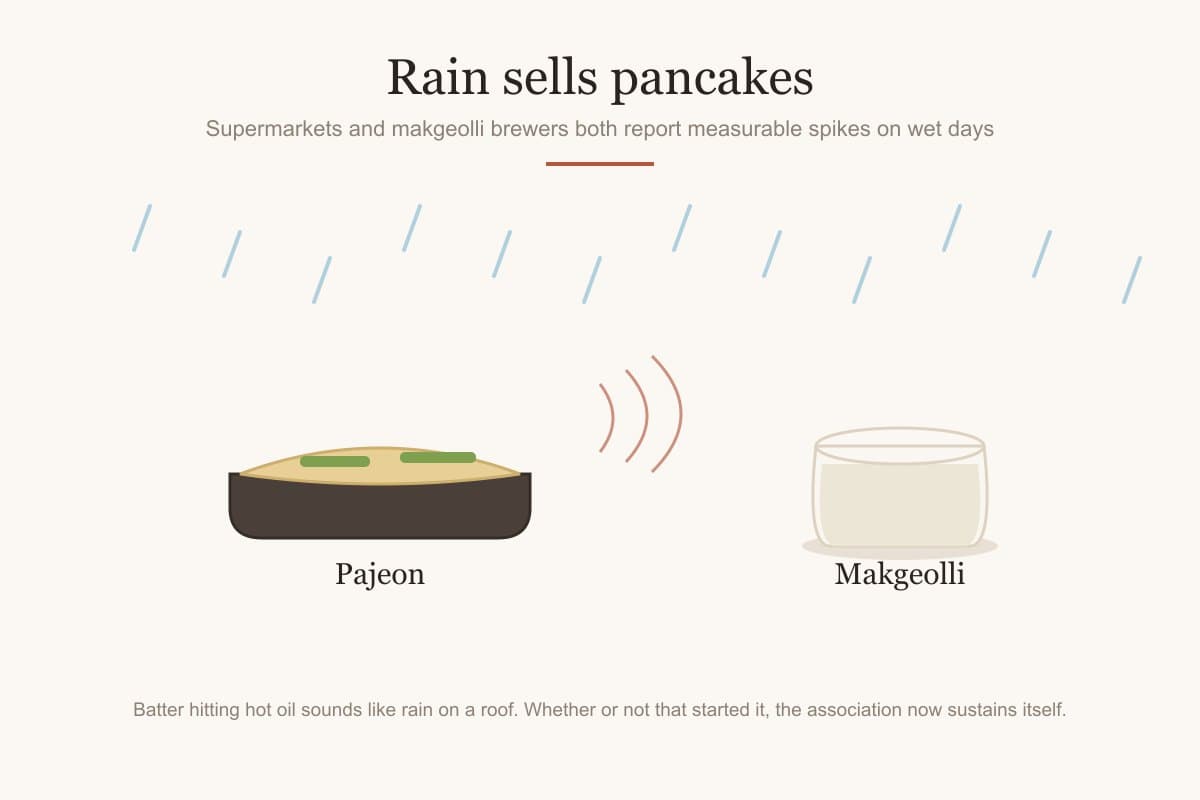
The link between rainy weather and pajeon is strong enough to show up in sales data: Korean supermarkets and makgeolli producers both report measurable spikes on wet days. The most repeated explanation is acoustic — batter hitting hot oil sounds like rain on a roof. Whether or not that is the real origin, the association is now self-sustaining, and restaurants put jeon specials on the board when the forecast turns.
A pancake that comes out soft and bready had a batter and a pan problem before it ever had a cooking problem.
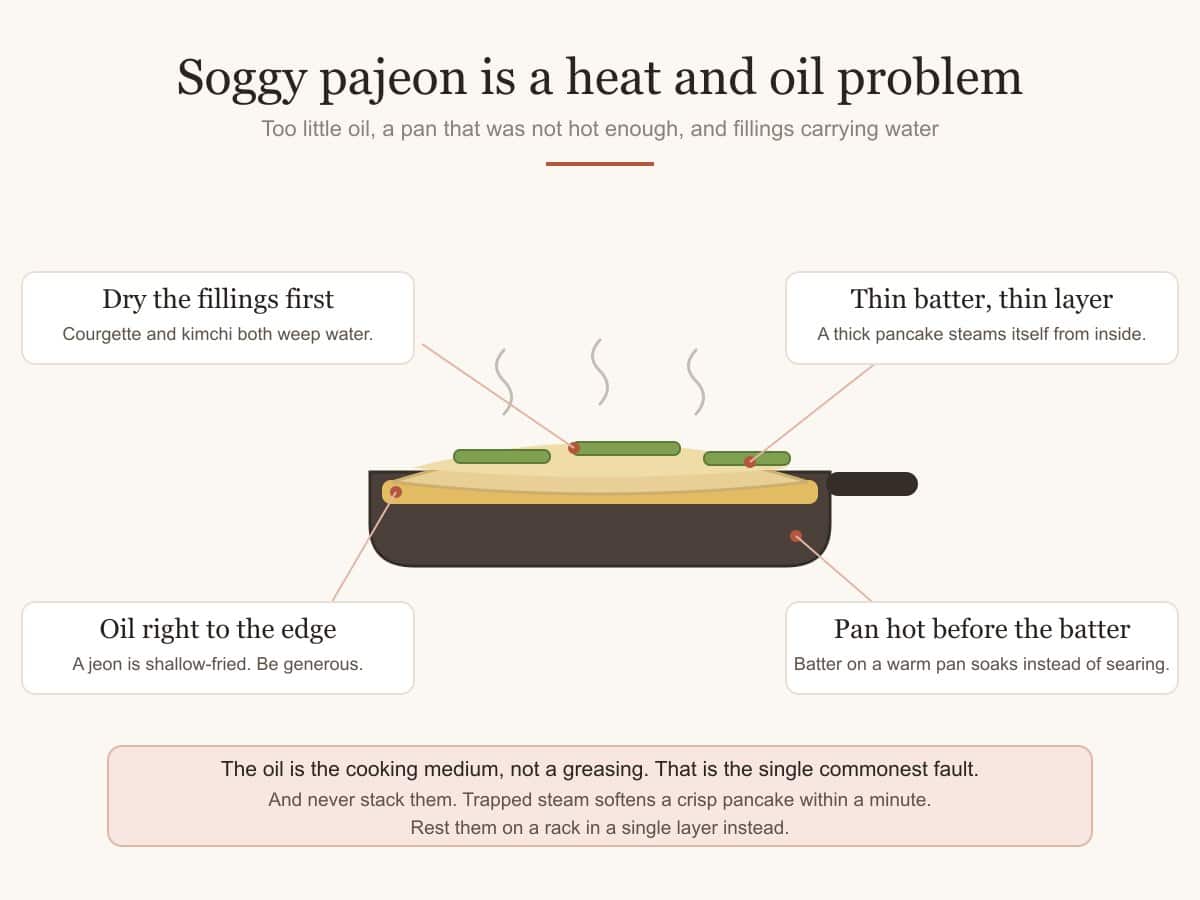
Crispness in pajeon comes from three things working together: enough oil, cold batter, and nothing wet in the mix. Miss any one and the result is pale and chewy.
Use more oil than feels right
Pajeon is closer to shallow-frying than to pan-frying. A thin film is not enough — the batter needs to be sizzling in oil, not steaming on metal.
Add more oil around the edges after you flip. This is the single trick that most reliably crisps the second side, and most recipes leave it out.
Cold batter, barely mixed
Ice-cold water. The temperature difference between cold batter and hot oil is what creates the crisp edge. Some cooks rest the bowl on ice while they work.
Do not overmix. Lumps are fine. Worked batter develops gluten and turns chewy.
Cut the flour with starch — about a quarter potato or corn starch, or use Korean frying mix. Plain flour alone gives a softer, breadier result.
Dry everything that goes in
Wet fillings release water into the batter halfway through cooking, and that water has nowhere to go.
Seafood must be patted properly dry, and thawed first if frozen. Kimchi should be squeezed out, with the juice saved for the batter rather than carried in on the leaves. Courgette and other watery vegetables benefit from a light salting and a squeeze.
For kimchi jeon specifically, the squeezed juice is what colours the batter — use it as liquid, not as cargo.
Never stack them
Steam trapped between two hot pancakes softens both within a minute. It undoes everything the oil just did.
Rest them on a rack, in a single layer. If you are cooking several, a low oven on a rack holds them without steaming.
To revive a soft one: a dry pan, medium heat, a couple of minutes a side. No extra oil. It crisps up surprisingly well — the microwave does the opposite.
Common questions
How do I make pajeon crispy?
Generous oil, ice-cold batter mixed as little as possible, and nothing wet in the filling. Then add more oil around the edges after flipping, and rest the finished pancake on a rack rather than a plate.
What flour is best for Korean pancakes?
Korean frying mix (buchimgaru) is easiest. Otherwise plain flour cut with about a quarter potato or corn starch gets close. Straight plain flour gives a softer, breadier pancake.
Can I reheat pajeon and keep it crisp?
In a dry pan over medium heat, two minutes a side, no extra oil — it recovers most of its crispness. The microwave makes it limp and rubbery.
Why does my pancake fall apart when I flip it?
It was flipped too early, or the batter is too thin to bind. Let the underside set completely and go brown before you touch it, and press it down once with the spatula after flipping.
More to cook
All Ingredient & Substitute Guides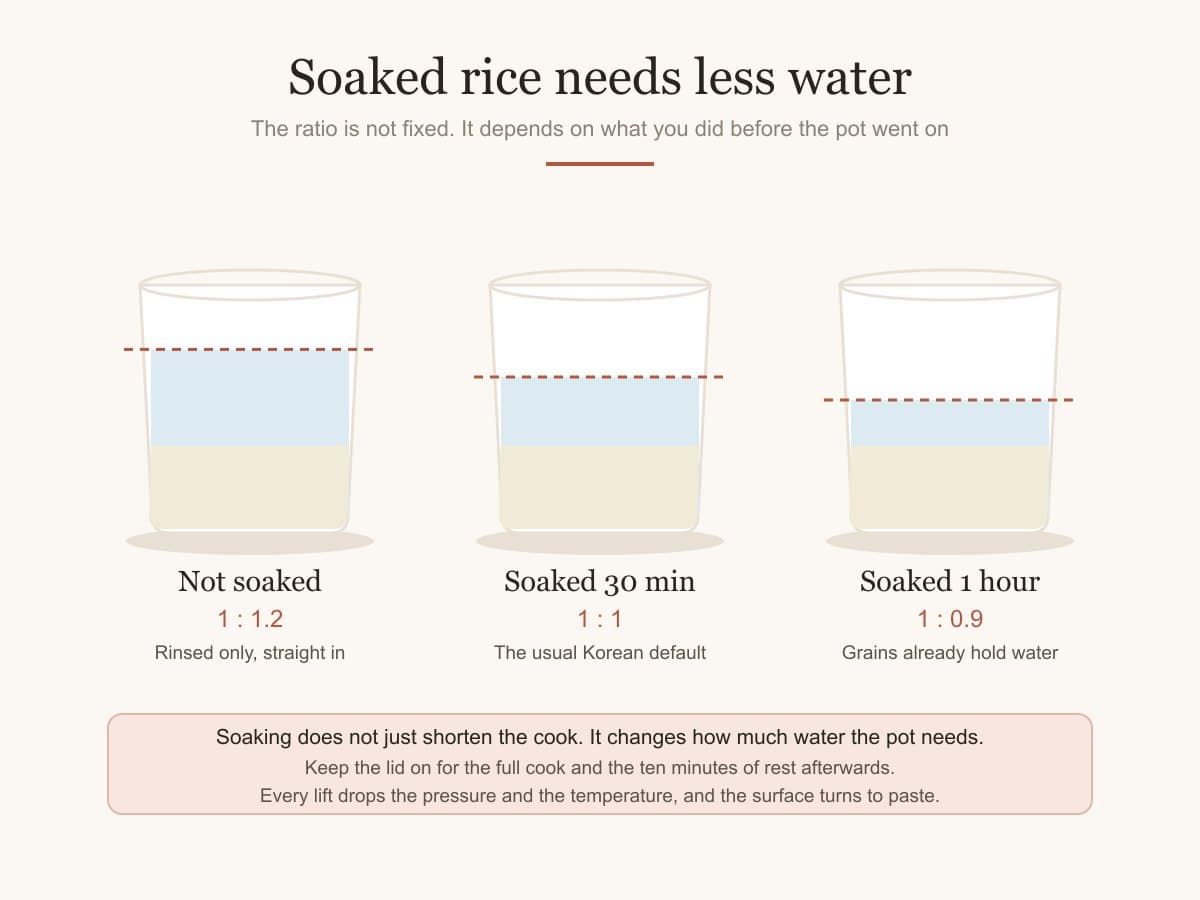
Why Is My Rice Mushy?
Mushy short-grain rice usually comes from skipped rinsing or water measured before soaking. The ratios that work and how to rescue a wet pot.
Why Is My Seolleongtang Not Milky?
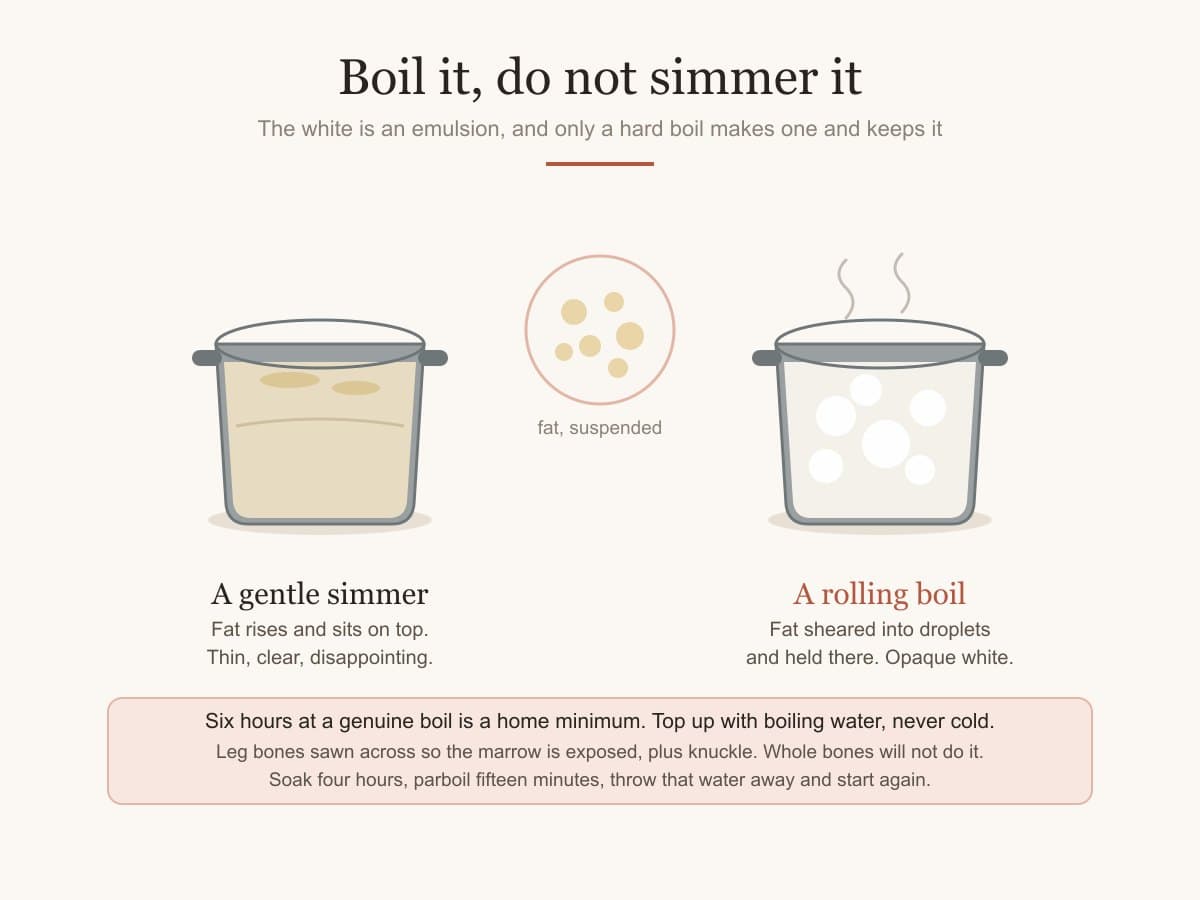
A clear ox bone broth means you simmered when you should have boiled. The emulsion that makes seolleongtang white, and how to force it.
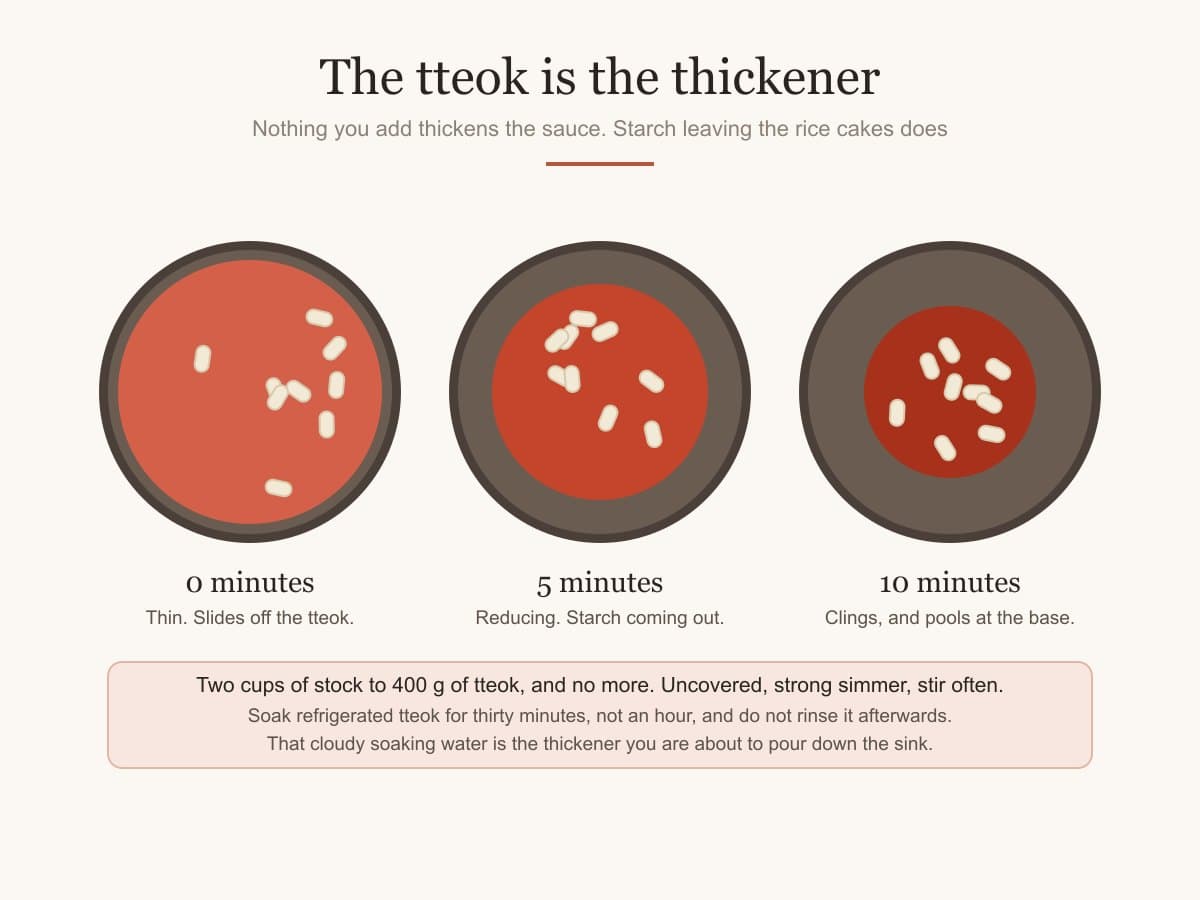
Why Is My Tteokbokki Sauce Watery?
Thin tteokbokki sauce is a starch problem, a liquid problem or a timing problem. Which one you have, and what to do about it.