Did you know — Korean culture
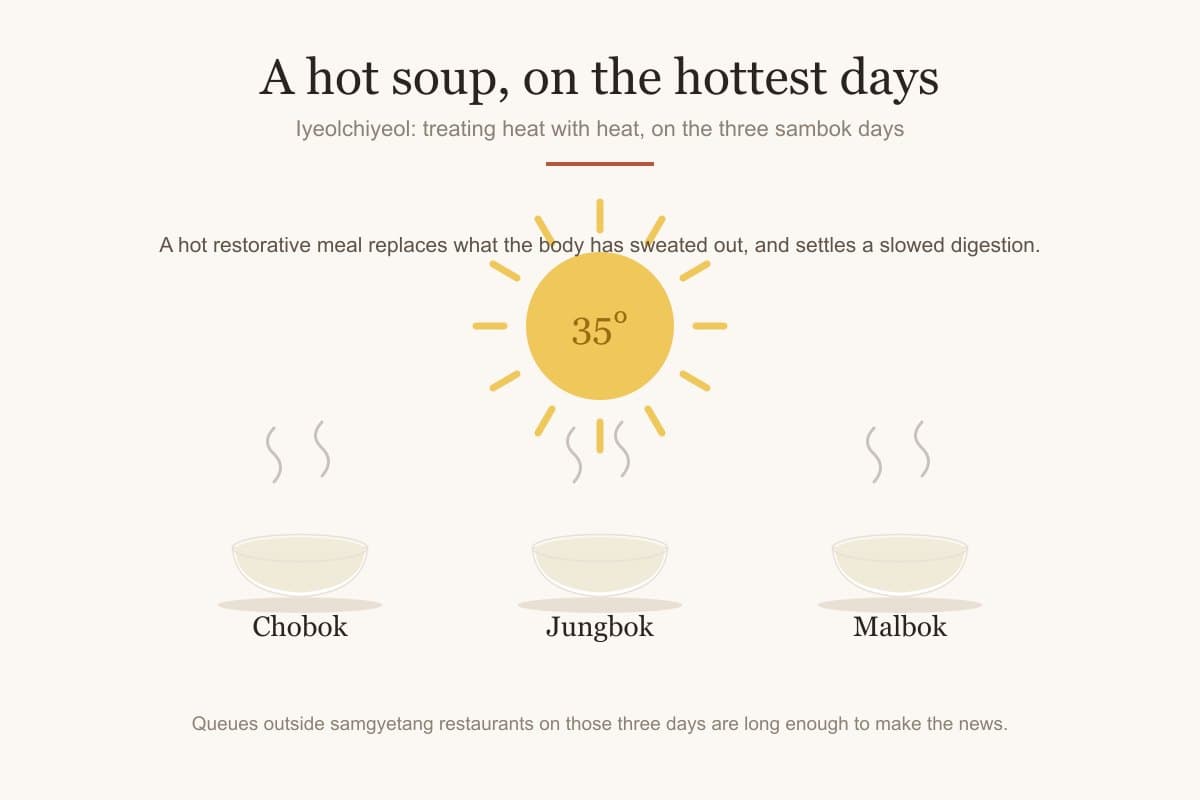
Samgyetang is summer food, which startles almost everyone who meets it. It is eaten on the three hottest days of the year — the sambok days — under the principle of iyeolchiyeol, treating heat with heat: the idea that a hot, restorative meal replaces what the body has sweated out and settles a digestive system slowed by the weather. Queues outside samgyetang restaurants on those days are long enough to make the news, in weather well into the thirties.
Before troubleshooting samgyetang, check which problem you have. Unsalted and thin are different things, and only one of them is a fault.
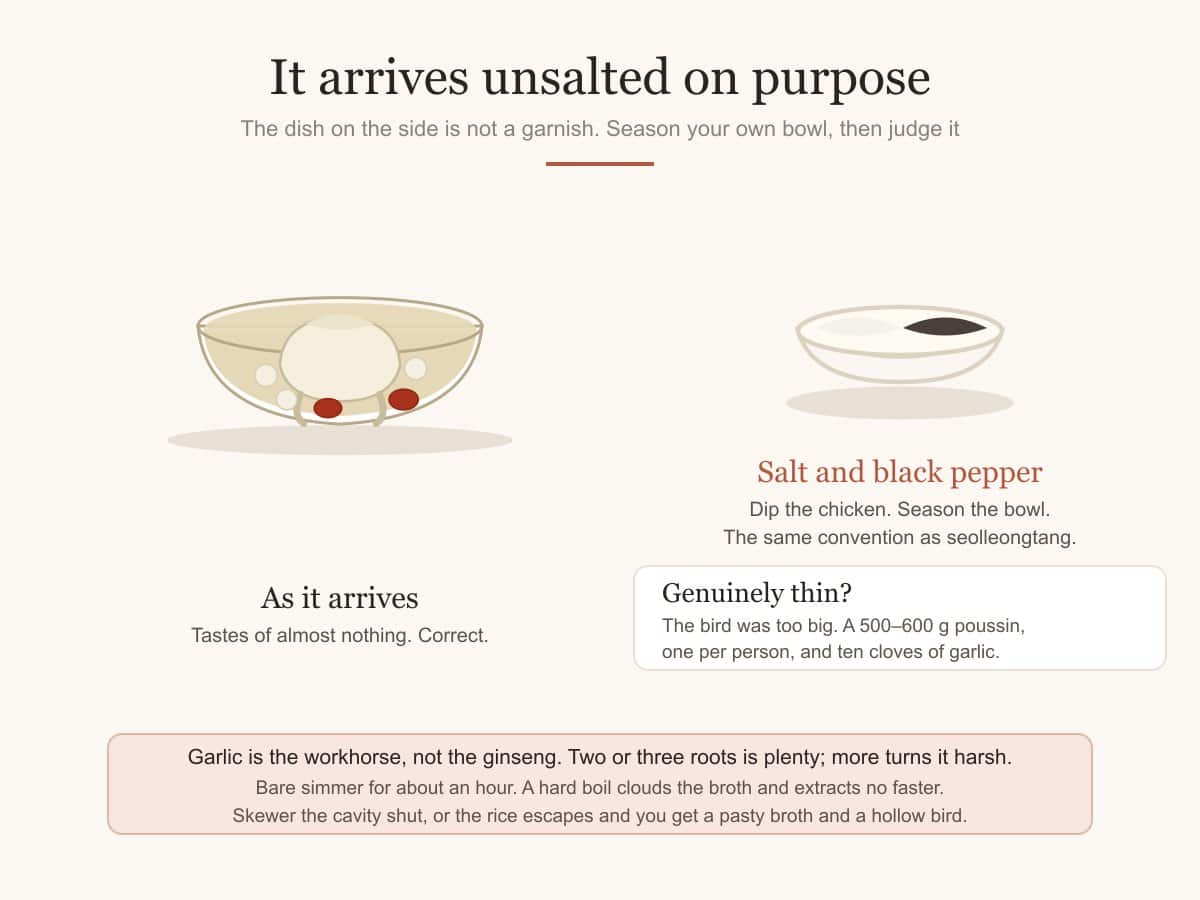
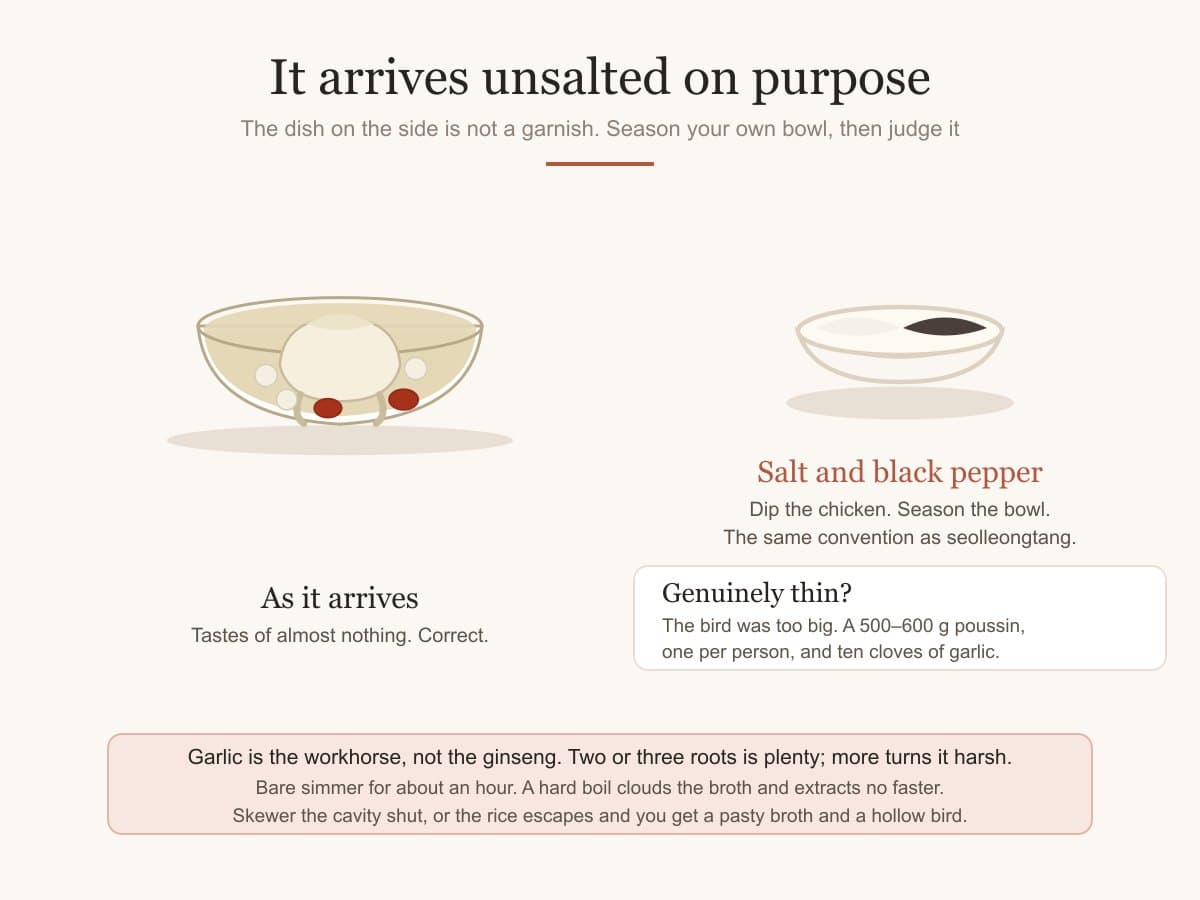
The broth is supposed to arrive tasting of very little. The salt and pepper on the table are not a garnish.
It is seasoned at the table, on purpose
Samgyetang is served completely unsalted, with a small dish of salt and black pepper beside it. You dip the chicken and season your own bowl.
This is the same convention as seolleongtang and galbitang, and it is not laziness — the dish is eaten as a restorative, and the diner decides how much salt they want.
If the broth tastes of nothing before you touch it, that is correct. Salt your bowl and taste again before concluding anything.
If it is genuinely thin, the bird was too big
Samgyetang uses a young chicken — a poussin, around 500 to 600 g, one per person. That is what fits in a bowl and what cooks through in an hour without the broth going flat.
A 1.5 kg supermarket chicken in the same volume of water gives a much weaker broth per bowl, and the breast is dry before the legs are done.
If a poussin is not available, use a small chicken and less water — enough to just cover — rather than scaling the water up.
The aromatics do more than the ginseng
Garlic is the workhorse. Ten to fifteen whole cloves per bird, and they go soft and sweet into the broth. Most people under-use it badly.
Ginseng contributes a distinct bitterness and medicinal note rather than savouriness. Two or three roots is plenty, and more makes the soup harsh rather than deeper.
Jujube, chestnut and a little ginger round it out. Glutinous rice stuffed inside the bird thickens the broth as it cooks, and that body is a large part of what people mean by a good samgyetang.
Simmer, do not boil
A hard boil clouds the broth and toughens the meat, and it does not extract any faster.
Bring it up, skim, then hold at a bare simmer for about an hour, until a leg pulls away easily.
Sew or skewer the cavity closed so the rice stays in. Rice escaping into the pot gives you a thick, pasty broth and a hollow bird, which is a different disappointment from a thin one.
Common questions
Is samgyetang supposed to be bland?
It is supposed to arrive unsalted. Salt and black pepper are served alongside, and you season your own bowl and dip the chicken — the same convention as seolleongtang.
What size chicken for samgyetang?
A young bird of about 500 to 600 g, one per person. A large chicken in the same amount of water gives a weaker broth and dry breast meat.
How much ginseng should I use?
Two or three roots per bird. Ginseng contributes bitterness and a medicinal note rather than savouriness, and more makes the soup harsh instead of deeper.
Why is my samgyetang broth cloudy?
It boiled rather than simmered, or the rice escaped from the cavity. Skim after it comes up, hold at a bare simmer, and skewer the bird closed.
More to cook
All Ingredient & Substitute Guides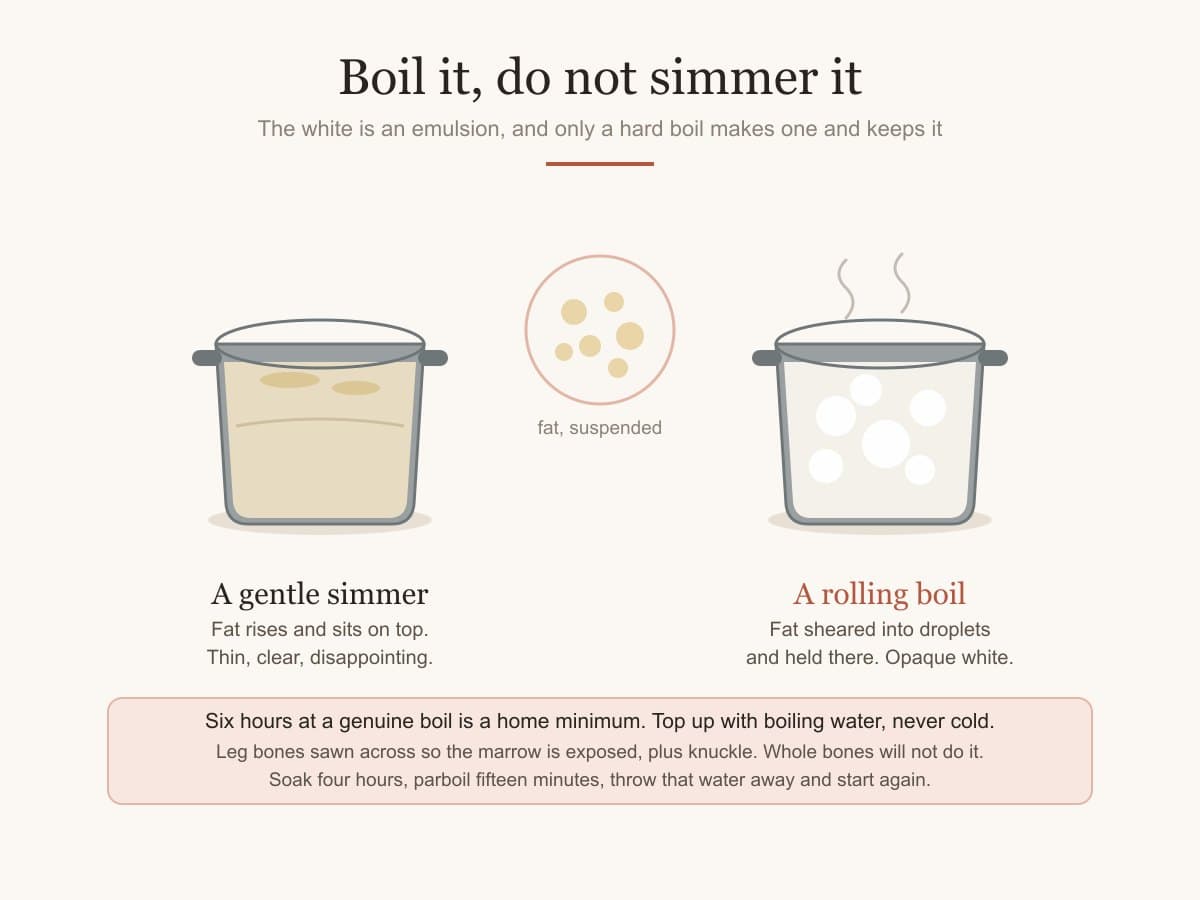
Why Is My Seolleongtang Not Milky?
A clear ox bone broth means you simmered when you should have boiled. The emulsion that makes seolleongtang white, and how to force it.
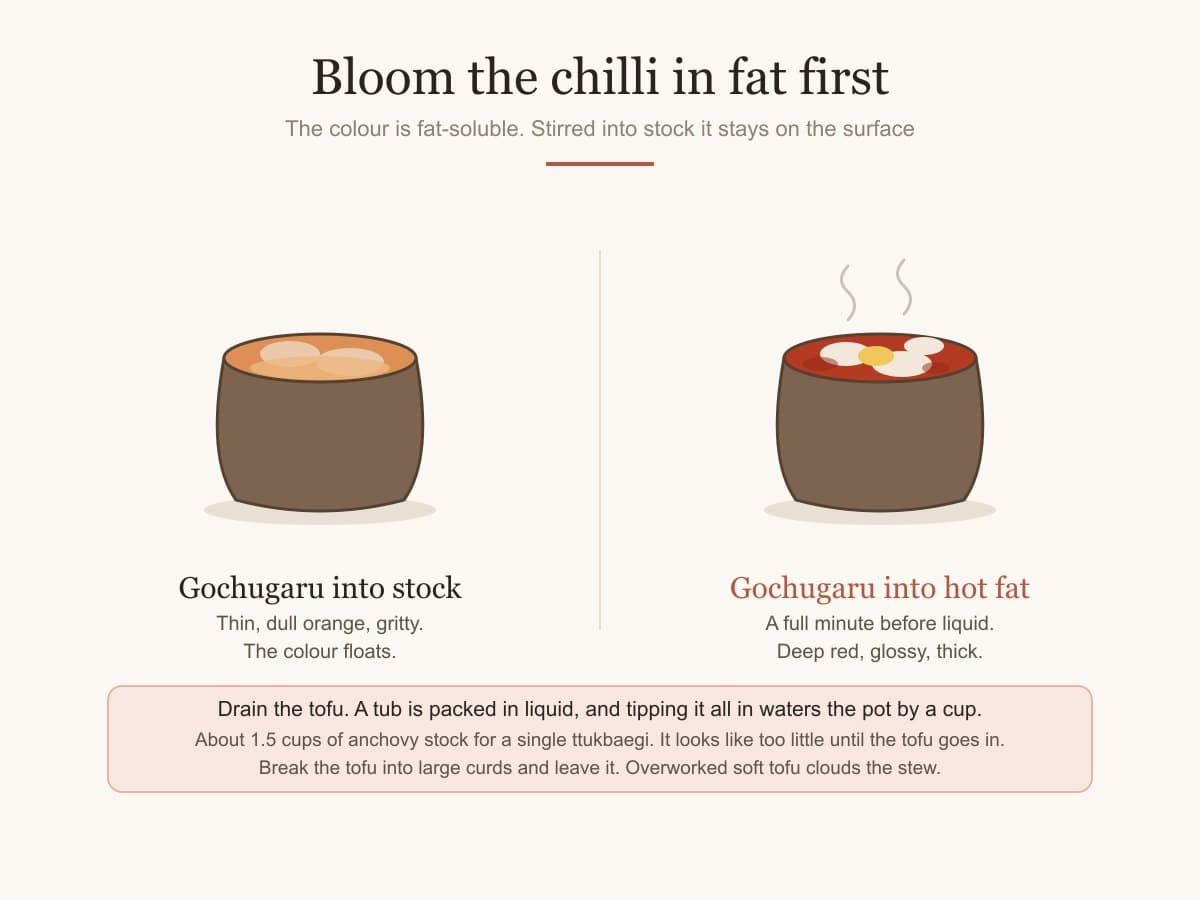
Why Is My Sundubu Jjigae Watery?
Thin soft-tofu stew means the chilli oil base was skipped or the tofu was drained badly. The two steps that give it body.
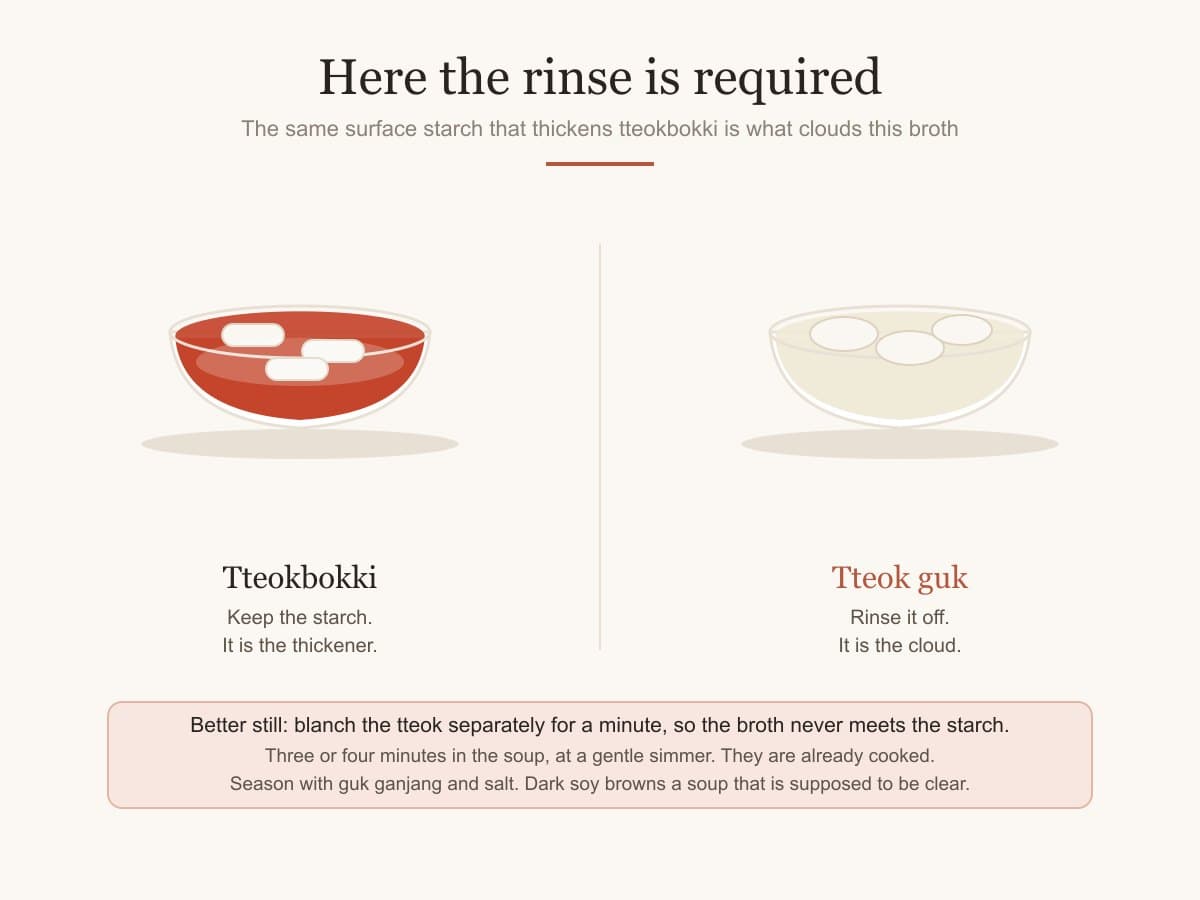
Why Is My Tteok Guk Cloudy?
A clear new-year soup goes murky from tteok starch and a hard boil. Here the rinse is required — the opposite of the tteokbokki rule.