Did you know — Korean culture
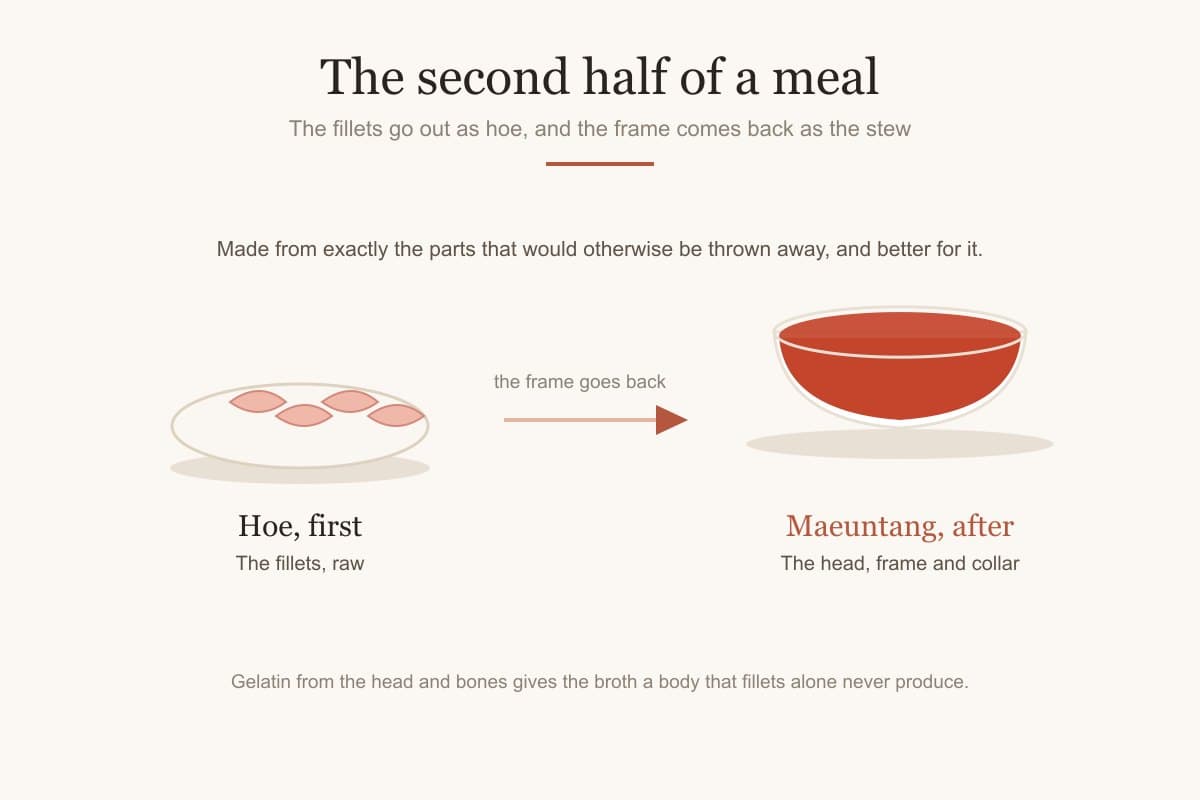
Maeuntang is traditionally the second half of a meal rather than a dish in itself. At a Korean raw fish restaurant the fillets are served as hoe, and the frame, head and collar go straight to the kitchen to become maeuntang, which arrives at the end — so the stew is made from exactly the parts that would otherwise be discarded, and it is the better version for it. Gelatin from the head and bones gives the broth a body that fillets alone never produce.
Fishy is not the same as fishy-tasting-of-fish. Maeuntang should taste clean, hot and deep; what people mean by fishy is blood, gill and a boil that went too hard.
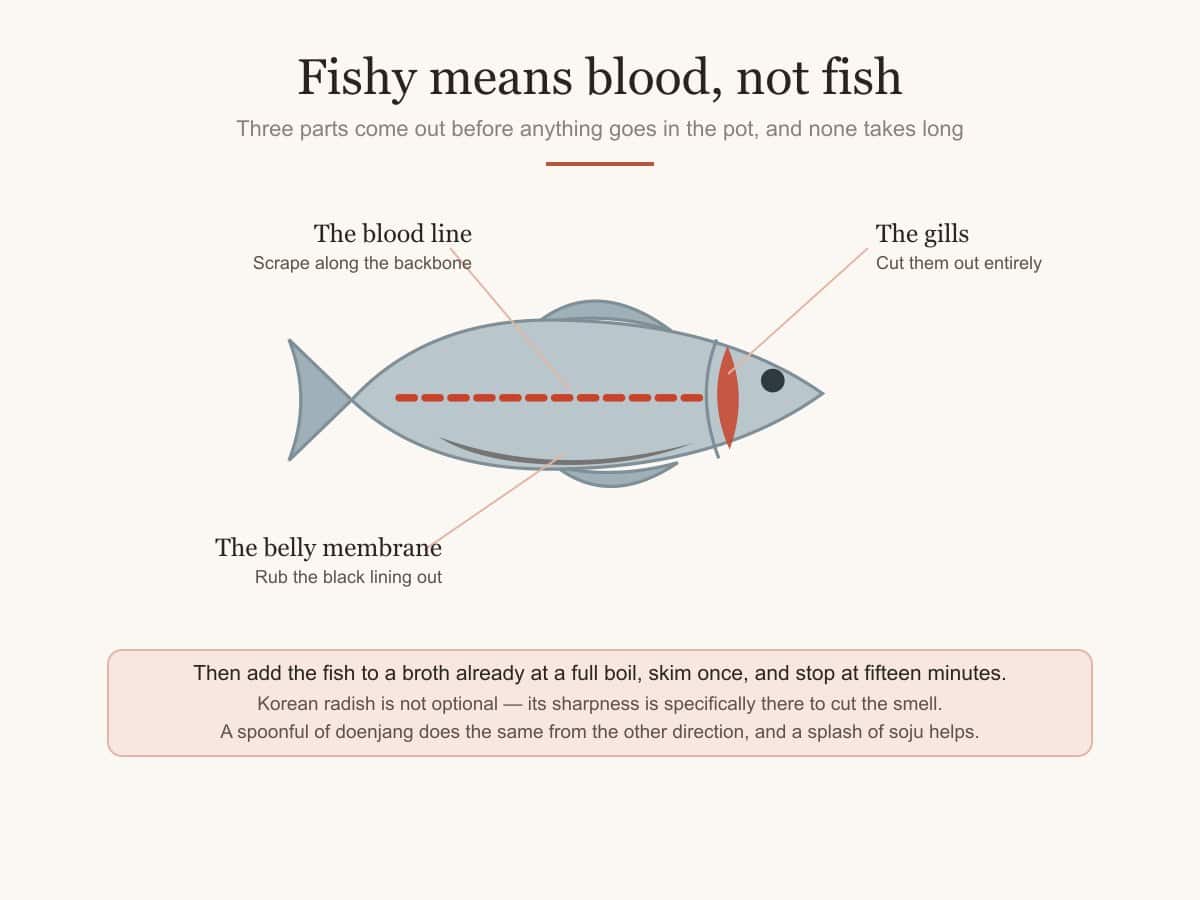
Three preparations fix nearly all of it, and none takes long.
Gills, blood line, and the belly membrane
Cut the gills out entirely. They hold blood and they are the single biggest contributor.
Scrape the dark blood line along the backbone inside the cavity, and rub out the black membrane lining the belly. Both are bitter and both go rank in a stew.
Then rinse the pieces under cold running water until the water runs clear, not cloudy. For a head, soak it in cold salted water for twenty minutes first.
Boil the broth before the fish goes in
Build the stock and get it to a full boil, then add the fish. Fish dropped into cold water and brought up slowly leaches blood and albumen into the broth the whole way.
Skim once, immediately, and then leave it mostly alone.
And keep it short: ten to fifteen minutes once the fish is in. A long simmer breaks the flesh down and pushes more of what you removed back out.
What goes in the pot with it
Korean radish is not optional. Its sharpness is specifically there to cut fish smell, and a maeuntang without it tastes noticeably different.
A spoonful of doenjang alongside the gochujang and gochugaru does the same job from the other direction — soybean paste is the standard Korean answer to a fish smell.
Crown daisy (ssukgat) goes in at the very end and is the aromatic finish. Minari if you can get it. A splash of soju in the pot is traditional and works.
The fish itself
Use it fresh, and use the right kind. Firm white fish holds up — rockfish, red snapper, cod, monkfish. Oily fish makes a stronger, more assertive stew and is less forgiving.
Frozen fish releases more water and more smell. If that is what you have, thaw it fully in the fridge and pat it dry before it goes anywhere near the pot.
And a maeuntang made from the frame and head after filleting is the traditional and best version — more gelatin, more flavour — provided the head is cleaned properly first.
Common questions
How do I stop maeuntang tasting fishy?
Remove the gills, scrape the blood line along the backbone and rub out the black belly membrane, then rinse until the water runs clear. That accounts for most of it.
Should I add fish to boiling or cold broth?
Boiling. Fish brought up slowly from cold leaches blood and albumen into the broth the whole way, and the stew tastes of it.
Why does maeuntang have radish in it?
Korean radish specifically cuts fish smell, which is why it is standard rather than optional. A spoonful of doenjang does the same job from the other direction.
How long should maeuntang simmer?
Ten to fifteen minutes after the fish goes in. Longer breaks the flesh down and pushes more of what you cleaned out back into the broth.
More to cook
All Ingredient & Substitute Guides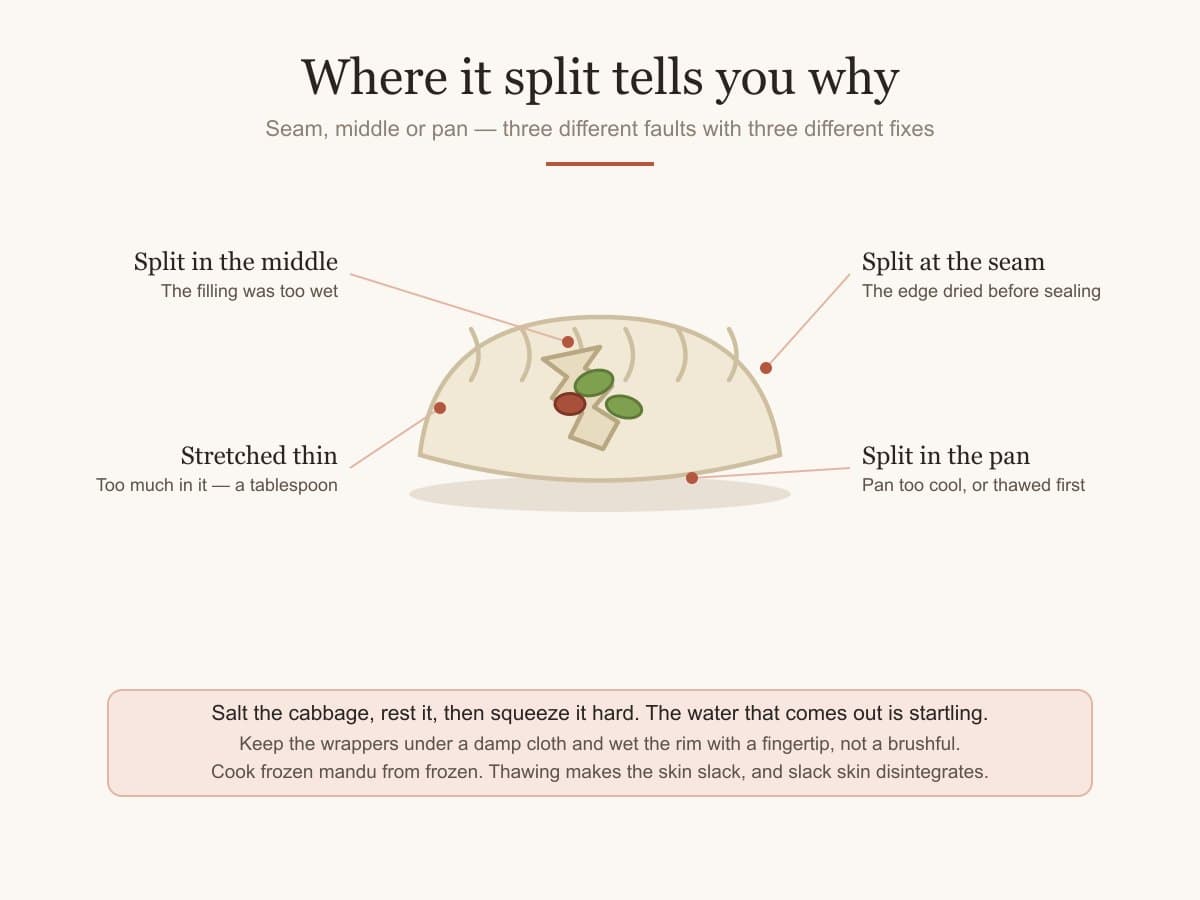
Why Is My Mandu Skin Tearing?
Split dumpling skins come from a wet filling, a dry edge, overfilling or a cold pan. Which one you have, and the fix for each.
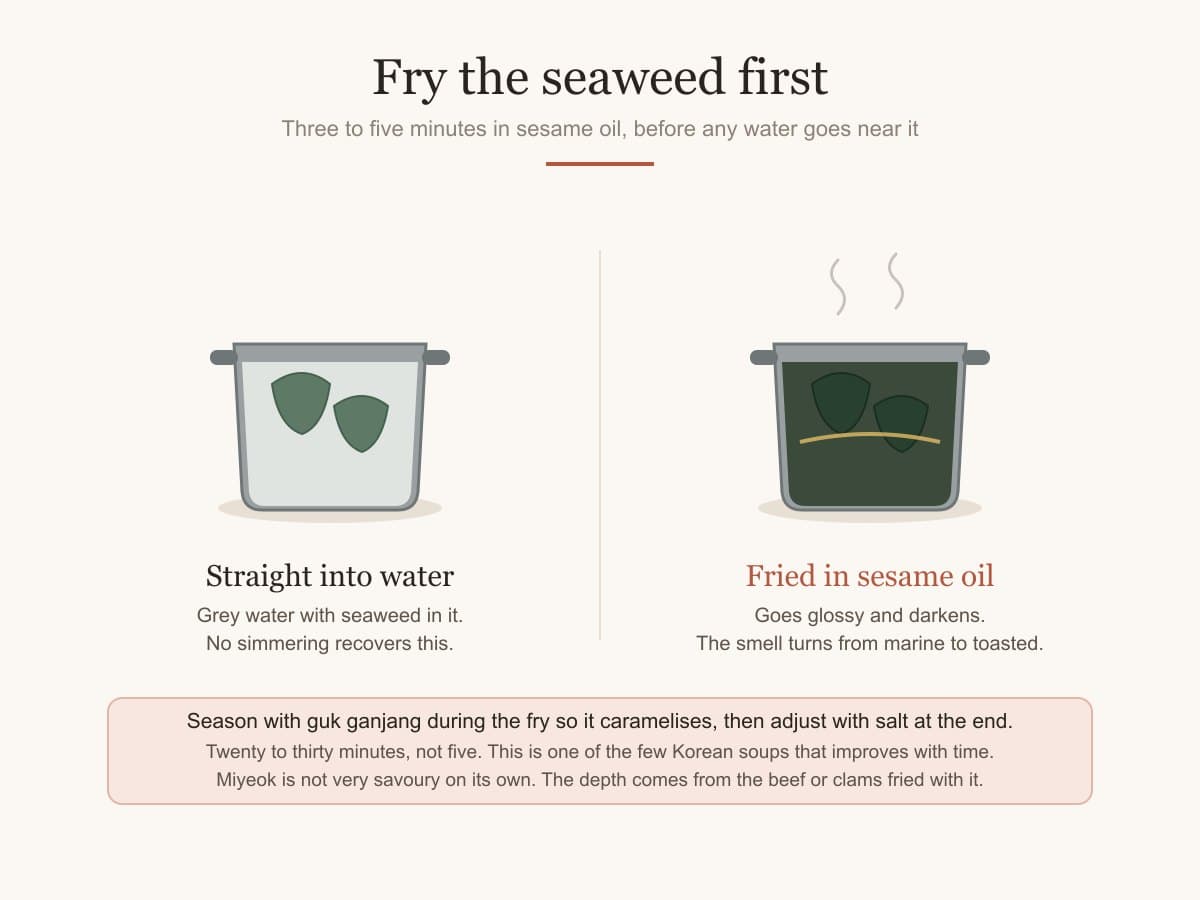
Why Is My Miyeok Guk Bland?
Seaweed soup tastes of nothing if the miyeok goes straight into water. The sesame oil fry, the soy, and how long it really needs.
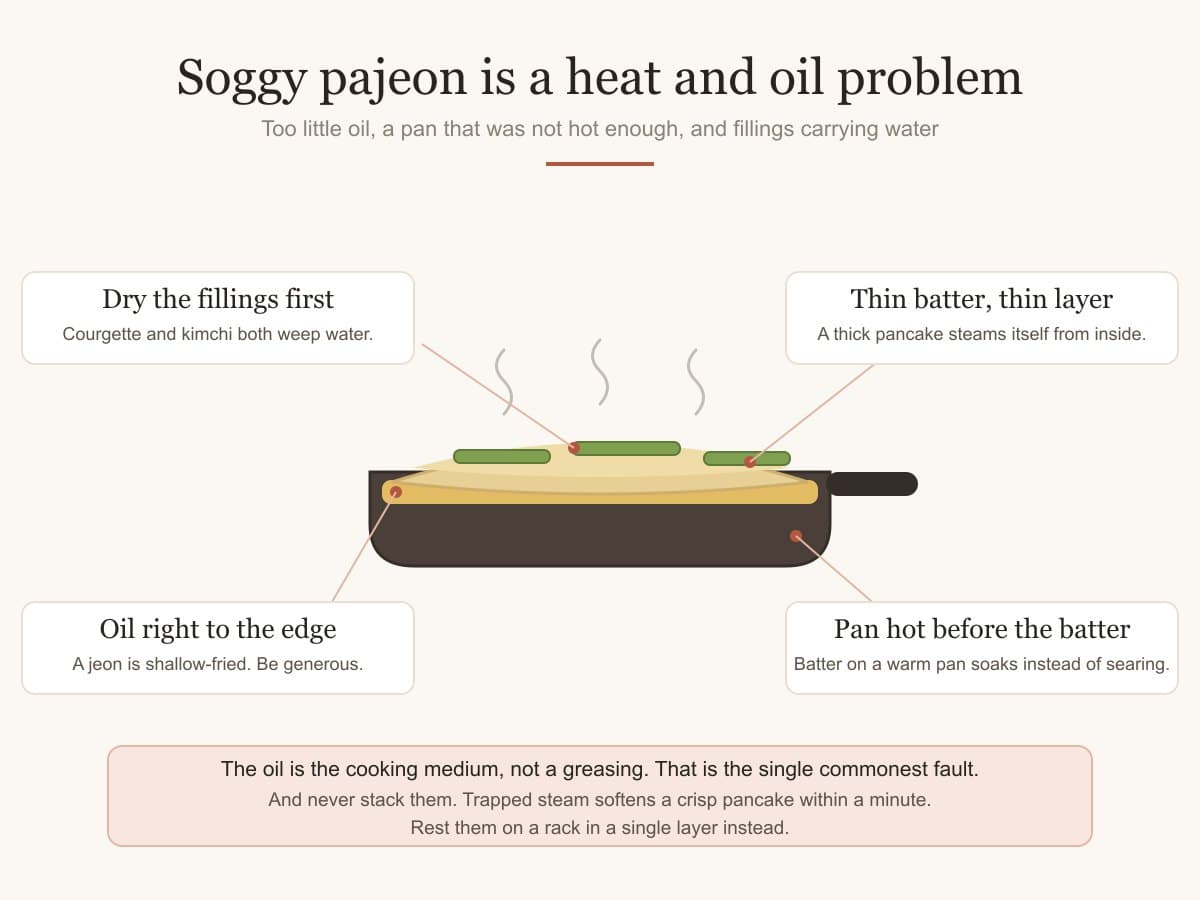
Why Is My Pajeon Soggy?
Soggy Korean pancake comes down to oil, batter temperature and wet fillings. The three fixes, and why stacking them undoes all of it.