Did you know — Korean culture
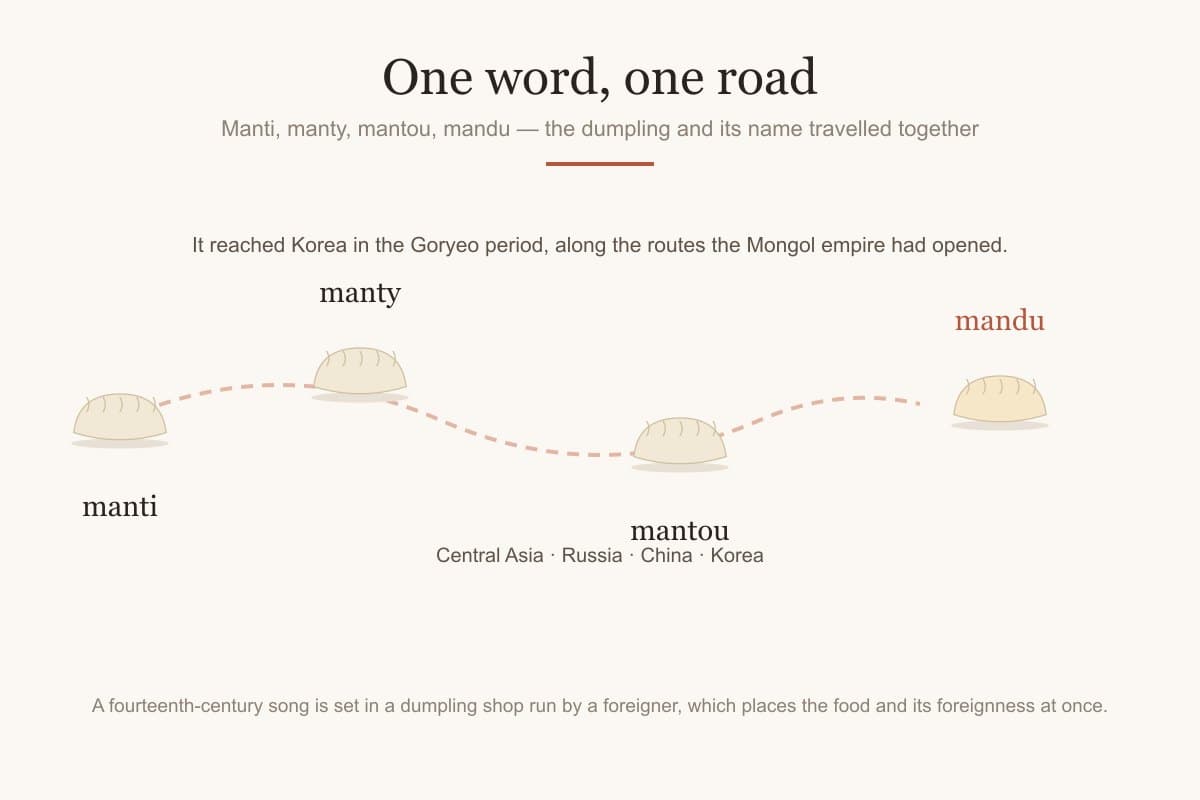
Mandu and manti and mantou are the same word travelling. The dumpling reached Korea during the Goryeo period, along the routes the Mongol empire had opened, and the name follows that road almost exactly — manti in Turkey and Central Asia, manty in Russia, mantou in China, mandu in Korea. A fourteenth-century Korean song, Ssanghwajeom, is set in a dumpling shop run by a foreigner, which places both the food and the fact that it was understood as foreign.
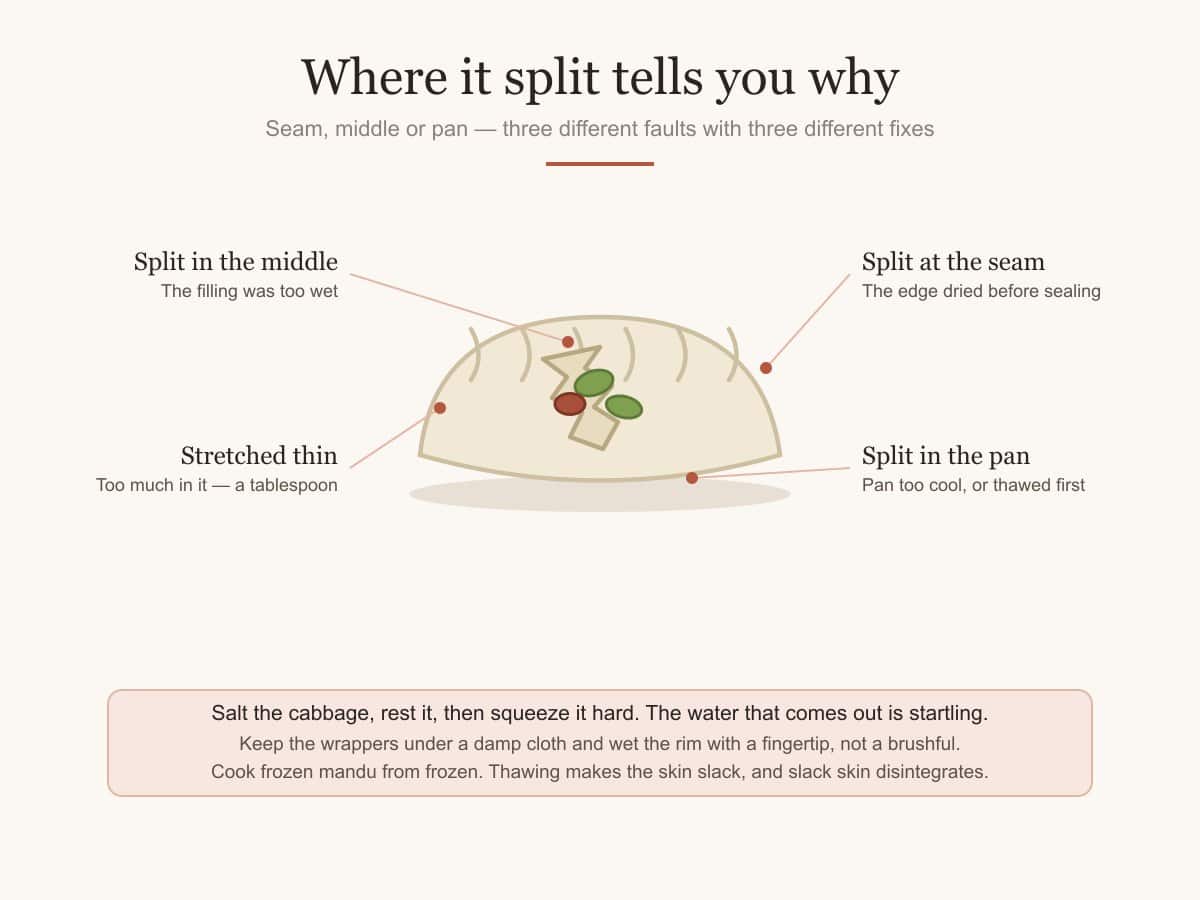
A torn mandu usually fails in one of four places, and each has a different signature. Knowing where it split tells you what went wrong.
Split at the seam is a sealing problem. Split in the middle is a filling problem. Split in the pan is a heat problem.
The filling is too wet
This is the usual cause of a dumpling that bursts in the middle. Cabbage, courgette and tofu all hold a great deal of water, and the steam has to go somewhere.
Salt the cabbage, rest it fifteen minutes, then squeeze it hard in a cloth. The amount of water that comes out is startling the first time.
Do the same with tofu: press it, crumble it, press again. And drain kimchi filling thoroughly — kimchi mandu is the version that bursts most often, for exactly this reason.
The edge dried out before you sealed it
Shop wrappers dry within about a minute of leaving the pack. A dry edge does not bond, and the seam opens in the water.
Keep the stack under a damp cloth and take one wrapper at a time. Wet the rim with a fingertip of water, not a brushful — too much makes it slippery rather than tacky.
Press the seam flat first, then pleat. Pleating an unsealed edge traps air in the folds, and trapped air expands.
There is too much in it
A tablespoon is about right for a standard round wrapper, and it looks like too little until you try to close it.
Overfilled mandu split on the first contact with heat, because the filling expands and the skin has no slack.
If the wrapper will not close without stretching, take filling out. A stretched skin is already thinner where it matters.
The pan or the water was wrong
Boiling: a rolling boil batters dumplings against each other. Bring it to the boil, drop the mandu in, then reduce to a strong simmer. They are done about a minute after they float.
Frying: a pan that is not hot enough lets the skin absorb oil and go fragile before it crisps. Hot pan, oil, mandu, then thirty seconds undisturbed before you add water and cover.
Frozen mandu goes in frozen. Thawing makes the skin damp and slack, and that is the single commonest cause of a dumpling that disintegrates in the pot.
Common questions
Why do my dumplings burst in the middle?
The filling is too wet. Salt and squeeze the cabbage, press the tofu, and drain kimchi filling well. The steam has to go somewhere and it goes through the thinnest part of the skin.
Why does the seam open while cooking?
The edge dried before you sealed it. Keep wrappers under a damp cloth, wet the rim with a fingertip rather than a brushful, and press the seam flat before pleating.
Should I thaw frozen mandu before cooking?
No. Cook them from frozen. Thawing makes the skin damp and slack, and that is the commonest reason a frozen dumpling disintegrates in the pot.
How much filling goes in a mandu?
About a tablespoon for a standard round wrapper. It looks like too little until you try to close it, and an overfilled dumpling splits the moment it meets heat.
More to cook
All Ingredient & Substitute Guides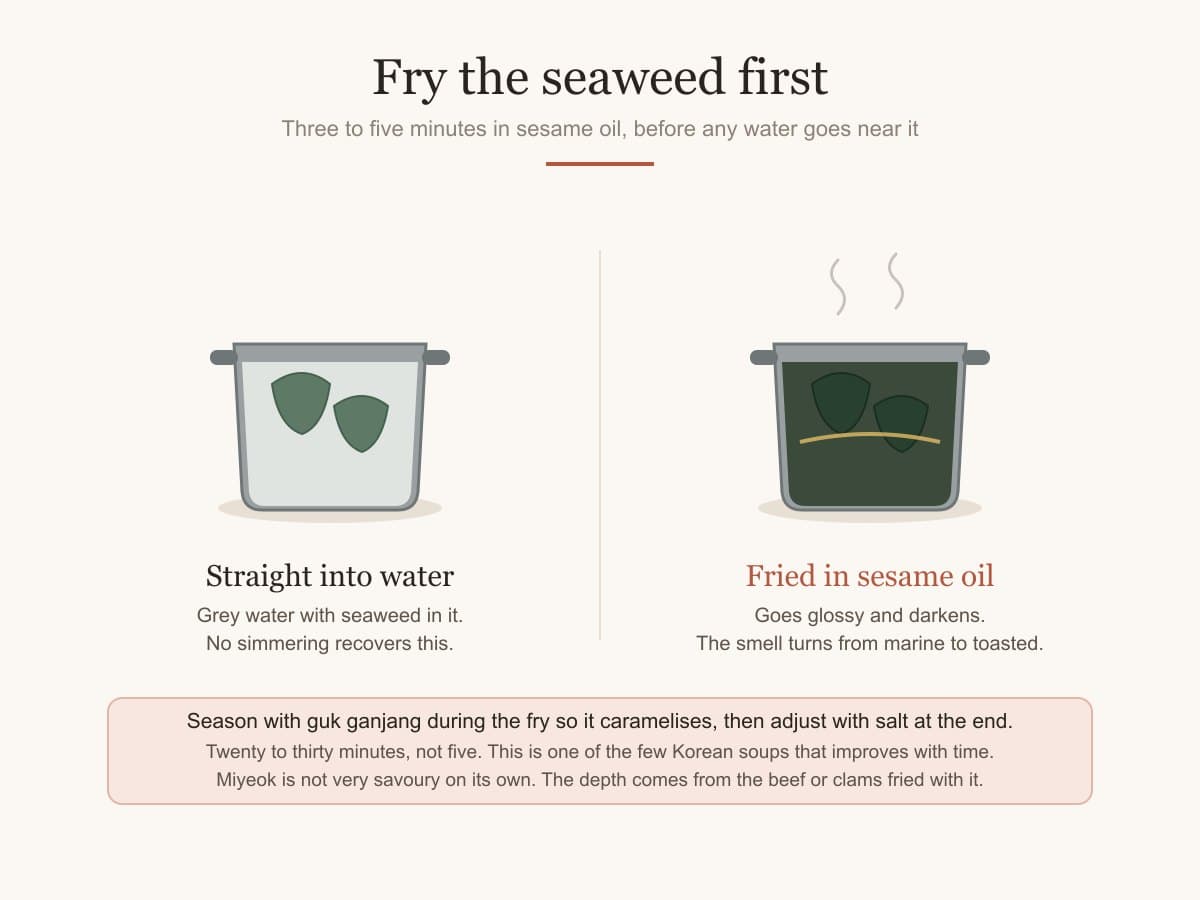
Why Is My Miyeok Guk Bland?
Seaweed soup tastes of nothing if the miyeok goes straight into water. The sesame oil fry, the soy, and how long it really needs.
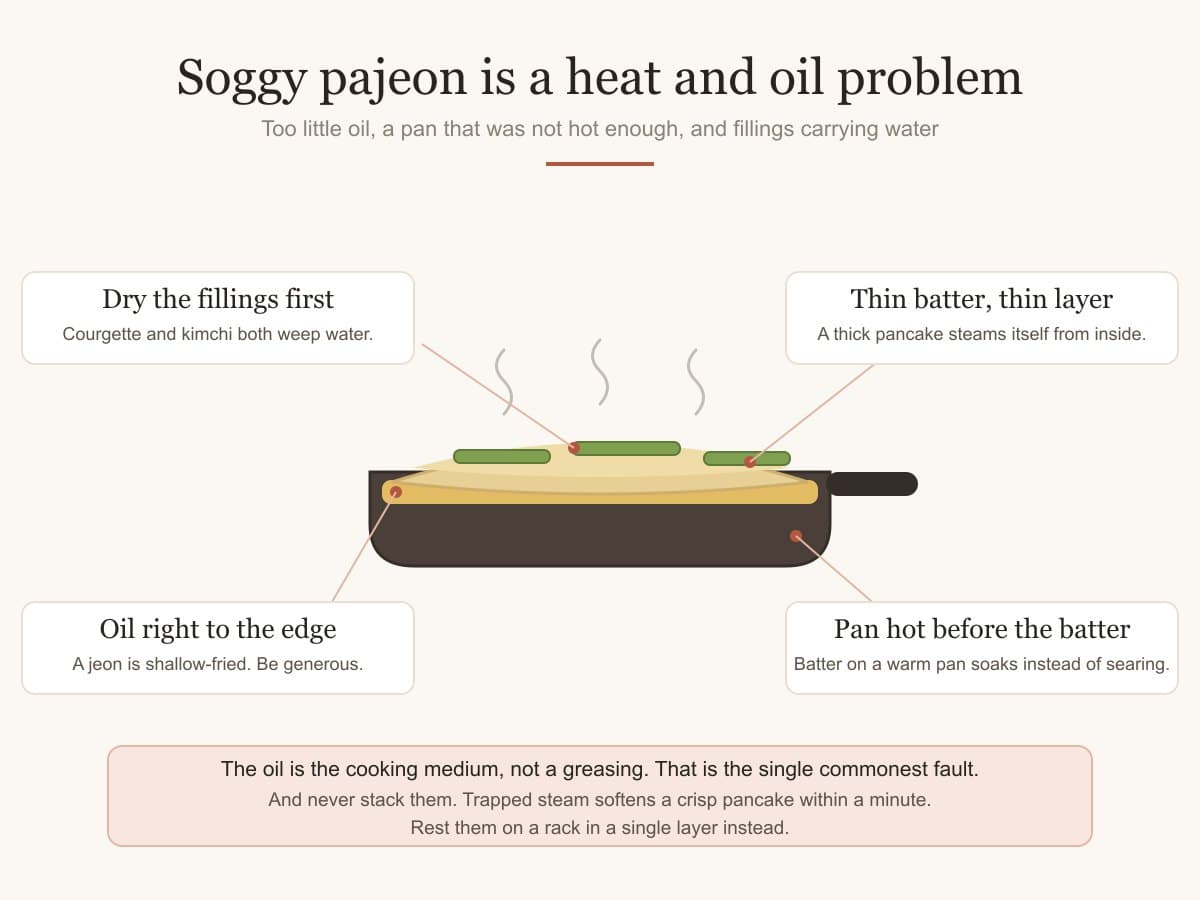
Why Is My Pajeon Soggy?
Soggy Korean pancake comes down to oil, batter temperature and wet fillings. The three fixes, and why stacking them undoes all of it.
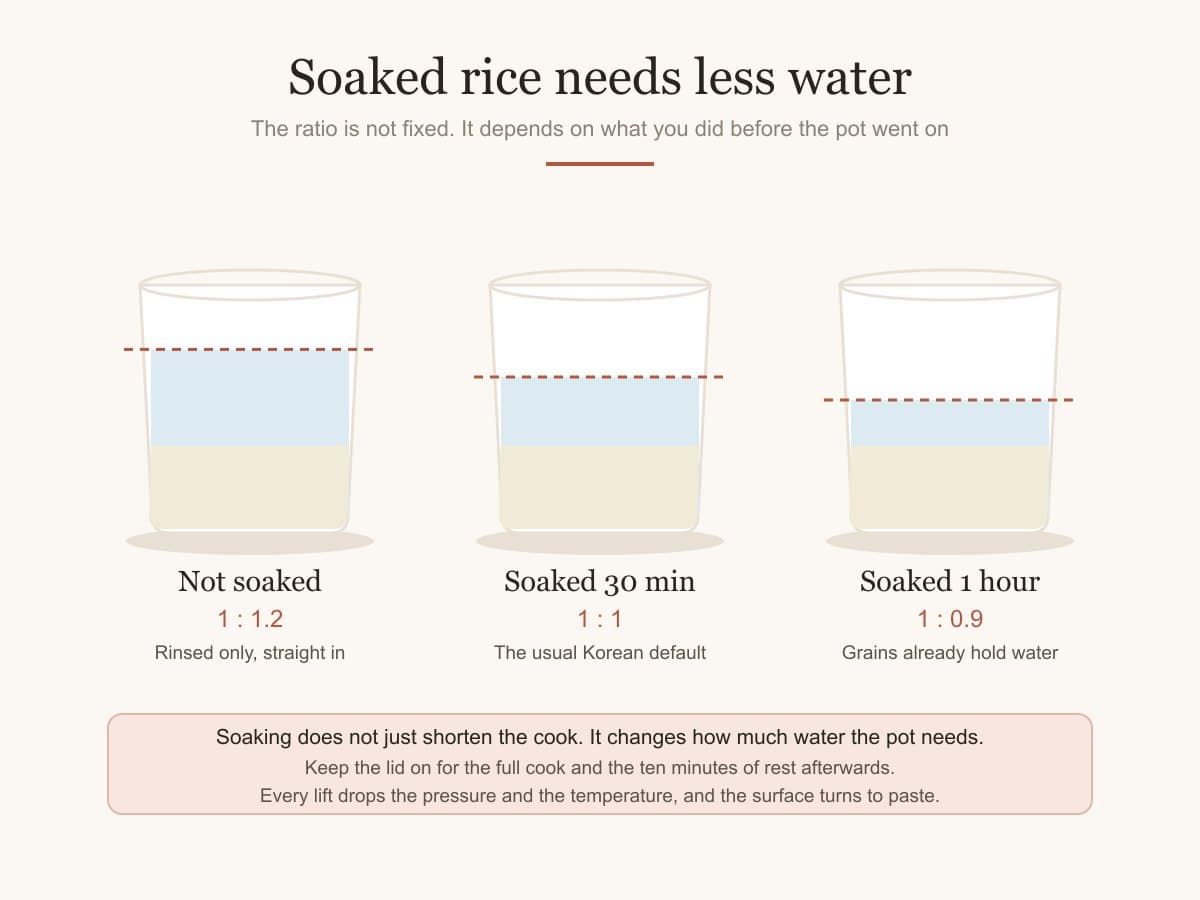
Why Is My Rice Mushy?
Mushy short-grain rice usually comes from skipped rinsing or water measured before soaking. The ratios that work and how to rescue a wet pot.