Did you know — Korean culture
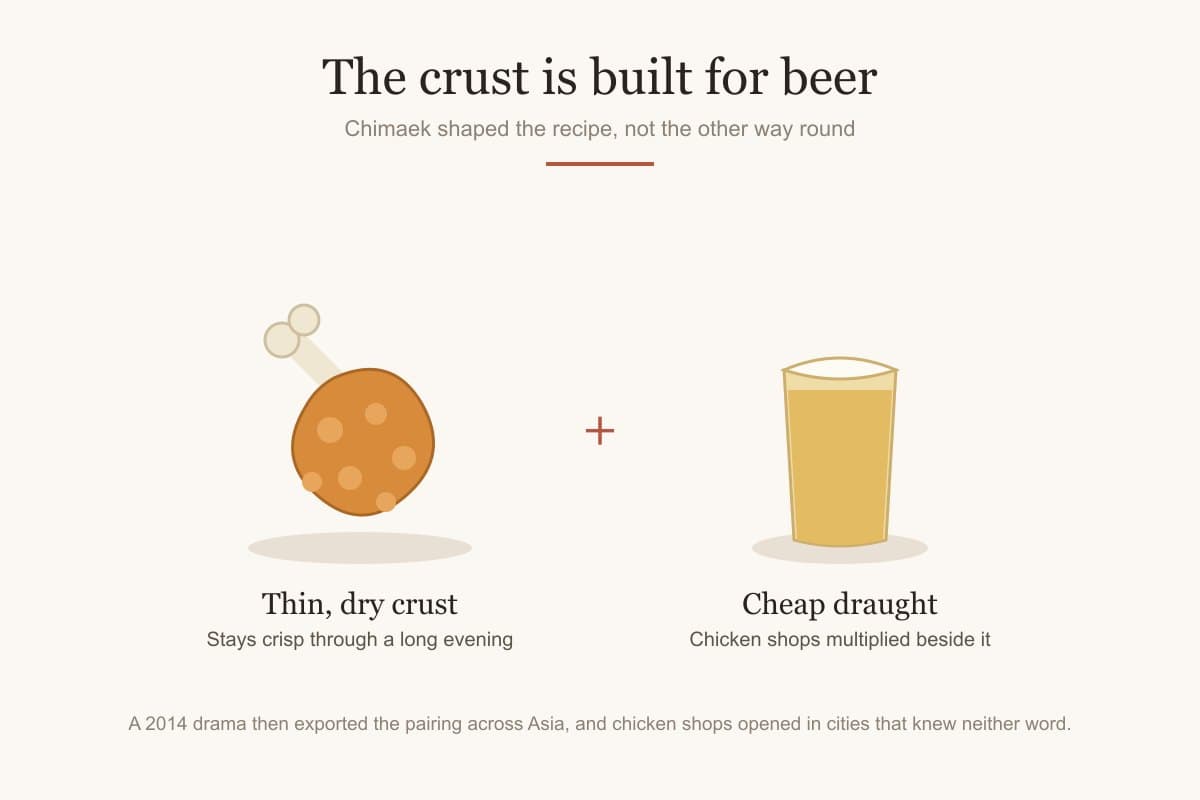
The crust is why chimaek works. Chicken and beer became a national pairing in the 1970s, when fried chicken shops multiplied alongside cheap draught, and the dish evolved to suit it: a shell thin and dry enough to stay crisp through a long evening of drinking and talking, rather than a thick batter that goes soft in ten minutes. The 2014 drama *My Love from the Star* then exported the combination across Asia almost overnight, and Korean chicken shops opened in cities that had never heard of either half of the word.
Korean fried chicken is crisp for structural reasons, not seasoning ones. If yours is soft, one of four things is missing, and the first is the one people skip.
Fry it twice. Almost everything else is secondary to that.
You only fried it once
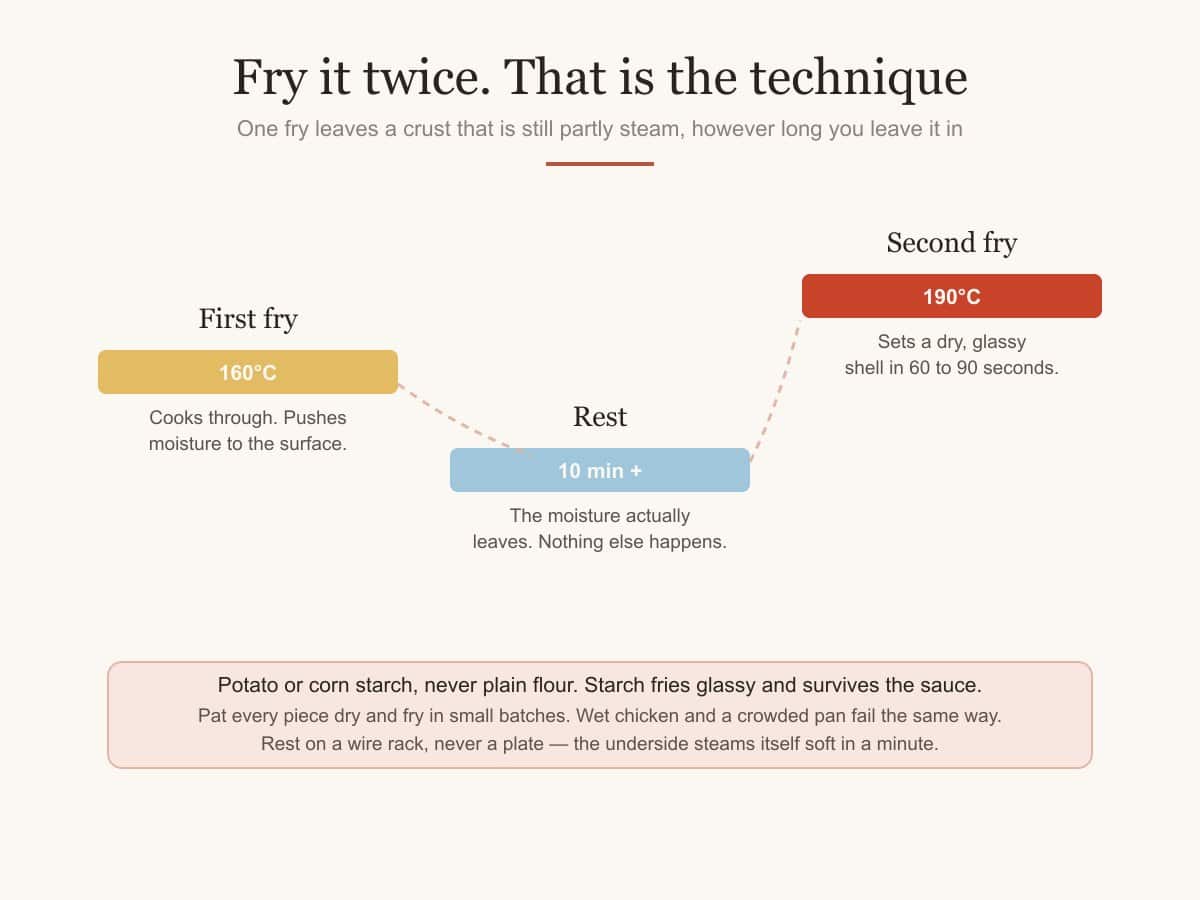
The double fry is the whole technique. First fry at around 160°C cooks the chicken through and drives moisture to the surface. The rest at room temperature lets that moisture escape. The second fry at around 190°C sets a dry crust.
Skip the second fry and you have fried chicken with a crust that is still partly steam.
Rest for at least ten minutes between fries. Longer is fine — shops hold par-fried chicken for much longer than that. See korean fried chicken for the full method.
The chicken went in wet
Surface water turns to steam, and steam is the enemy of crust. Pat every piece dry with kitchen paper before it meets the coating, and let brined or marinated chicken drain properly first.
The oil temperature also drops hard when wet food goes in, so the pieces absorb oil instead of sealing.
Fry in small batches. Crowding the pan does the same thing as wet chicken, by the same mechanism.
The coating is wrong
Potato starch or corn starch, not plain flour. Starch fries into a lighter, glassier shell that stays crisp under sauce; wheat flour makes a heavier crust that softens quickly.
A thin batter of starch and cold water — the consistency of single cream — gives the most reliable shell. A dry dredge works too and gives a rougher, craggier surface.
For dakgangjeong and yangnyeom-style sauced chicken, the starch coating is what lets it stay crisp after saucing at all.
It sat in the sauce, or on a plate
Sauce the chicken at the last possible moment and toss rather than soak. Thirty seconds in the pan with hot sauce coats it; two minutes softens it.
And never rest fried chicken on a plate or on kitchen paper — the underside steams. A wire rack, in a single layer, every time.
If you are frying in batches, hold the finished pieces on a rack in a low oven rather than stacking them.
Common questions
Why is Korean fried chicken fried twice?
The first fry at about 160°C cooks the meat and pushes moisture to the surface; the rest lets it escape; the second at about 190°C sets a dry crust. One fry leaves a crust that is still partly steam.
What starch is used for Korean fried chicken?
Potato starch, or corn starch. Both fry into a lighter, glassier shell than wheat flour and stay crisp under sauce, which is the point for yangnyeom and dakgangjeong.
How long between the two fries?
At least ten minutes, and longer does no harm — shops hold par-fried chicken far longer. The rest is when the surface moisture actually leaves.
How do I keep fried chicken crisp after saucing?
Toss it in hot sauce for about thirty seconds rather than letting it sit, and rest it on a wire rack, never a plate or kitchen paper, which steams the underside.
More to cook
All Ingredient & Substitute Guides
Why Is My Pajeon Soggy?
Soggy Korean pancake comes down to oil, batter temperature and wet fillings. The three fixes, and why stacking them undoes all of it.
Why Is My Rice Mushy?
Mushy short-grain rice usually comes from skipped rinsing or water measured before soaking. The ratios that work and how to rescue a wet pot.
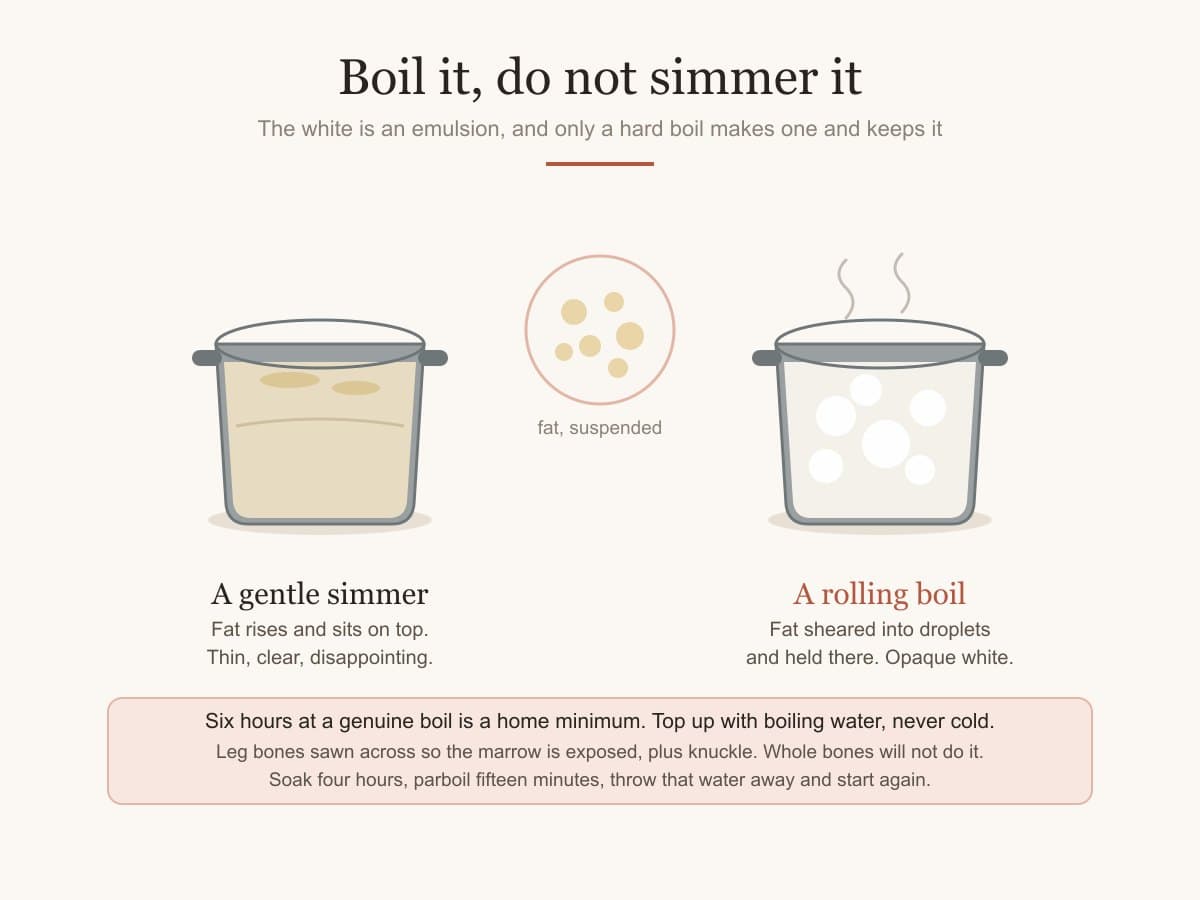
Why Is My Seolleongtang Not Milky?
A clear ox bone broth means you simmered when you should have boiled. The emulsion that makes seolleongtang white, and how to force it.