Did you know — Korean culture
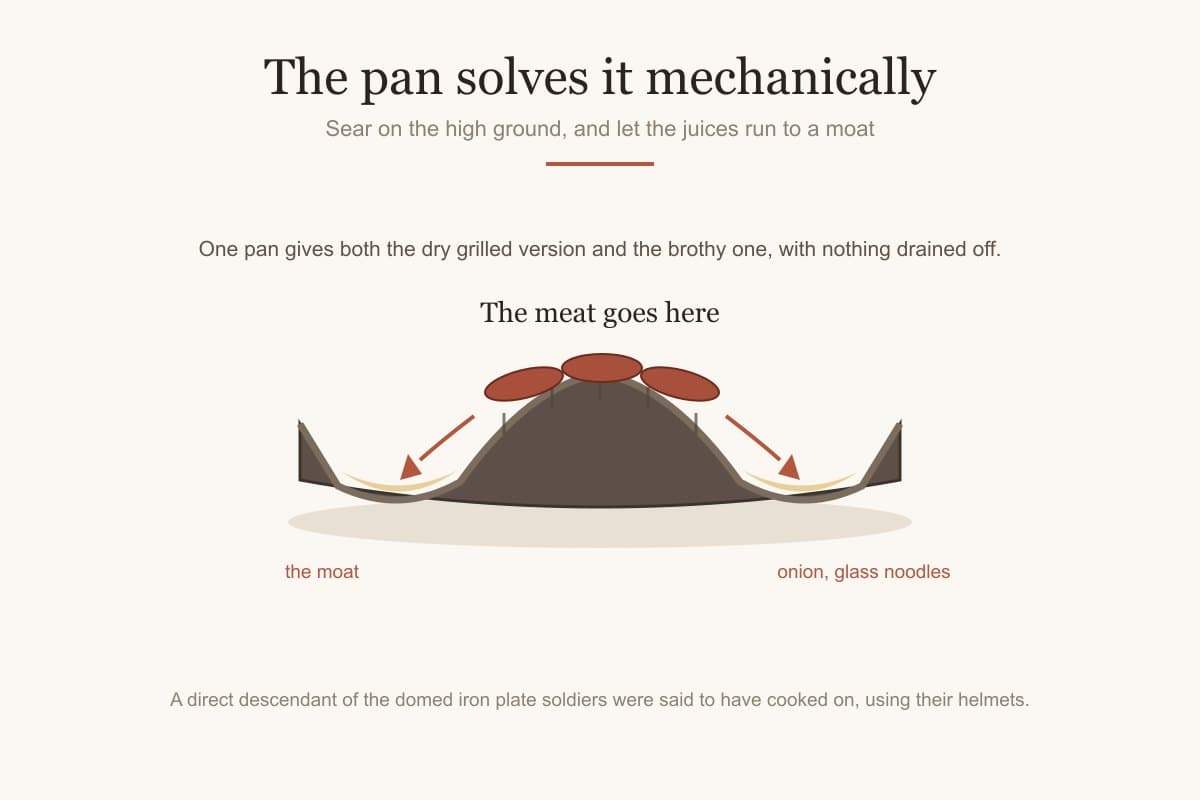
The domed bulgogi pan is a piece of engineering aimed at exactly this problem. Its ridged slope lets the meat sear on the high ground while the juices run down into a moat around the rim, where onion and glass noodles sit and cook in them. One pan produces both the dry grilled version and the brothy one at the same time, and nothing has to be drained or poured off. It is a direct descendant of the domed iron plate soldiers were said to have cooked on using their helmets.
Watery bulgogi and tough bulgogi have the same root cause and different symptoms. Both come from meat that boiled instead of searing.
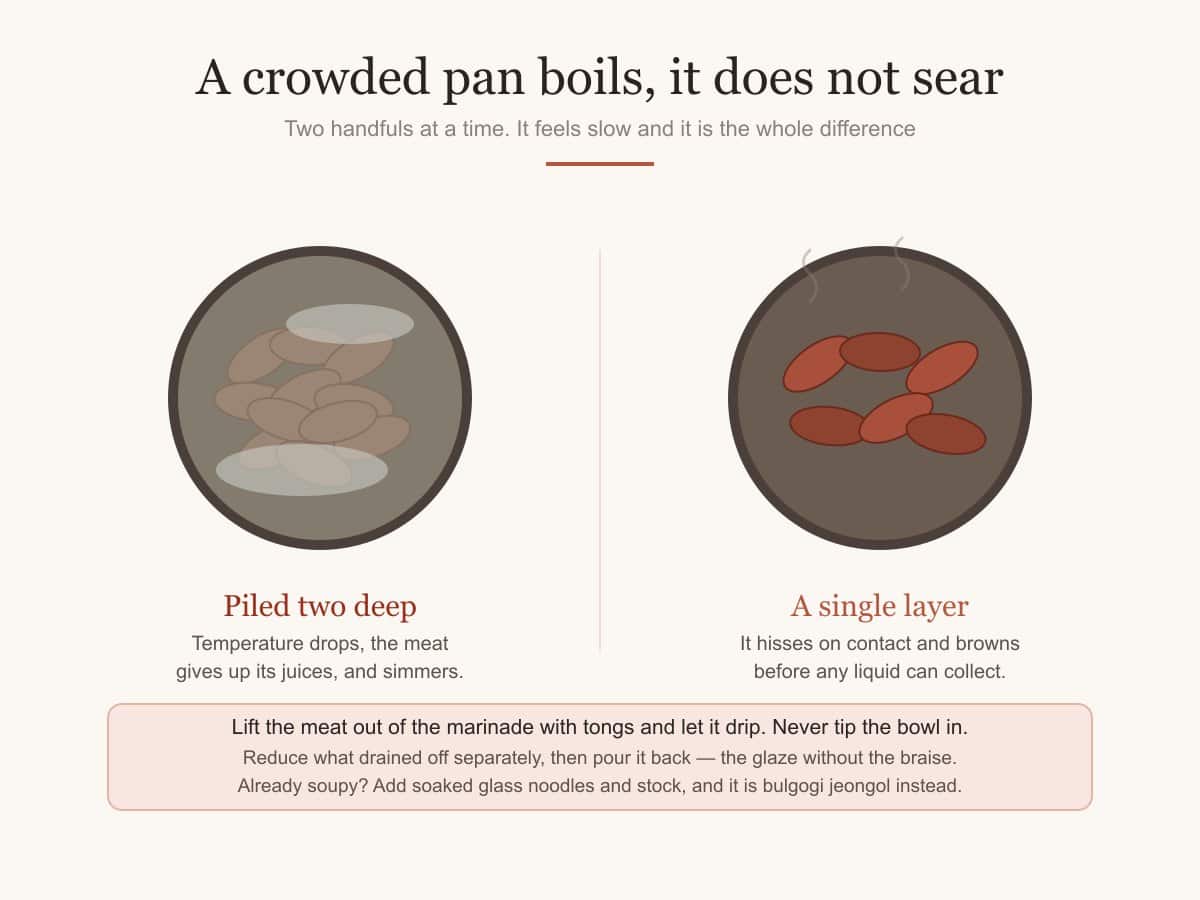
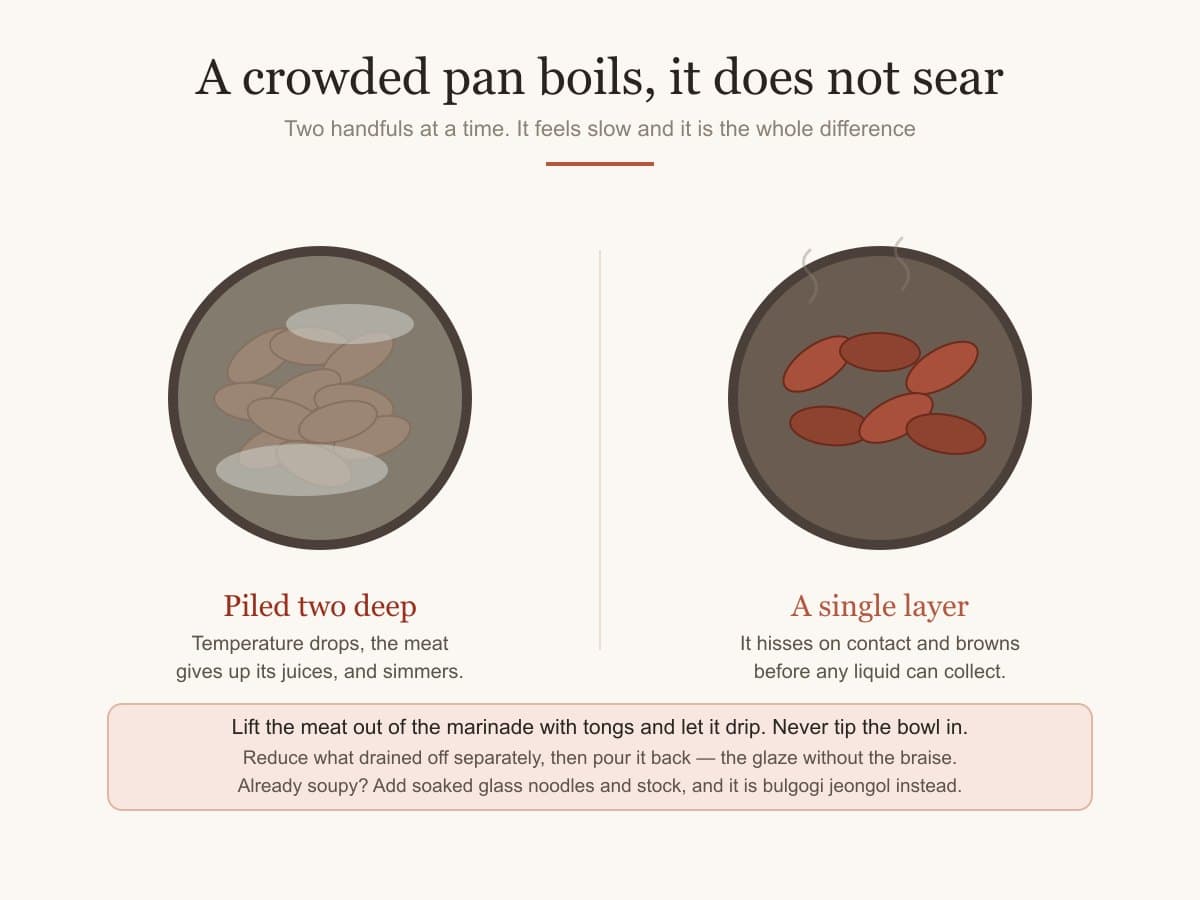
A crowded pan drops below searing temperature, the meat releases its juices, and then it simmers in them. Everything else follows.
Cook in batches, in a single layer
Two handfuls at a time in a large pan, maximum. It feels slow and it is the whole difference.
Meat piled two deep steams. You get grey meat and a pan of grey liquid, and no amount of further cooking browns it.
The pan has to be properly hot before the first batch — hot enough that the meat hisses immediately. Preheat for longer than feels necessary; thin slices cool a pan fast.
Drain the marinade off
Lift the meat out of the marinade with tongs and let it drip. Do not tip the bowl into the pan.
A bulgogi marinade is mostly liquid — soy, rice wine, pear juice — and pouring it in guarantees a simmer.
Keep what drains off. Reduce it separately in the pan after the meat is out and pour it back over at the end, which gives you the glaze without the braise.
Some water is the meat, and some is the pear
Thin-sliced beef gives up liquid readily, and grated Asian pear adds more. A marinade heavy on pear or onion purée is wetter than one that uses juice.
If you marinated overnight, expect more liquid still — the enzymes have had time to break the structure down.
Thirty minutes is enough for bulgogi. Longer gains little and costs texture.
Or make it on purpose
Bulgogi jeongol is the wet version and it is a real dish, not a failure. Thin meat, a lot of onion, dangmyeon noodles, mushrooms, and enough stock to half-cover it, cooked at the table in a shallow pan.
If a batch has gone soupy, add a handful of soaked glass noodles and some stock and call it that.
Bulgogi deopbap also wants some liquid — the sauce is the point when it goes over rice. The dry, seared version is the one for a grill plate and a lettuce leaf.
Common questions
Why does my bulgogi release so much water?
The pan was crowded or not hot enough, so the meat boiled in its own juices instead of searing. Cook two handfuls at a time in a properly preheated pan.
Should I pour the marinade into the pan?
No. Lift the meat out with tongs and let it drip. Reduce the leftover marinade separately afterwards and pour it back as a glaze.
How long should bulgogi marinate?
About thirty minutes. The slices are thin, so longer gains little, and an overnight marinade with grated pear releases noticeably more liquid in the pan.
Is wet bulgogi always wrong?
No. Bulgogi jeongol is deliberately brothy, with onion, glass noodles and stock, cooked at the table. A soupy batch converts into it with a handful of noodles.
More to cook
All Ingredient & Substitute Guides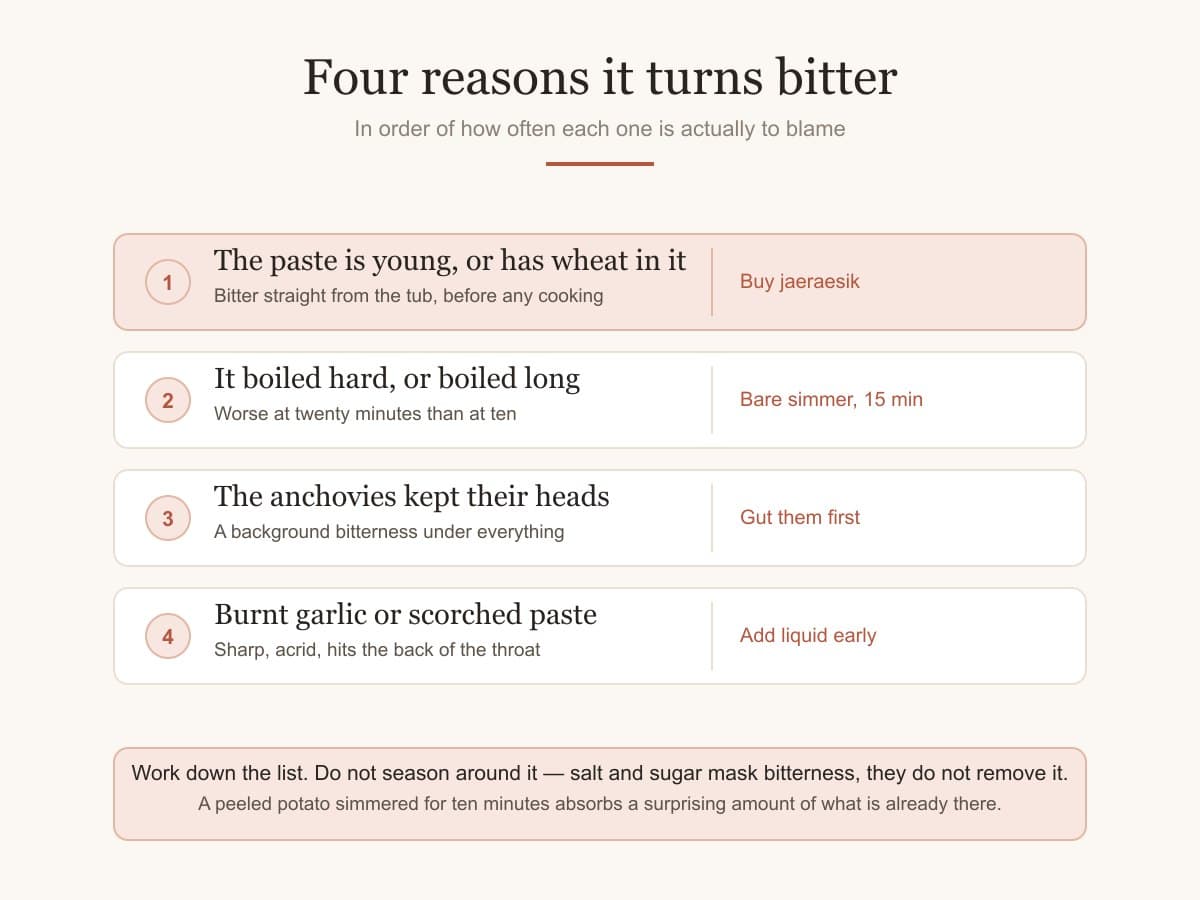
Why Is My Doenjang Jjigae Bitter?
Bitterness in doenjang jjigae almost always comes from the paste or the boil, not the vegetables. How to find which, and how to fix it mid-pot.
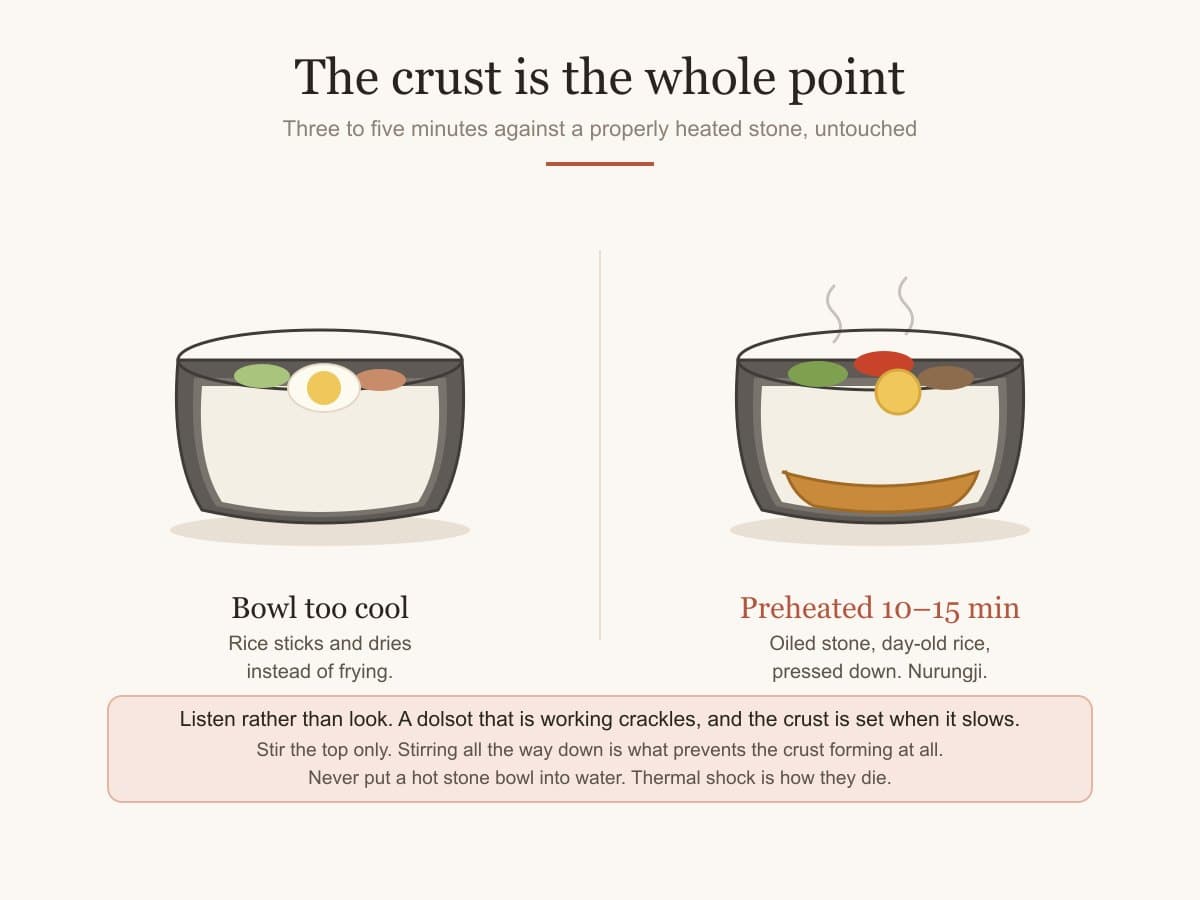
Why Is My Dolsot Bibimbap Not Crispy?
No crust at the bottom means the stone bowl was not hot enough or the rice was too wet. How to build nurungji, and the sound it makes.
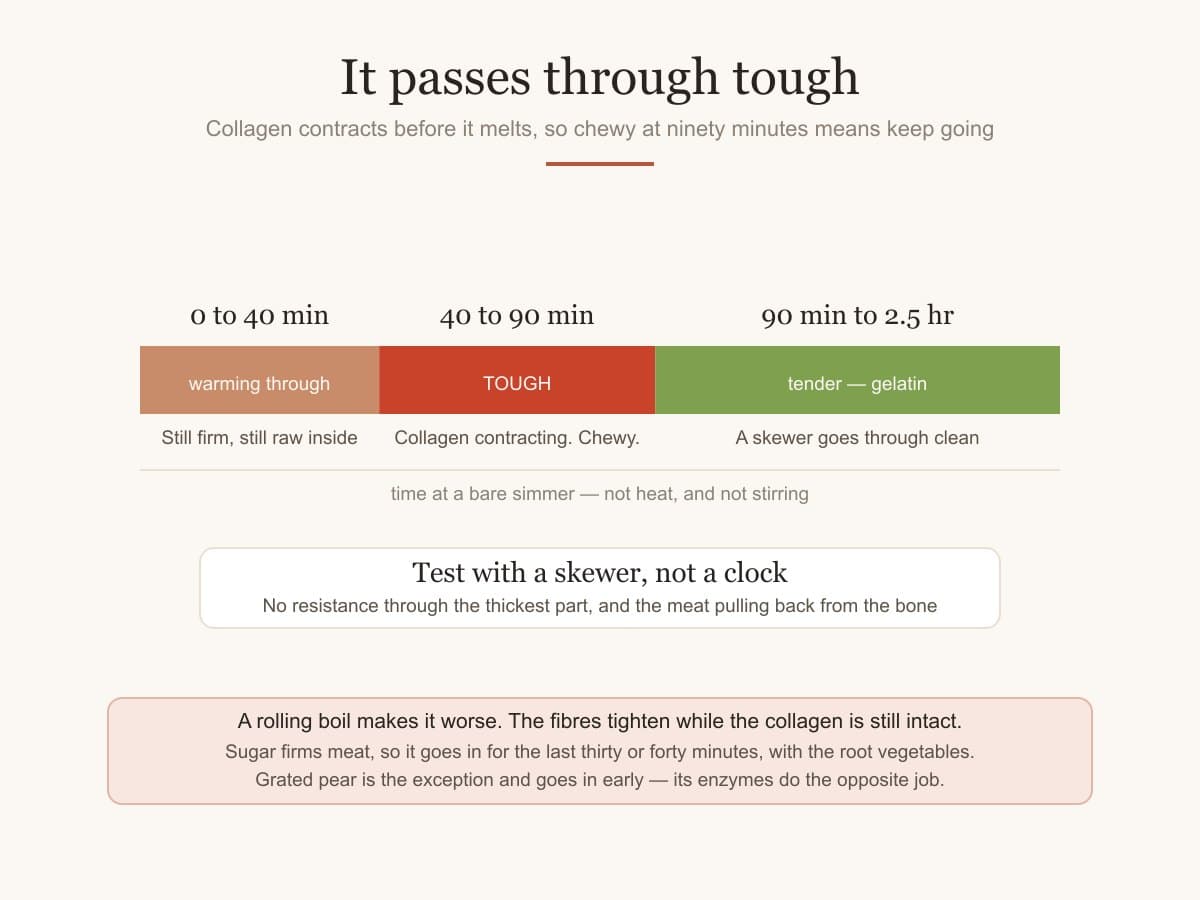
Why Is My Galbijjim Tough?
Tough braised short rib is almost always undercooked, not overcooked. The collagen window, the parboil, and why the sugar goes in late.