Did you know — Korean culture
The tenderising in a bulgogi marinade is enzymatic rather than chemical, which is why it has a deadline that a salt or acid marinade does not. Protease enzymes in Asian pear keep breaking down muscle protein for as long as they are warm and wet, and they do not stop at pleasantly tender. Freezing halts them completely, so beef frozen in its marinade is the one case where longer genuinely is safer — it marinates as it thaws and cannot overshoot.
Bulgogi that comes out chewy is a disappointing result from an expensive ingredient, and the usual instinct — marinate it longer — makes it worse rather than better.
The marinade is rarely the problem. Three things decide whether bulgogi is tender: what you bought, how thin you cut it, and how much of it went into the pan at once.
The cut comes first
Ribeye is the traditional choice and still the best. The marbling melts into the marinade sugars and keeps the meat moist through fast, high heat. Sirloin is the sensible everyday alternative. Chuck works if it is sliced thin enough.
What does not work is a lean, thick cut. Bulgogi is cooked hot and fast, and a thick slice cannot cook through in that window without drying out. If you bought stewing beef, cook a stew — see jangjorim or kalbi jjim.
Slice thinner than feels reasonable
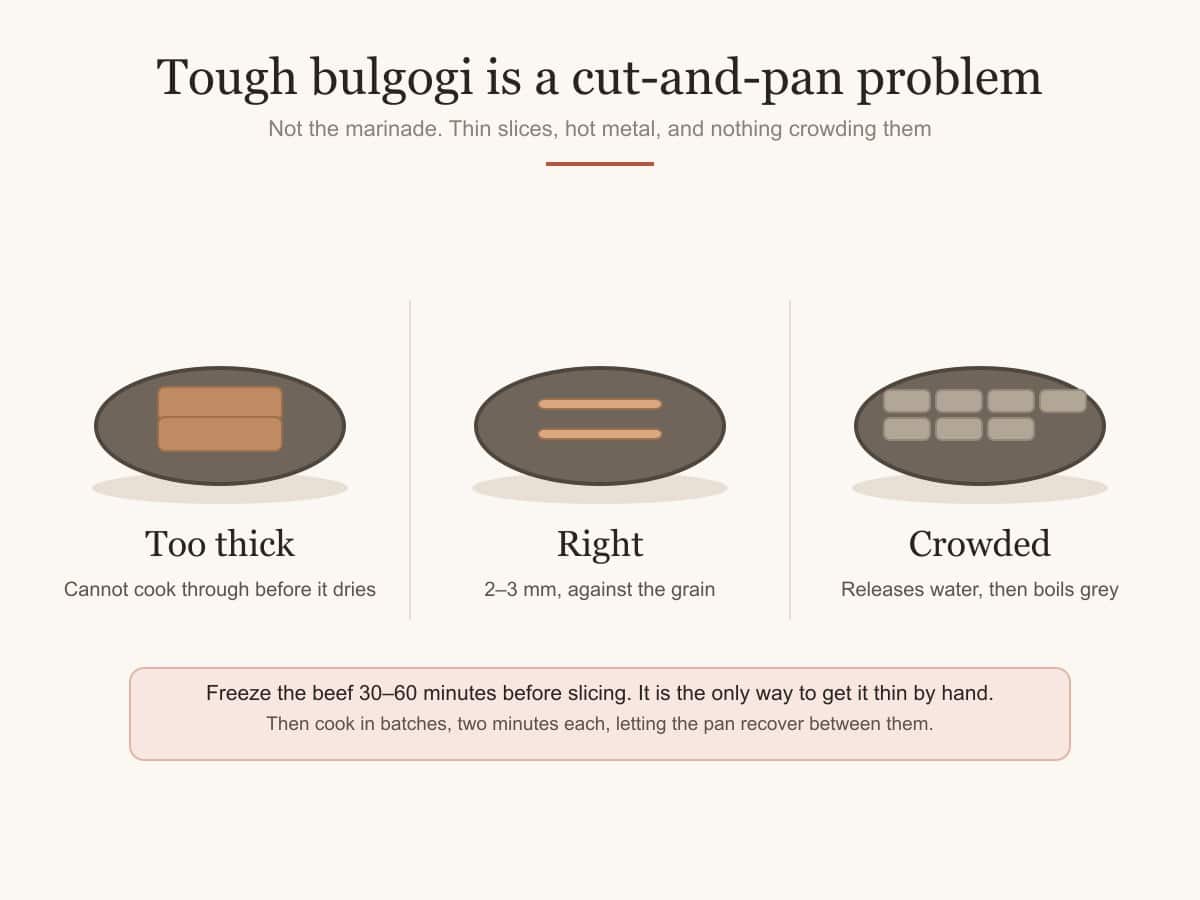
Two to three millimetres, against the grain. Thinner than most people cut by instinct.
Freeze the beef for 30 to 60 minutes first. Firm but not solid. This is the only practical way to get that thin by hand, and it is what every recipe quietly assumes you already know.
Or buy it pre-sliced from a Korean grocer, where it is sold for exactly this and labelled bulgogi-gam. That removes the problem entirely.
Do not crowd the pan
This is the one that catches careful cooks. Thin beef releases liquid quickly. Put too much in at once and the liquid cannot evaporate, so the meat boils in its own marinade and comes out grey and chewy instead of seared.
Cook in batches. Two minutes each. Let the pan come back up to temperature in between.
Lift the beef out of the marinade rather than tipping the bowl in. The excess liquid is what floods the pan. Reduce it separately for a minute if you want it as a sauce.
Marinating longer will not help
Standard bulgogi marinade contains Asian pear, whose enzymes genuinely tenderise. But they do not stop when the meat is tender enough.
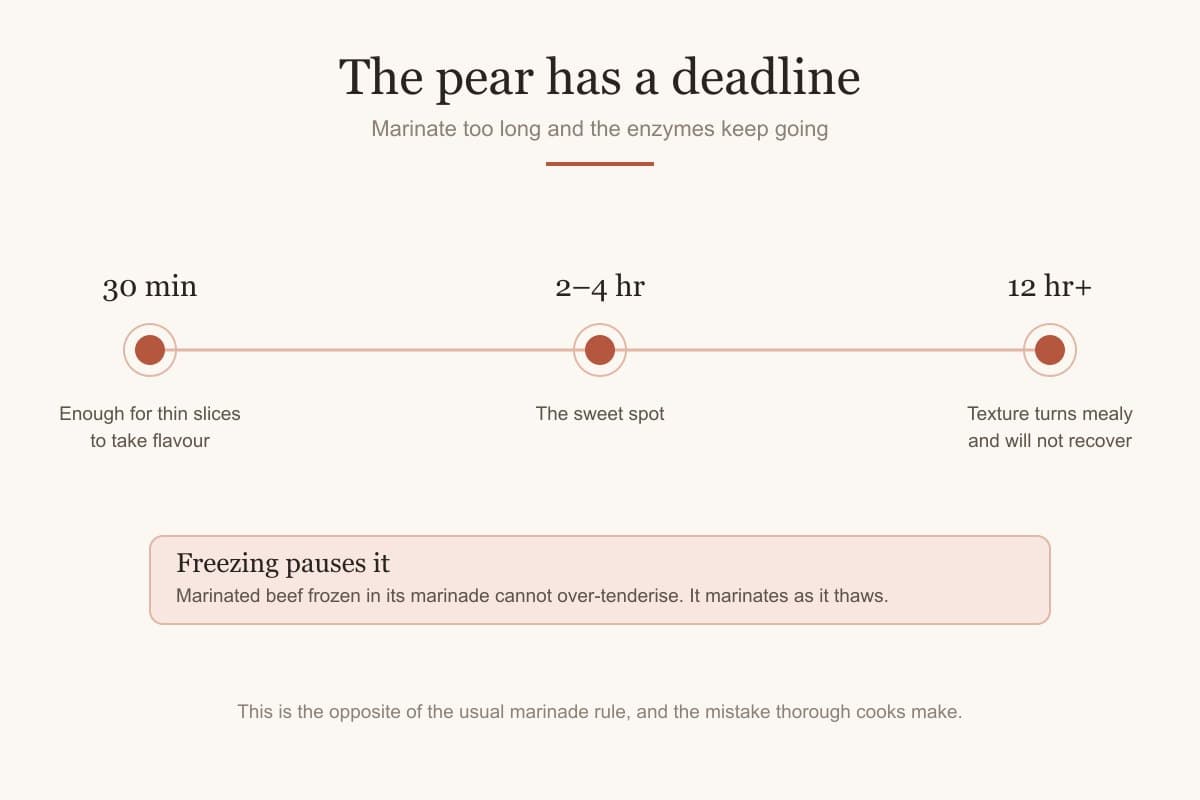
Two to four hours is the sweet spot. Beyond about twelve, the texture turns mealy and will not recover. That is the opposite of the usual marinade rule, and it is the mistake thorough cooks make.
If you want to prepare further ahead, freeze the beef in its marinade. The enzymes are inactive while frozen, so it marinates as it thaws and cannot overshoot.
Common questions
What is the best cut for tender bulgogi?
Ribeye, sliced 2–3 mm against the grain. The marbling is what keeps it moist over high heat. Sirloin is a good everyday alternative, and pre-sliced bulgogi beef from a Korean grocer removes the problem entirely.
Does marinating bulgogi longer make it more tender?
Only up to a point, then it reverses. Two to four hours is ideal. Past about twelve hours the enzymes in the Asian pear break the meat down too far and the texture goes mealy.
Why did my bulgogi go grey instead of browning?
The pan was crowded or not hot enough, so the beef boiled in the liquid it released. Cook in small batches over high heat and lift the meat out of the marinade rather than pouring it all in.
Can I make bulgogi tender without a pear?
Yes. Grated apple does much of the same work, grated onion helps, and slicing thinner compensates for a good deal. Kiwi tenderises very aggressively — use a quarter as much and no more than half an hour.
More to cook
All Ingredient & Substitute Guides
Why Is My Doenjang Jjigae Bitter?
Bitterness in doenjang jjigae almost always comes from the paste or the boil, not the vegetables. How to find which, and how to fix it mid-pot.
Why Is My Gyeranjjim Watery?
Watery or weeping steamed egg comes down to the liquid ratio and the heat. The numbers that work, and how to tell which one went wrong.
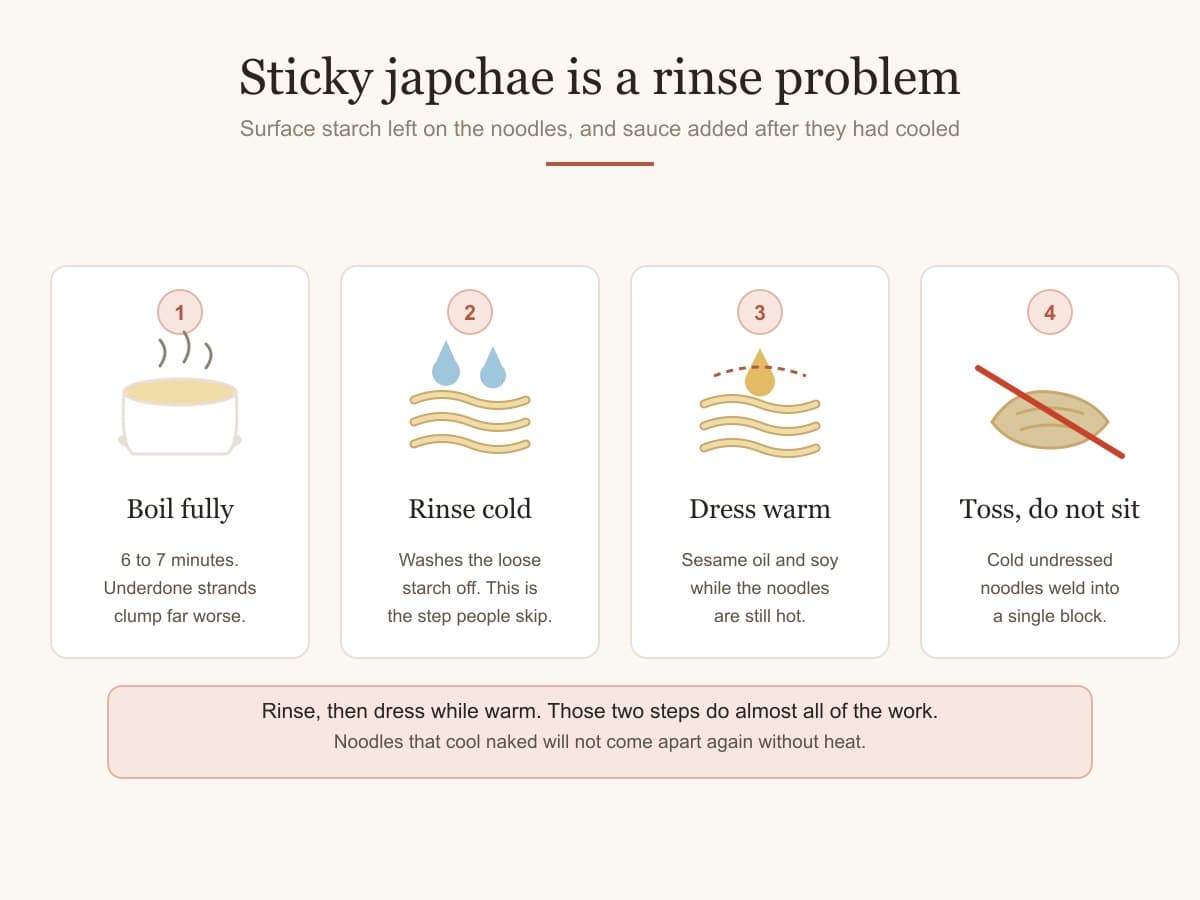
Why Is My Japchae Sticky?
Clumped japchae comes from the rinse and the timing, not the sauce. How to keep dangmyeon separate and springy from pan to plate.