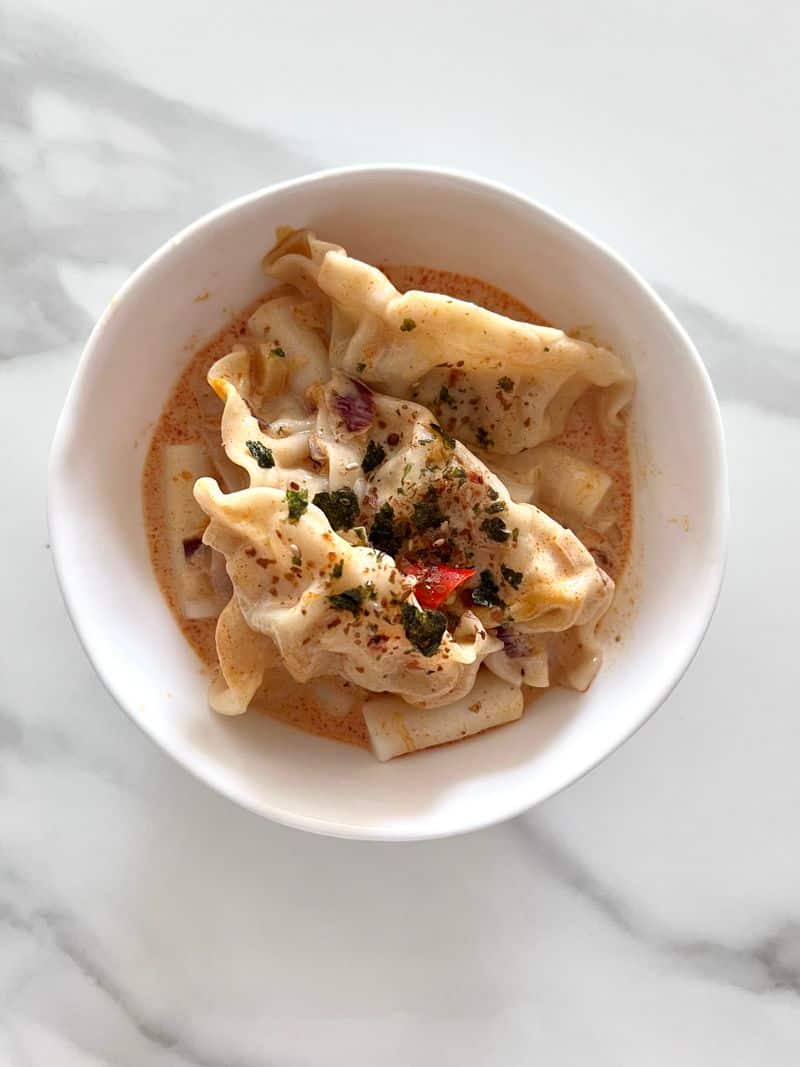
Steps
- 1
Squeeze excess liquid from the chopped kimchi.
- 2
Combine kimchi, pork, tofu, chives, sesame oil, salt, and pepper into a filling.
- 3
Place a spoonful of filling in each wrapper, wet the edges, and fold and seal into dumplings.
- 4
Bring the stock to a simmer and season with soy sauce.
- 5
Gently lower the dumplings into the simmering broth.
- 6
Simmer until the dumplings float and the wrappers turn translucent, 6-8 minutes — don't boil hard, which can split the wrappers.
- 7
Drizzle in beaten egg in the last minute if using, stirring gently for ribbons.

Did you know — Korean culture
Mandu (Korean dumplings) trace back through Central Asian and Chinese trade routes, adapted over centuries into a distinctly Korean form — kimchi mandu-guk became a common way to use kimchi that's fermented past its prime for eating fresh, turning it into the backbone of a whole dish instead of waste.
Using kimchi that's genuinely well-fermented and sour, not fresh or mild, makes a real difference in this dish. Under-fermented kimchi doesn't have the depth or tang to carry the filling on its own, and the broth ends up tasting flat instead of having that distinctive sour-savory backbone kimchi mandu-guk is known for.
Simmering gently rather than at a hard boil is what keeps the dumplings intact. A vigorous boil knocks the dumplings against each other and against the pot, which is exactly how wrappers split and the filling spills out into the broth — a slow, steady simmer lets them cook through without the agitation.
Mandu (Korean dumplings) trace back through Central Asian and Chinese trade routes, adapted over centuries into a distinctly Korean form — kimchi mandu-guk specifically became a common way to use kimchi that's fermented past its prime for eating fresh, turning an ingredient that's "too sour" for the table into the backbone of a whole dish.
Troubleshooting
Dumplings splitting in the broth? The broth was likely at a hard boil — drop to a gentle simmer once the dumplings go in.
Broth tastes flat? The kimchi probably wasn't sour enough — this dish specifically benefits from well-fermented kimchi rather than fresh.
Filling leaking out? The wrapper edges weren't sealed tightly enough — press firmly and make sure there's no gap before they go into the pot.
Recommended products
- Round dumpling wrappers
- Anchovy-kelp stock ingredients
More to cook
All Stews & Soups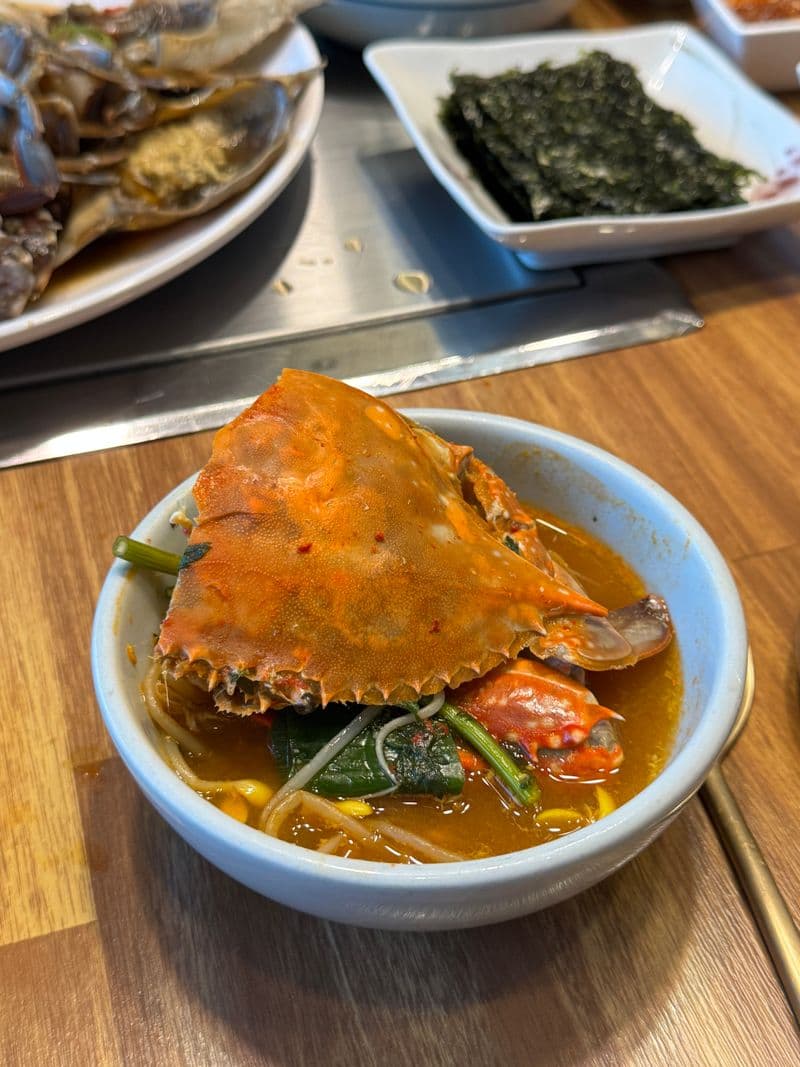
Kkotgetang (Blue Crab Stew)
Why the crab goes in at the very end, not the start, and how building the broth first is what keeps the meat from turning rubbery.
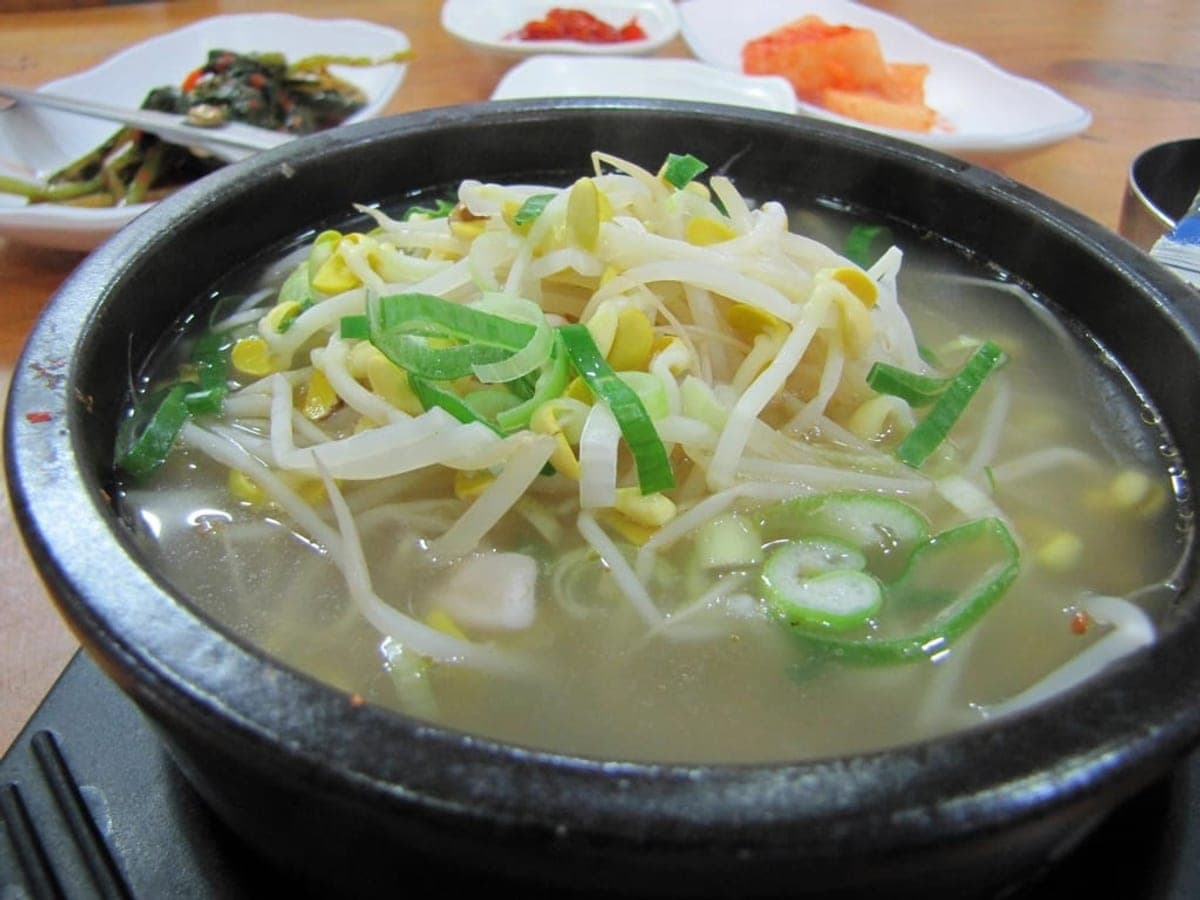
Kongnamul Gukbap (Bean Sprout Soup with Rice)
Why the lid on a pot of bean sprouts must stay either fully on or fully off, and how the rice goes into the bowl rather than being cooked in the broth.
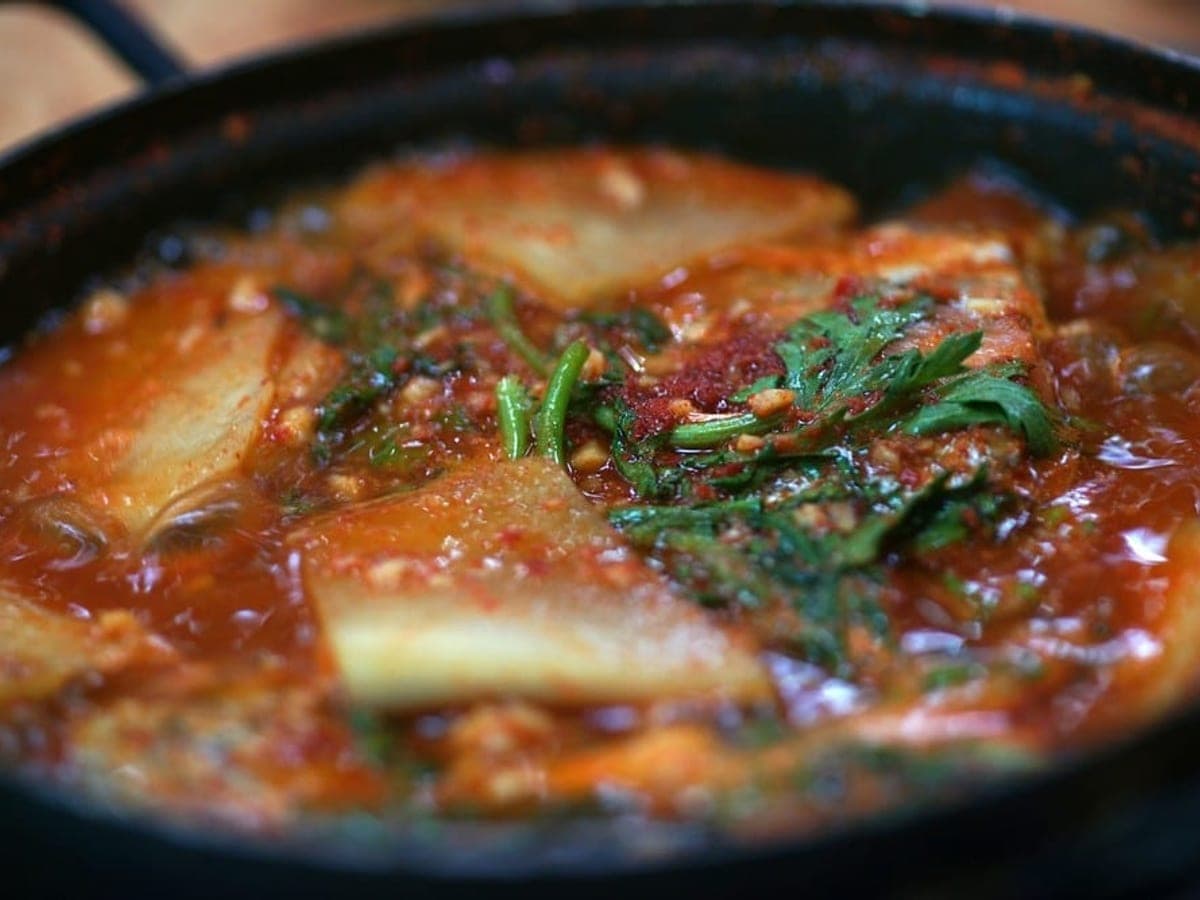
Maeuntang (Spicy Fish Stew)
Why maeuntang is built from the fish bones and head rather than the fillets, and why the fish goes in last and is never stirred once it does.