Steps
- 1
Bring the water or stock to a boil in a wide pot.
- 2
Stir in gochugaru, gochujang, soy sauce, garlic, and ginger and simmer 5 minutes to build the base broth.
- 3
Add the daikon and simmer until slightly softened, about 5 minutes.
- 4
Add the zucchini and bean sprouts.
- 5
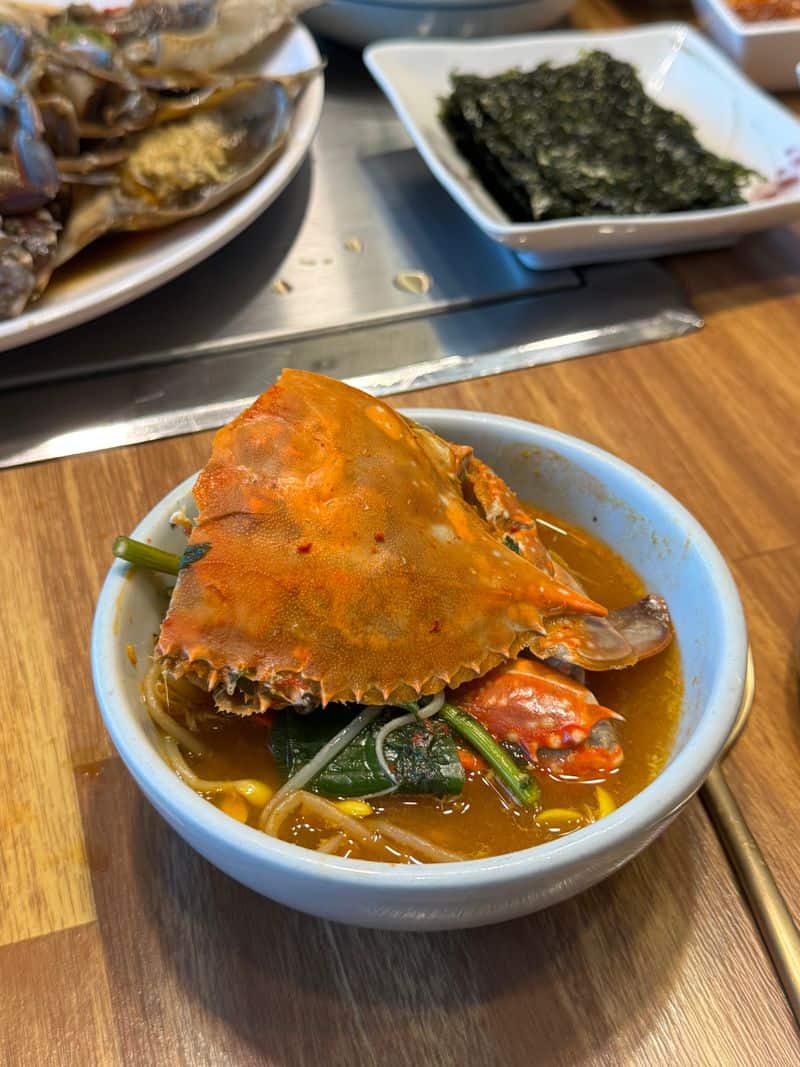
Add the crab halves last and simmer just until the shells turn bright orange and the meat is opaque, 6-8 minutes — no longer.
- 6
Add the green onions and chili in the final minute.
- 7
Serve immediately, hot, straight from the pot.

Did you know — Korean culture
Blue crab — kkotge, literally "flower crab" for the pattern on its shell — has long been a prized catch along Korea's western coast, and kkotgetang is typically made with the crab left whole specifically because the shell and roe add flavor to the broth that fillets alone can't.
Building the spicy broth completely before the crab ever touches the pot is the real technique here, not an optional order of operations. Crab meat turns from tender to rubbery fast once it's cooked, so every extra minute the crab spends simmering while the broth is still coming together is a minute working against the texture. Getting the broth's seasoning and other vegetables sorted first means the crab only needs a short, final simmer.
Watching for the shell to turn bright orange is a more reliable doneness cue than timing alone, since crab size varies — the color change happens fast and predictably right as the meat finishes cooking, which makes it easy to catch the right moment even without exact timing.
Blue crab (kkotge, literally "flower crab" for the pattern on its shell) has long been a prized catch along Korea's western coast, and kkotgetang is a common way to prepare it whole specifically because the shell and roe add flavor to the broth that filleted crab meat alone wouldn't provide.
Troubleshooting
Crab meat came out rubbery? It was almost certainly overcooked — 6-8 minutes at a simmer is usually enough once the broth is already built and hot.
Broth tastes flat despite the crab? Build the spice base fully before the crab goes in — a broth that's under-seasoned when the crab arrives won't catch up in the short cooking window left.
Vegetables still firm when the crab is done? Stagger them by how long each takes — daikon needs a real head start, while bean sprouts and zucchini can go in closer to the crab.
Recommended products
- Wide stock pot
More to cook
All Stews & Soups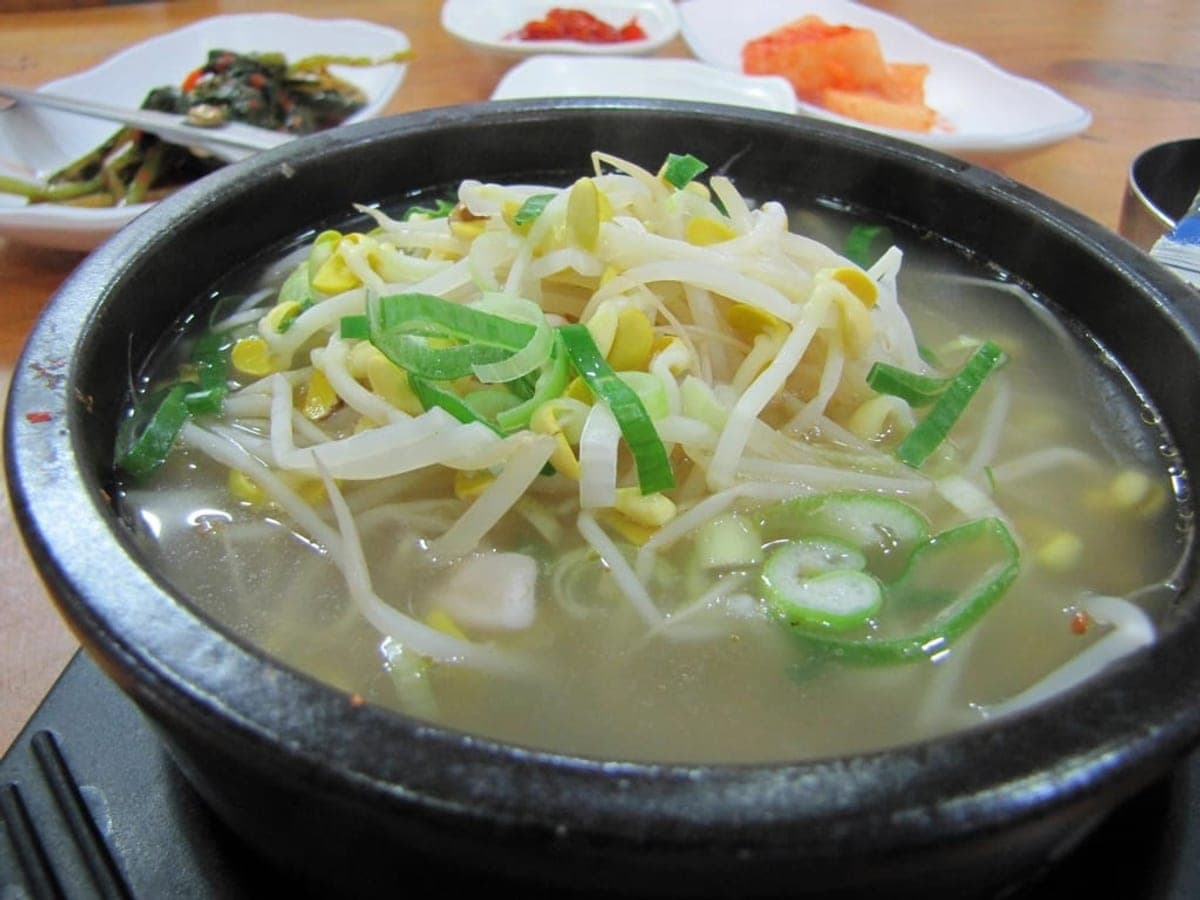
Kongnamul Gukbap (Bean Sprout Soup with Rice)
Why the lid on a pot of bean sprouts must stay either fully on or fully off, and how the rice goes into the bowl rather than being cooked in the broth.
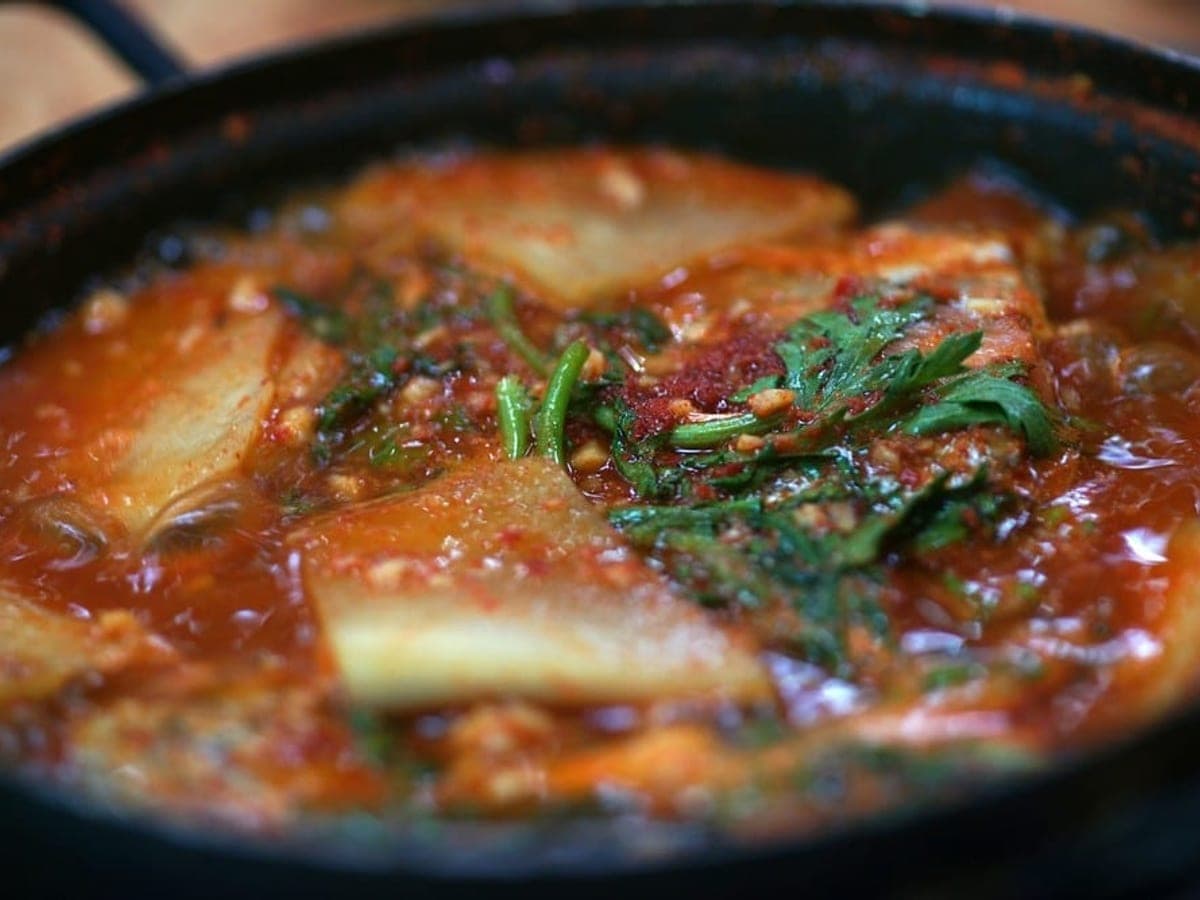
Maeuntang (Spicy Fish Stew)
Why maeuntang is built from the fish bones and head rather than the fillets, and why the fish goes in last and is never stirred once it does.
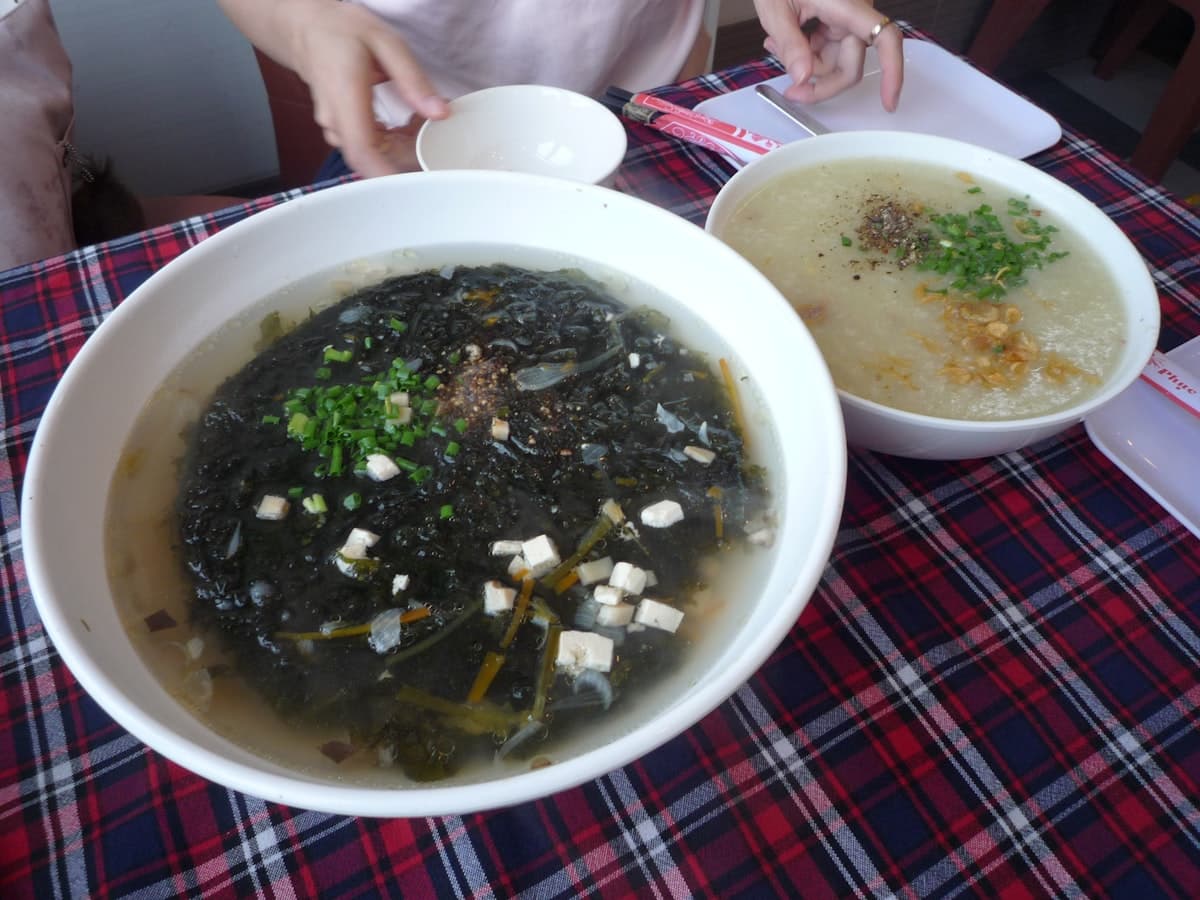
Miyeok-guk (Seaweed Soup)
The soak-and-sauté technique behind miyeok-guk, and why this simple soup is Korea's traditional birthday dish.