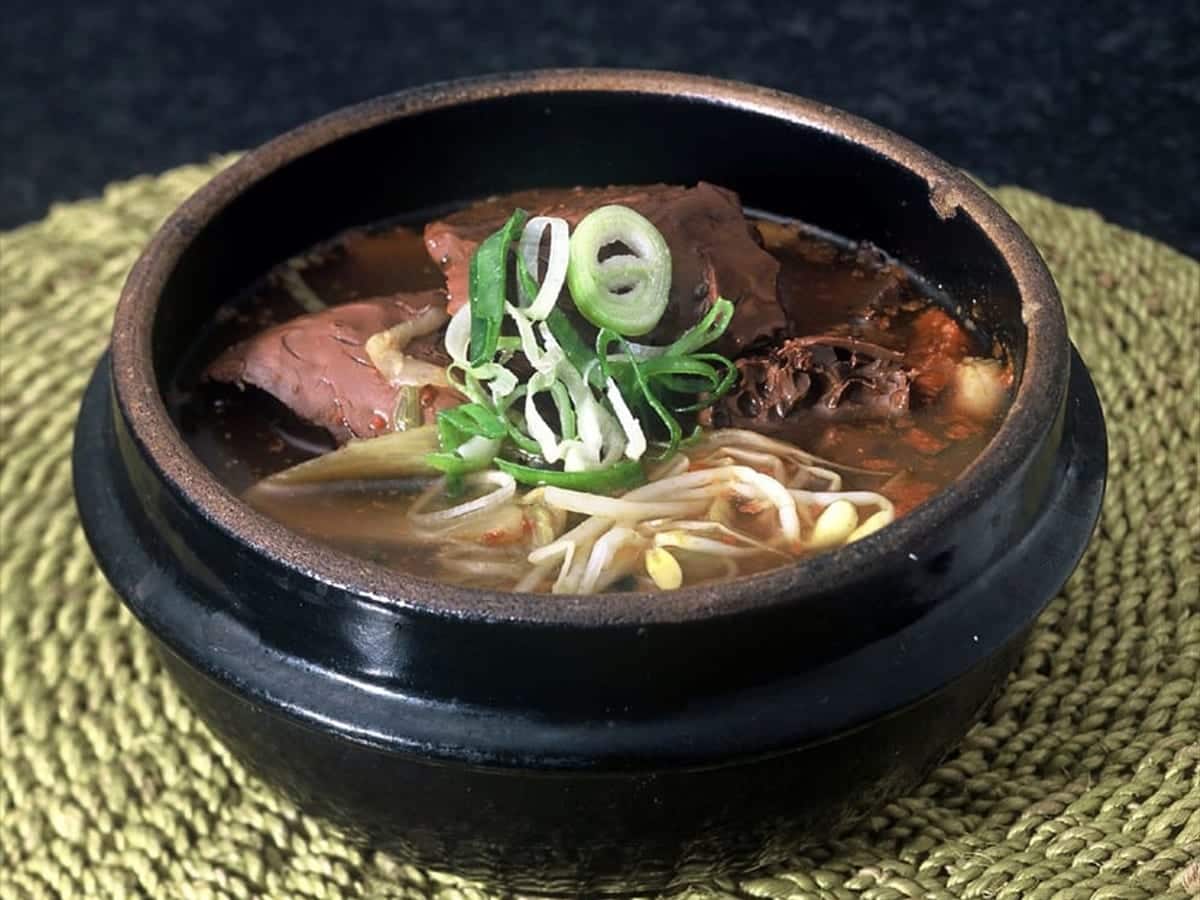
Photo: KOREA.NET - Official page of the Republic of Korea · CC BY-SA
Steps
- 1
Soak the ox bones in cold water 2 hours, changing the water twice.
- 2
Parboil the bones 10 minutes, discard that water, and rinse both bones and pot.
- 3
Simmer the bones in fresh water 2-3 hours until the broth turns milky.
- 4
Add the brisket for the last hour, then remove and slice it.
- 5
Blanch the outer cabbage leaves until pliable and cut into wide strips.
- 6
Season the broth with doenjang, gochugaru, garlic and pepper.
- 7
Add the cabbage and simmer 15 minutes, then add bean sprouts for the final 5.
- 8
Return the sliced brisket, adjust salt, and finish with green onion.
Did you know — Korean culture
Haejangguk translates literally as soup to chase away a hangover, and the category is old enough to appear in Joseon-era records. Seoul has restaurants that open through the night specifically to serve it, and the regional variations are strongly held - Jeonju's is built on bean sprouts, while the Seoul version leans on ox bones and cabbage.
The broth is the point and it cannot be rushed. Ox bones need two to three hours before they give up enough collagen to turn the liquid milky and give it body - a quick stock produces a thin soup that tastes like seasoned water no matter how much doenjang goes in. The soak and parboil at the start are the same clarity step as in galbitang.
Cabbage and bean sprouts go in at different times because they want completely different treatment. The tough outer cabbage leaves need a full fifteen minutes to soften into something silky; bean sprouts need five and turn limp past that. Adding them together means one of them is wrong.
Doenjang rather than gochujang is what makes this taste like haejangguk rather than a generic red stew. It brings a deep, savoury saltiness that suits a broth built on bones, and the gochugaru is there for warmth rather than to lead.
Korea has more than one hangover soup, and gamjatang — the pork-bone stew — is the other one people reach for. It is heavier and takes considerably longer, but the pork neck bones give a broth with far more body.
Troubleshooting
Broth thin and pale? Not simmered long enough. Ox bones need 2-3 hours to turn the liquid milky.
Cabbage tough? Outer leaves need blanching first and then a full 15 minutes in the soup.
Soup too salty? Doenjang varies enormously by brand. Add two-thirds of it, taste, then decide.
Recommended products
- Korean pantry staples
More to cook
All Stews & Soups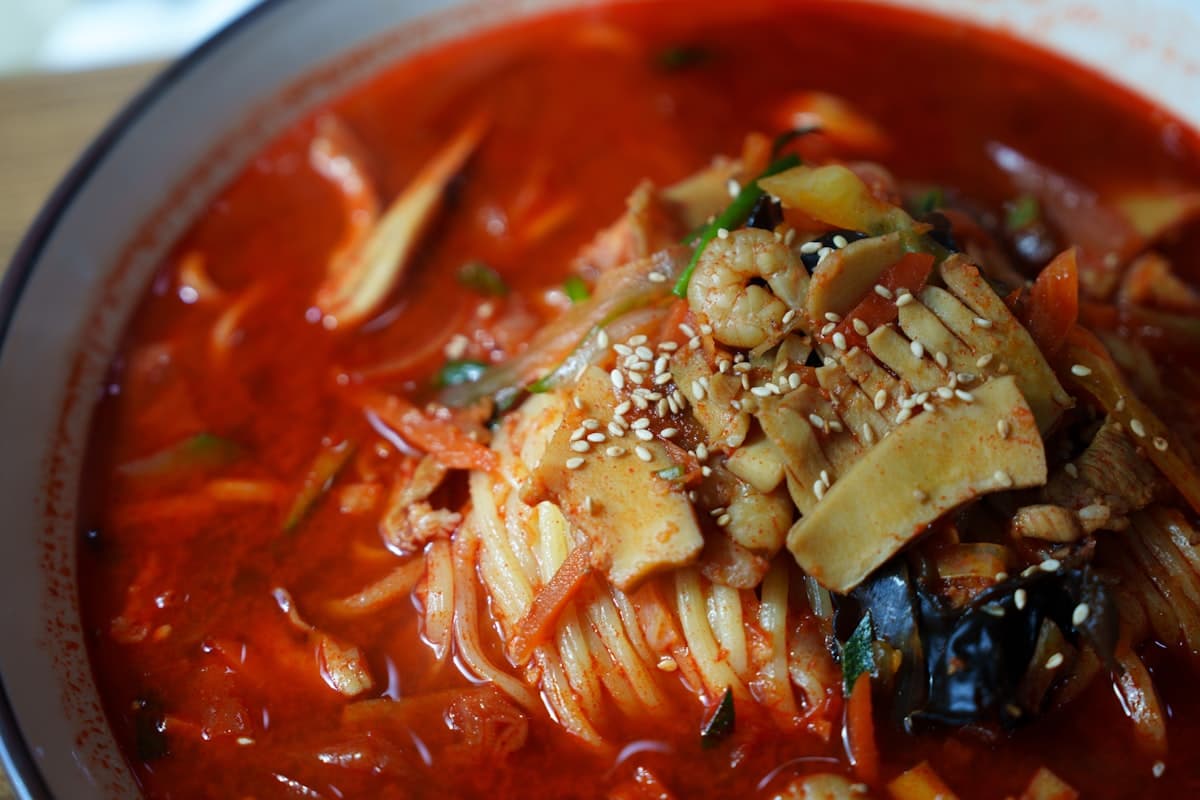
Jjamppong (Spicy Seafood Noodle Soup)
The high-heat stir-fry-then-simmer technique behind jjamppong's deep red broth, and why the seafood goes in in stages, not all at once.
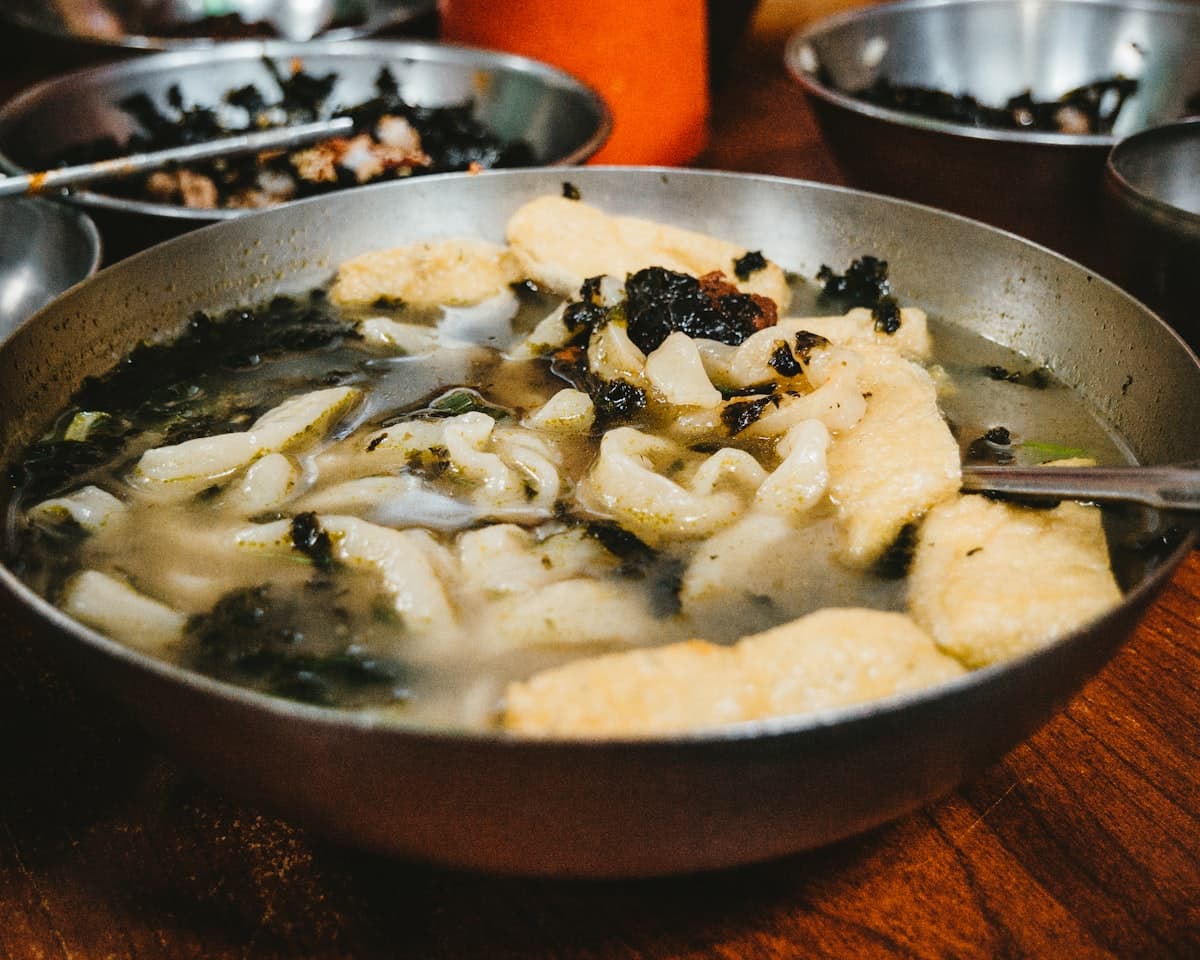
Kalguksu (Knife-Cut Noodle Soup)
The dough-resting step behind kalguksu's chewy hand-cut noodles, and why a real anchovy-kelp stock matters more than in most noodle soups.
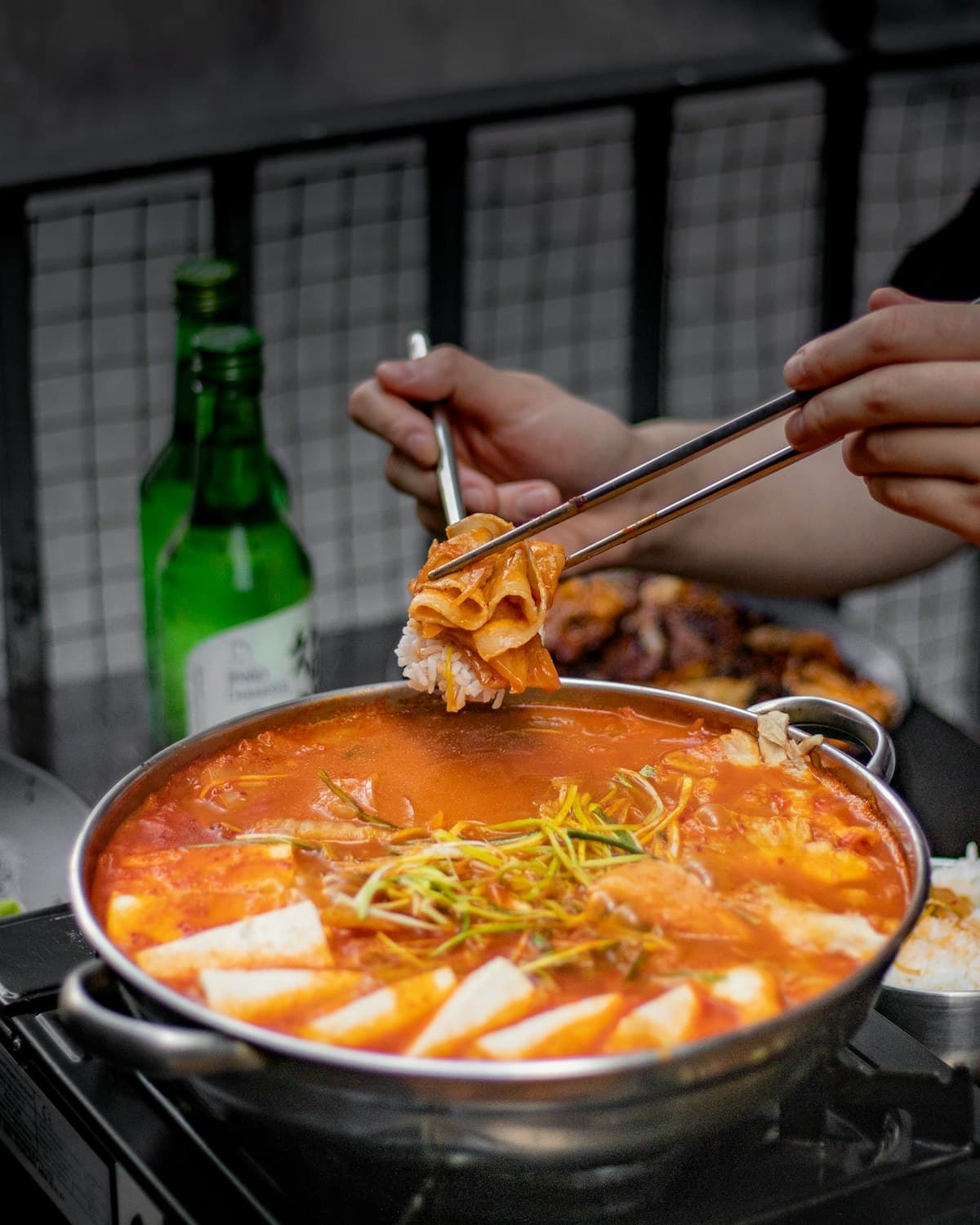
Kimchi Jjigae (Kimchi Stew with Pork Belly)
Why this stew wants your sourest, most overripe kimchi — and the simmer time that turns pork belly and old kimchi into something better than either started as.