Steps
- 1
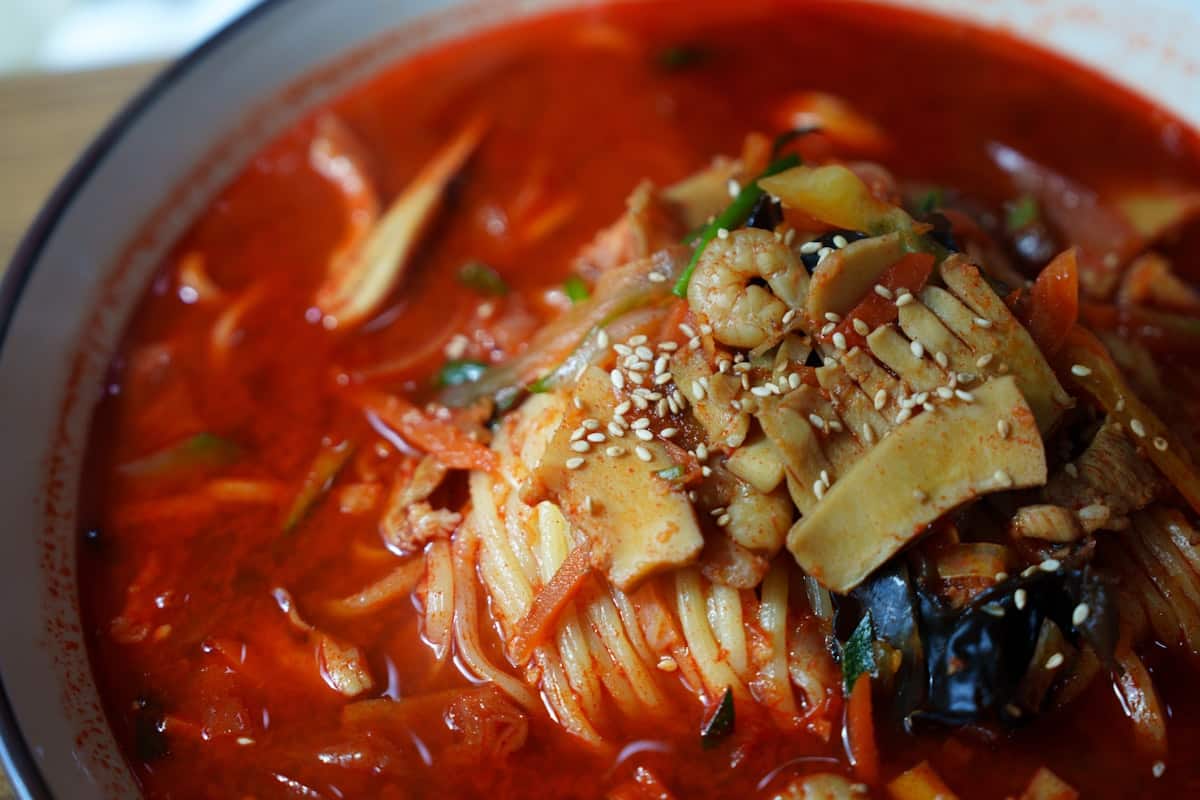
Heat oil in a large pot over high heat and add garlic and gochugaru, stirring quickly to bloom the chili oil without burning it.
- 2
Add the onion, cabbage, and carrot, and stir-fry over high heat for 2-3 minutes.
- 3
Add the gochujang and stir to coat the vegetables.
- 4
Pour in the stock and bring to a rolling boil.
- 5
Add the mussels first and cook 2 minutes, then add the squid and shrimp, cooking just until opaque, about 2-3 minutes more.
- 6
Meanwhile, boil the noodles separately according to package directions, then drain.
- 7
Season the broth with salt to taste.
- 8
Place the noodles in bowls and ladle the hot broth and seafood over them.
Did you know — Korean culture
Jjamppong is Korean-Chinese fusion food, not an import from China itself — it grew out of Chinese immigrant communities in Korean port cities, who adapted a milder Chinese noodle soup to local tastes by loading it with gochugaru-based heat. Jjajangmyeon and jjamppong sit side by side on nearly every Korean-Chinese restaurant menu as the two standard choices, sweet-savory versus fiery, for exactly that reason.
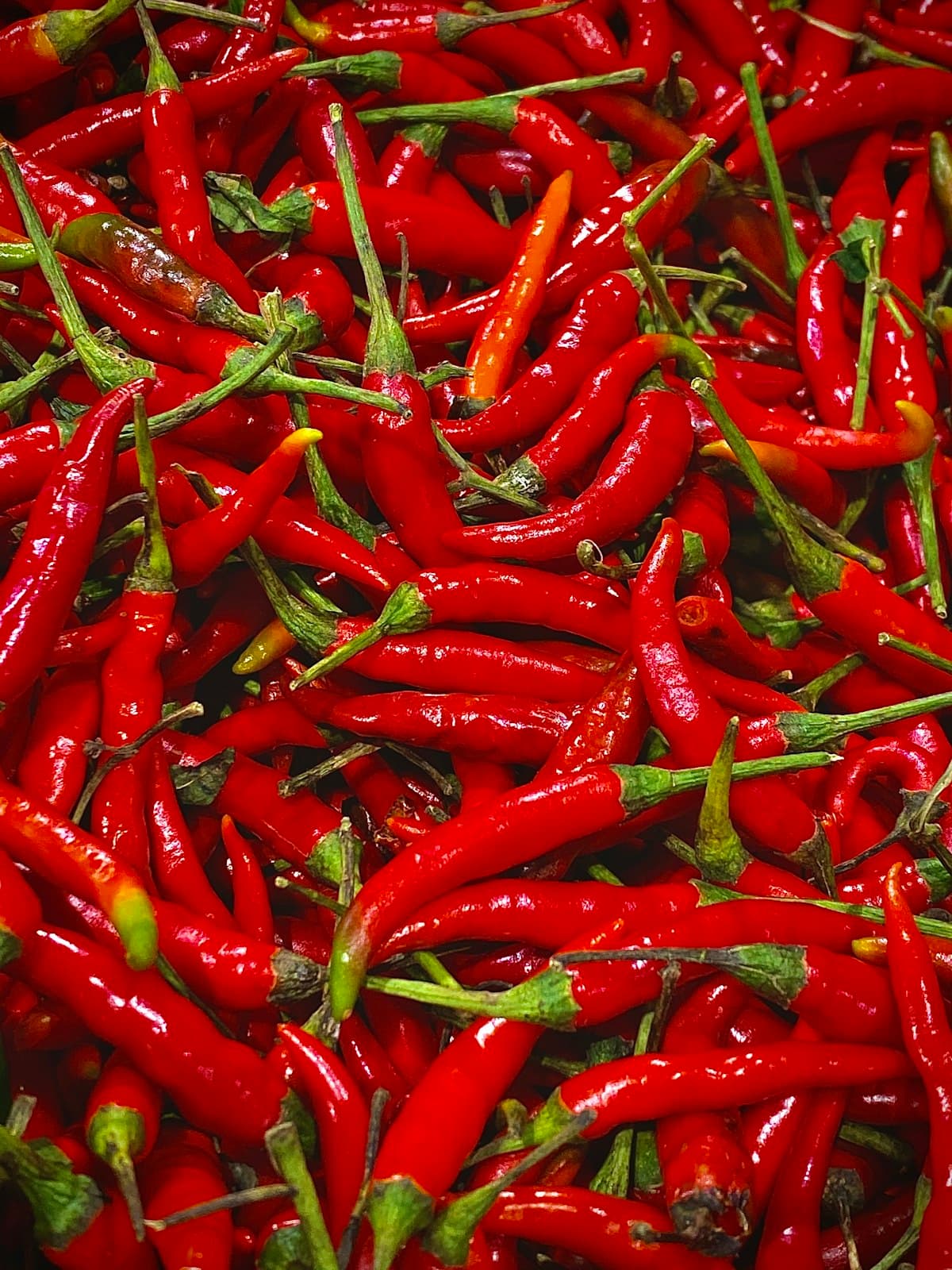
Blooming the gochugaru in hot oil at the very start, before any liquid goes in, is what gives jjamppong's broth its deep red color and rounded heat rather than a flat, gritty spiciness. Skipping straight to adding stock leaves the chili flakes raw-tasting and the broth a duller color.
The seafood goes in staggered, not all at once, because mussels, squid, and shrimp don't cook at the same rate. Mussels need a couple of minutes to open, while squid and shrimp turn rubbery within moments of overcooking — adding them in that order, mussels first, keeps everything at its best texture by the time the bowl is served.
Jjamppong is Korean-Chinese fusion, not a dish imported wholesale from China. It developed out of Chinese immigrant communities in Korean port cities, who adapted a milder Chinese noodle soup to local tastes by loading it with gochugaru-driven heat. It sits alongside jjajangmyeon as one of the two default orders at nearly any Korean-Chinese restaurant — sweet and savory on one side, fiery on the other.
Jjamppong and jjajangmyeon are the two halves of a Korean-Chinese menu, and ordering one of each to split is standard practice rather than indecision. If you cannot choose, some restaurants serve jjamppong with a small bowl of black bean sauce on the side.
Troubleshooting
Seafood turning rubbery? It's almost certainly overcooked — add it in stages (mussels first, then squid and shrimp) and pull the pot off heat the moment the shrimp turns opaque.
Broth tasting flat instead of rounded? The gochugaru needs to bloom in hot oil before the stock goes in — that step builds flavor a raw chili powder addition can't replicate.
Noodles turning mushy in the broth? Cook and drain them separately, then ladle the hot broth over just before serving, rather than simmering the noodles directly in the pot.
Recommended products
- Large stockpot
- Gochugaru
More to cook
All Stews & Soups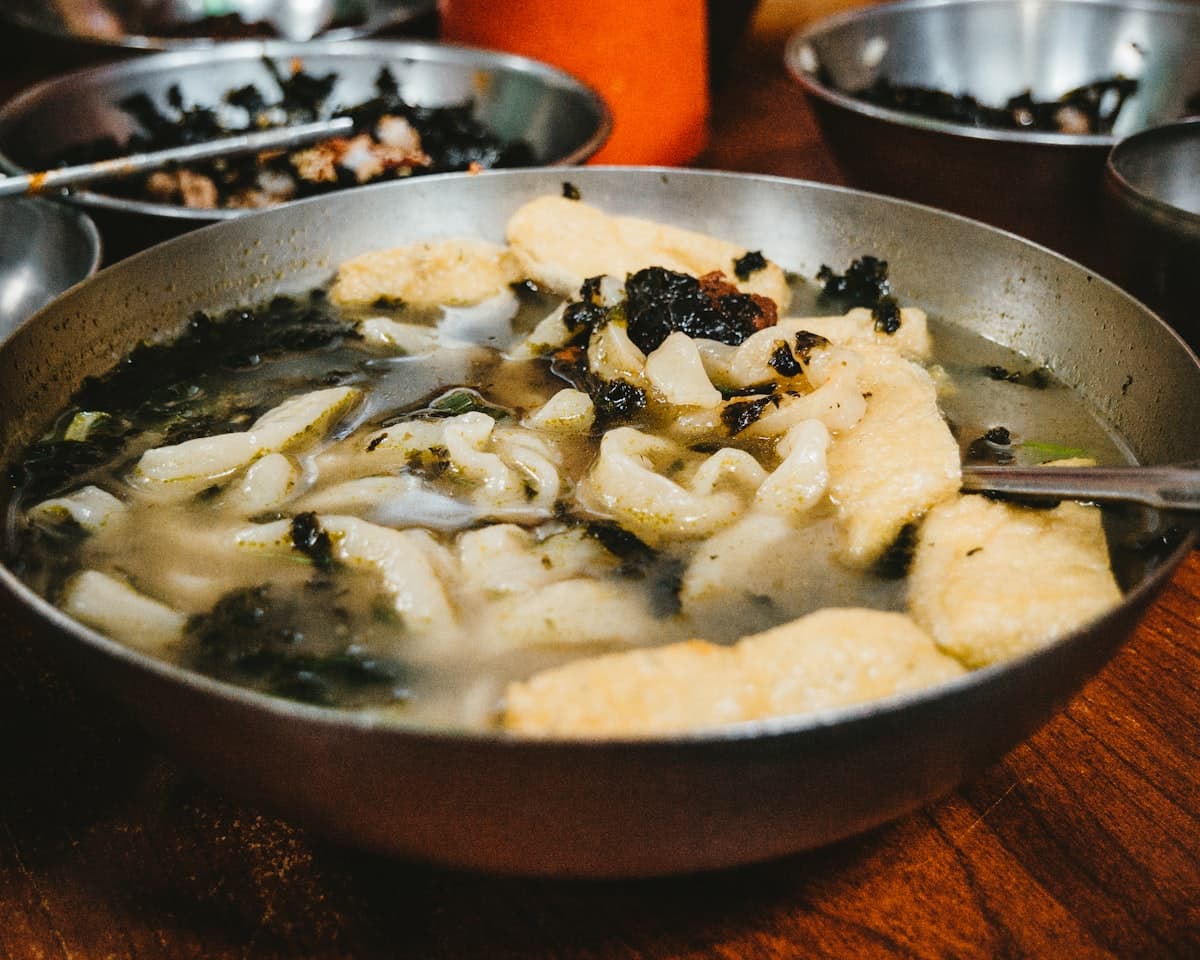
Kalguksu (Knife-Cut Noodle Soup)
The dough-resting step behind kalguksu's chewy hand-cut noodles, and why a real anchovy-kelp stock matters more than in most noodle soups.
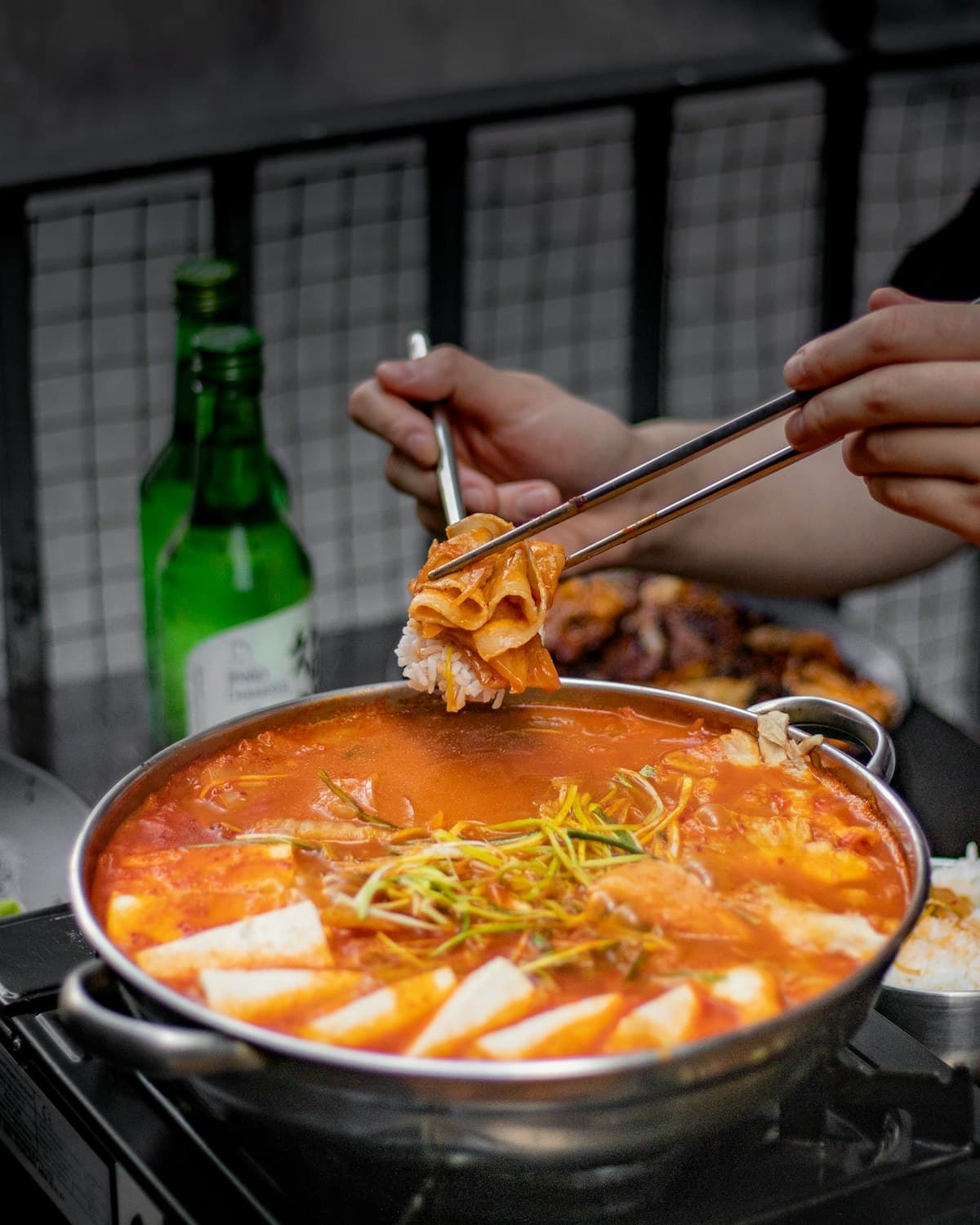
Kimchi Jjigae (Kimchi Stew with Pork Belly)
Why this stew wants your sourest, most overripe kimchi — and the simmer time that turns pork belly and old kimchi into something better than either started as.
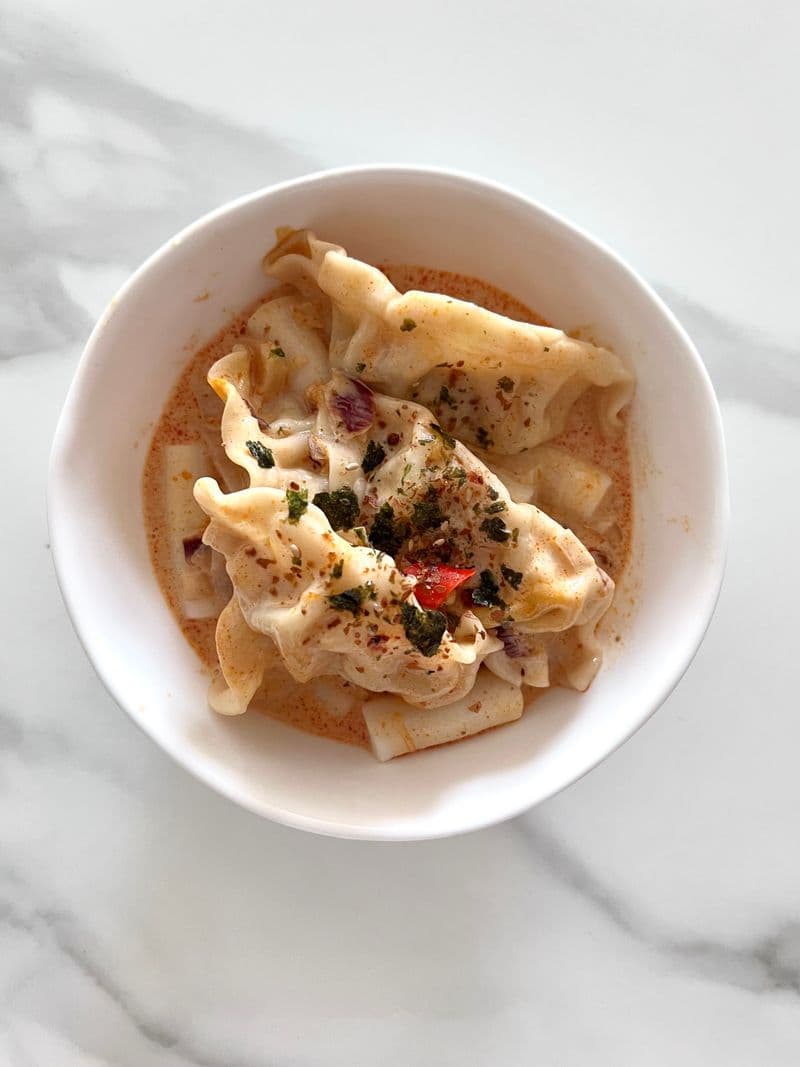
Kimchi Mandu-guk (Kimchi Dumpling Soup)
Why using well-fermented, sour kimchi in the filling changes the whole dish, and how simmering dumplings gently keeps the wrappers from splitting.