Did you know — Korean culture
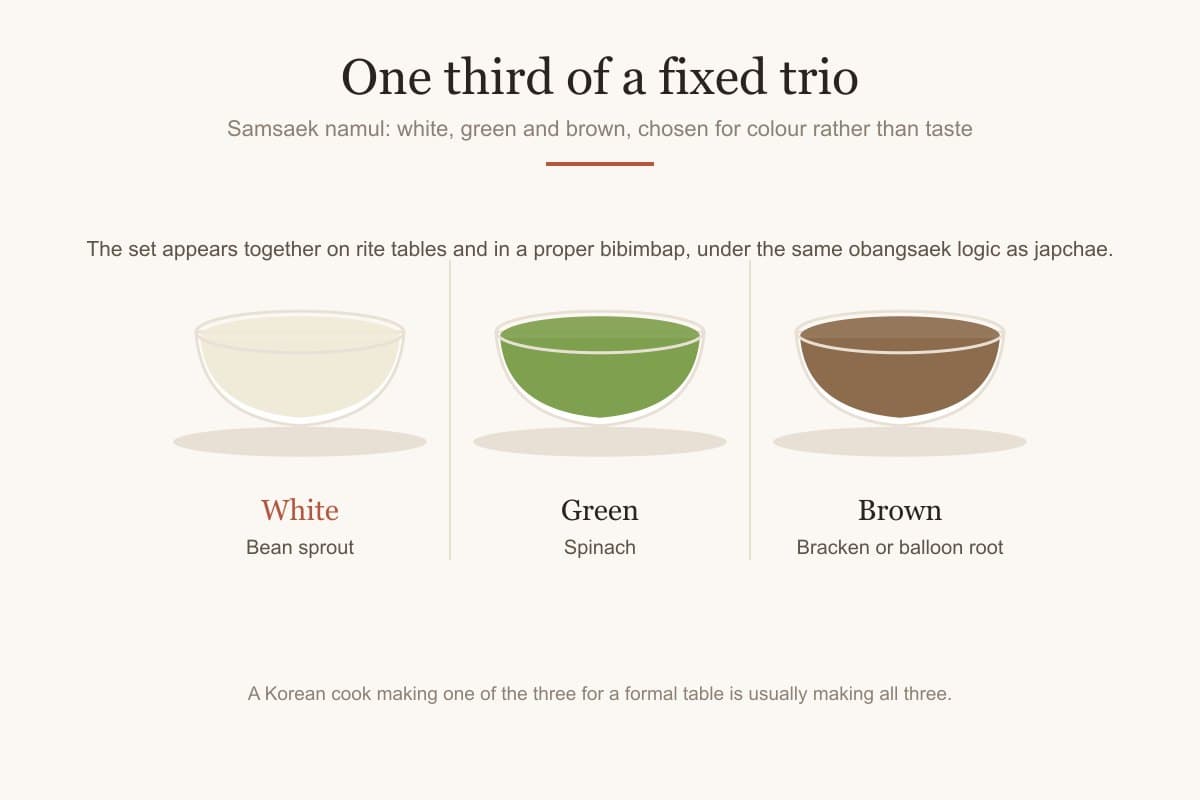
Kongnamul muchim is one third of a fixed trio. Samsaek namul — three-colour namul — pairs white bean sprout with green spinach and brown bracken or balloon root, and the set appears together on ancestral rite tables and in a proper bibimbap. The three are not chosen for flavour balance but for colour, under the same obangsaek logic that shaped japchae. A Korean cook making one of the three for a formal table is usually making all three.
Kongnamul muchim should be dry enough to pick up with chopsticks without a puddle underneath. A watery one has usually been blanched too long and dressed too early.
Short blanch, hard drain, dress at the last moment.
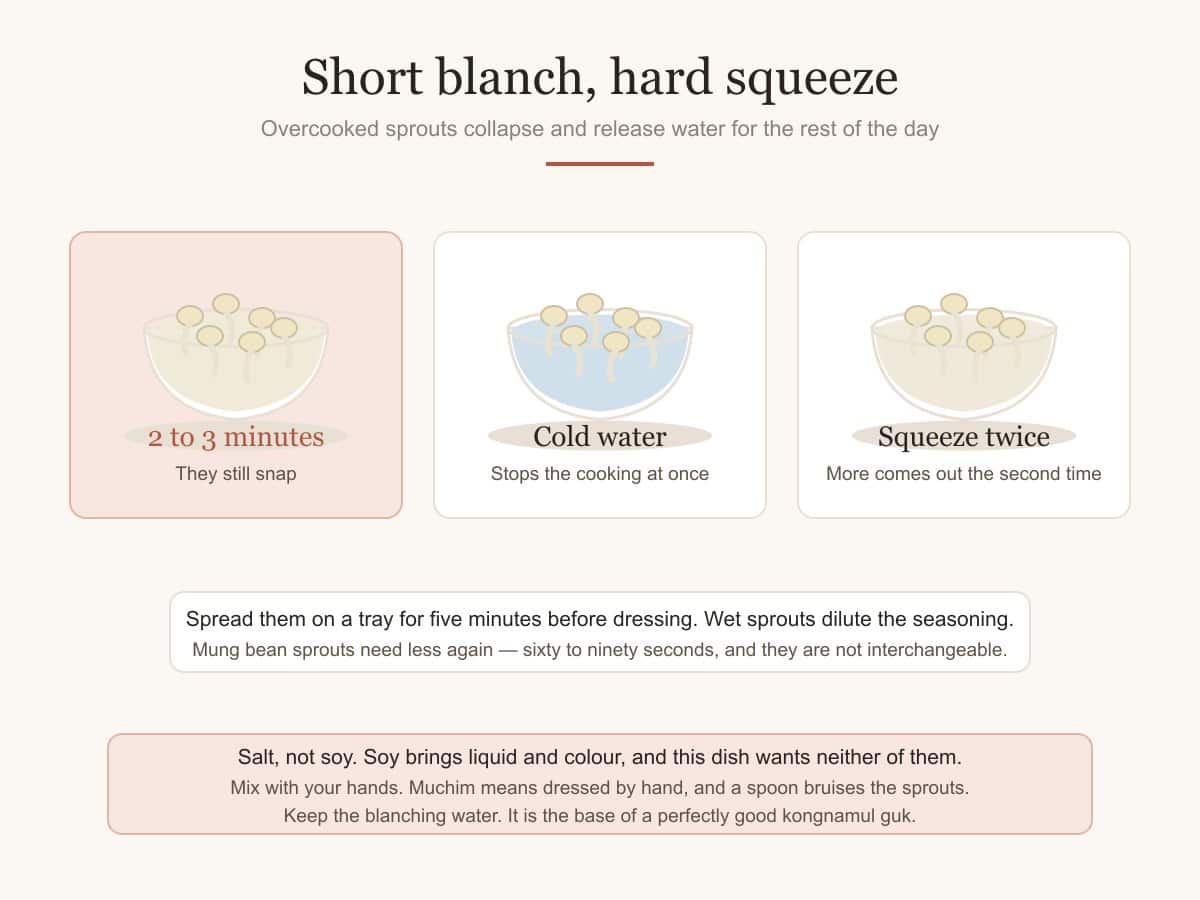
Two to three minutes, no more
Boiling water, lid rules observed — see the lid problem — and two to three minutes for soybean sprouts.
They should still snap. Overcooked sprouts collapse and release water for the rest of the day, and nothing recovers the texture.
Mung bean sprouts (sukju) need less again: sixty to ninety seconds. The two are not interchangeable here and the thicker soybean sprout is the traditional one.
Cold water, then squeeze
Straight into cold water to stop the cooking, then drain properly.
Then squeeze. Gather a handful and press — gently, so they do not break — and do it twice. A surprising amount comes out the second time.
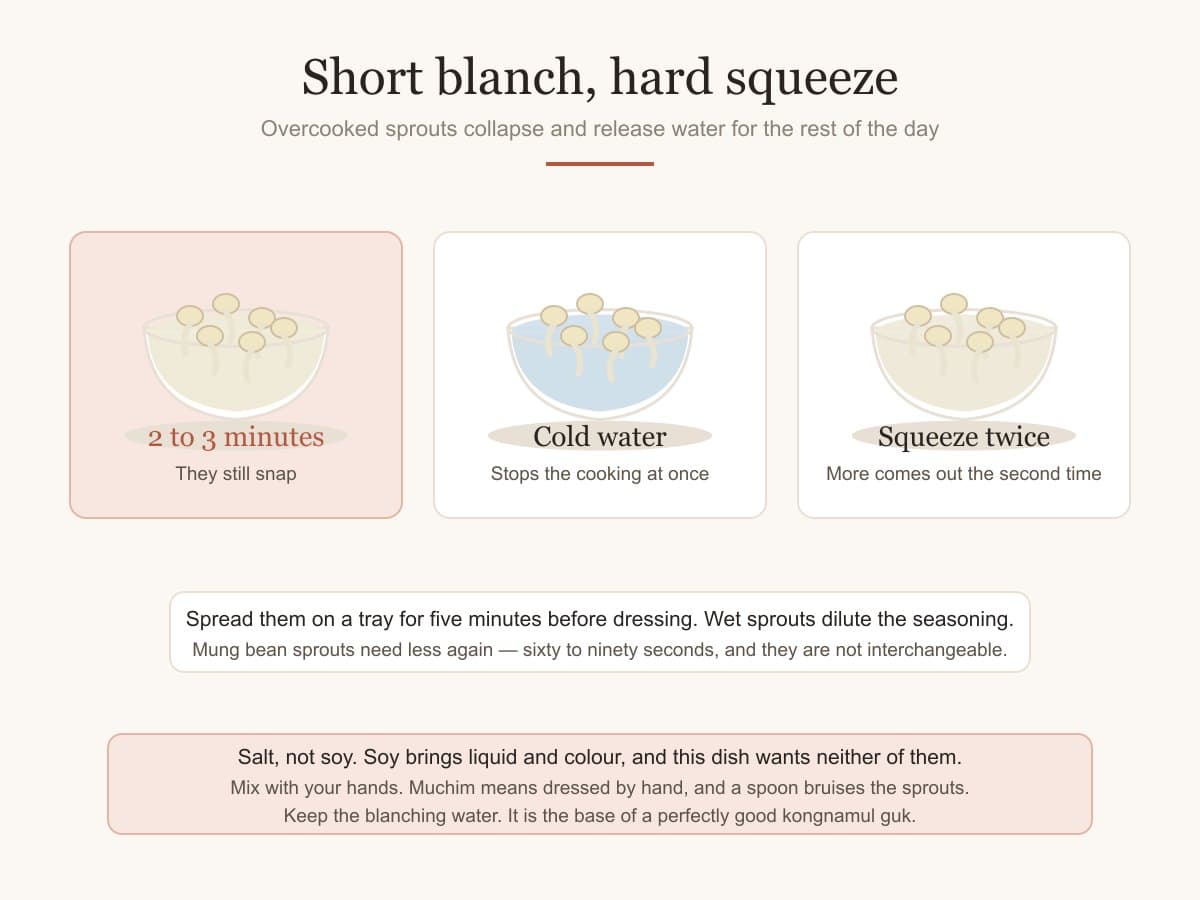
Spread them on a tray for five minutes afterwards. Sprouts dressed while still wet dilute the seasoning and then sit in it.
Dress at the end, by hand
Sesame oil, salt, minced garlic, chopped spring onion, toasted sesame seeds. Gochugaru if you want the red version.
Salt rather than soy — soy brings liquid and colour, and this dish wants neither.
Mix with your hands, not a spoon. The Korean word for this kind of dish, muchim, means dressed by hand, and the point is to coat without crushing. A spoon bruises the sprouts and bruised sprouts weep.
Make it the same day
It keeps two or three days and is best on the first. Water separates out in the fridge however well you drained it.
If it has gone watery overnight, drain it off, squeeze again and re-dress with a little more sesame oil. It comes back most of the way.
And save the blanching water. It is the base of a perfectly good kongnamul guk, which is what a Korean kitchen would do with it.
Common questions
How long do I blanch bean sprouts?
Two to three minutes for soybean sprouts, sixty to ninety seconds for mung bean sprouts. They should still snap; overcooked ones collapse and release water all day.
Should I squeeze bean sprouts after blanching?
Yes, gently, and twice — a surprising amount comes out the second time. Then spread them on a tray for five minutes before dressing.
Salt or soy sauce for kongnamul muchim?
Salt. Soy brings liquid and colour, and this dish wants neither of them.
Why mix it by hand?
Muchim means dressed by hand, and a spoon bruises the sprouts. Bruised sprouts weep, which is the thing you are trying to avoid.
More to cook
All Ingredient & Substitute Guides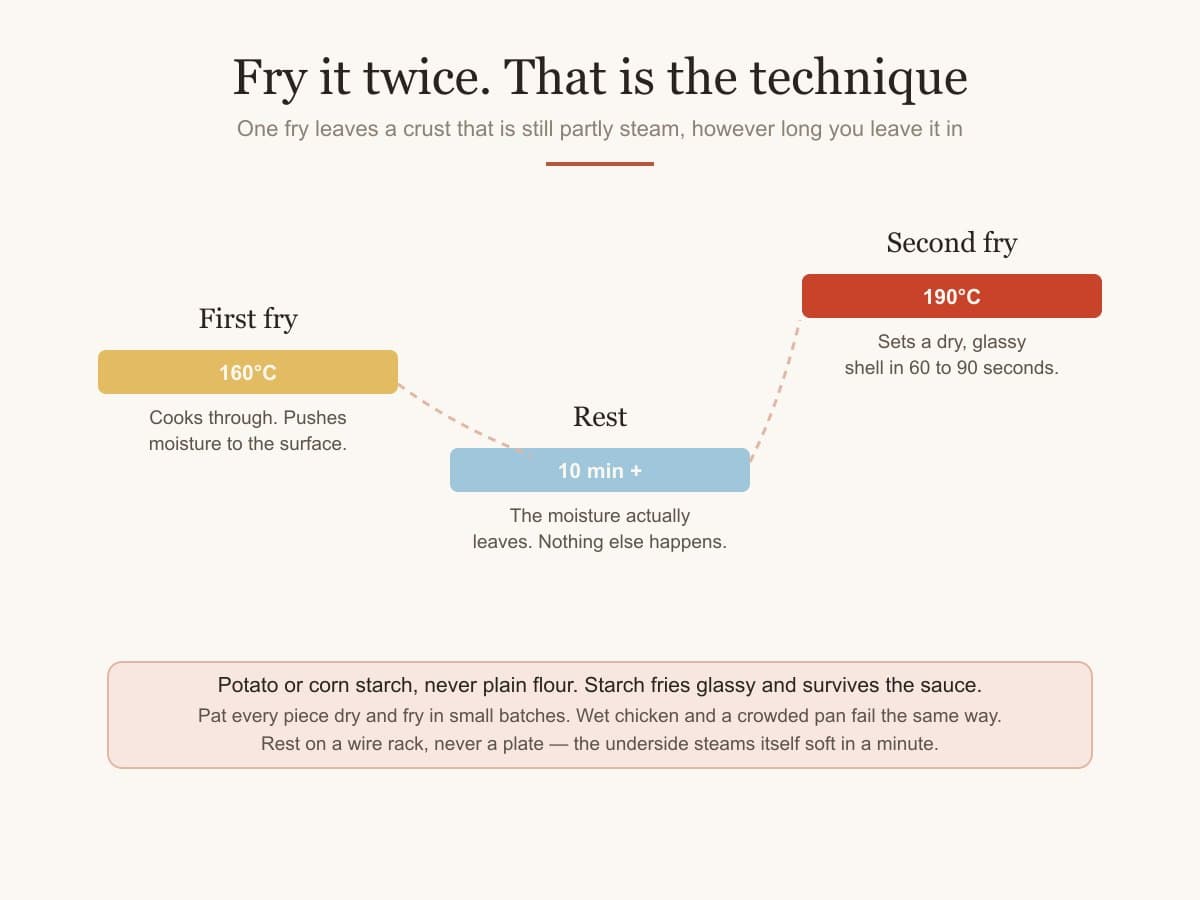
Why Is My Korean Fried Chicken Not Crispy?
Soft Korean fried chicken is nearly always a missing second fry, a wet surface or the wrong starch. The four things that decide the crust.
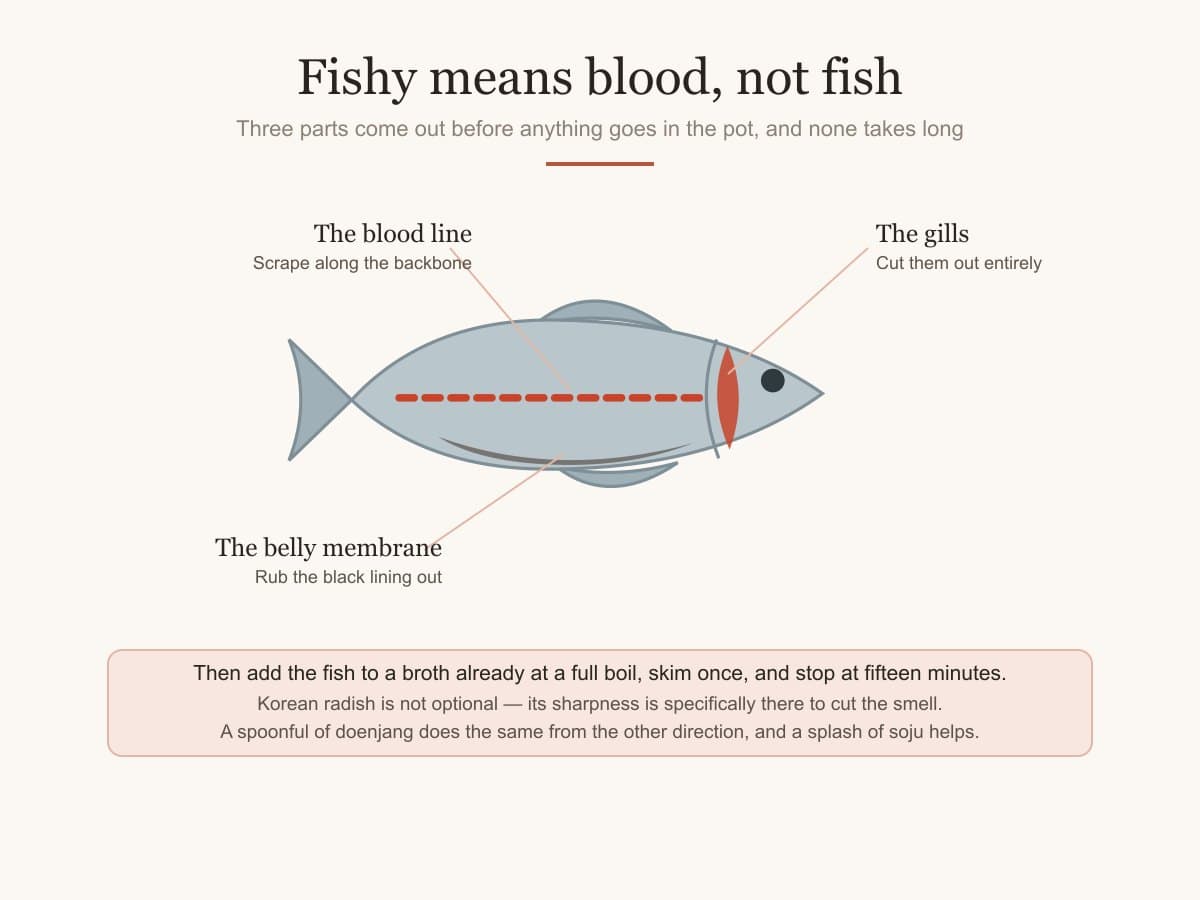
Why Does My Maeuntang Taste Fishy?
Spicy fish stew turns rank from blood, gills and a hard boil. The preparation that makes the difference, and what to put in the pot.
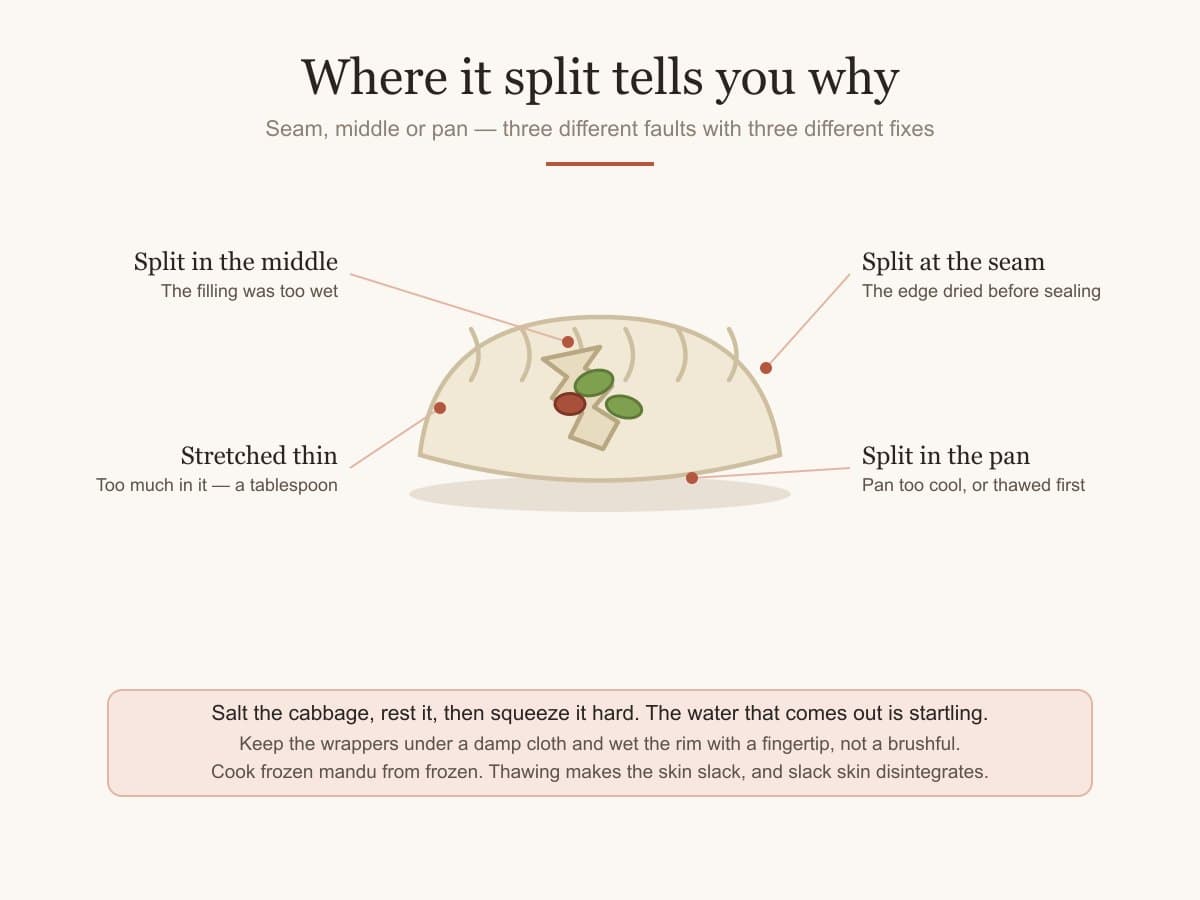
Why Is My Mandu Skin Tearing?
Split dumpling skins come from a wet filling, a dry edge, overfilling or a cold pan. Which one you have, and the fix for each.