Did you know — Korean culture
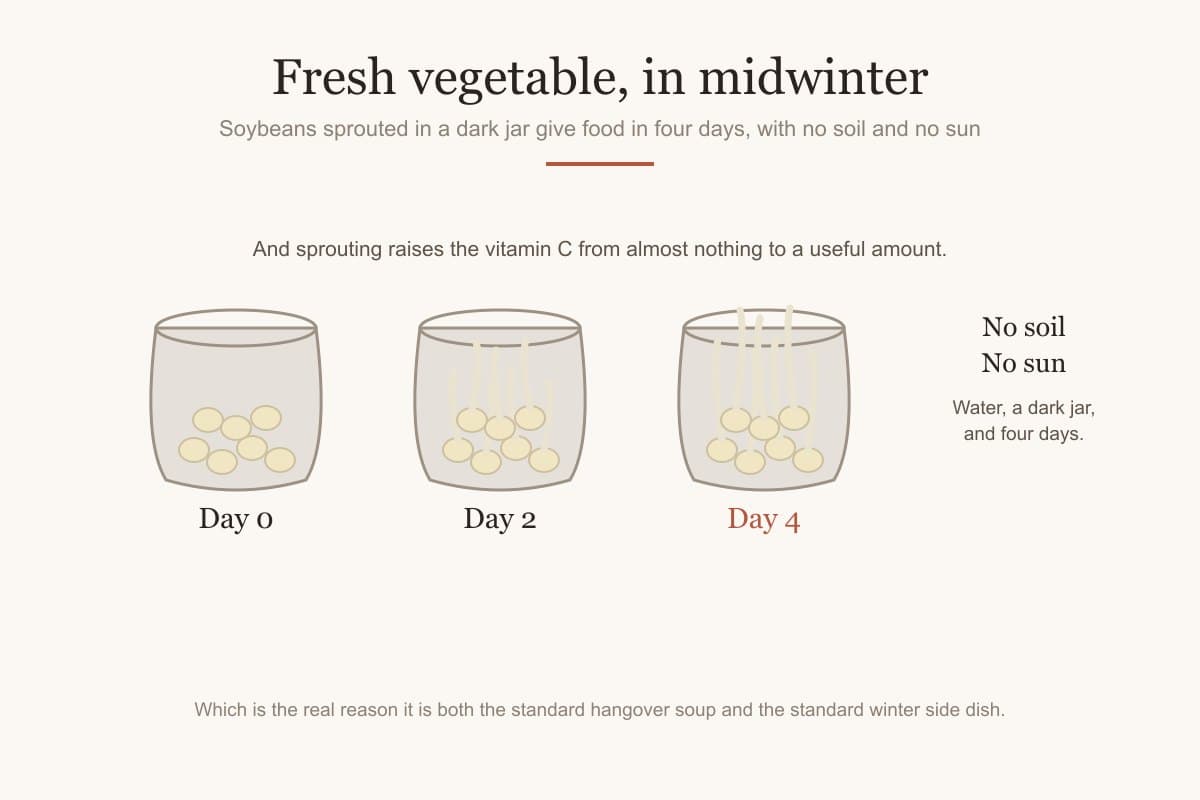
Bean sprouts were a crop you could grow indoors in midwinter, which is most of why they matter in Korean cooking. Soybeans sprouted in a dark jar with nothing but water produce fresh vegetable matter in three or four days, at a time of year when nothing green was growing, and the sprouting itself raises the vitamin C content from almost nothing to a useful amount. That is the real reason kongnamul guk is the standard hangover soup and the standard winter side dish: for centuries it was the only fresh vegetable available.
The smell is unmistakable and slightly fishy, and it is not the anchovies. It is the bean sprouts, and it is caused by one specific thing.
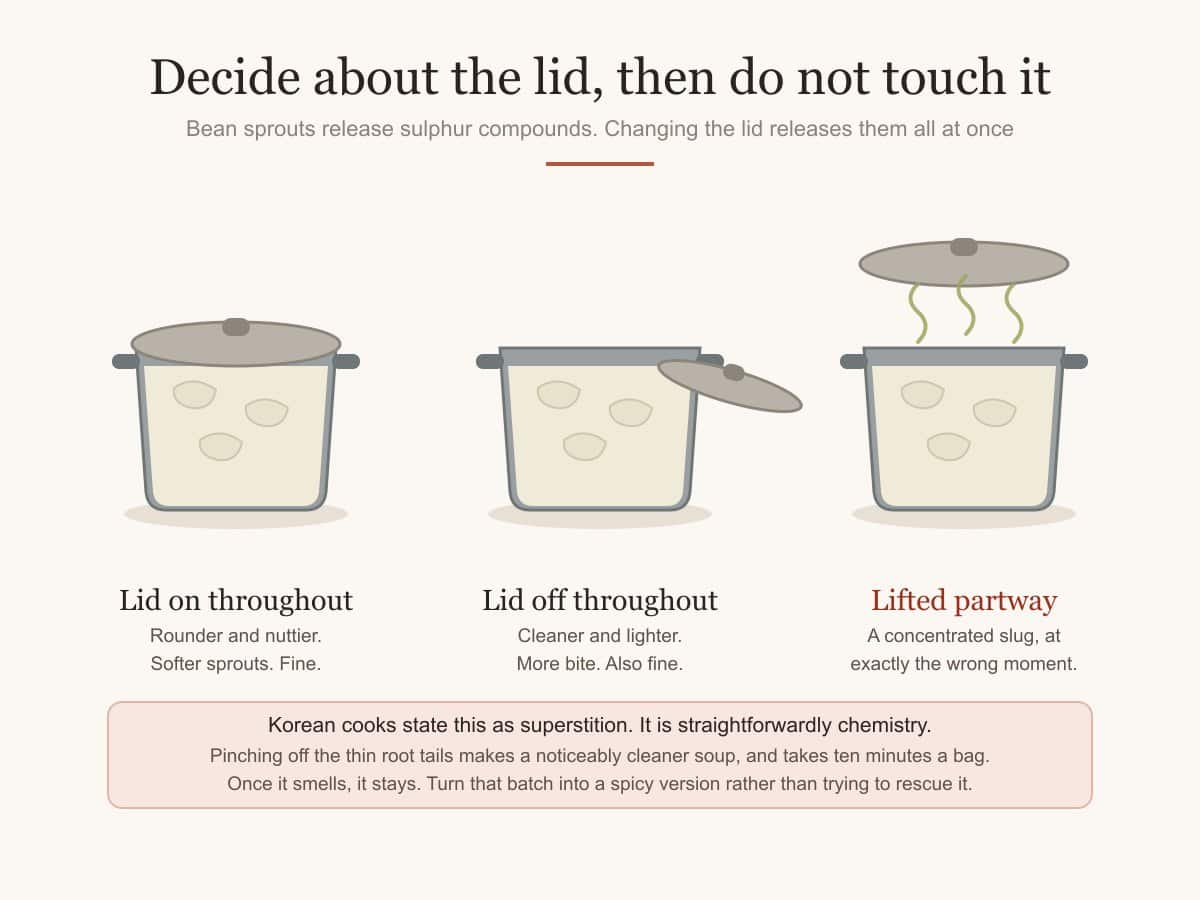
Lid on the whole time, or lid off the whole time. Never change it partway through. That is the entire rule, and it is as strict as it sounds.
What the rule actually is
Bean sprouts release volatile sulphur compounds as they cook. Lid on, they stay in the pot and dissipate as the cooking finishes. Lid off, they leave from the start.
Lifting the lid halfway releases a concentrated slug of them at exactly the wrong moment, and the soup keeps that smell.
Korean cooks state this as superstition and it is straightforwardly chemistry. Decide before you start, and then do not touch the lid.
Which to choose
Lid on is the usual choice for kongnamul guk and gives a rounder, nuttier flavour, with the sprouts a little softer.
Lid off gives a cleaner, lighter soup and keeps more bite in the sprouts. It is the better choice if your sprouts are large or have been in the fridge a few days.
For kongnamul muchim, where the sprouts are blanched and dressed, lid off is standard and the blanch is short — two to three minutes, then straight into cold water.
Trim the tails, or do not
The thin root tails are where a lot of the grassy, earthy note sits. Pinching them off makes a noticeably cleaner soup and takes ten minutes for a bag.
Most households skip it. Restaurants generally do not, and that is part of why a restaurant kongnamul guk tastes cleaner than a home one.
Rinse the sprouts well in several changes of water either way, and pick out the loose hulls that float.
If it already smells
It will not come back. The compounds are in the broth, and nothing added removes them.
What helps a little: a generous handful of spring onion, a spoonful of saeujeot or fish sauce, and a short hard boil with the lid off. That masks rather than fixes.
The better use for a batch that has gone off-smelling is to make it into a spicy version — gochugaru, garlic and a little gochujang will carry it. Start again if the soup was meant to be the clean hangover kind.
Common questions
Why do bean sprouts smell fishy when cooked?
They release volatile sulphur compounds. If the lid is lifted partway through cooking, a concentrated slug escapes at the wrong moment and the soup keeps the smell.
Should I cook bean sprouts with the lid on or off?
Either, as long as you do not change it partway. Lid on gives a rounder, nuttier soup; lid off a cleaner, lighter one with more bite.
Do I need to trim bean sprout tails?
Not strictly, but it makes a noticeably cleaner soup — the thin root tails carry most of the grassy note. It takes about ten minutes for a bag, and it is part of why restaurant versions taste cleaner.
Can I fix bean sprout soup that already smells?
Not really. The compounds are in the broth. Spring onion, fish sauce and a short hard boil mask it, and turning it into a spicy version carries it better than the clean style does.
More to cook
All Ingredient & Substitute Guides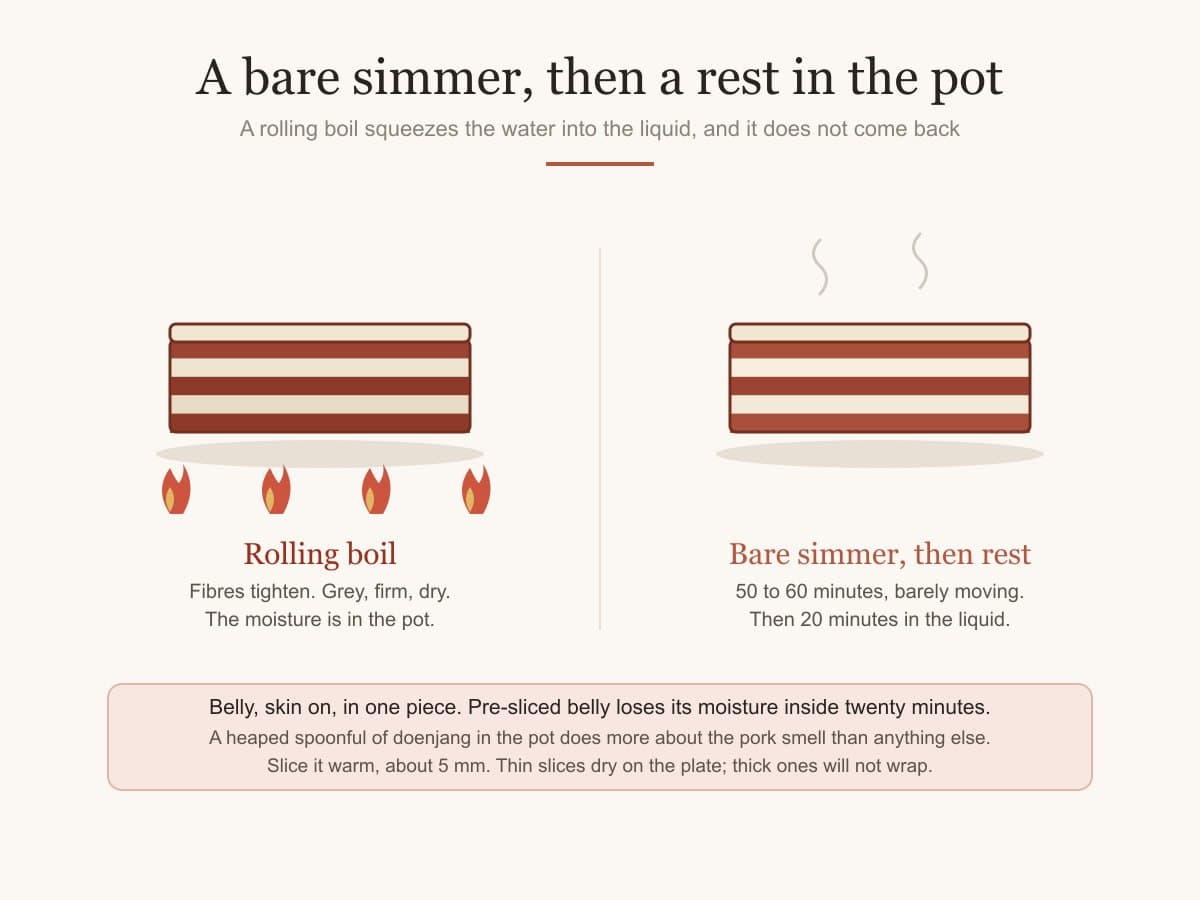
Why Is My Bossam Pork Dry?
Dry boiled pork comes from the wrong cut, a hard boil, or slicing it too early. The three things that keep it succulent.
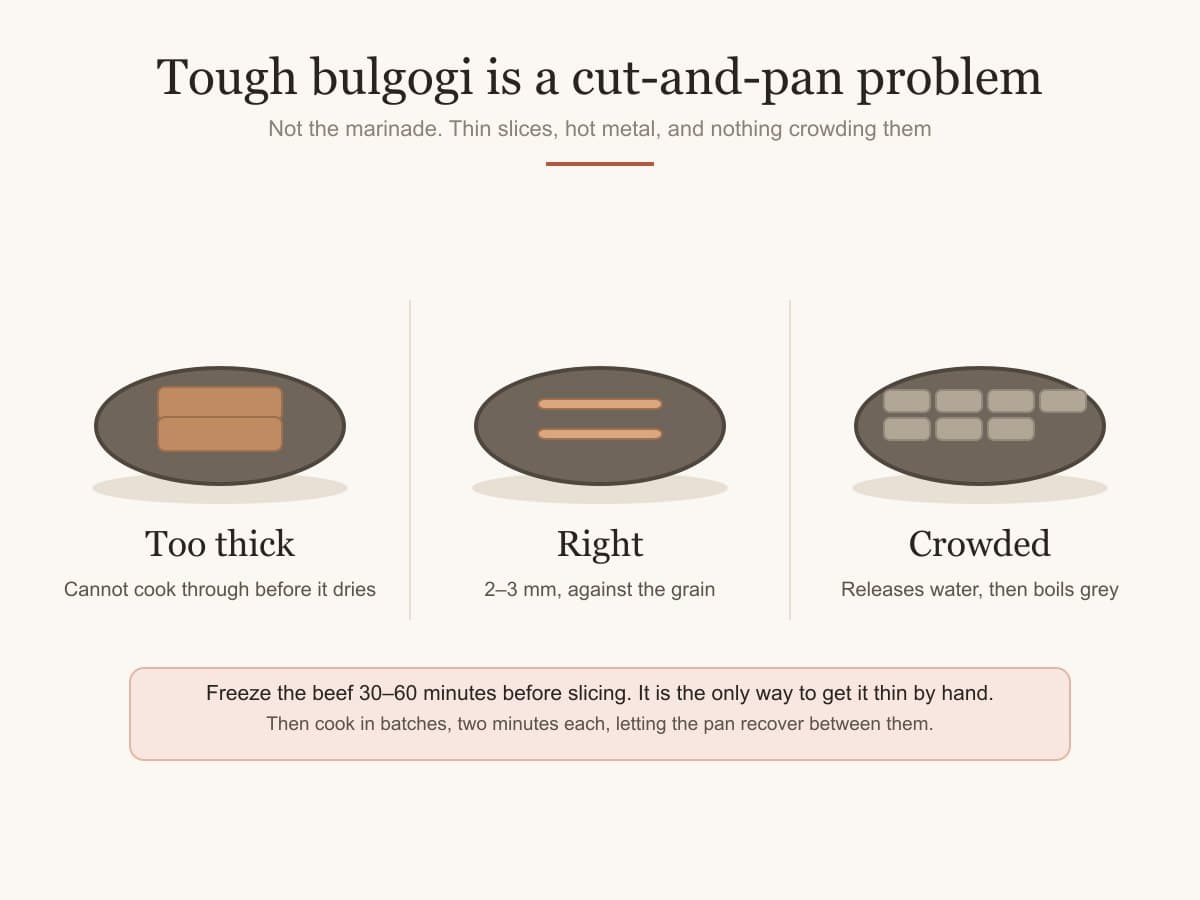
Why Is My Bulgogi Tough?
Tough bulgogi is almost never the marinade. The three real causes are the cut, the thickness and a crowded pan, and all three are easy to fix.
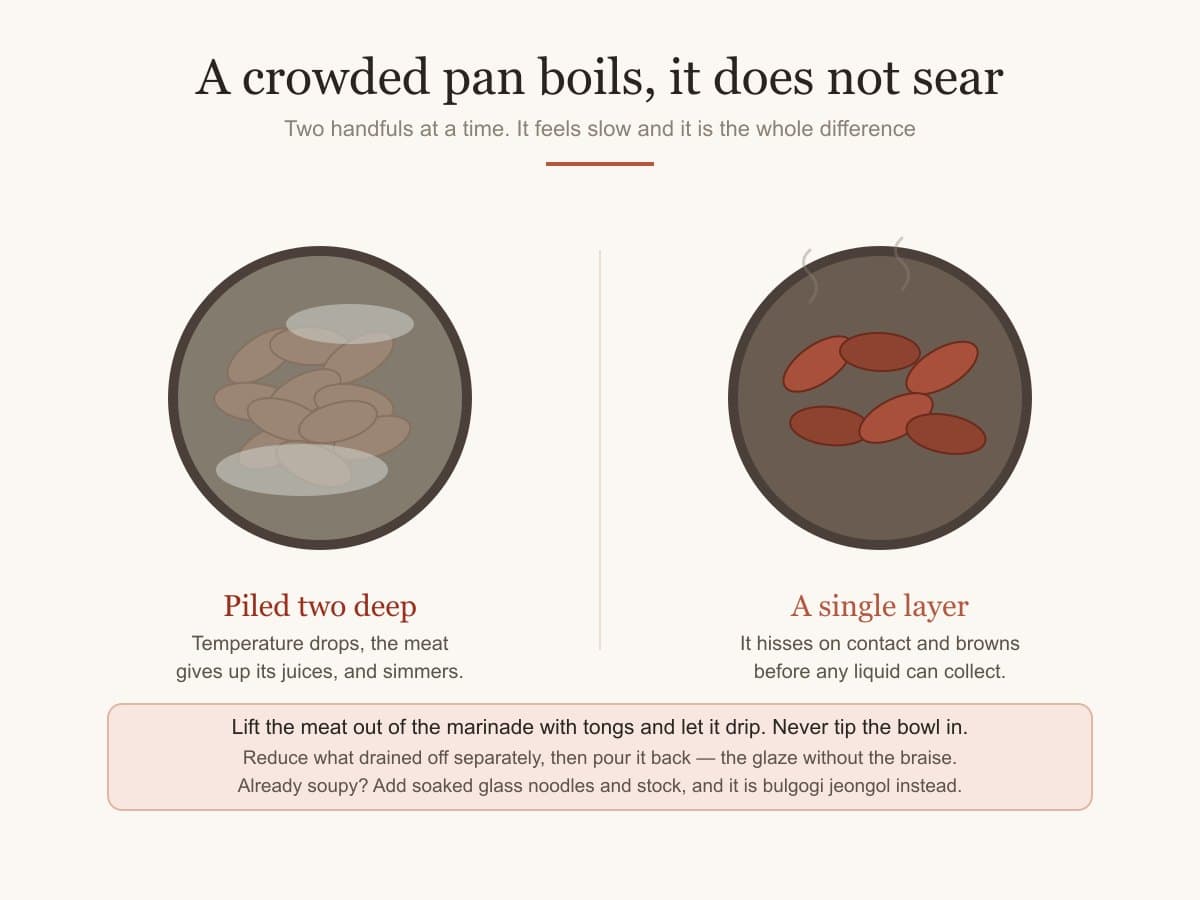
Why Is My Bulgogi Watery?
Bulgogi swimming in liquid is a crowded pan and a cold one. How to get a sear instead of a boil, and what to do with the juices.