Did you know — Korean culture
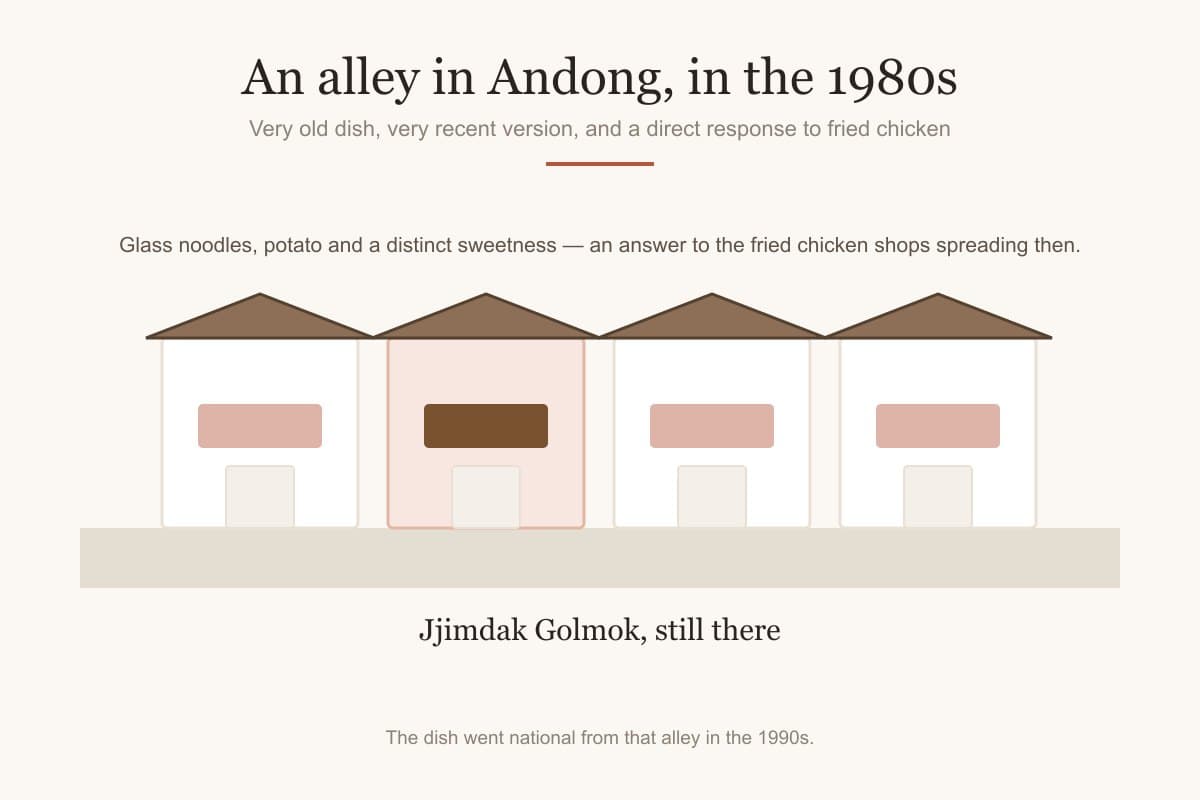
Andong jjimdak is both very old and very recent. A soy-braised chicken is recorded in the region for a long time, but the dish as it is now eaten — with glass noodles, potato and a distinct sweetness — took its modern form in Andong's old market in the 1980s, in an alley of chicken restaurants competing with the fried chicken shops that were spreading at the time. The alley is still there and still called Jjimdak Golmok, and the dish went national from it in the 1990s.
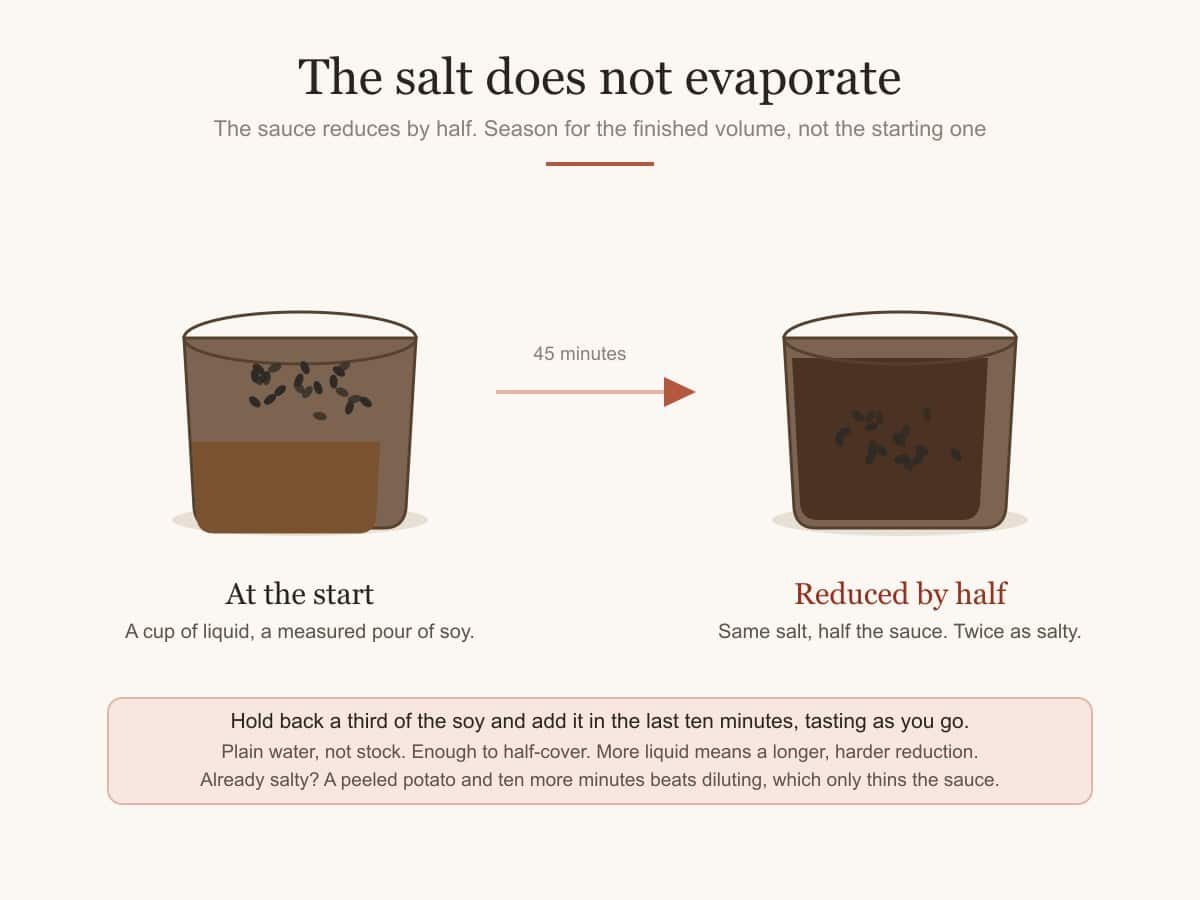
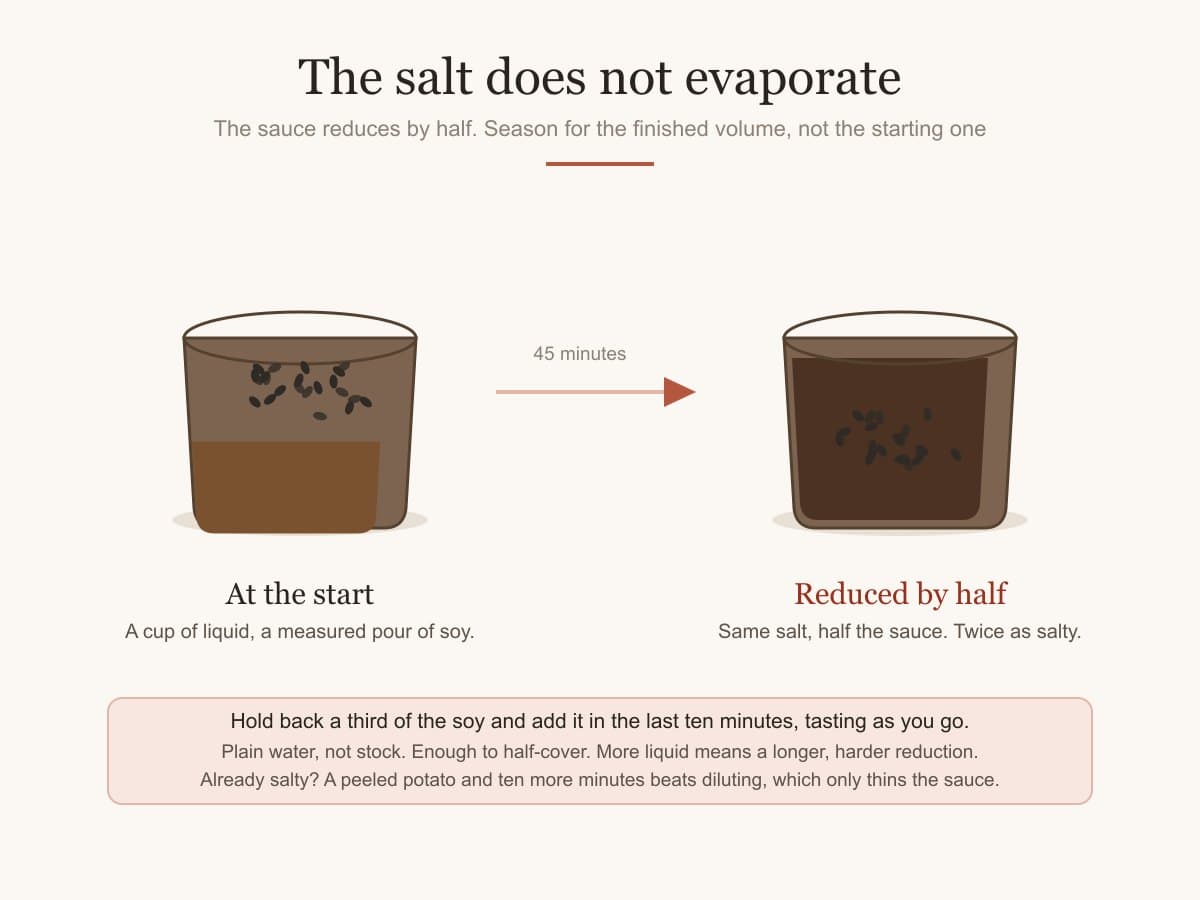
Jjimdak is a soy braise that reduces by half, and salt does not evaporate. Whatever soy went in at the start is still there at the end, in half the liquid.
Season for the finished volume, not the starting one. That single change fixes most salty jjimdak.
Start with less soy than the recipe says
Hold back about a third of the soy and add it in the last ten minutes, tasting as you go.
Most recipes are written for a particular soy sauce, and jin ganjang brands vary considerably in salt. A cup that works with one is too much with another.
If you used guk ganjang by mistake, that alone explains it — soup soy sauce is much saltier and was never meant for a braise.
Water, not stock
Jjimdak is one of the few Korean braises that wants plain water.
The chicken, the soy and the aromatics make the sauce, and an anchovy or beef stock on top of a cup of soy pushes it over.
Enough to half-cover is right. More liquid means a longer reduction, and a longer reduction concentrates what is already in there.
The potatoes are doing a job
Potato and sweet potato absorb a surprising amount of salt, and they also thicken the sauce with their starch.
A jjimdak made without them tastes saltier even with identical seasoning.
If a batch is already too salty, adding a peeled potato and simmering ten more minutes genuinely helps — more than diluting with water, which thins the sauce without fixing the balance.
Balance it rather than diluting it
Sugar, jocheong or a splash of rice wine rounds the salt off, and most jjimdak is meant to be distinctly sweet anyway.
A handful of dangmyeon noodles at the end soaks up sauce and salt together, which is why they are traditional in the Andong version.
And serve it with plain rice, which is what the salt level assumes. Jjimdak tasted on its own always reads saltier than jjimdak eaten the way it is meant to be.
Common questions
Why is my jjimdak so salty?
The sauce reduced by half and the salt did not evaporate with it. Hold back about a third of the soy and add it in the last ten minutes, tasting as you go.
Can I fix jjimdak that is already too salty?
Add a peeled potato and simmer ten more minutes, or stir in glass noodles. Both absorb salt. Diluting with water thins the sauce without fixing the balance.
Should I use stock for jjimdak?
No, plain water. The chicken, soy and aromatics make the sauce, and stock on top of a cup of soy pushes the whole thing over.
Did I use the wrong soy sauce?
If you used guk ganjang, yes — soup soy sauce is much saltier and is not meant for braising. Jjimdak wants jin ganjang.
More to cook
All Ingredient & Substitute Guides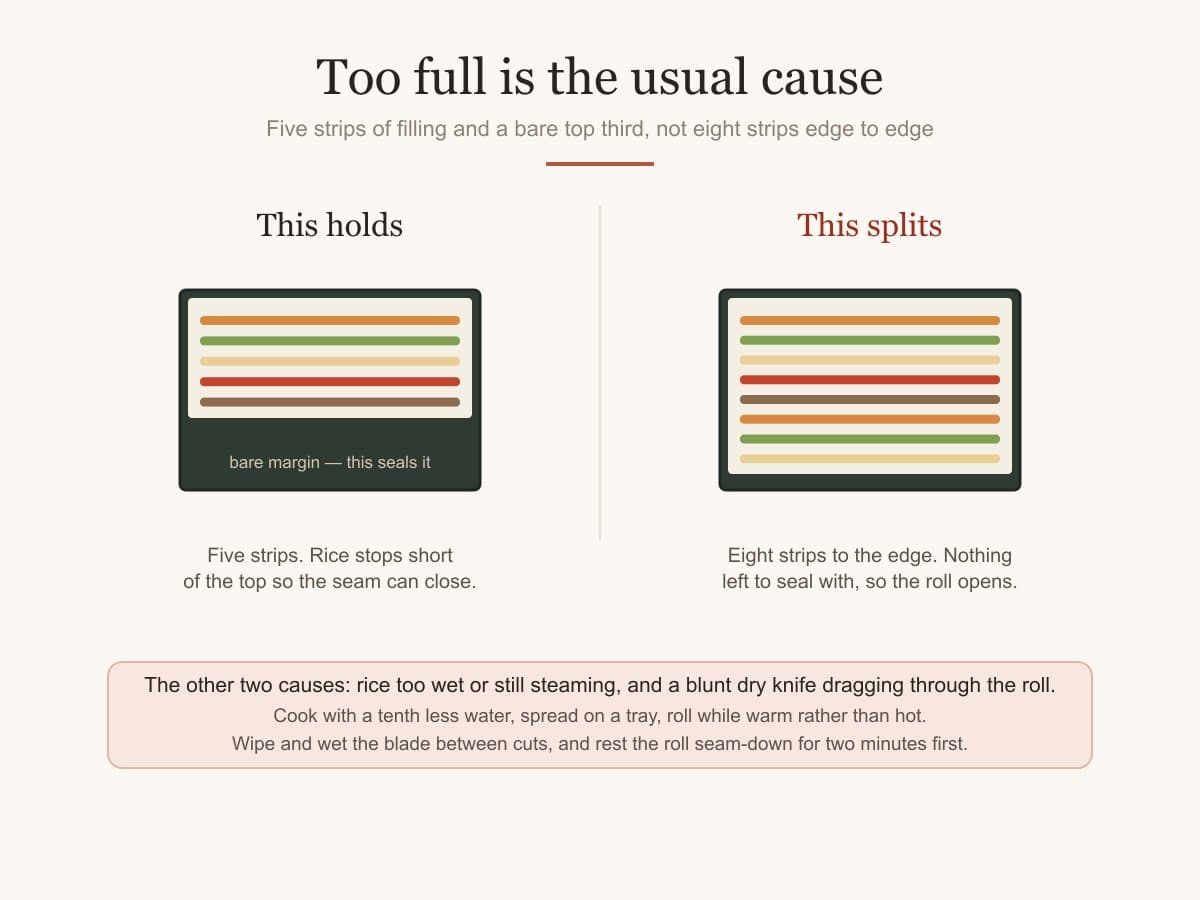
Why Is My Kimbap Falling Apart?
Kimbap that unravels is nearly always wet rice, an overfilled roll or a blunt knife. What to change, in the order worth trying.
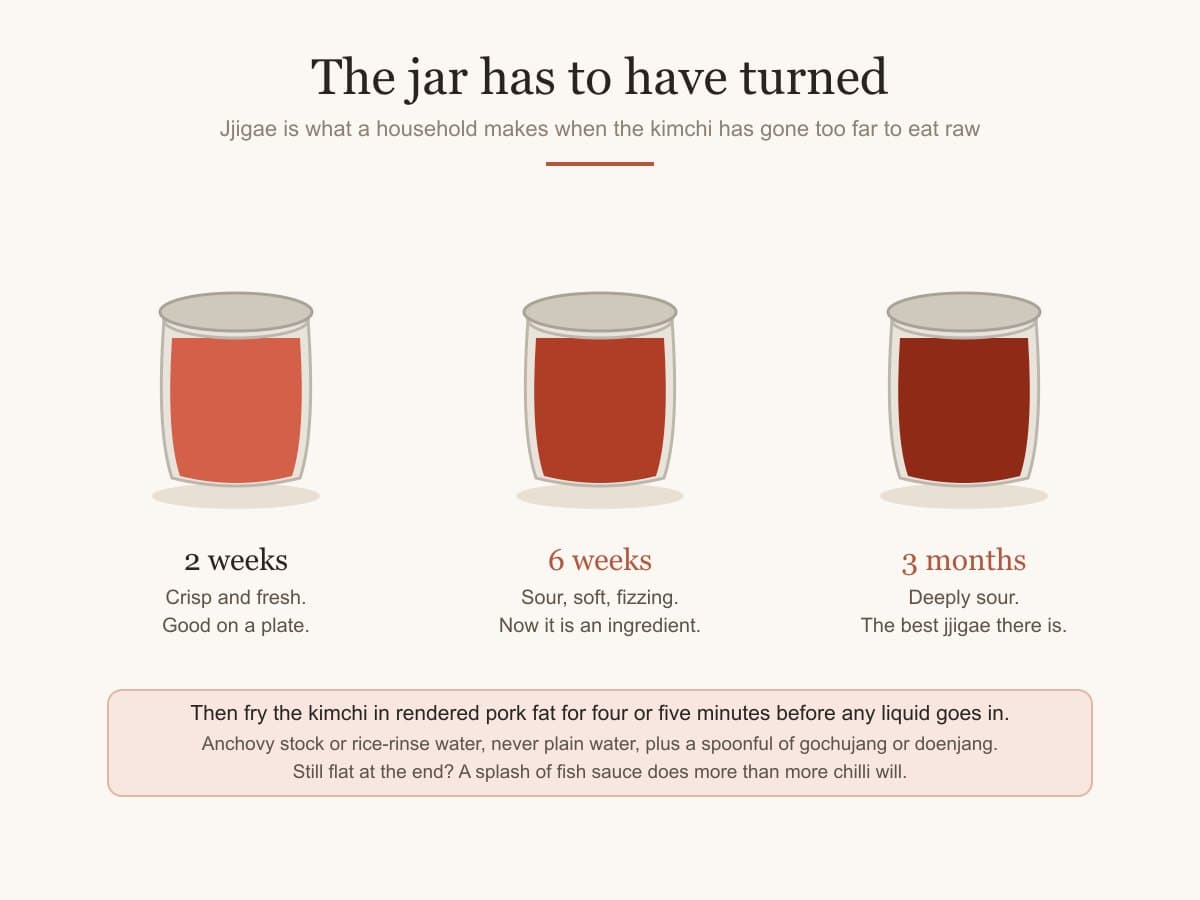
Why Is My Kimchi Jjigae Bland?
Flat kimchi stew is almost always fresh kimchi, a skipped fry, or water instead of stock. The three things that give it depth.
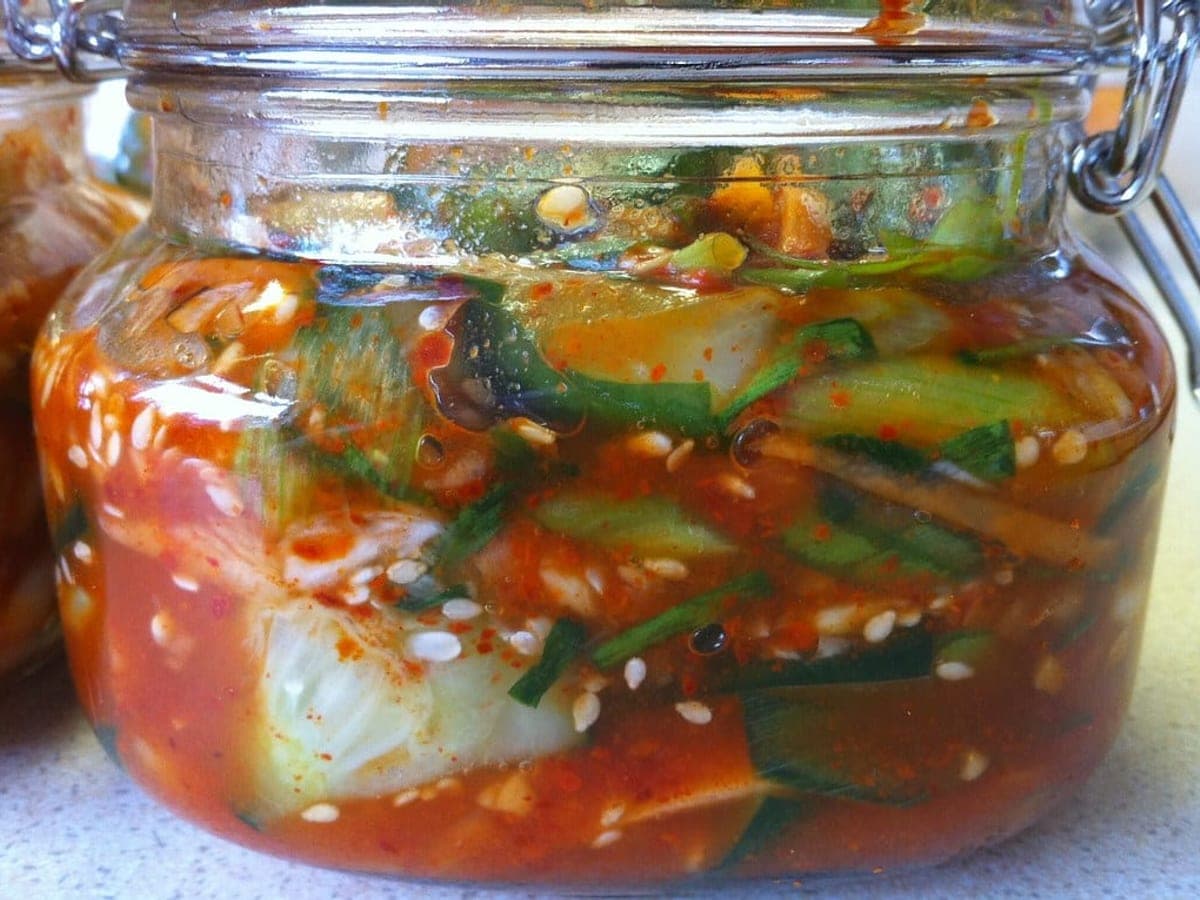
Why Is My Kimchi Not Sour?
The four things that stall kimchi fermentation — temperature, salt level, sugar and airtightness — and how to tell which one is your problem.