Did you know — Korean culture
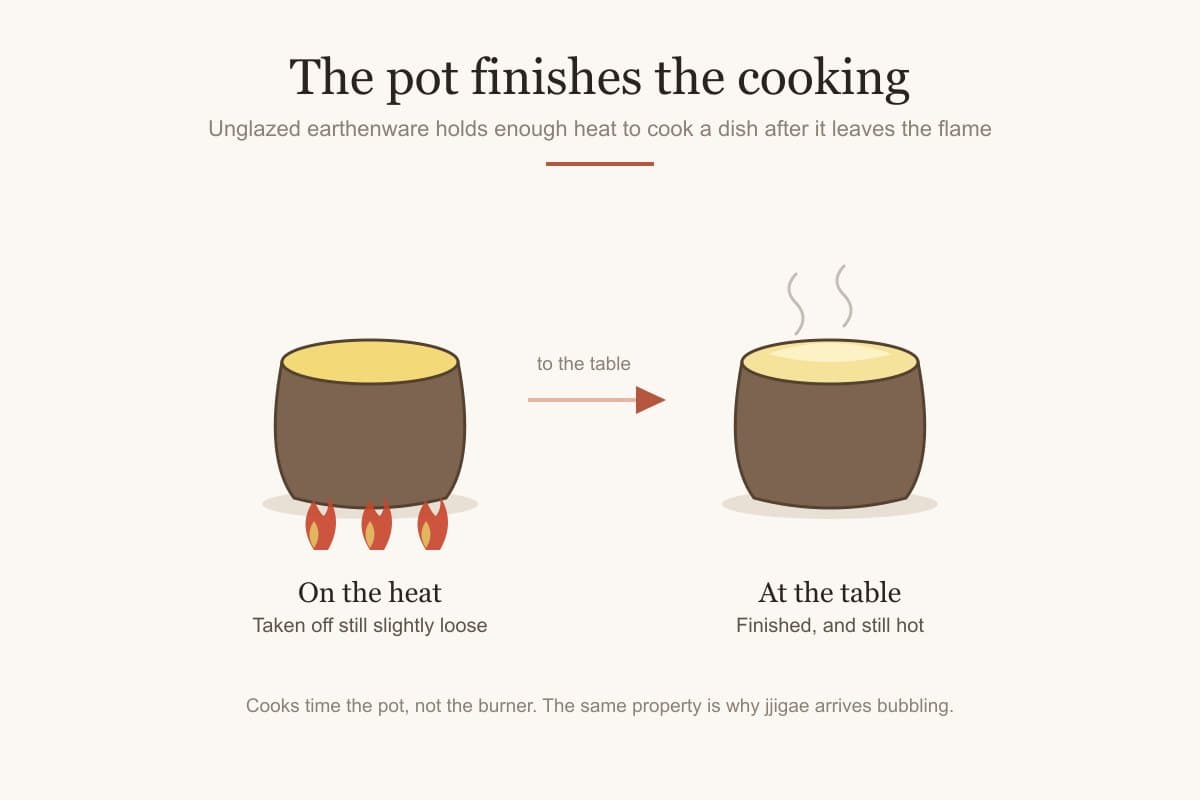
The ttukbaegi is not just serving ware, and that is why gyeranjjim is served in one. Unglazed earthenware heats slowly and holds that heat for several minutes after it leaves the flame, so a dish taken off the stove slightly underdone arrives at the table finished — and stays hot through a long meal. The same property is why jjigae is served bubbling in one. Cooks time the pot, not the burner: the last few minutes of cooking happen on the way to the table.
Steamed egg goes wrong in two distinguishable ways, and the way it fails tells you which fault you have.
Loose and soupy throughout is a ratio problem. Set but weeping water is a heat problem. They need opposite fixes, so identify it first.
Loose throughout means too much liquid
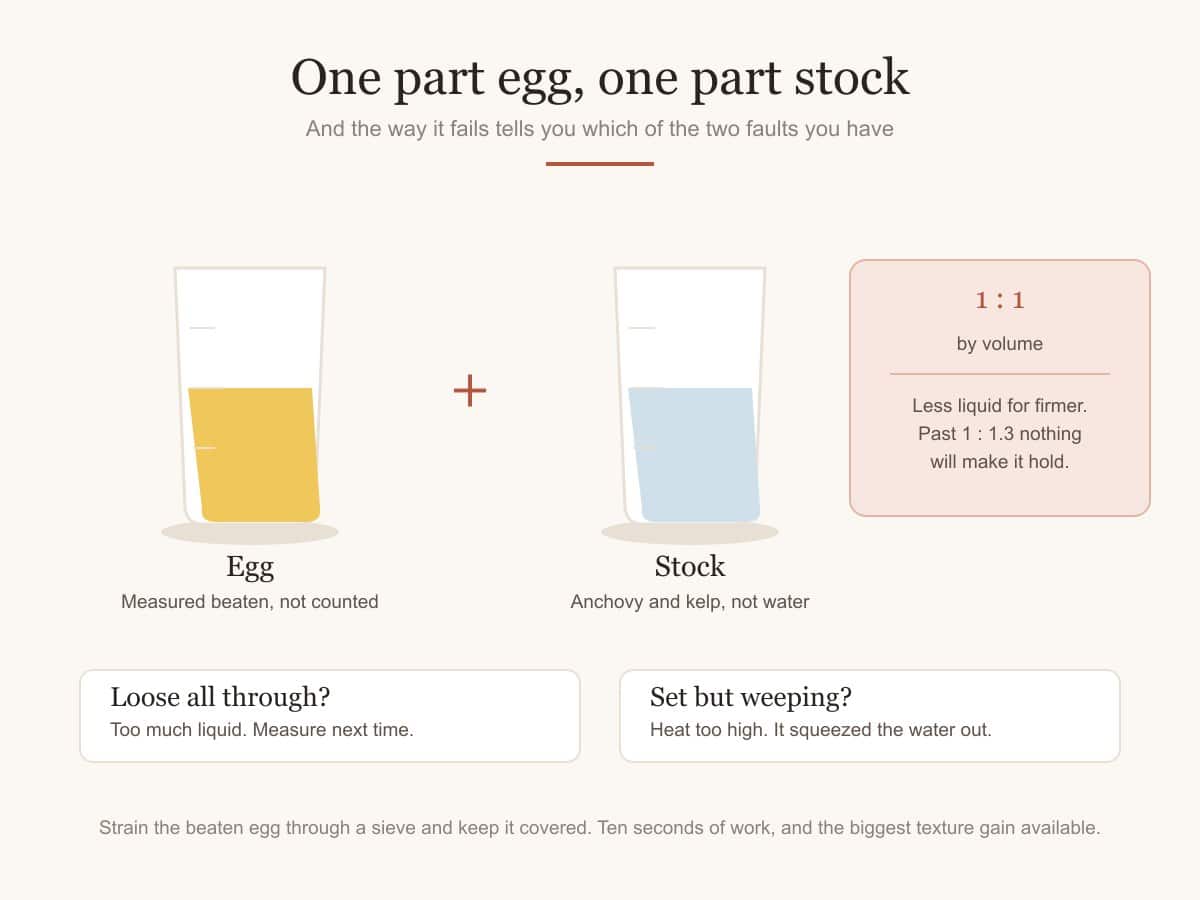
The working ratio for gyeranjjim is one part egg to one part liquid by volume, or a little less liquid if you want it firmer.
Measure the beaten egg rather than counting shells. Eggs vary enough that three large and three medium are not the same pour.
Use anchovy and kelp stock rather than water — it sets identically and tastes of something. If you go past about 1 : 1.3, nothing will make it hold.
Weeping water means the heat was too high
Egg protein that sets too fast squeezes out the water it was holding. You get a curd floating in liquid rather than a custard, and no amount of extra cooking reabsorbs it.
Bring the pot to a simmer, then drop to low and keep it there. Steam gently; do not boil underneath.
In an earthenware ttukbaegi, take it off the heat while the centre is still slightly loose. The pot holds enough heat to finish it, and that residual cooking is part of the method.
Strain it, and cover it
Straining the beaten egg through a sieve is the single biggest texture improvement available for about ten seconds of work. It removes the chalazae and any unbeaten white, and the result is noticeably smoother.
Cover while it cooks. An uncovered surface dries and skins over while the middle is still raw, and a lid also keeps condensation from dripping in — a plate works if you have no lid.
Salt with a little saeujeot or fish sauce rather than only table salt. It seasons more evenly through a custard.
The two styles, and which one you are making
There are two dishes under one name, and recipes conflate them.
The ttukbaegi style is cooked directly over heat in an earthenware pot, stirred early, and comes out tall, fluffy and slightly coarse. This is the one served bubbling at a barbecue table.
The steamed style is set in a dish inside a steamer, untouched, and comes out smooth and flat like a savoury custard — closer to gyeran mari in refinement.
If you want smooth, stop stirring. If you want tall and fluffy, stir in the first minute and let it climb.
Common questions
What is the egg to water ratio for gyeranjjim?
About 1 : 1 by volume, or slightly less liquid for a firmer set. Measure the beaten egg rather than counting shells, since egg sizes vary more than recipes assume.
Why is my steamed egg weeping water?
The heat was too high. Egg protein that sets too quickly squeezes out the water it was holding, and that water does not go back in. Simmer gently and take it off while the centre is still slightly loose.
Should I strain gyeranjjim?
Yes, if you want it smooth. Passing the beaten egg through a sieve takes about ten seconds and removes the chalazae and unbeaten white, which is the biggest single texture improvement available.
Why is restaurant gyeranjjim so tall and fluffy?
That is the ttukbaegi style, cooked directly over heat in an earthenware pot and stirred in the first minute so it climbs. The smooth flat version is a different method, set untouched in a steamer.
More to cook
All Ingredient & Substitute Guides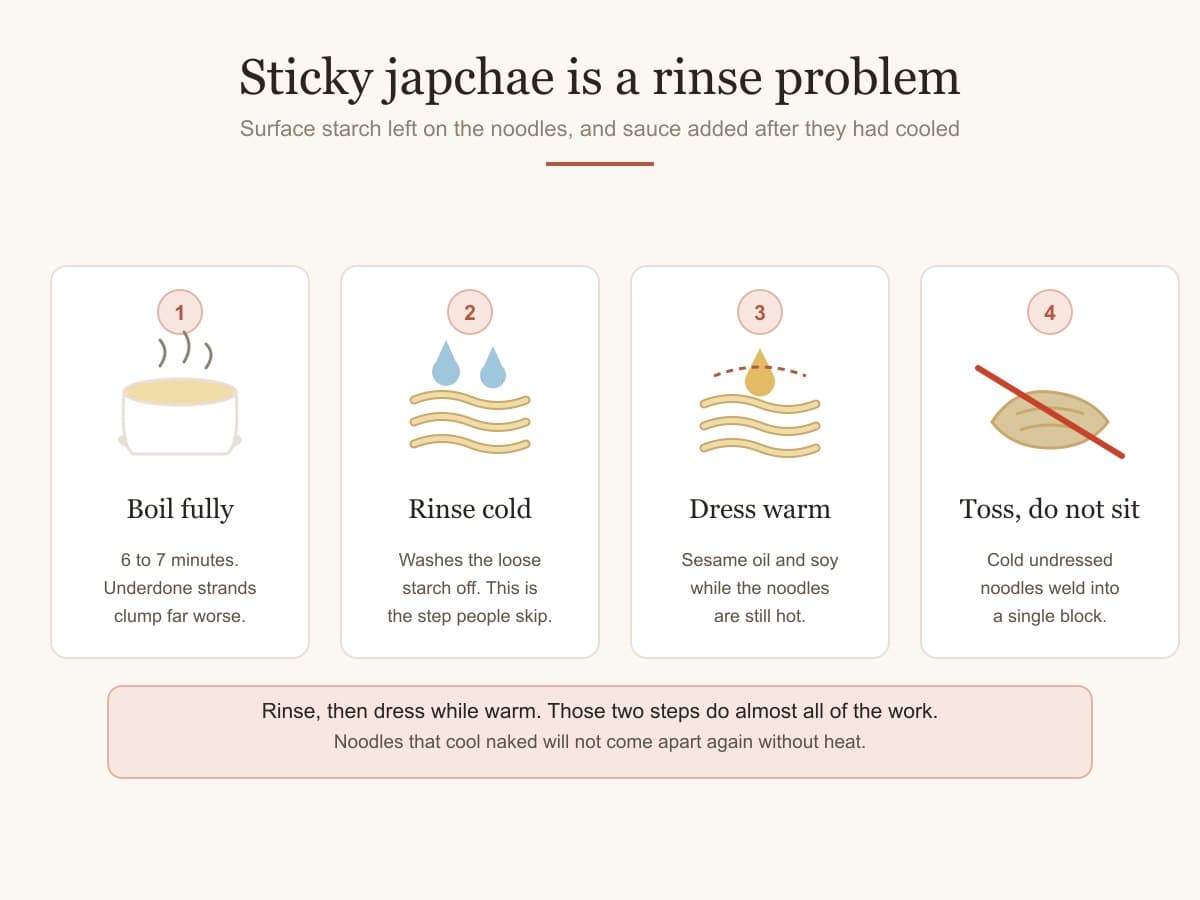
Why Is My Japchae Sticky?
Clumped japchae comes from the rinse and the timing, not the sauce. How to keep dangmyeon separate and springy from pan to plate.
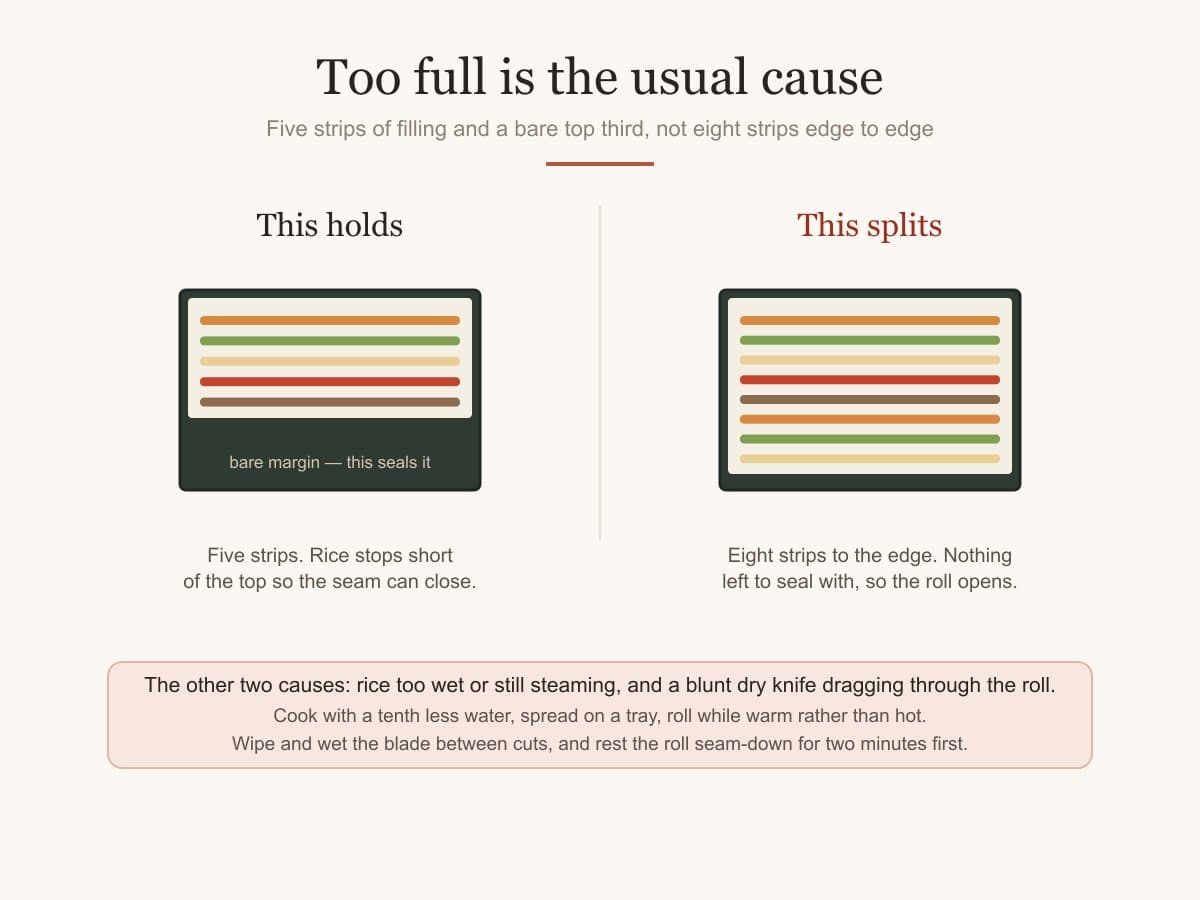
Why Is My Kimbap Falling Apart?
Kimbap that unravels is nearly always wet rice, an overfilled roll or a blunt knife. What to change, in the order worth trying.
Why Is My Kimchi Not Sour?
The four things that stall kimchi fermentation — temperature, salt level, sugar and airtightness — and how to tell which one is your problem.