Did you know — Korean culture
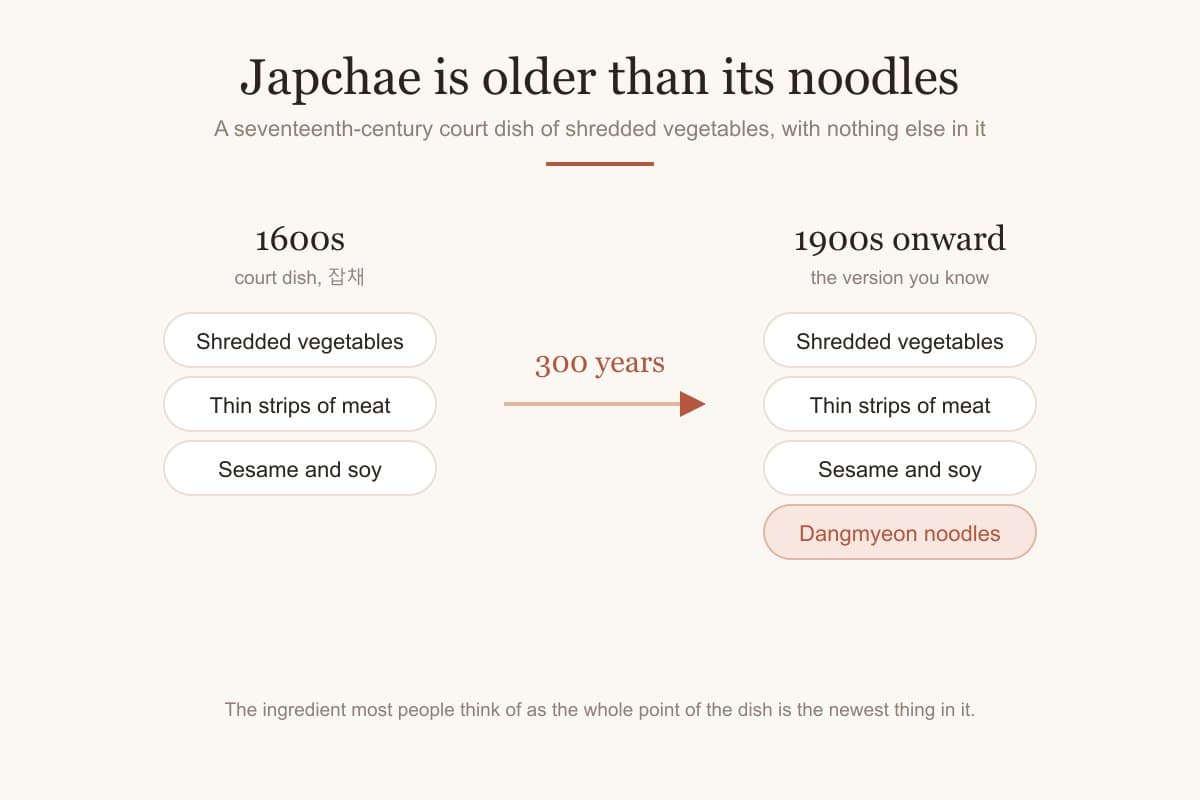
Japchae is older than its noodles. The dish is recorded in the seventeenth century as a court dish of shredded vegetables and meat, and the name means roughly 'mixed vegetables' — there were no noodles in it at all. Dangmyeon only entered the recipe in the early twentieth century, once sweet potato starch noodles became widely available. The ingredient most people now think of as the whole point of the dish is the newest thing in it.
Japchae that arrives as one solid mass is a noodle problem, not a sauce problem. Adding more oil at the end does not undo it.
Dangmyeon sheds a lot of starch as it cooks. That starch is what glues the strands together, and there are exactly three moments where you can remove it or lock it in.
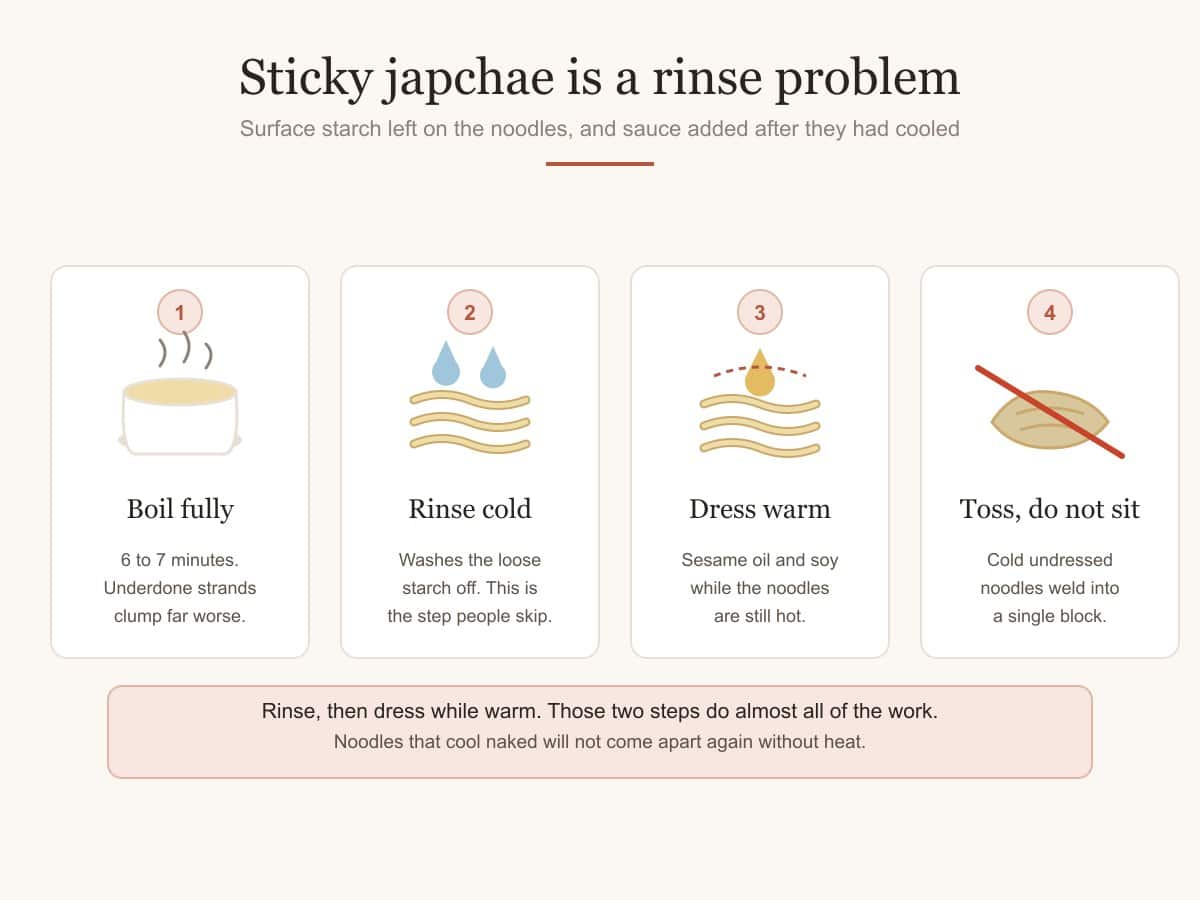
Rinse the starch off, properly
Cook the noodles in plenty of water — more than looks necessary — then rinse them under cold running water, working them between your hands until the water runs clear rather than cloudy.
A quick pass under the tap is not enough. The starch sits on the surface and the only thing that removes it is agitation.
The cold shock also firms the strands up, which is half of what gives japchae its bounce.
Dress them while warm, then do not wait
Toss the drained noodles with a little sesame oil and soy immediately, before they cool. Oil on warm noodles coats every strand; oil on cold noodles sits on the outside of a clump.
From there, japchae is best assembled and eaten within the hour. It holds at room temperature far better than it holds in the fridge.
Undercooked noodles clump worse
This is counter-intuitive. A strand with a hard white core keeps absorbing moisture after it leaves the pot, pulling sauce and neighbouring strands with it.
Six to eight minutes, until fully translucent. Check one by cutting it in half rather than by the clock. See dangmyeon substitutes for why nothing else behaves this way.
Reviving a batch that has already clumped
A hot pan, a splash of water and a little sesame oil will loosen most of it in about a minute. Work the noodles apart with tongs as the water turns to steam.
The microwave does not do this — it heats the starch without moving it, and you get a warm clump instead of a cold one.
Common questions
How do I stop japchae noodles sticking together?
Rinse them hard in cold water until it runs clear, then dress them with sesame oil while they are still warm. Starch left on the surface is the glue, and oil only coats properly before the strands cool.
Can I make japchae ahead without it clumping?
Yes — it is good at room temperature and traditionally party food for that reason. Hold back a little sesame oil and soy, and toss it through just before serving to loosen everything again.
Why are my glass noodles still hard in the middle?
Undercooked. Dangmyeon needs six to eight minutes and must be fully translucent with no white core. An underdone strand keeps absorbing afterwards and clumps worse than a properly cooked one.
Should I rinse japchae noodles in hot or cold water?
Cold. It removes the surface starch and shocks the strands firm at the same time. Hot water rinses the starch around rather than off.
More to cook
All Ingredient & Substitute Guides
Why Is My Kimbap Falling Apart?
Kimbap that unravels is nearly always wet rice, an overfilled roll or a blunt knife. What to change, in the order worth trying.
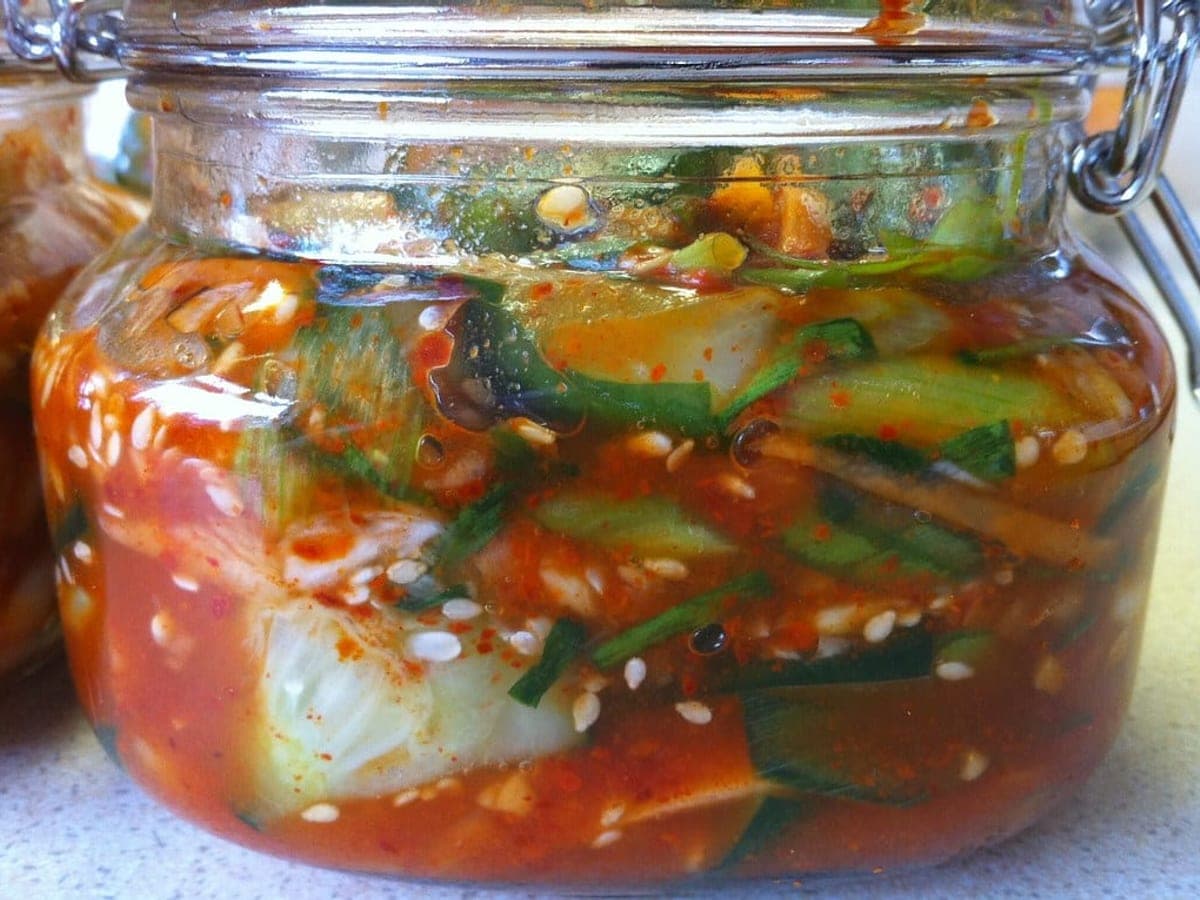
Why Is My Kimchi Not Sour?
The four things that stall kimchi fermentation — temperature, salt level, sugar and airtightness — and how to tell which one is your problem.
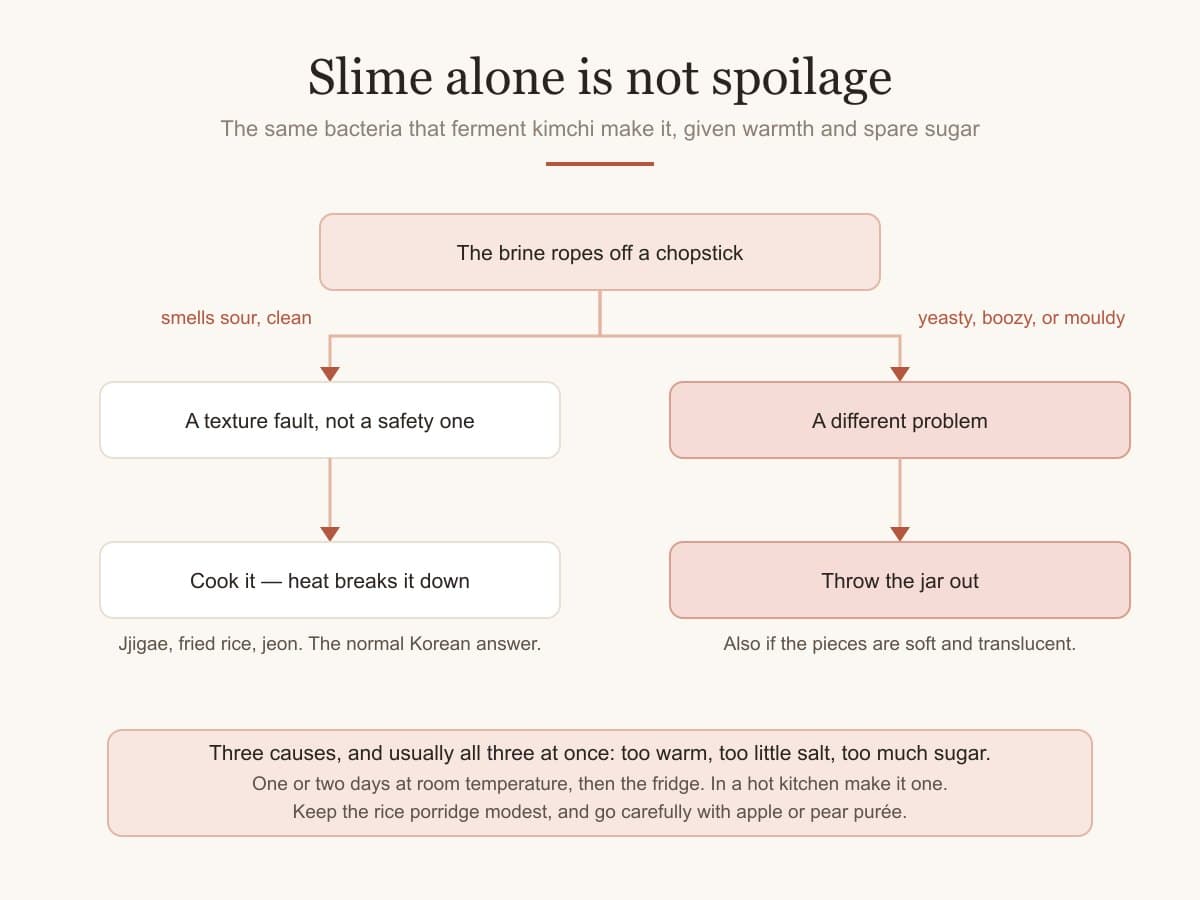
Why Is My Kimchi Slimy?
Slimy or stringy kimchi brine is usually harmless and always preventable. What causes it, when to throw the jar out, and how to avoid it next time.