Did you know — Korean culture
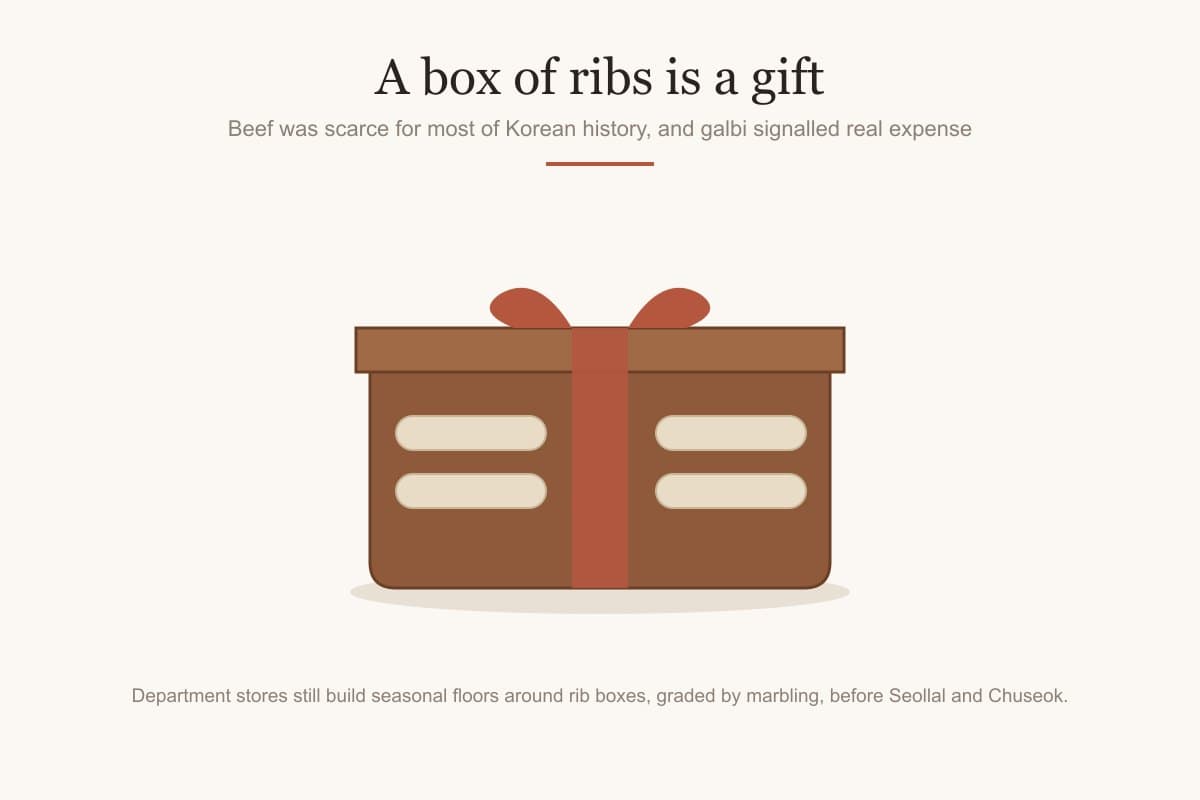
A box of short ribs is a standard Korean holiday gift, and the reason is price. Beef was scarce and expensive for most of Korean history, and galbi in particular was the cut that signalled real expense, so giving it carried weight that money would not have. Department stores still build whole seasonal floors around rib boxes before Seollal and Chuseok, graded and priced by marbling, and the top boxes cost more than most people's weekly shop. The dish is festive because the ingredient was once nearly unaffordable.
Tough galbijjim is counter-intuitive, because the instinct when meat is tough is that it was cooked too long. With a braise the opposite is nearly always true.
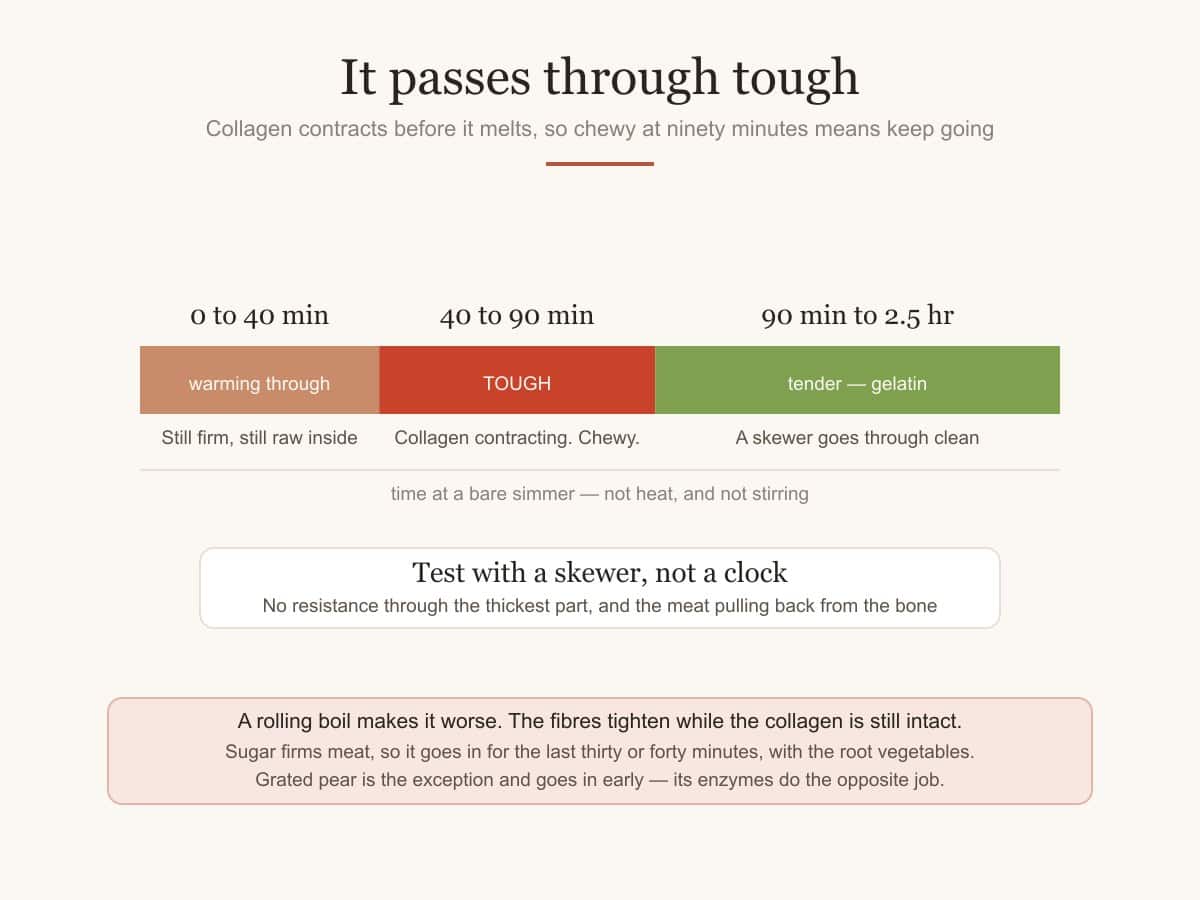
Short rib passes through tough on its way to tender. If yours is chewy, it has not been in the pot long enough.
The collagen window
Short rib is full of connective tissue. Heat first makes it contract and squeeze, which is the tough stage, and only then does it break down into gelatin.
That conversion needs time at temperature, not more heat. Somewhere between 1.5 and 2.5 hours at a bare simmer, depending on the ribs.
A rolling boil makes it worse, not faster: the muscle fibres tighten and the meat goes stringy while the collagen is still intact. If you are an hour in and it is tough, the answer is another hour.
Parboil, then braise
The ten-minute parboil and rinse is standard for kalbi jjim, and it is not only about scum. It firms the surface so the ribs hold their shape through a long braise instead of fraying.
Soak the ribs in cold water for an hour first, changing it once, to draw out blood. Then boil hard for ten minutes, drain, and rinse each piece.
Skim the braise as well, once at the start and once halfway. Fat left on top is what makes a galbijjim heavy rather than rich.
Sugar goes in late
Sugar firms meat. A heavily sweetened braising liquid from the start slows the collagen conversion and leaves the surface tight.
Braise the ribs in soy, aromatics and stock first, and add the sugar, honey or jocheong in the last thirty to forty minutes, along with the carrot and radish.
Grated Asian pear is the exception and goes in early. Its enzymes tenderise, which is the opposite job — though as tough bulgogi covers, leaving it too long has its own consequence.
Telling done from nearly done
The test is a skewer, not a clock. It should pass through the thickest part with no resistance and come out clean.
The second test is the bone: at the right point the meat is pulling back from it but has not fallen off. Fallen off is slightly past where you want galbijjim, which should still be in pieces.
It is better the next day, and genuinely so rather than as a saying. Chill it overnight, lift the set fat off the top, and reheat gently.
Common questions
Why is my galbijjim tough after two hours?
It needs longer. Short rib passes through a tough stage as the collagen contracts, and only converts to gelatin after that. Keep it at a bare simmer and test with a skewer, not a clock.
Can you overcook galbijjim?
Eventually, yes — the meat falls off the bone and shreds. That is past where galbijjim should be, which is tender but still in pieces. It is far more commonly undercooked.
Why parboil short ribs first?
To remove scum and to firm the surface so the ribs hold their shape through a long braise. Soak in cold water for an hour first, then boil hard ten minutes and rinse each piece.
When should I add the sugar?
In the last thirty to forty minutes, with the carrot and radish. Sugar firms meat, so a sweet braising liquid from the start slows the collagen breakdown.
More to cook
All Ingredient & Substitute Guides
Why Is My Gyeranjjim Watery?
Watery or weeping steamed egg comes down to the liquid ratio and the heat. The numbers that work, and how to tell which one went wrong.
Why Is My Japchae Sticky?
Clumped japchae comes from the rinse and the timing, not the sauce. How to keep dangmyeon separate and springy from pan to plate.
Why Is My Kimbap Falling Apart?
Kimbap that unravels is nearly always wet rice, an overfilled roll or a blunt knife. What to change, in the order worth trying.