Did you know — Korean culture
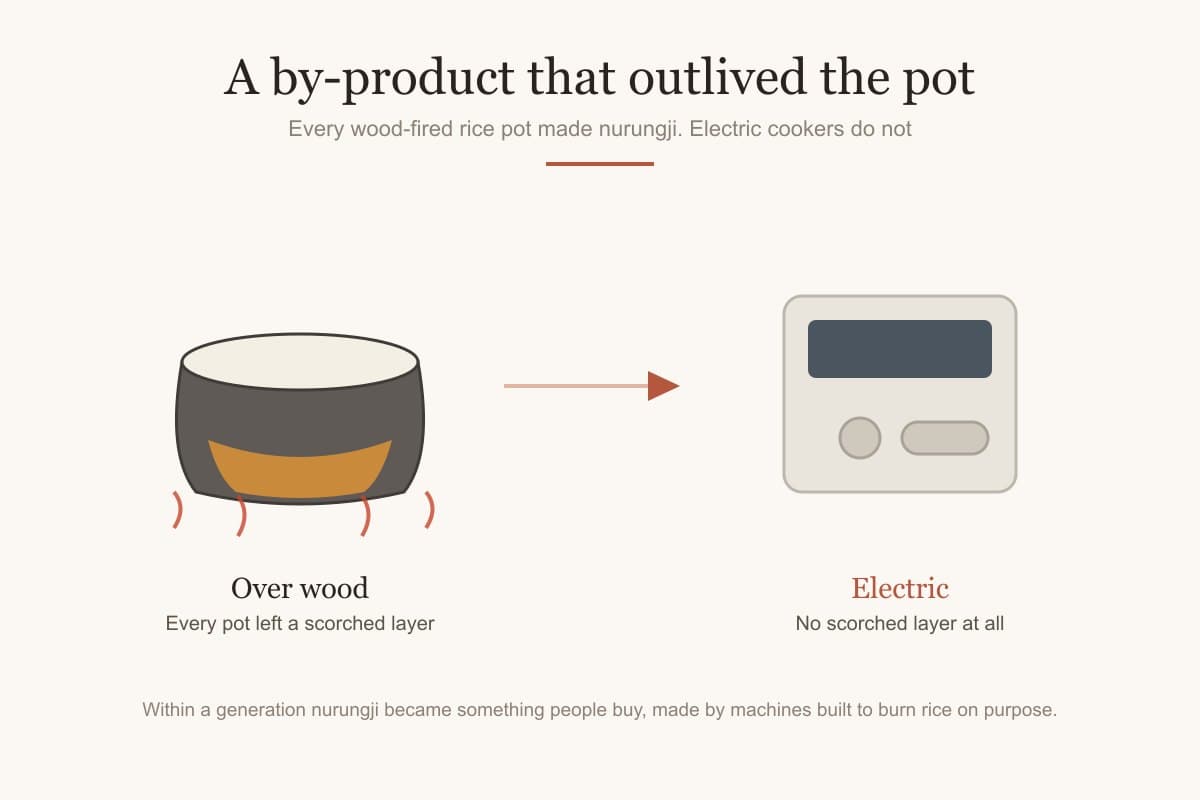
Nurungji was a by-product of cooking rice over wood, and it has outlived the method entirely. Every pot left a scorched layer at the bottom, so every household had it, and the usual thing was to pour hot water in and drink the result as sungnyung at the end of a meal. Electric rice cookers removed the by-product and within a generation nurungji became something people buy — sold in bags as a snack, and manufactured deliberately by machines built to burn rice in a controlled way.
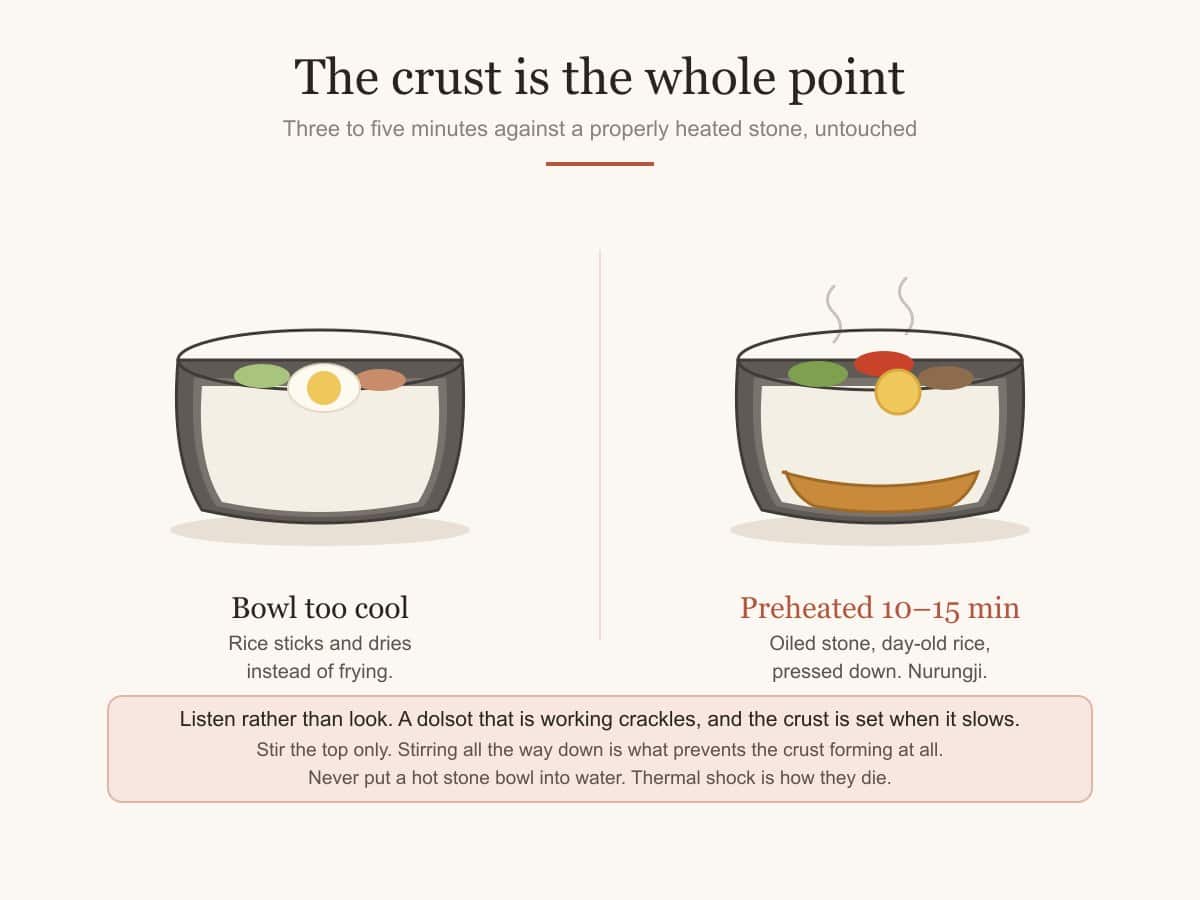
The crust at the bottom — nurungji — is the whole reason to use a dolsot rather than a bowl. If it is not forming, one of three things is wrong.
The bowl was not hot enough, the rice was too wet, or you stirred too soon. All three are fixable and none takes longer.
The stone has to be much hotter than you think
A dolsot needs ten to fifteen minutes over medium heat before anything goes in it, and it should be hot enough that a drop of water skitters and vanishes.
Most disappointing dolsot bibimbap is a bowl that went on the heat for three minutes.
Brush the inside with sesame oil before the rice. The oil is what fries the layer against the stone — without it the rice dries out and sticks rather than crisping.
The rice is too wet
Day-old refrigerated rice crisps better than fresh. It has lost surface moisture, which is exactly what has to go before browning can start.
If you only have fresh rice, spread it on a tray for ten minutes first.
And press it down firmly into the bowl. Contact with the stone is what makes the crust, and loose rice has air under most of it. See why rice goes mushy for the cooking side of this.
You stirred too soon
The crust forms in the three to five minutes after the bowl reaches the table, while the stone is still giving up heat.
Listen rather than look. A dolsot that is working crackles steadily. When the crackling slows, the crust is set.
Stir the top, eat downward, and leave the bottom layer until last. Scraping it up at the end is the point, and some people pour a little hot water or tea into the empty bowl afterwards to loosen what is left — which is sungnyung.
The bowl itself
An unseasoned dolsot cracks and sticks. A new one is usually soaked overnight, then simmered with rice water, then rubbed with oil — follow whatever the maker says, but do not skip it.
Never put a hot dolsot into water. The thermal shock splits it, and that is the usual way they die.
A cast-iron pan is a reasonable stand-in for the crust, though it cools far faster. A ceramic ttukbaegi is not — it holds heat well but does not get hot enough at the surface to brown rice.
Common questions
How hot does a dolsot need to be?
Ten to fifteen minutes over medium heat before anything goes in, hot enough that a drop of water skitters and vanishes. Three minutes is the usual mistake.
Why is there no crust in my dolsot bibimbap?
The bowl was too cool, the rice too wet, or you stirred too early. Day-old rice pressed firmly into an oiled, properly heated bowl crusts in three to five minutes at the table.
Should I use fresh or day-old rice?
Day-old refrigerated rice. It has already lost the surface moisture that has to go before browning can begin. Fresh rice can be spread on a tray for ten minutes instead.
Can I use a cast-iron pan instead of a dolsot?
For the crust, yes, though it cools much faster. A ceramic ttukbaegi will not work — it holds heat but does not reach a high enough surface temperature to brown rice.
More to cook
All Ingredient & Substitute Guides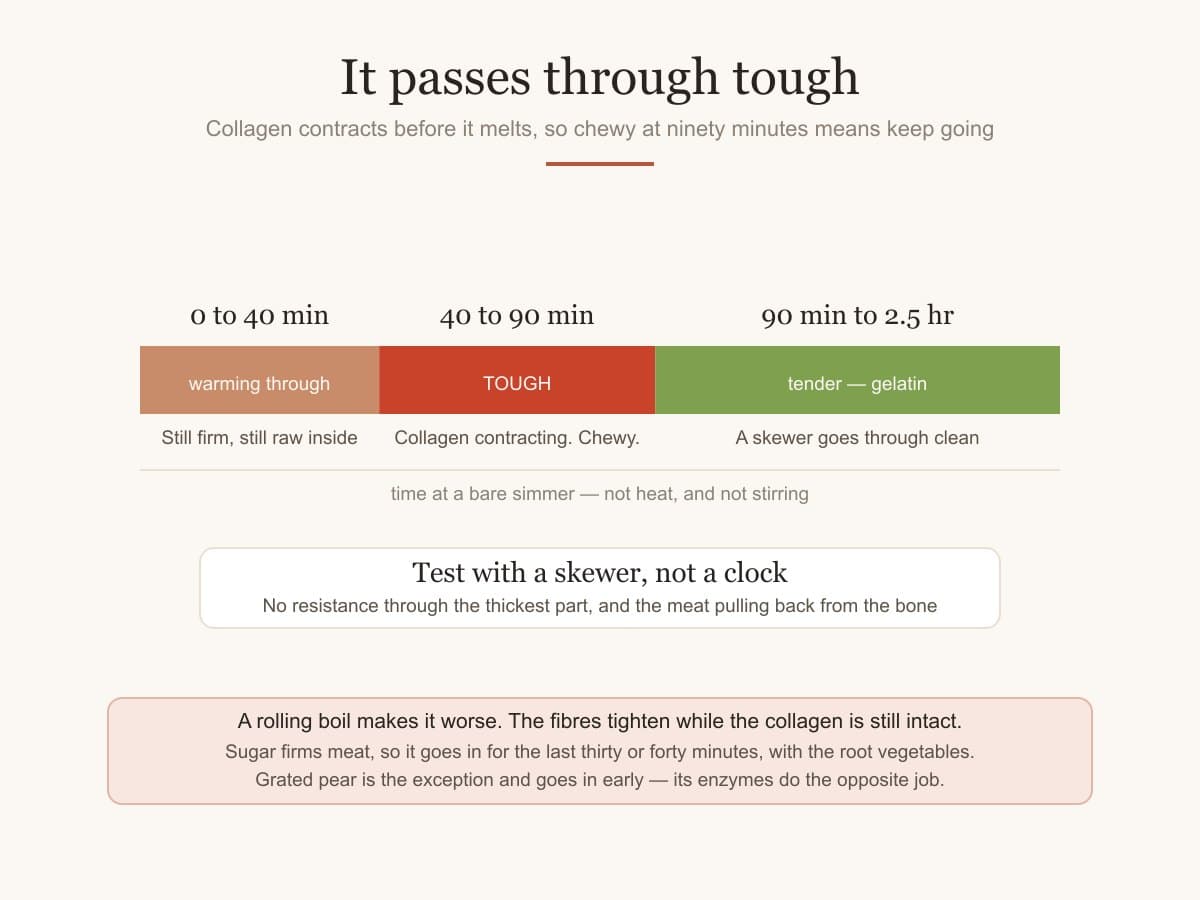
Why Is My Galbijjim Tough?
Tough braised short rib is almost always undercooked, not overcooked. The collagen window, the parboil, and why the sugar goes in late.
Why Is My Gyeran Mari Falling Apart?
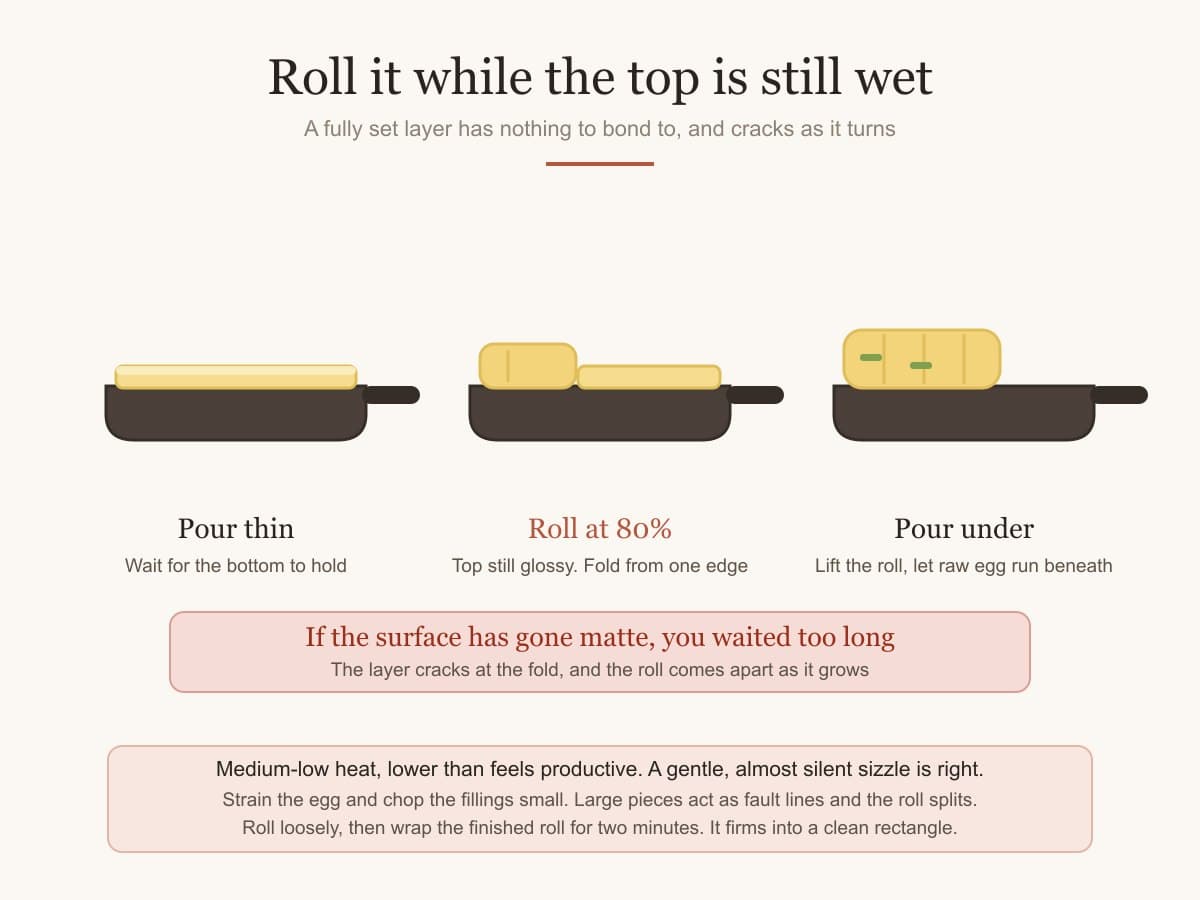
Rolled omelette that breaks was cooked too far before rolling, or cooked too hot. The timing, the pan, and the strain.

Why Is My Gyeranjjim Watery?
Watery or weeping steamed egg comes down to the liquid ratio and the heat. The numbers that work, and how to tell which one went wrong.