Did you know — Korean culture
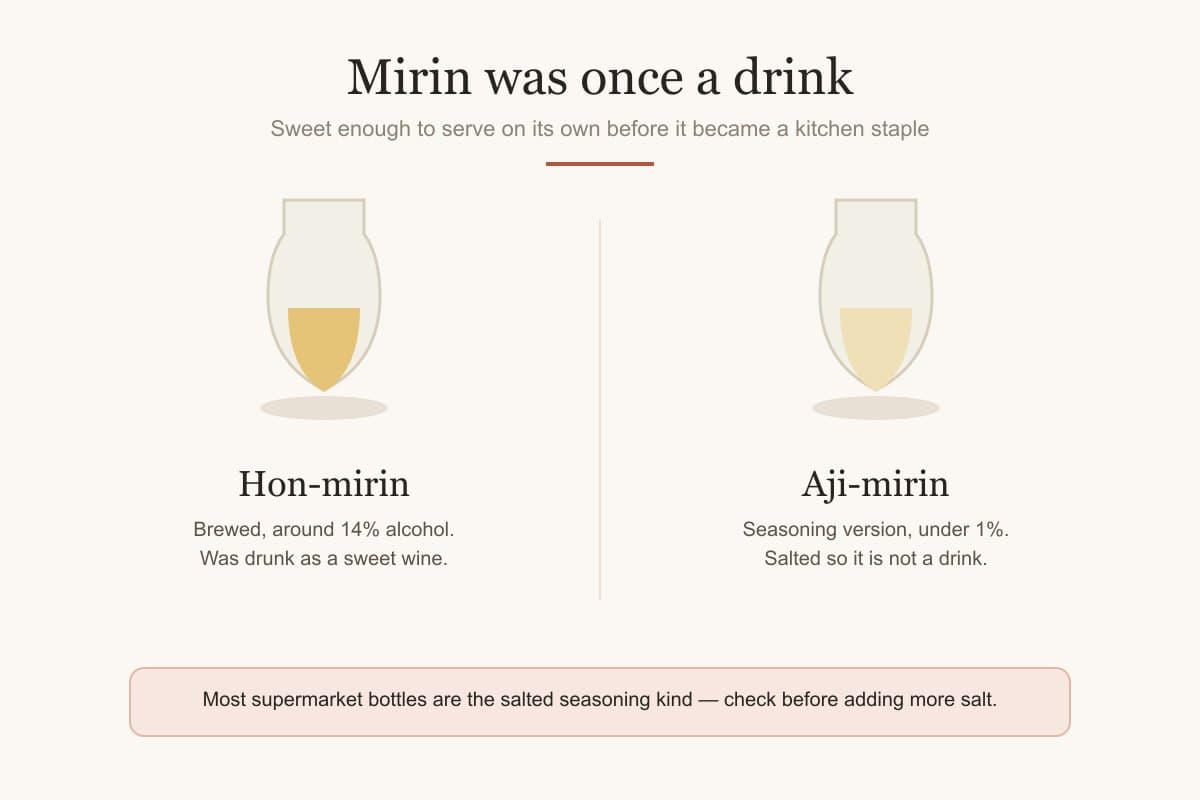
Mirin began as something you drank. Brewed sweet rice wine was served as a cordial in Japan for centuries before it moved to the kitchen, and hon-mirin still sits at around fourteen percent alcohol. The thin, salted bottle that most shops sell exists largely because of tax: adding salt makes it undrinkable, which takes it out of the alcohol duty bracket and onto the grocery shelf. That salt is the reason a dish made with supermarket mirin can come out saltier than the recipe intended.
Mirin turns up in Korean recipes often enough to be worth keeping, and rarely enough that running out should not stop you cooking.
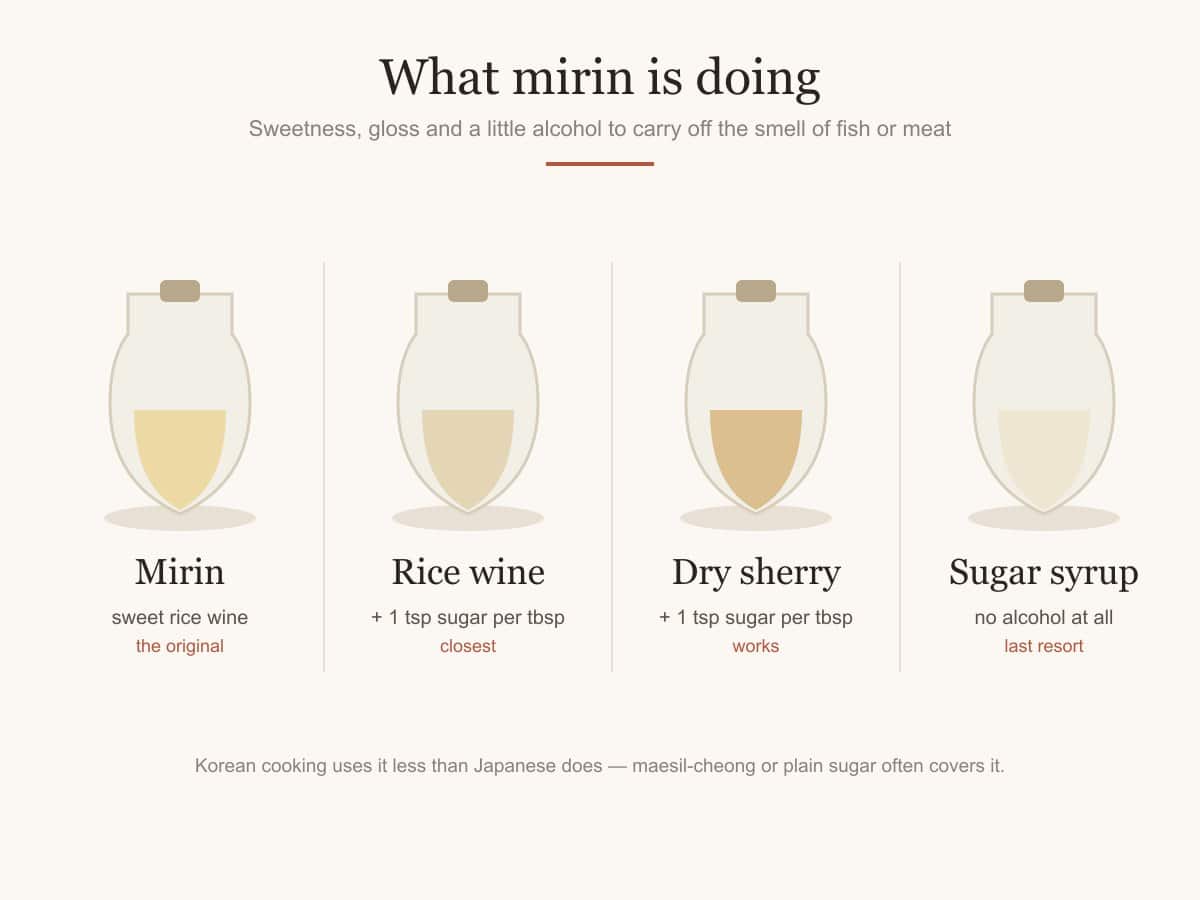
It does three things: it sweetens, it adds gloss, and its small amount of alcohol carries off the smell of fish or meat as it cooks. A good substitute covers the first two. The third matters less than people assume.
What to use instead
Rice wine plus sugar — the closest. One tablespoon of rice wine to one teaspoon of sugar. Cheap cooking rice wine is fine; this is the swap most Korean home cooks make without thinking about it.
Dry sherry plus sugar — same ratio, works well, slightly nuttier.
Dry white wine plus sugar — acceptable in a braise, less good in a glaze.
Maesil-cheong on its own — green plum syrup sweetens and adds acidity, which is a genuinely good fit for Korean marinades and often better than mirin in them.
Sugar syrup, no alcohol — the last resort. You get the sweetness and the gloss, and nothing else. Perfectly usable.
Check which mirin you have
Two quite different products share the name.
Hon-mirin is brewed and around 14% alcohol. It was once drunk as a sweet wine in its own right.
Aji-mirin, the common supermarket bottle, is under 1% alcohol and salted so that it is not taxed as drink. That salt matters: if you are using aji-mirin, taste before adding more salt to the dish.
Most bottles on a Western supermarket shelf are the second kind.
How much it matters in Korean cooking
Less than in Japanese cooking, where mirin is structural. Korean recipes tend to reach for syrup, sugar or maesil-cheong for sweetness and gloss, and for soju or rice wine when they want the alcohol.
Where you will meet it: bulgogi and galbi marinades, braised fish, and glazed dubu jorim. In every one of those, a rice-wine-and-sugar swap passes unnoticed.
Common questions
What is the best substitute for mirin?
Rice wine with a little sugar — one tablespoon to one teaspoon. It covers the sweetness and the gloss, and the alcohol does the same job mirin's does. Dry sherry works almost as well.
Can I use rice vinegar instead of mirin?
Not directly. Vinegar is sour where mirin is sweet, and swapping one for the other will noticeably unbalance a marinade. If vinegar is all you have, add sugar and use considerably less than the mirin quantity.
Is mirin alcoholic?
Hon-mirin is, at around 14%. Aji-mirin — the usual supermarket bottle — is under 1% and salted. Either way the alcohol largely cooks off, but the salt in aji-mirin does not, so season the dish afterwards rather than before.
Do Korean recipes need mirin?
Less often than Japanese ones. Korean cooking usually reaches for rice syrup, sugar or green plum syrup for the same effect. Treat mirin as useful rather than essential.
More to cook
All Ingredient & Substitute Guides
Napa Cabbage Substitute
Which cabbages actually work in place of napa, which ones only work outside kimchi, and why the water content matters more than the flavor.

Perilla vs Shiso
Korean kkaennip and Japanese shiso are varieties of one species, and they are not interchangeable. How they differ and when a swap works.
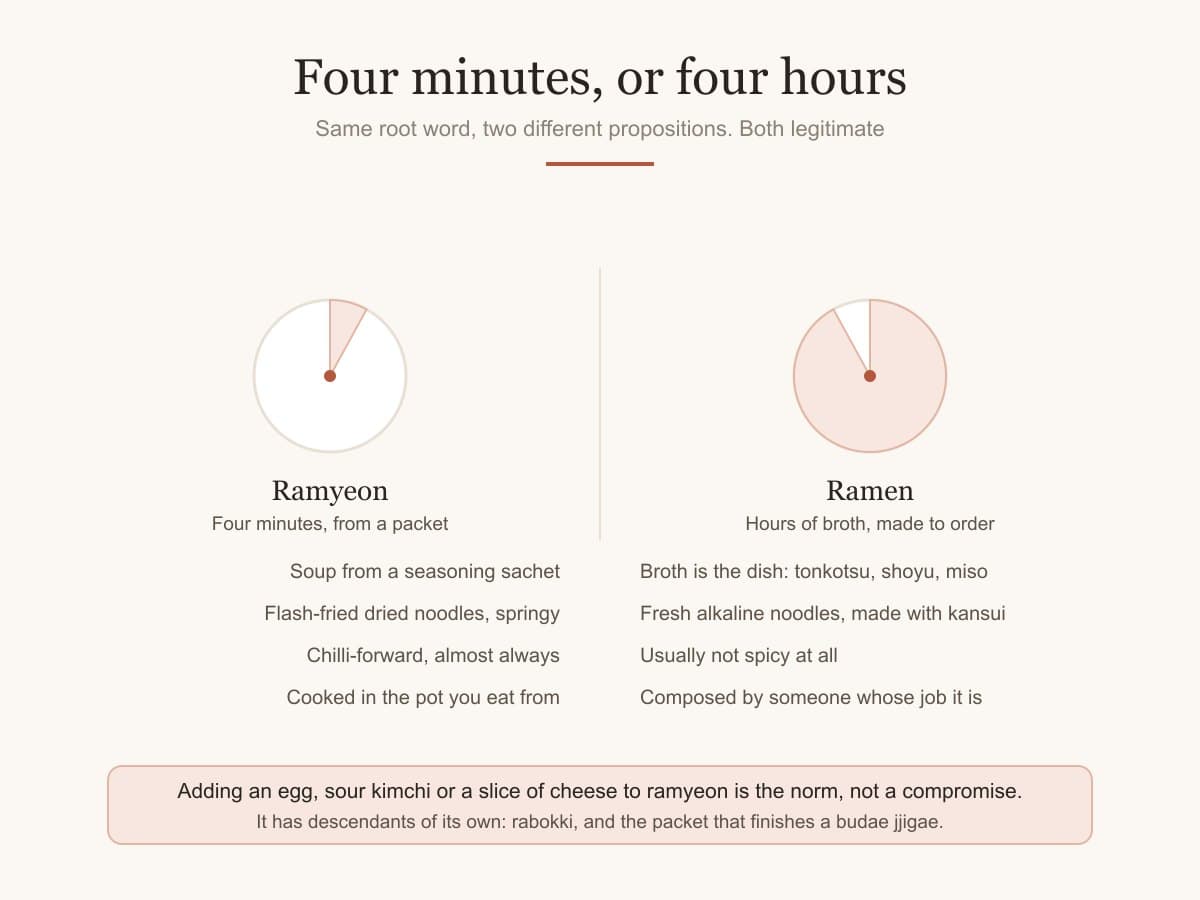
Ramyeon vs Ramen
Korean ramyeon and Japanese ramen share an ancestor and almost nothing else. Broth, noodles, time and what each one is for.