Did you know — Korean culture
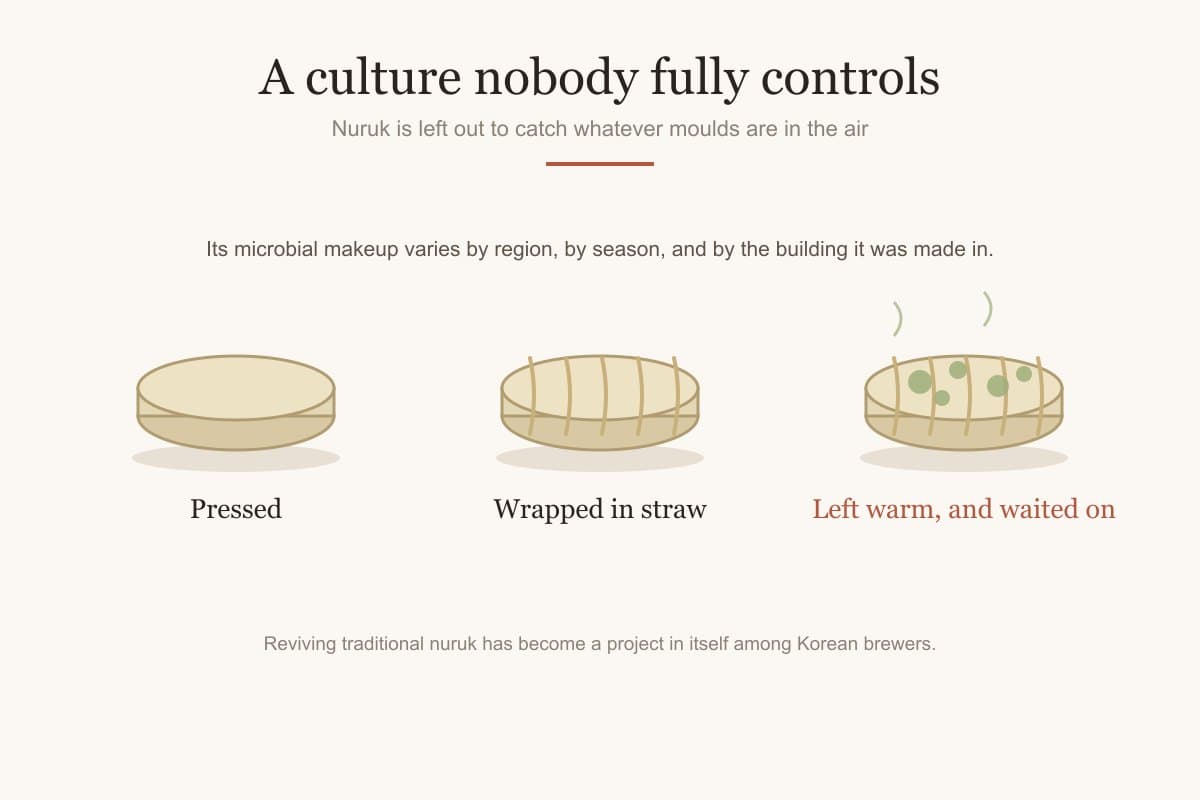
Nuruk is a culture nobody fully controls. A cake of crushed wheat or rice is pressed, wrapped in straw, and left in a warm place to catch whatever moulds and yeasts are in the air — so its microbial makeup varies by region, by season and by the building it was made in. Japanese koji, by contrast, is a single purified strain propagated deliberately. That difference in approach is why makgeolli from two producers can taste genuinely unalike, and why reviving traditional nuruk has become a project in itself among Korean brewers.
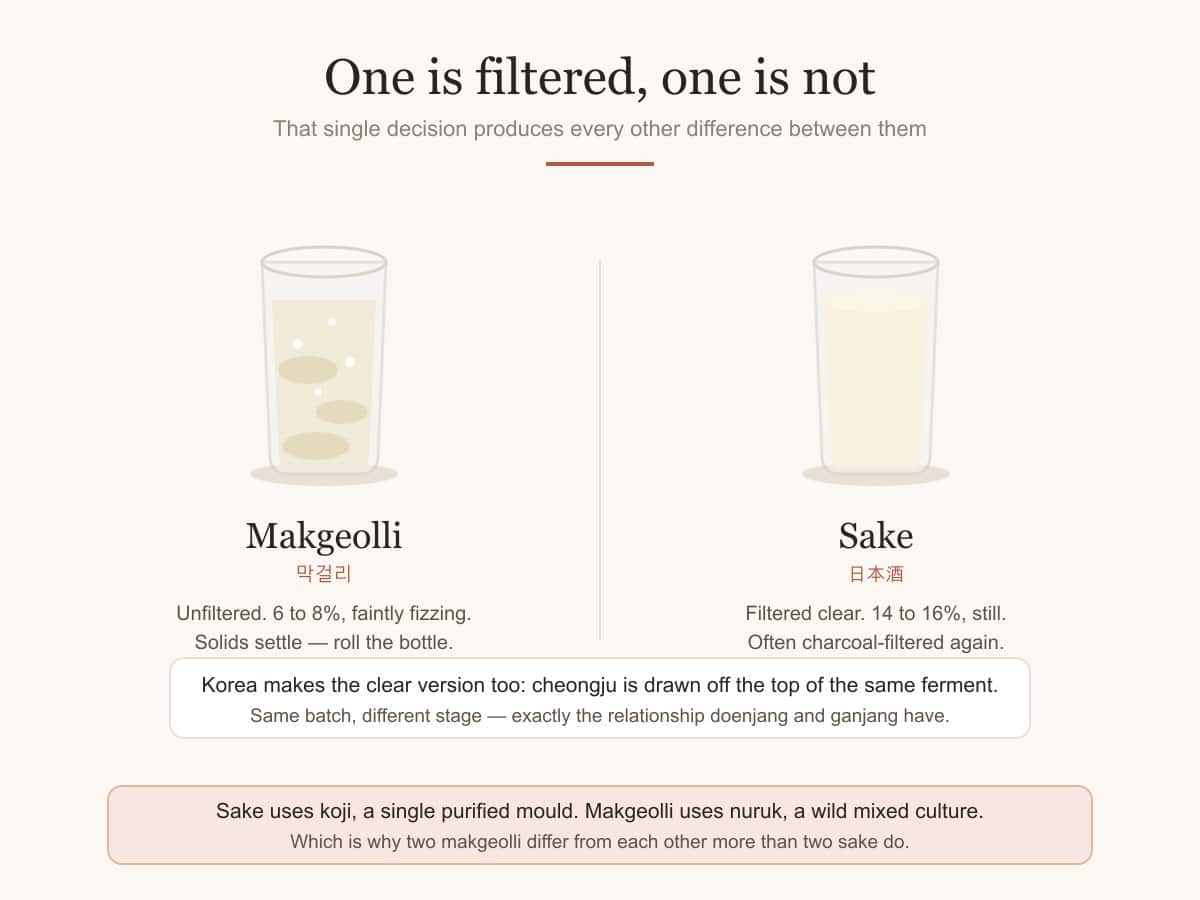
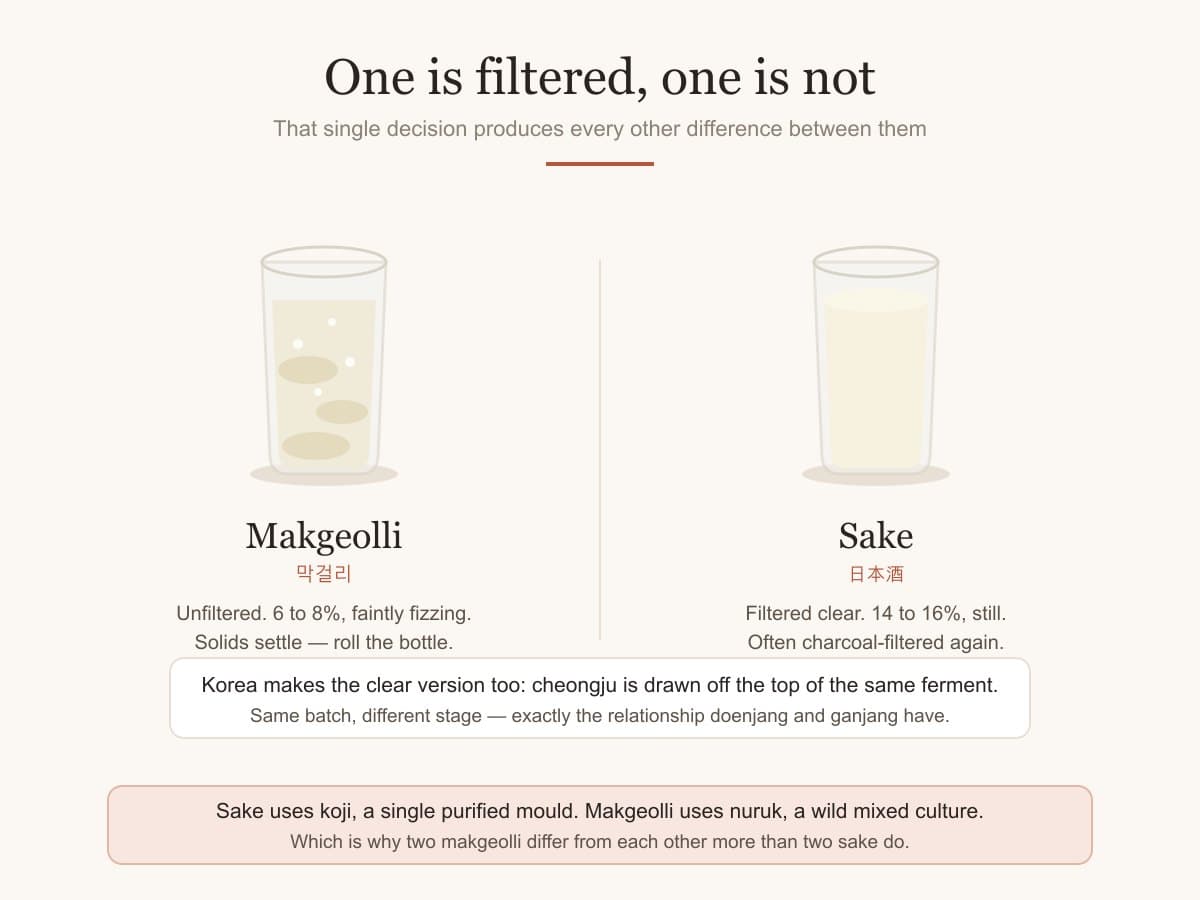
Both are rice brewed with a mould culture, and the family resemblance stops at the bottle. One is clear, still and around 15%; the other is cloudy, fizzing and around 6%.
Sake is filtered. Makgeolli is not. That one decision produces every other difference.
Filtered against unfiltered
Makgeolli is the unrefined brew, pressed only coarsely, so the rice solids stay in. That is the cloud, and it settles — which is why the bottle has to be rolled or turned before pouring.
Sake is filtered clear, and often filtered again through charcoal.
Korea also makes a clear version from the same ferment: cheongju is the liquid drawn off the top before the rest is roughened up into makgeolli. The two are the same batch at different stages, which is exactly the relationship doenjang and ganjang have.
Strength, and fizz
Makgeolli is about 6 to 8%, roughly beer strength, and usually faintly sparkling because it is often sold still fermenting.
Sake is 14 to 16% and still.
A live makgeolli keeps changing in the fridge and turns sourer over a week or two. Many bottles carry a short use-by date for that reason, and pasteurised ones taste noticeably flatter.
The culture is different
Sake uses koji — Aspergillus oryzae grown on steamed rice, a single purified mould.
Makgeolli uses nuruk, a cake of crushed wheat or rice left to catch wild moulds and yeasts from the air. It is a mixed culture rather than a clean one.
That is most of why makgeolli tastes earthier, tangier and less refined, and why two makgeolli from different producers differ more than two sake do.
What each is drunk with
Makgeolli goes with pajeon on a rainy day, and with heavy savoury food generally. It is poured into shallow bowls rather than cups, and it is cheap — historically the farmers' drink.
Sake spans a far wider range, from everyday to extremely expensive, and is served warm or chilled depending on the style.
Neither substitutes for the other in cooking. Sake works in a Korean braise much as soju does; makgeolli is sometimes used in marinades for its enzymes but brings sweetness and cloudiness with it.
Common questions
What is the difference between makgeolli and sake?
Makgeolli is unfiltered, cloudy, lightly sparkling and about 6 to 8%. Sake is filtered clear, still, and 14 to 16%. The filtering is the root of every other difference.
Why do you shake makgeolli?
The rice solids settle out. Rolling or gently turning the bottle puts them back into suspension; poured unshaken you get a clear layer and then a very thick one.
Is makgeolli the same as cheongju?
Same ferment, different stage. Cheongju is the clear liquid drawn off the top; makgeolli is what remains once the solids are stirred back through and the whole thing is strained coarsely.
Can I cook with makgeolli instead of sake?
In a marinade, sometimes — it has useful enzymes. In a braise it brings sweetness and cloudiness that sake does not, so soju or plain rice wine is the closer swap.
More to cook
All Ingredient & Substitute Guides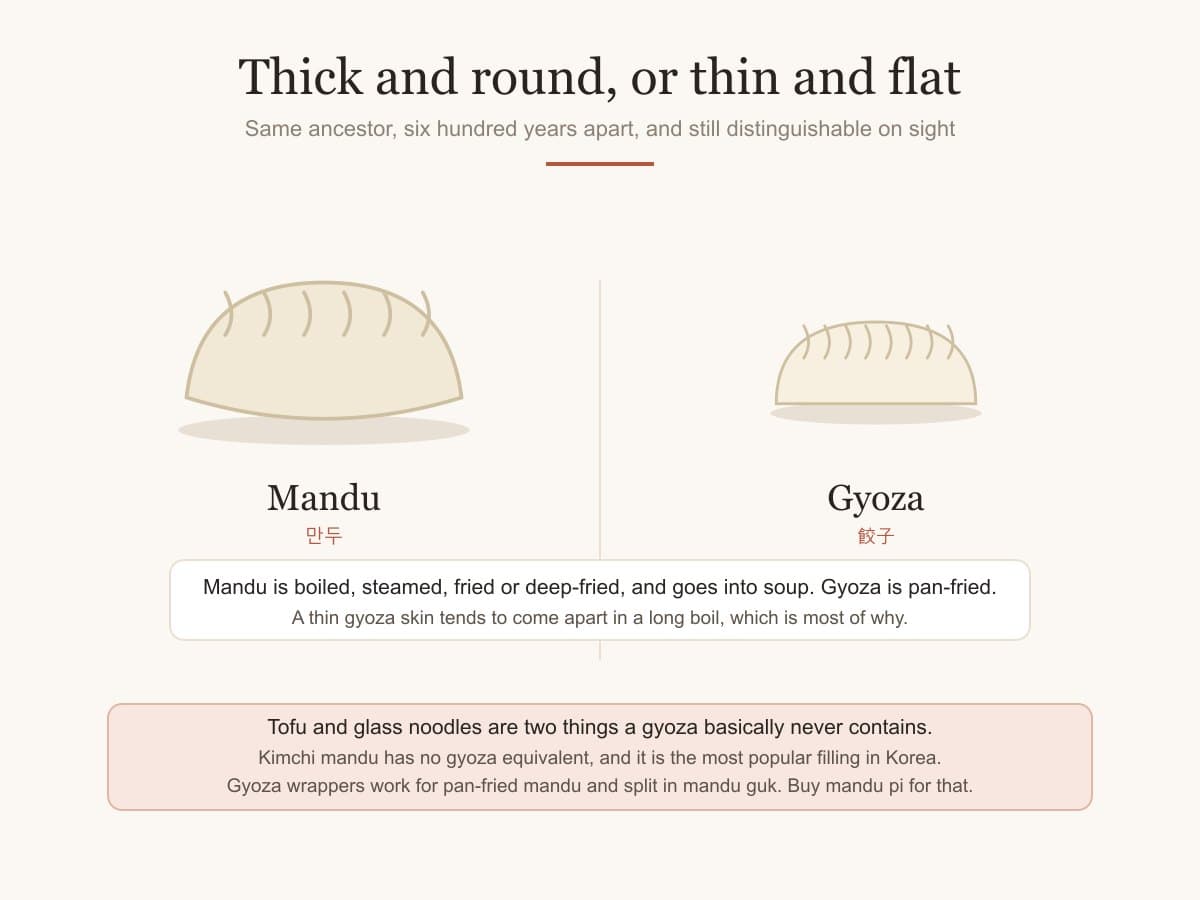
Mandu vs Gyoza
Korean mandu and Japanese gyoza come from the same ancestor and diverged. Wrapper thickness, filling, shape and how each is cooked.
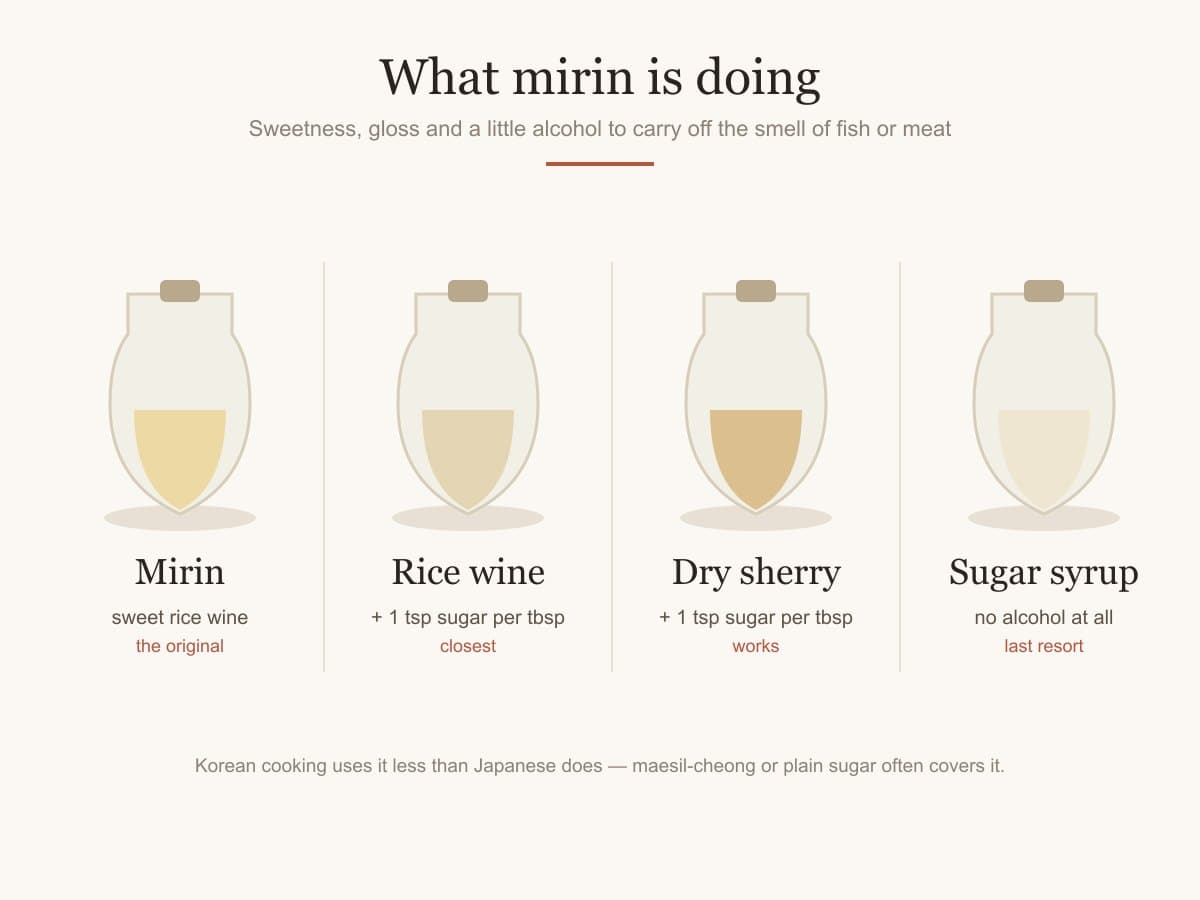
Mirin Substitute
What mirin actually contributes to a Korean marinade, the substitutes that hold up, and why Korean cooking needs it less often than Japanese cooking does.
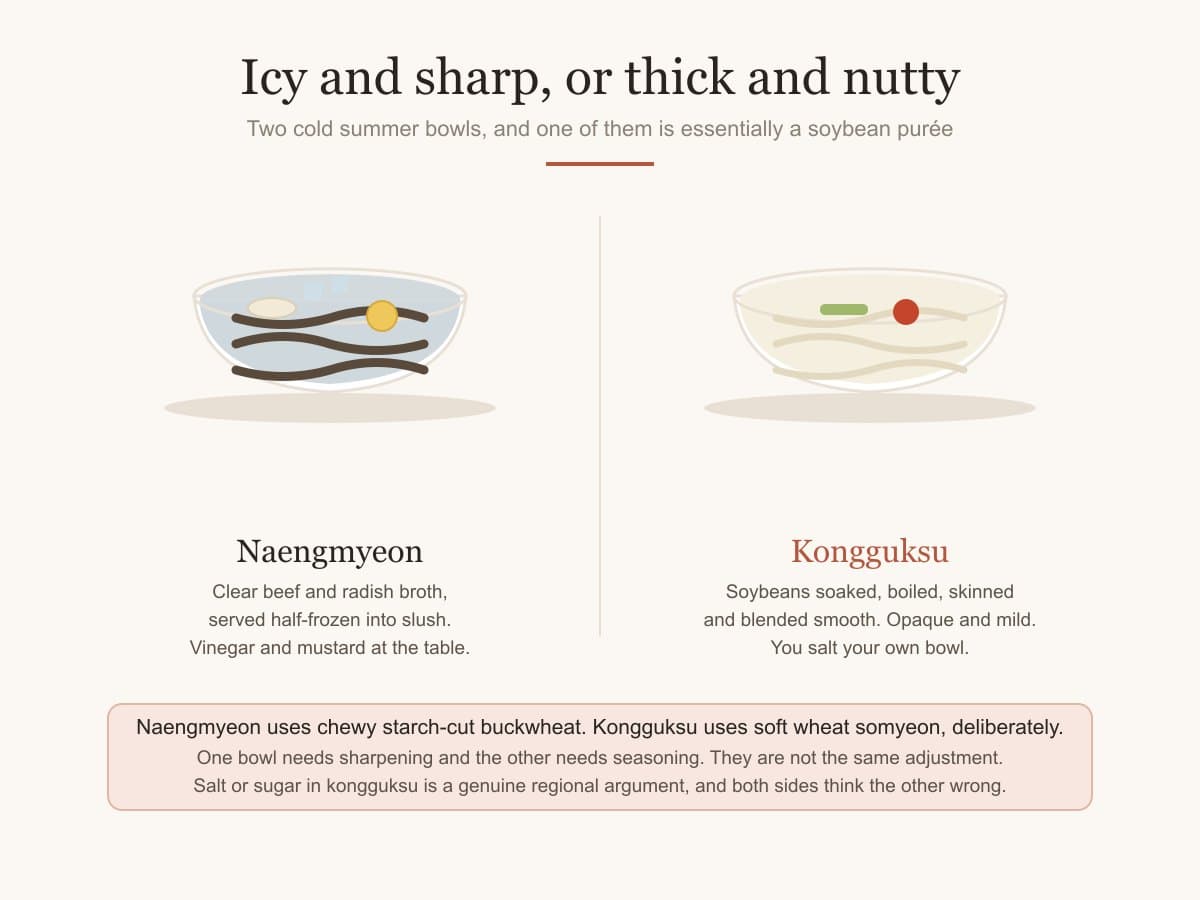
Naengmyeon vs Kongguksu
Both are cold noodle soups eaten in summer and they could not be less alike. Icy and sharp against thick and nutty.