Did you know — Korean culture
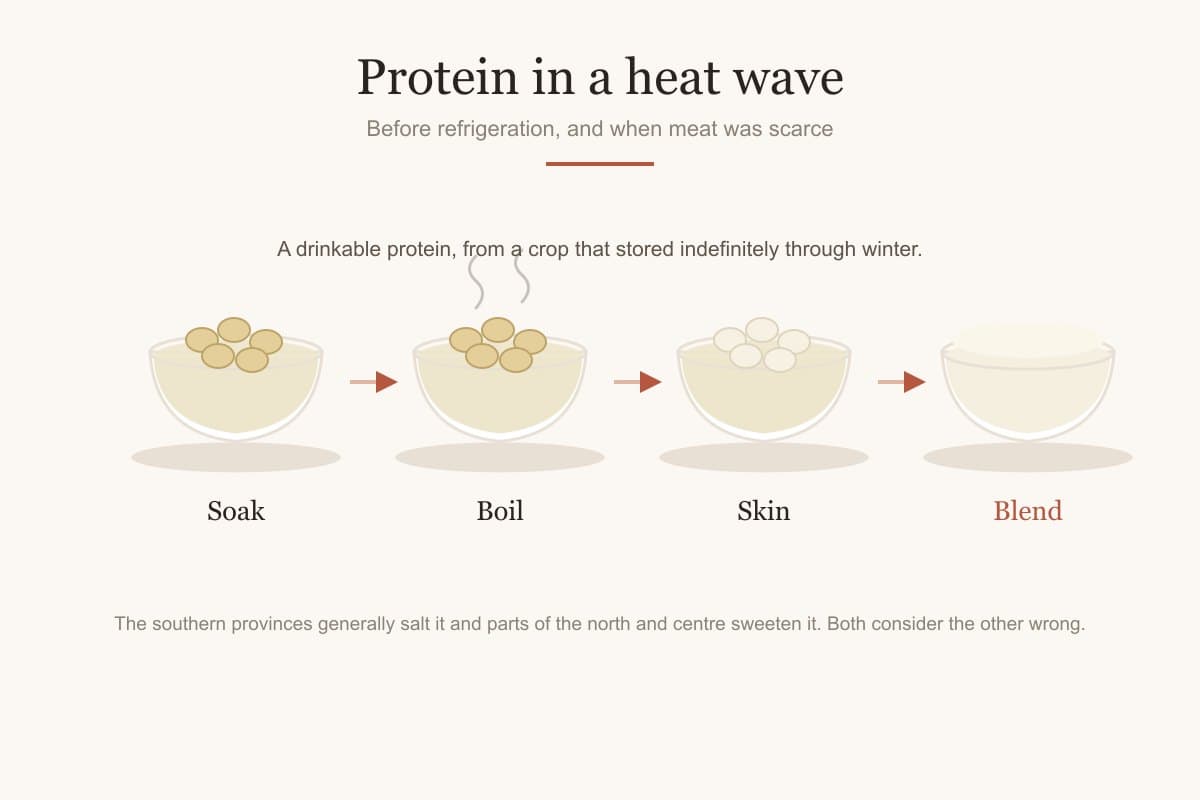
Kongguksu was a way of eating protein in a heat wave before refrigeration, and the soybean was doing that work because meat was scarce. Records of the dish go back at least to the nineteenth century, and the method — soak, boil, skin, grind — produces a drinkable protein from a crop that stored indefinitely through winter. The regional salt-or-sugar split survives from that period too: the southern provinces generally salt it and parts of the north and centre sweeten it, and both sides consider the other wrong.
Two cold noodle soups, both summer food, and about as different as two dishes in the same category can be.
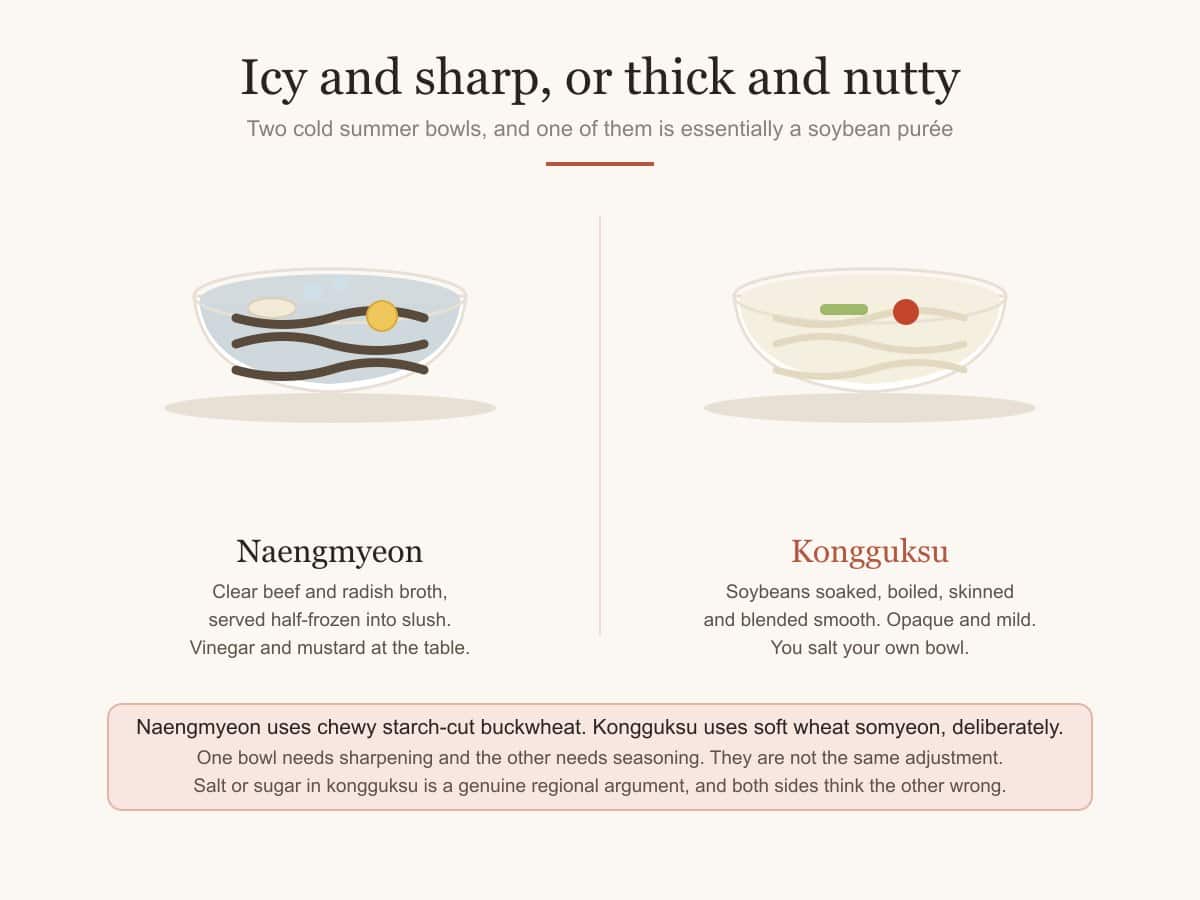
Naengmyeon is sharp, icy and savoury. Kongguksu is thick, cool and nutty. One is a broth, the other is essentially a soybean purée.
The liquid
Naengmyeon sits in a clear beef-and-radish broth, often with dongchimi brine, served half-frozen into slush. Vinegar and mustard go in at the table.
Kongguksu is soybeans soaked, boiled, skinned and blended with water into a smooth, pale, opaque soup — closer to a thin dairy-free milk than a broth.
One is sour and bracing; the other is mild to the point of needing salt at the table, which is exactly how it is served.
The noodles
Naengmyeon uses buckwheat noodles cut with potato or sweet potato starch — very chewy, very elastic, cut with scissors at the table.
Kongguksu uses plain wheat somyeon, soft and thin, because a chewy noodle fights a smooth soup.
That is the practical difference for a home cook: kongguksu noodles are the ones already in your cupboard.
Seasoning at the table
Kongguksu is served unseasoned and you salt your own bowl, which startles people the first time. Some regions add a spoonful of sugar instead, and the salt-versus-sugar split is a genuine regional argument in Korea.
Naengmyeon arrives seasoned and gets vinegar and mustard added, not salt.
So one bowl needs sharpening and the other needs seasoning, and they are not the same adjustment.
What is on top
Naengmyeon: sliced pear, cucumber, half a boiled egg, cold beef. The pear is not a garnish — its sweetness is part of the balance.
Kongguksu: cucumber, sometimes tomato, sometimes sesame seeds, and that is usually all. The soup is the dish.
Neither substitutes for the other. If you want a bracing, acidic cold bowl, naengmyeon. If you want a cold bowl that is filling and gentle, kongguksu — and it is the better choice for anyone who finds naengmyeon's acidity hard going.
Common questions
What is the difference between naengmyeon and kongguksu?
Naengmyeon is chewy buckwheat noodles in a sharp, icy beef-and-radish broth. Kongguksu is soft wheat noodles in a thick, mild, blended soybean soup.
Is kongguksu served cold?
Yes, cool to cold, and unseasoned — you add salt at your own bowl. Some regions use sugar instead, and which one is correct is a real regional argument.
Which noodles does kongguksu use?
Plain wheat somyeon, soft and thin. A chewy starch noodle fights the smooth soup, which is why naengmyeon noodles are wrong here.
Which is better for someone new to Korean cold noodles?
Kongguksu is gentler — mild, filling and not acidic. Naengmyeon's sharpness and the extreme chew of the noodles are more of an acquired taste.
More to cook
All Ingredient & Substitute Guides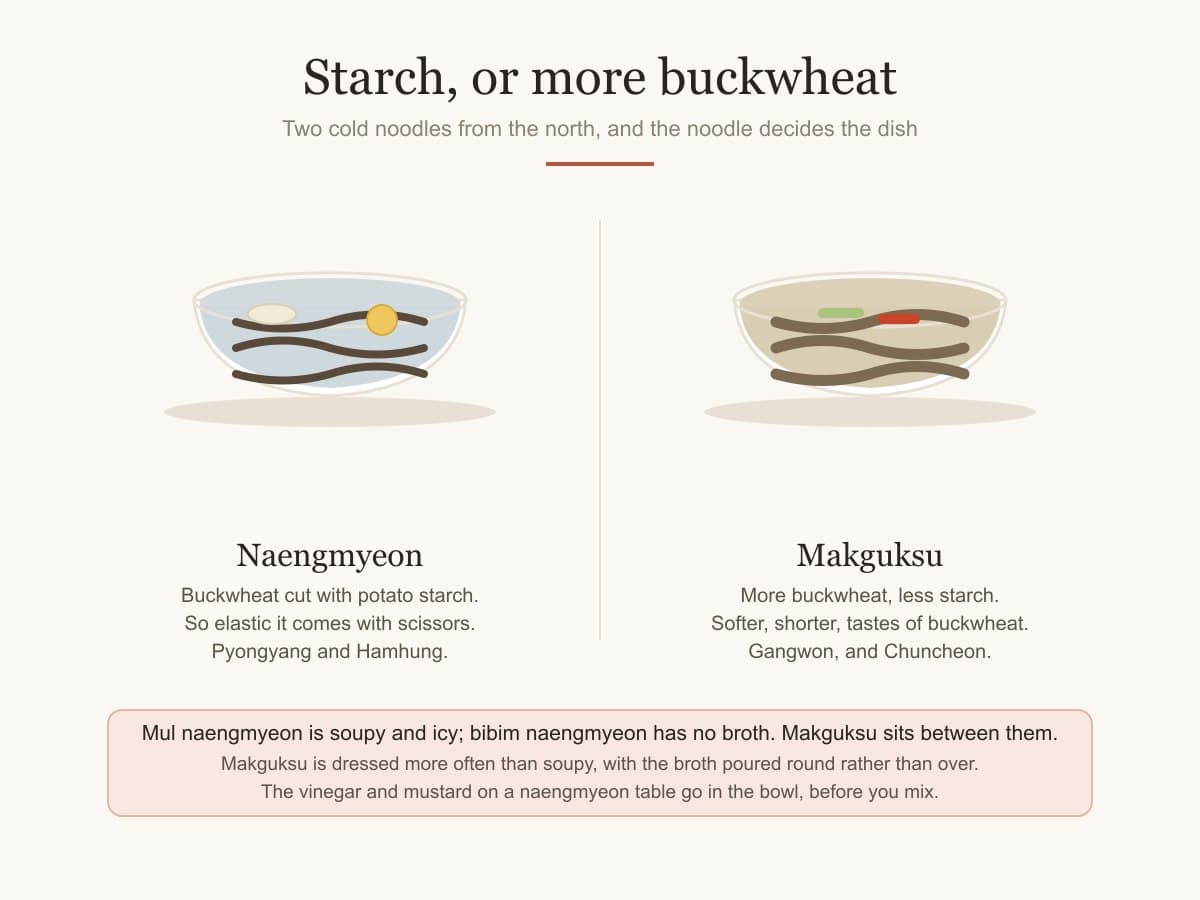
Naengmyeon vs Makguksu
Both are cold buckwheat noodles from the north. The noodle, the broth, the region and how each one is actually served.
Napa Cabbage Substitute
Which cabbages actually work in place of napa, which ones only work outside kimchi, and why the water content matters more than the flavor.
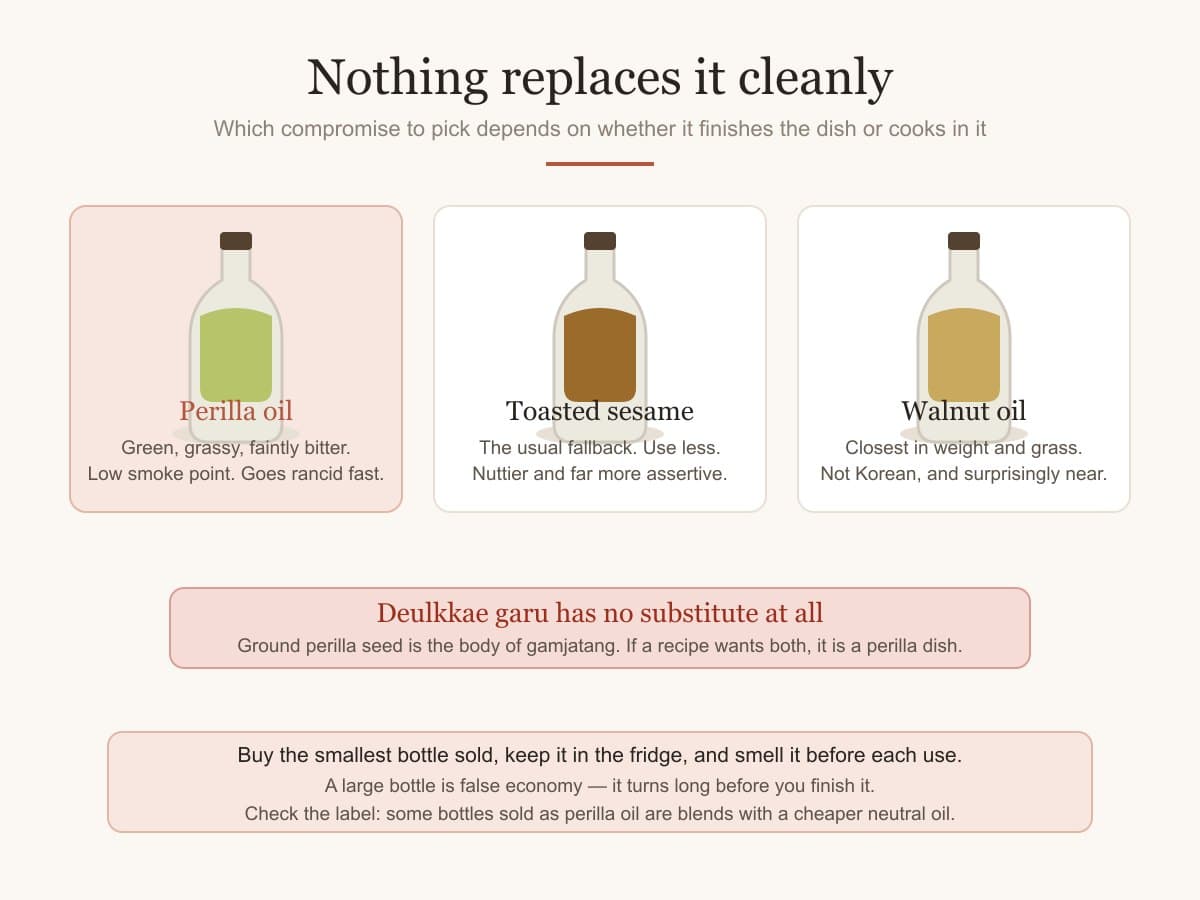
Perilla Oil Substitute
Nothing quite replaces deulgireum, and which compromise to pick depends on the dish. What to use for namul, for soup and for finishing.