Did you know — Korean culture
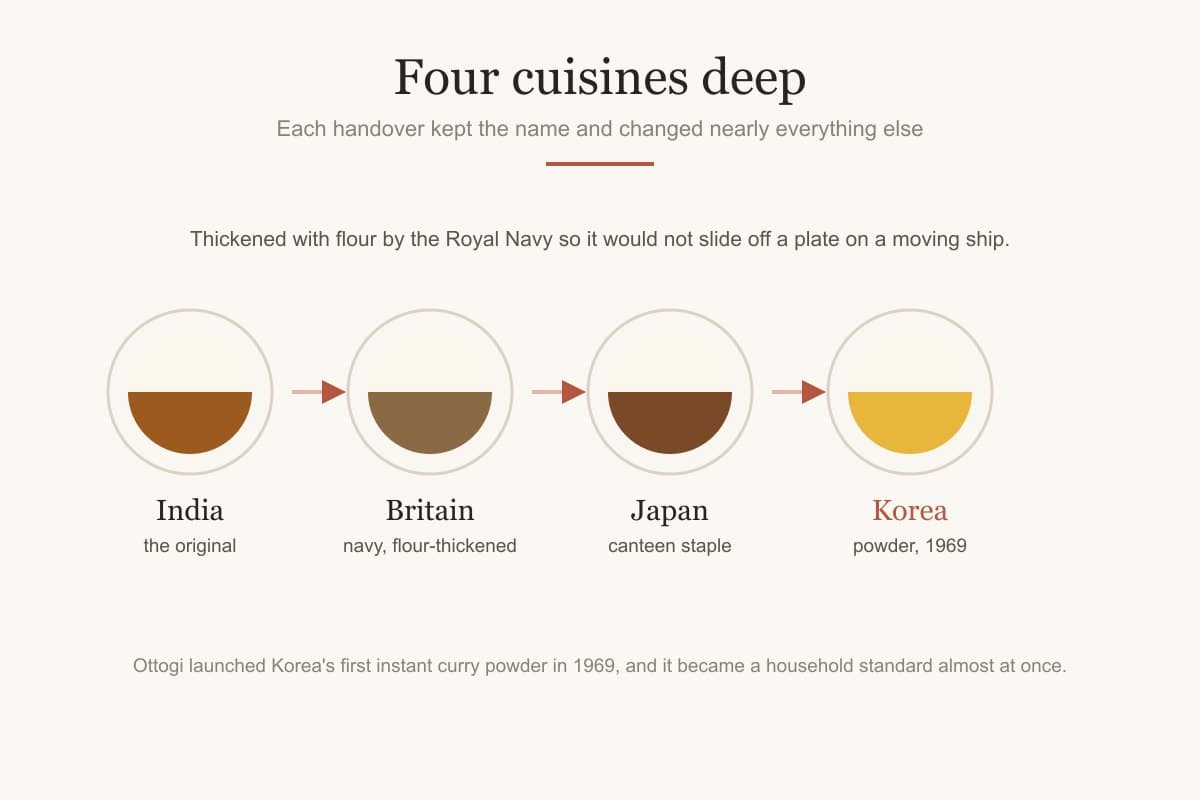
Korean curry is four cuisines removed from where it started. An Indian dish was adapted by the British, standardised as a thickened stew by the Royal Navy — flour-thickened so it would not slide off a plate on a moving ship — carried to Japan in the Meiji period, where it became a military and then a school-canteen staple, and arrived in Korea from there. Ottogi launched the first Korean instant curry powder in 1969 and it became a household standard almost immediately. Each handover kept the name and changed nearly everything else.
Korean curry is a descendant of Japanese curry, which is itself a descendant of a British naval adaptation of an Indian dish. Four cuisines deep, and each one changed it.
The two are close. The differences are colour, thickness, and what is on the table beside it — and the last one is the biggest.
Yellow against brown
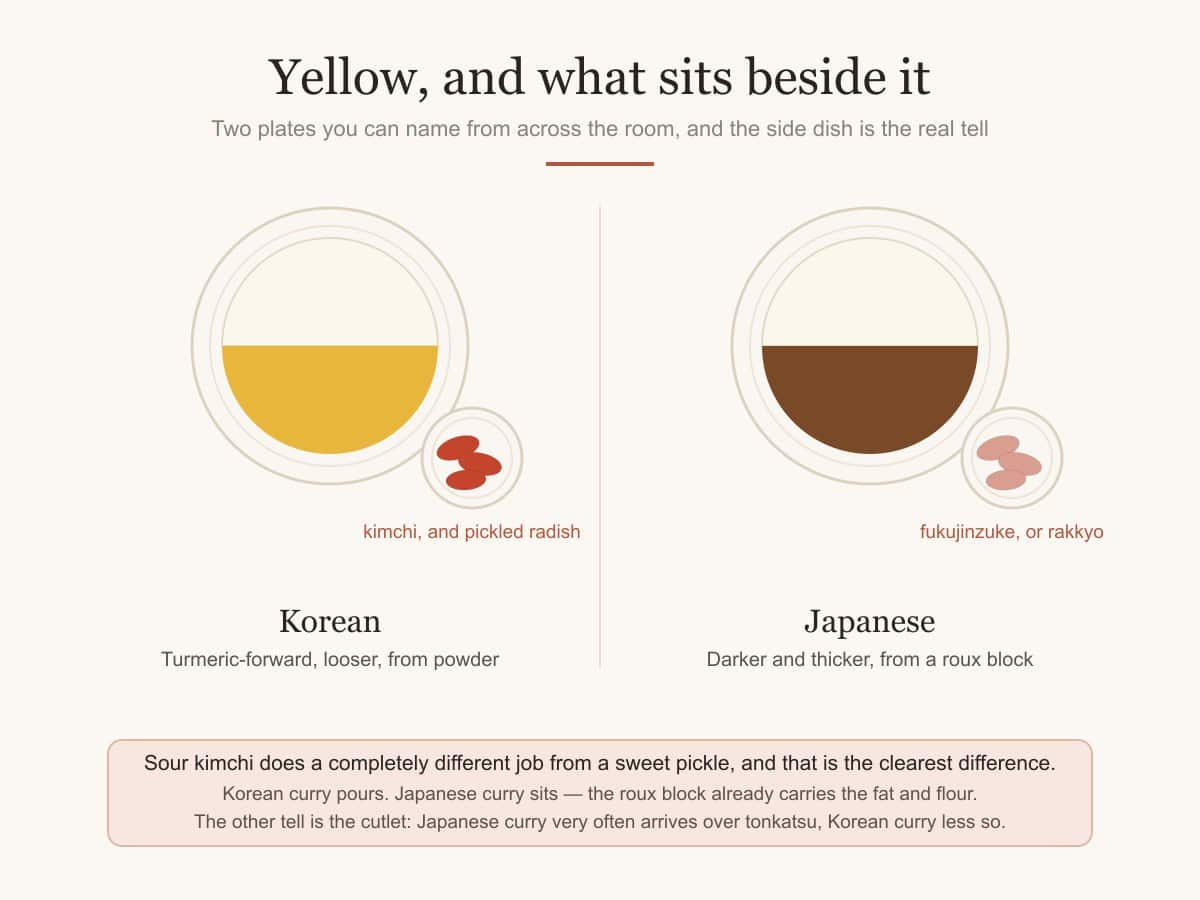
Korean curry is distinctly yellow. Turmeric-forward, and the standard Ottogi powder is noticeably brighter than any Japanese roux block.
Japanese curry is dark brown. The roux is cooked further, and the blocks usually carry caramel, tomato and often a fruit sweetener.
Put two plates side by side and you can name them from across the room, which is not true of most dish pairs in this family.
Powder against roux block
Korean curry is most often made from a powder stirred into water or stock and thickened — the Ottogi tin is the default, and it has been since the 1960s.
Japanese curry is made from a solid roux block that already contains the fat and flour. It melts into the pot and thickens as it goes.
That is why Japanese curry is thicker and glossier, and Korean curry is looser and more sauce-like. Korean curry pours; Japanese curry sits.
The spicing, and the heat
Both are mild by the standards of the cuisines they came from. Neither is hot in the way a buldak is hot.
Korean curry leans on turmeric and cumin and tastes cleaner. Japanese curry is rounder and sweeter, with more of the fruit-and-caramel background.
Korean versions are also more likely to be nudged with gochugaru at home, which is not a traditional move but is a common one.
What is on the plate beside it
This is the real difference. Japanese curry comes with fukujinzuke or rakkyo — sweet pickled vegetables or pickled shallots.
Korean curry comes with kimchi, and usually danmuji-style yellow radish as well. A plate of curry with a dish of sour napa cabbage kimchi beside it is an unmistakably Korean meal, and the acidity does a completely different job from the sweet Japanese pickle.
The other tell is the cutlet. Japanese curry very often arrives over tonkatsu; Korean curry more often does not.
Common questions
Is Korean curry the same as Japanese curry?
It descends from it but is not the same. Korean curry is yellower, thinner and more turmeric-forward, usually made from powder rather than a roux block, and served with kimchi rather than sweet pickles.
Why is Korean curry so yellow?
Turmeric. The standard Korean curry powder is turmeric-forward, while Japanese roux blocks are cooked darker and carry caramel and tomato.
Is Korean curry spicy?
Mild by default. Both Korean and Japanese curry are gentle; Korean home cooks sometimes add gochugaru, which is not traditional but is common.
What do you eat with Korean curry?
Rice, kimchi, and usually pickled yellow radish. The sour kimchi does a different job from the sweet pickles served with Japanese curry, and is the clearest difference between the two plates.
More to cook
All Ingredient & Substitute Guides
Korean Noodles Explained
Dangmyeon, somyeon, naengmyeon, kalguksu and the rest — which Korean noodle goes in which dish, and which ones you genuinely cannot substitute.
The Korean Pantry: What to Buy First
The ten things that unlock most Korean recipes, what each one actually does, and which ones have no substitute worth attempting.
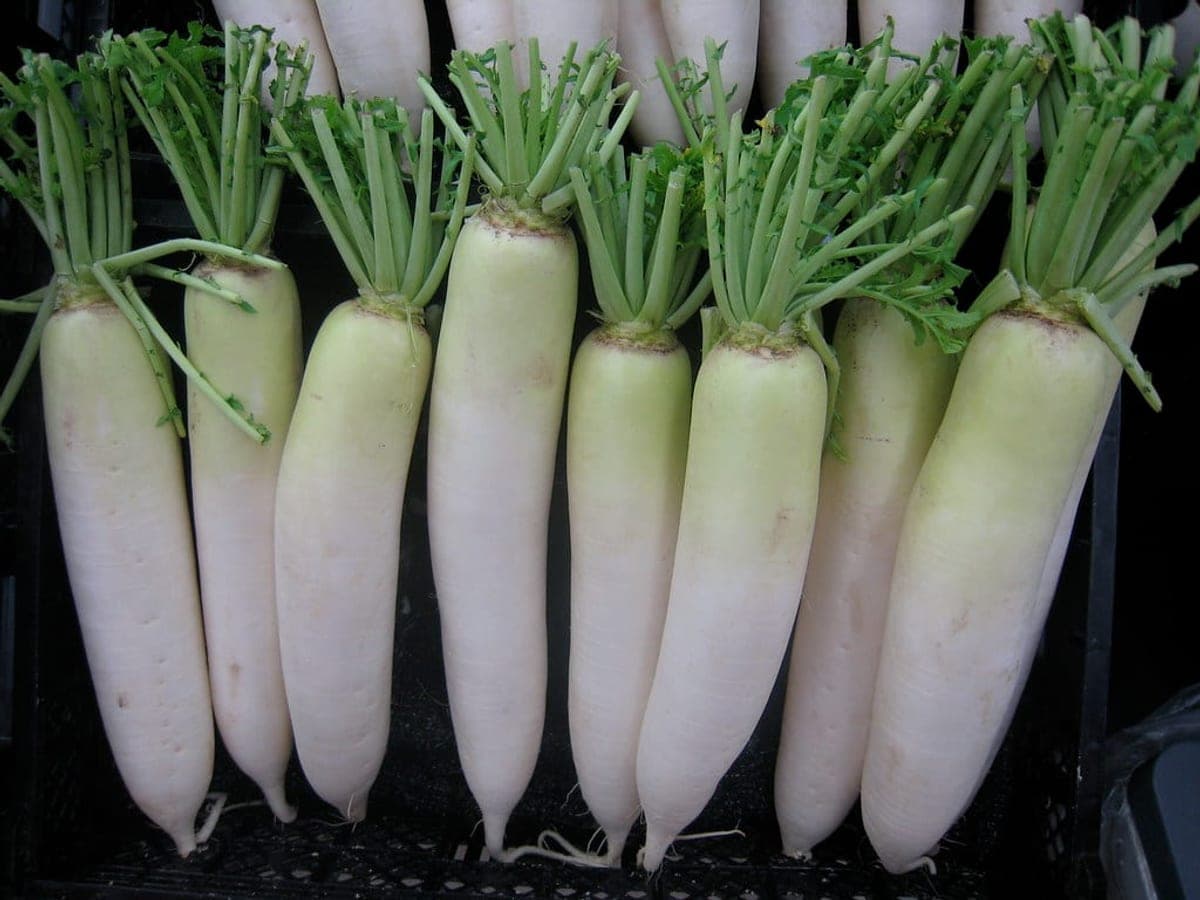
Korean Radish vs Daikon (Mu)
How Korean mu differs from Japanese daikon in density, sweetness and water content, and when swapping one for the other actually changes the dish.