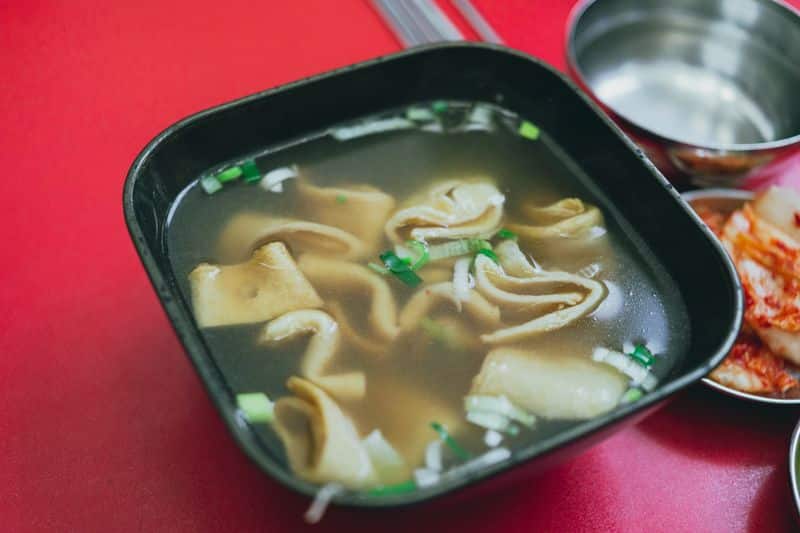
Steps
- 1
Simmer the kelp and anchovies in water for 15 minutes, then remove both and strain the stock through a fine sieve.
- 2
Briefly blanch the fish cake strips in boiling water for 30 seconds to rinse off surface oil, then drain.
- 3
Bring the strained stock back to a simmer and add the daikon.
- 4
Simmer until the daikon softens, about 5 minutes.
- 5
Add the blanched fish cake and soy sauce.
- 6
Simmer another 5 minutes.
- 7
Add green onions in the last minute, and season with salt and pepper.

Did you know — Korean culture
Eomuk (fish cake) took hold in Korean port cities through Japanese-influenced street food and became a year-round staple — eomuk guk is essentially the same warming street-cart broth people grab on a cold night, made at home instead, minus the skewer.
Straining the anchovy-kelp stock isn't a garnish step — anchovy stock left unstrained carries small bits of fish and grit that turn a clear broth cloudy and slightly gritty, which is the opposite of what this soup is supposed to be. A fine sieve after the simmer is what gets the broth genuinely clear.
Blanching the fish cake before it goes into the soup matters for a different reason: most packaged fish cake is fried, and that surface oil clouds and slicks a clear broth if it goes in unrinsed. A quick 30-second blanch washes most of that off without affecting the texture.
Eomuk (fish cake) itself has roots in Japanese-influenced street food that took hold in Korean port cities and became a year-round staple, especially as a quick, warm street snack in colder months — eomuk guk is essentially that same street-cart broth made at home, minus the skewer.
The fish-cake broth is what you drink between bites of something spicier — usually tteokbokki, sometimes kimbap. Street carts serve it free alongside, in paper cups.
Troubleshooting
Broth cloudy instead of clear? The stock likely wasn't strained, or the fish cake wasn't blanched first — both steps matter for clarity.
Broth tastes oily? Same fix — blanch the fish cake briefly before it goes into the pot to rinse off the frying oil.
Broth bland? Don't skip the soy sauce, and taste before adding salt — anchovy-kelp stock is subtle on its own and needs that seasoning layer to come through.
Recommended products
- Dried kelp (dasima)
- Dried anchovies for stock
More to cook
All Stews & Soups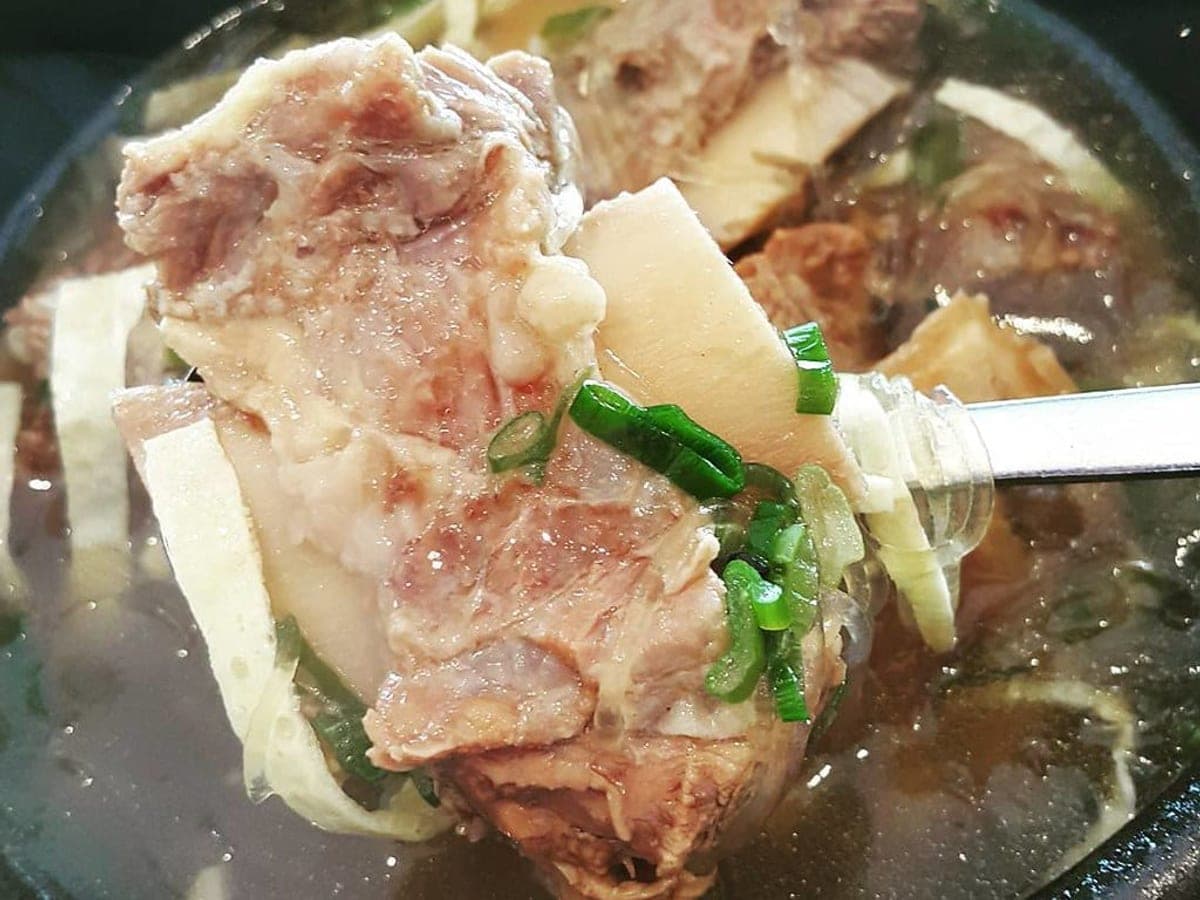
Galbitang (Beef Short Rib Soup)
Why short ribs get soaked and parboiled before they ever meet the broth, and how that discarded first boil is what makes galbitang clear instead of muddy.
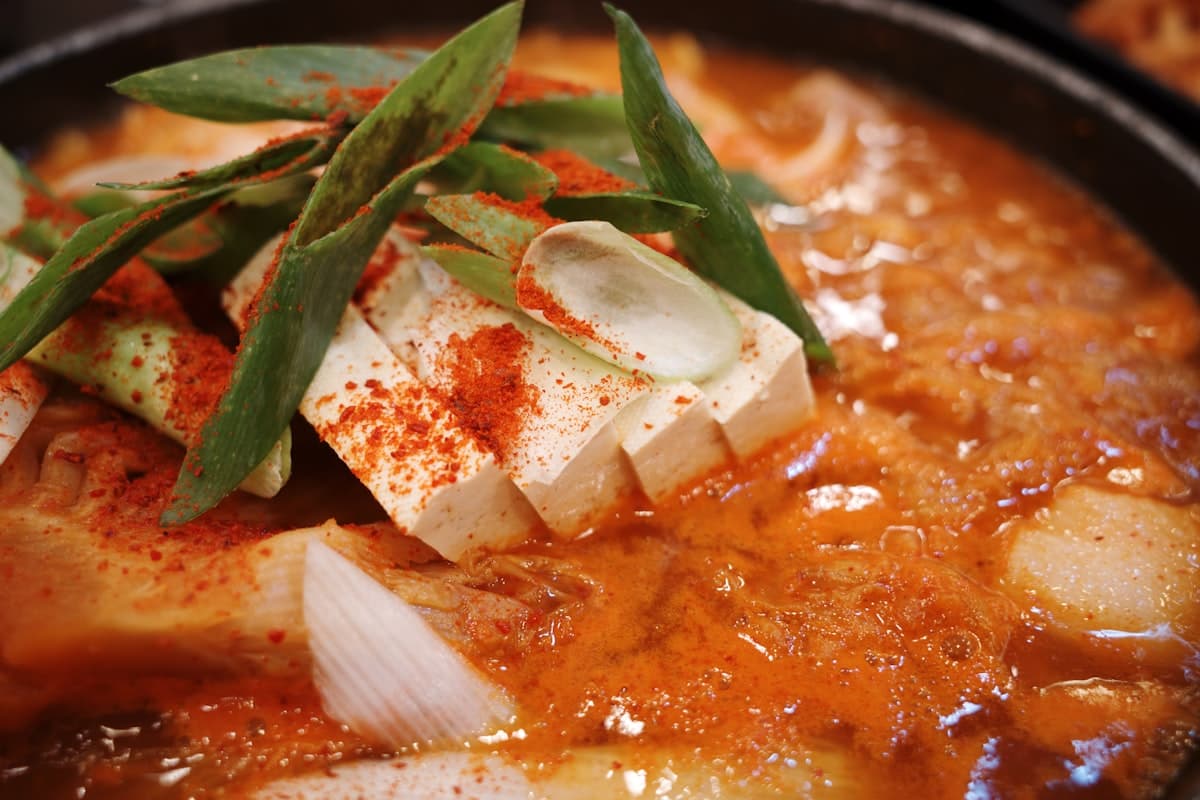
Gamjatang (Pork Bone Potato Stew)
The long-simmer technique for pork spine bones behind gamjatang, and the perilla-seed thickening that gives the broth its body.
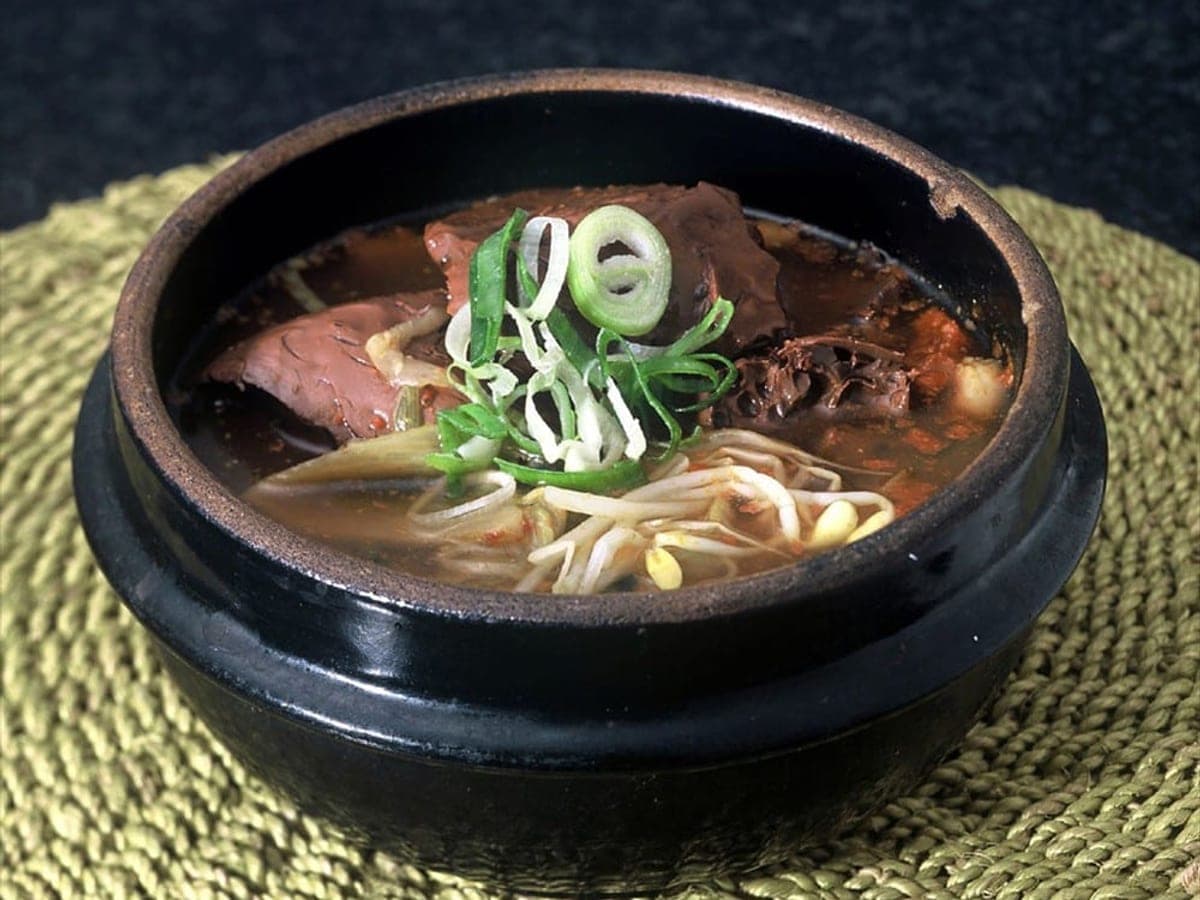
Haejangguk (Hangover Soup)
Why haejangguk needs a long ox-bone broth rather than a quick stock, and how the cabbage and bean sprouts go in at different times so neither overcooks.