Did you know — Korean culture
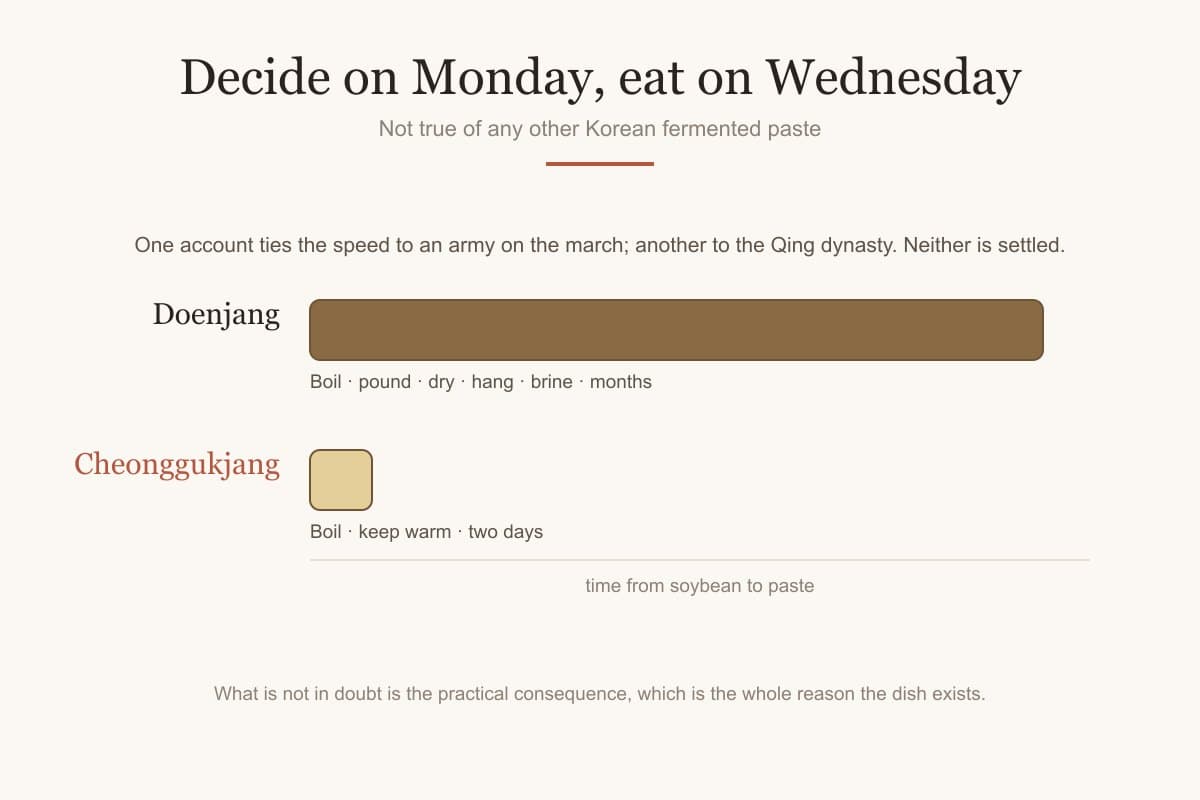
Cheonggukjang's speed is the most repeated explanation for its name. One account ties it to an army on the move needing a protein source that could be fermented in two or three days on the march rather than over a winter, and another to the Qing dynasty, since the first syllable can be read that way. Neither is settled. What is not in doubt is the practical consequence: a household could decide on Monday to have cheonggukjang on Wednesday, which is not true of any other Korean fermented paste.
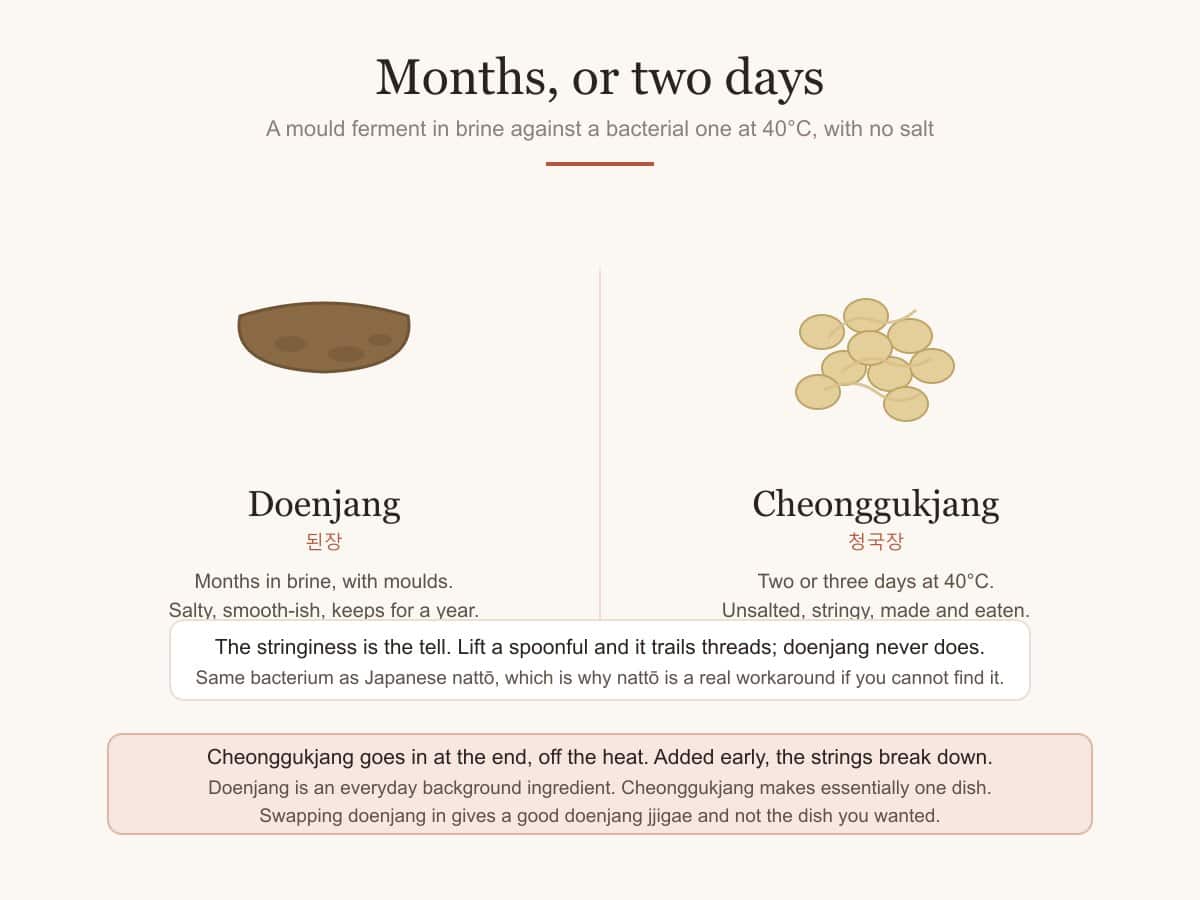
Two Korean fermented soybean pastes with completely different production. One takes months and a mould; the other takes two days and a bacterium.
Doenjang is aged in brine for months. Cheonggukjang is warm-fermented in about forty-eight hours — and smells like it.
How each is made
Doenjang: soybeans boiled, pounded, formed into blocks (meju), dried, hung to catch moulds, then submerged in brine for months. The liquid drawn off becomes ganjang; the solids become doenjang.
Cheonggukjang: soybeans boiled, then kept warm — around 40°C — for two to three days with rice straw or a Bacillus subtilis starter. No salt, no brine, no ageing.
That is why one is a pantry staple with a long shelf life and the other is made and eaten within the week.
Texture and smell
Doenjang is a smooth-ish salty paste with visible bean fragments, deep brown, strongly savoury.
Cheonggukjang is whole beans in a sticky, stringy web, pale brown, much less salty, and pungent in a way that is genuinely divisive — ammonia-adjacent, closer to Japanese nattō, which is the same bacterium.
The stringiness is the tell. Lift a spoonful and it trails threads; doenjang never does.
What each makes
Doenjang goes into jjigae, namul seasoning, ssamjang, and the pot with boiled pork. It is an everyday background ingredient.
Cheonggukjang makes essentially one dish — cheonggukjang jjigae, a thick stew with tofu, kimchi and the paste stirred in at the end.
Add it early and the smell intensifies and the stringiness breaks down. In at the end, off the heat, is the rule.
Substituting
Doenjang for cheonggukjang: gives you a perfectly good doenjang jjigae and not the dish you wanted. The pungency is the point.
Cheonggukjang for doenjang: no. It is unsalted, it does not keep, and it dominates anything it goes into.
Nattō is the closest available substitute for cheonggukjang if you cannot find it — same bacterium, similar strings, less depth and sweeter. It is a real workaround rather than a joke, though a Korean cook would not endorse it.
Common questions
What is the difference between doenjang and cheonggukjang?
Doenjang ferments in brine for months with moulds; cheonggukjang is warm-fermented in two or three days with Bacillus subtilis. One is a salty paste, the other whole sticky beans.
Why does cheonggukjang smell so strong?
It is fermented by Bacillus subtilis, the same bacterium as Japanese nattō, with no salt and no ageing to mellow it. The smell is the point, and it is divisive in Korea too.
Can I use doenjang instead of cheonggukjang?
You will get a good doenjang jjigae and not a cheonggukjang one. The pungency and the stringy whole beans are the dish.
When do I add cheonggukjang to the pot?
At the end, off the heat. Added early the smell intensifies and the stringiness breaks down, which loses both of the things that distinguish it.
More to cook
All Ingredient & Substitute Guides
Doenjang vs Miso
Both are fermented soybean paste, and swapping one for the other changes a dish more than people expect. What separates them, and when the substitution works.
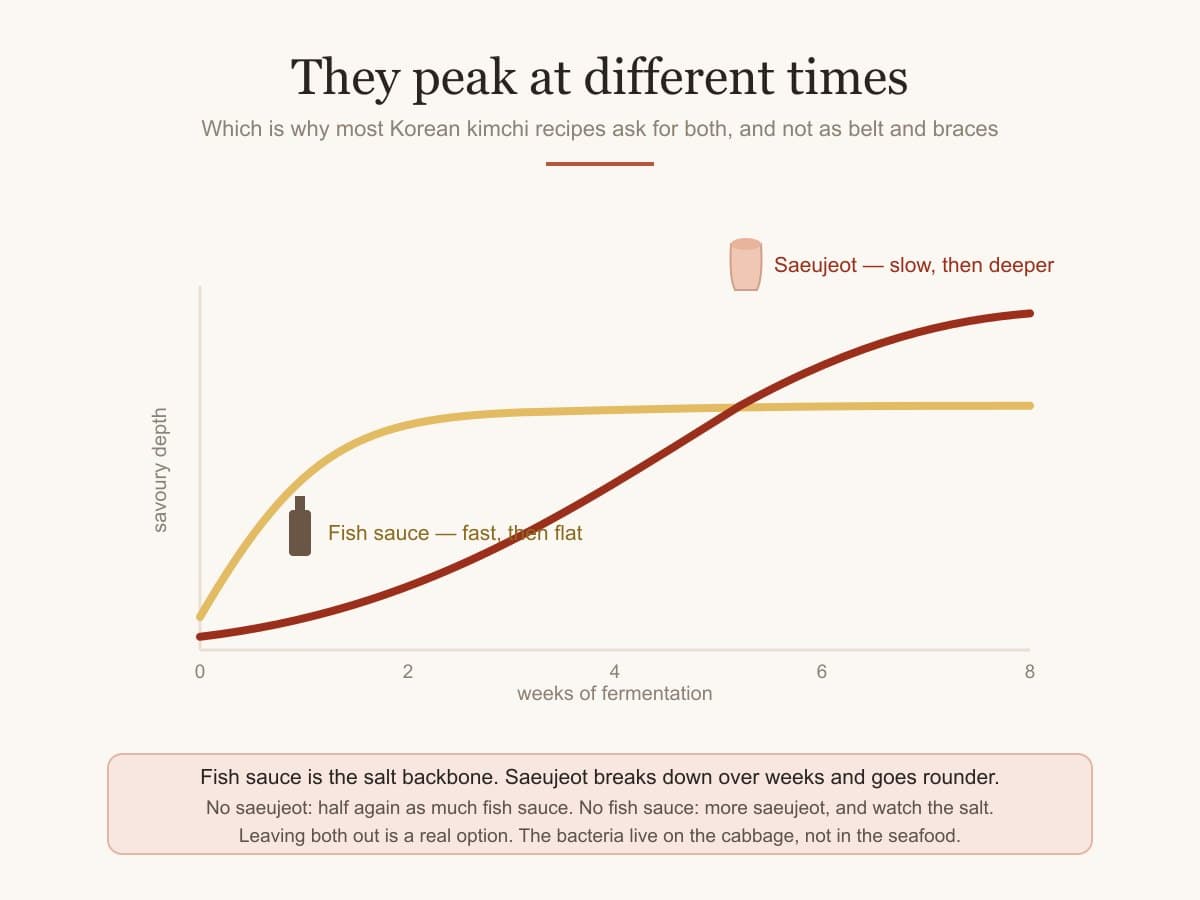
Fish Sauce vs Saeujeot
Korean kimchi often uses both, and they do different jobs. What each contributes, how to substitute, and what changes if you leave them out.
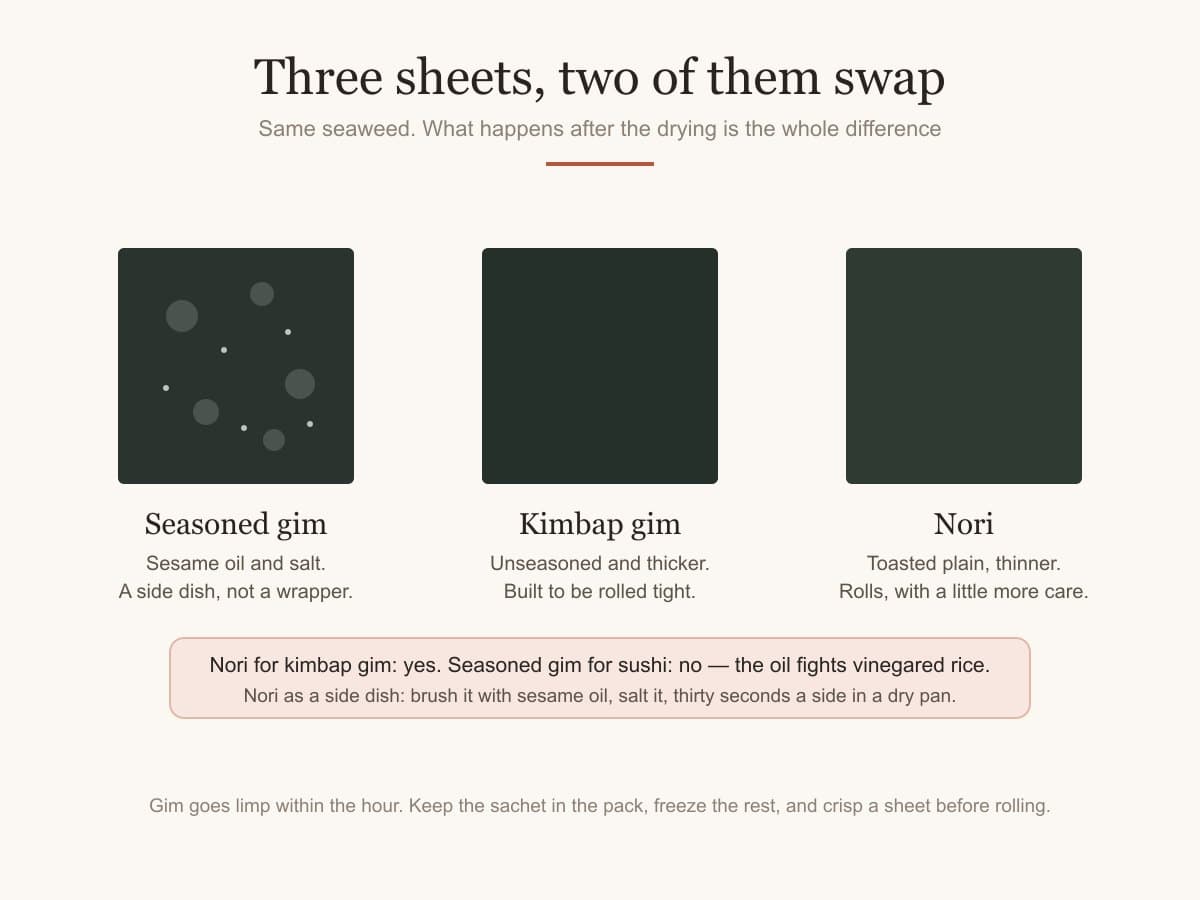
Gim vs Nori
Korean gim and Japanese nori are the same seaweed treated differently. Oil and salt, thickness, and which one a recipe actually wants.