Did you know — Korean culture
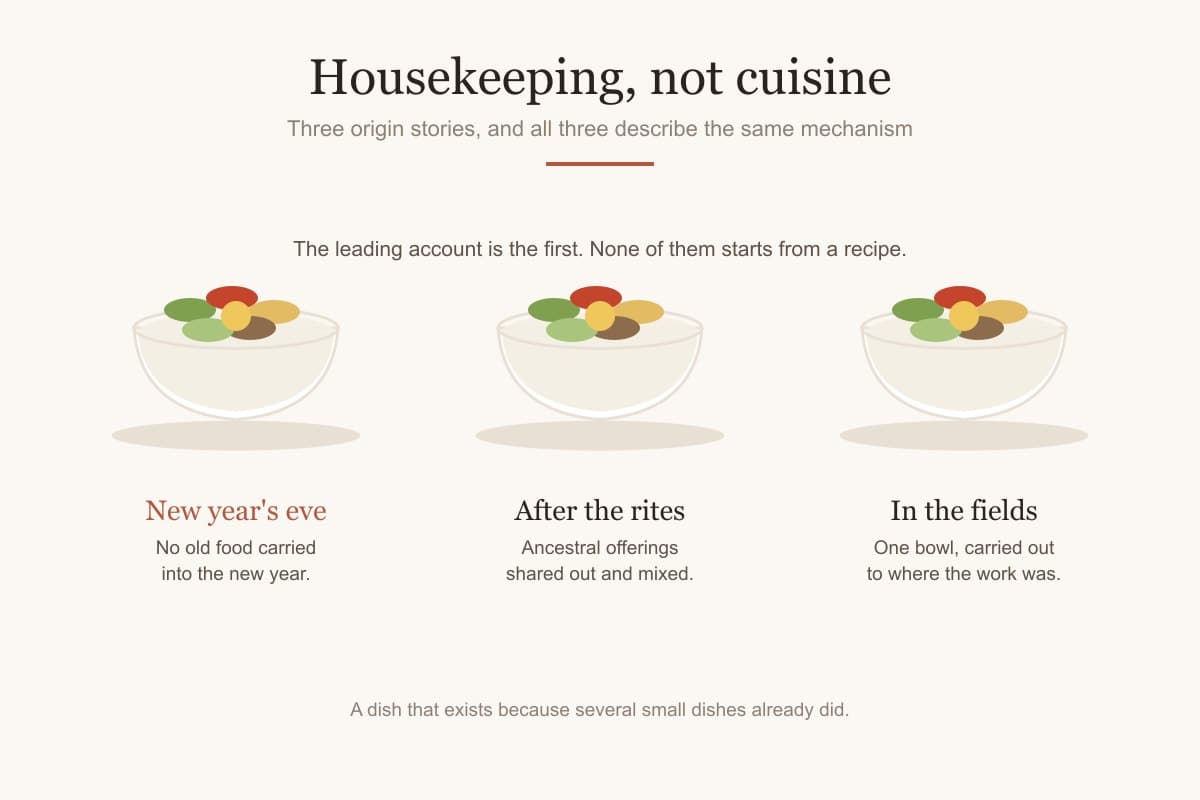
The most plausible origin of bibimbap is housekeeping rather than cuisine. The leading theory ties it to the eve of the lunar new year, when custom held that no old food should be carried into the new one, so whatever namul and banchan remained were put over rice and mixed. A competing account traces it to ritual food eaten after ancestral rites, and a third to farmers eating from a single bowl in the fields. All three describe the same mechanism: a dish that exists because several small dishes already did.
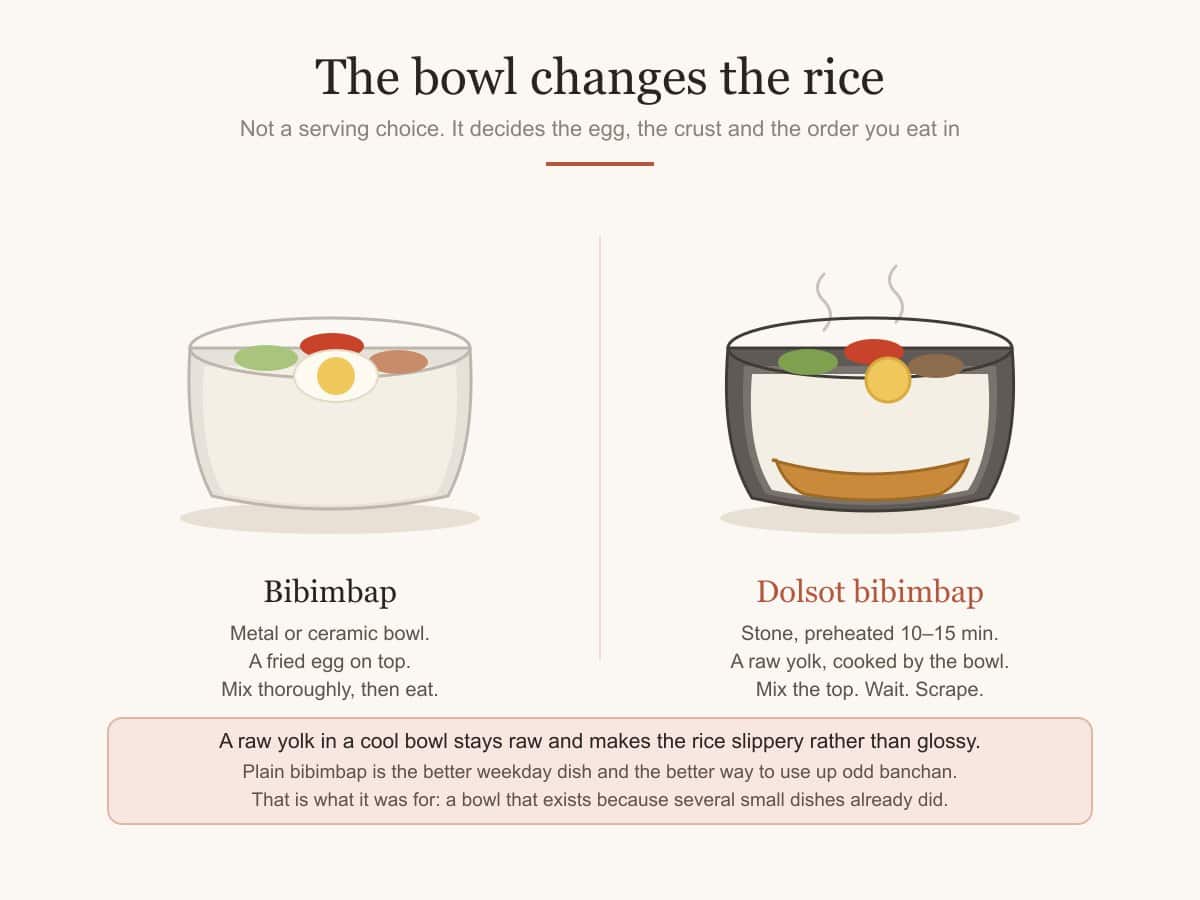
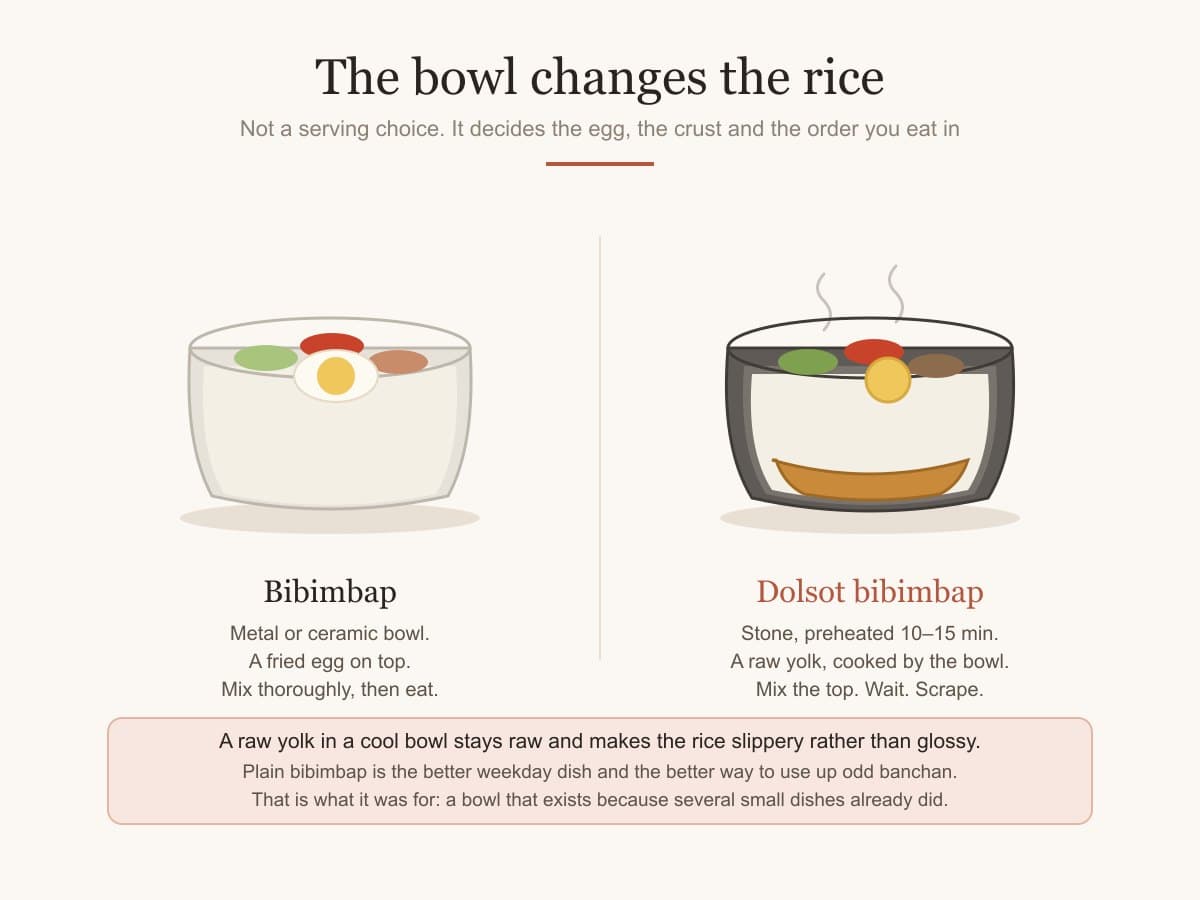
Same ingredients, different bowl, genuinely different dish. The stone changes the rice rather than just keeping it warm.
Bibimbap is mixed and eaten. Dolsot bibimbap is mixed, then left alone while a crust forms.
What the stone does
A dolsot is heated empty for ten to fifteen minutes and holds that heat for several more at the table. The rice against the stone fries in sesame oil and forms nurungji, a golden crust.
Ordinary bibimbap has no crust at all and is served at a comfortable eating temperature in a metal or ceramic bowl.
That is the whole difference, and it cascades into everything else.
The egg differs
Dolsot bibimbap takes a raw egg yolk, dropped in at the table. The bowl cooks it as you stir, and it emulsifies into the rice and the gochujang to make a sauce.
Plain bibimbap takes a fried egg, sunny side up, because there is nothing hot enough to cook a raw one.
A raw yolk in a cool bowl stays raw and makes the rice slippery rather than glossy, which is the usual disappointment when people copy the dolsot version into a normal bowl.
How you eat it
Plain bibimbap: mix thoroughly, immediately, and eat. The arrangement is for looking at, and it is meant to be destroyed.
Dolsot: mix the top, then wait. Three to five minutes of crackling while the base crisps, then eat downward and scrape the crust up at the end.
Stirring a dolsot continuously prevents the crust from forming — the single commonest mistake, and the reason some people conclude the stone bowl is just a gimmick.
Which to make at home
Plain bibimbap needs no equipment and is the better weekday dish. It is also the better one for using up namul and odd banchan, which is what it was for.
Dolsot needs a stone bowl, which must be seasoned and must never meet cold water while hot. A cast-iron pan approximates the crust and loses heat much faster.
If the crust is not forming, see why dolsot bibimbap is not crispy — it is nearly always the preheat.
Common questions
What is the difference between bibimbap and dolsot bibimbap?
The stone bowl, and what it does to the rice. Dolsot bibimbap forms a fried crust called nurungji against the hot stone; ordinary bibimbap has none and is served at eating temperature.
Is the egg raw in dolsot bibimbap?
The yolk goes in raw and the bowl cooks it as you stir. Ordinary bibimbap takes a fried egg instead, because there is nothing hot enough in the bowl to cook a raw one.
Should I mix dolsot bibimbap straight away?
Mix the top, then leave it three to five minutes while the base crackles and crusts. Stirring continuously is what prevents the nurungji forming at all.
Can I make dolsot bibimbap without a stone bowl?
A cast-iron pan gets you a crust, though it cools much faster. A ceramic bowl does not reach a high enough surface temperature to brown rice.
More to cook
All Ingredient & Substitute Guides
Bori (Barley) in Korean Cooking
Why barley is mixed into Korean rice rather than cooked alone, how much to use, and why it needs a longer soak than the rice it sits with.
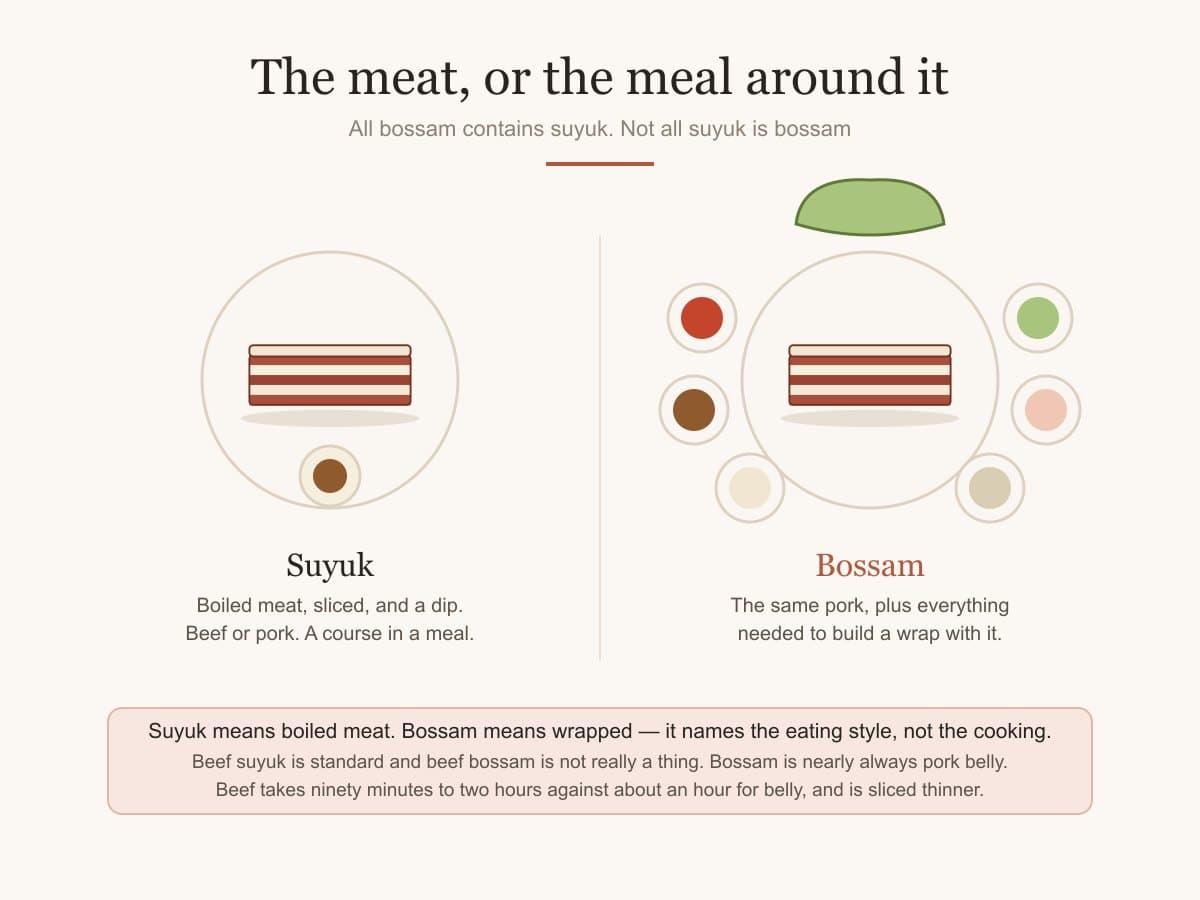
Bossam vs Suyuk
Suyuk is boiled meat. Bossam is a way of eating it. What the words actually mean, and what changes on the table.
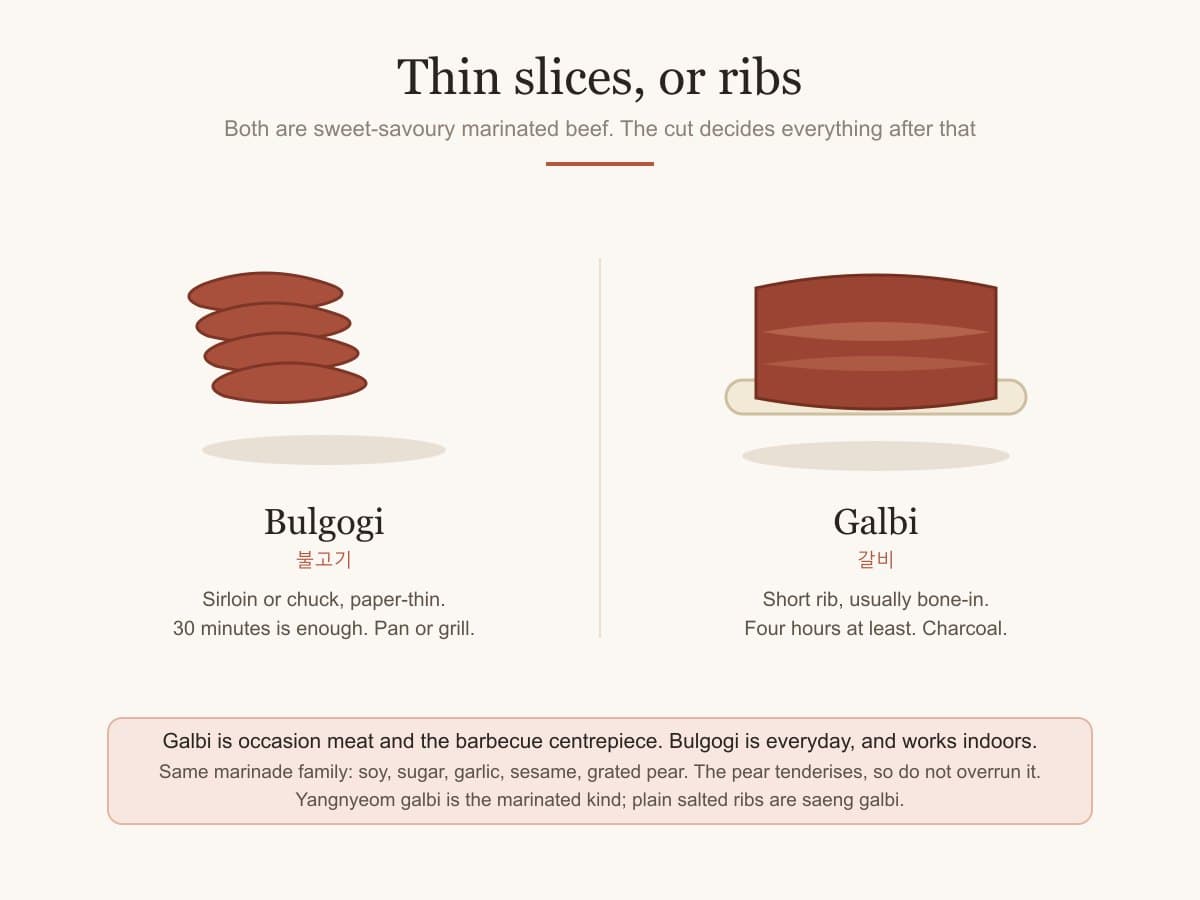
Bulgogi vs Galbi
Both are marinated Korean beef and they are not versions of one dish. The cut, the marinade, the cooking and when each one is served.