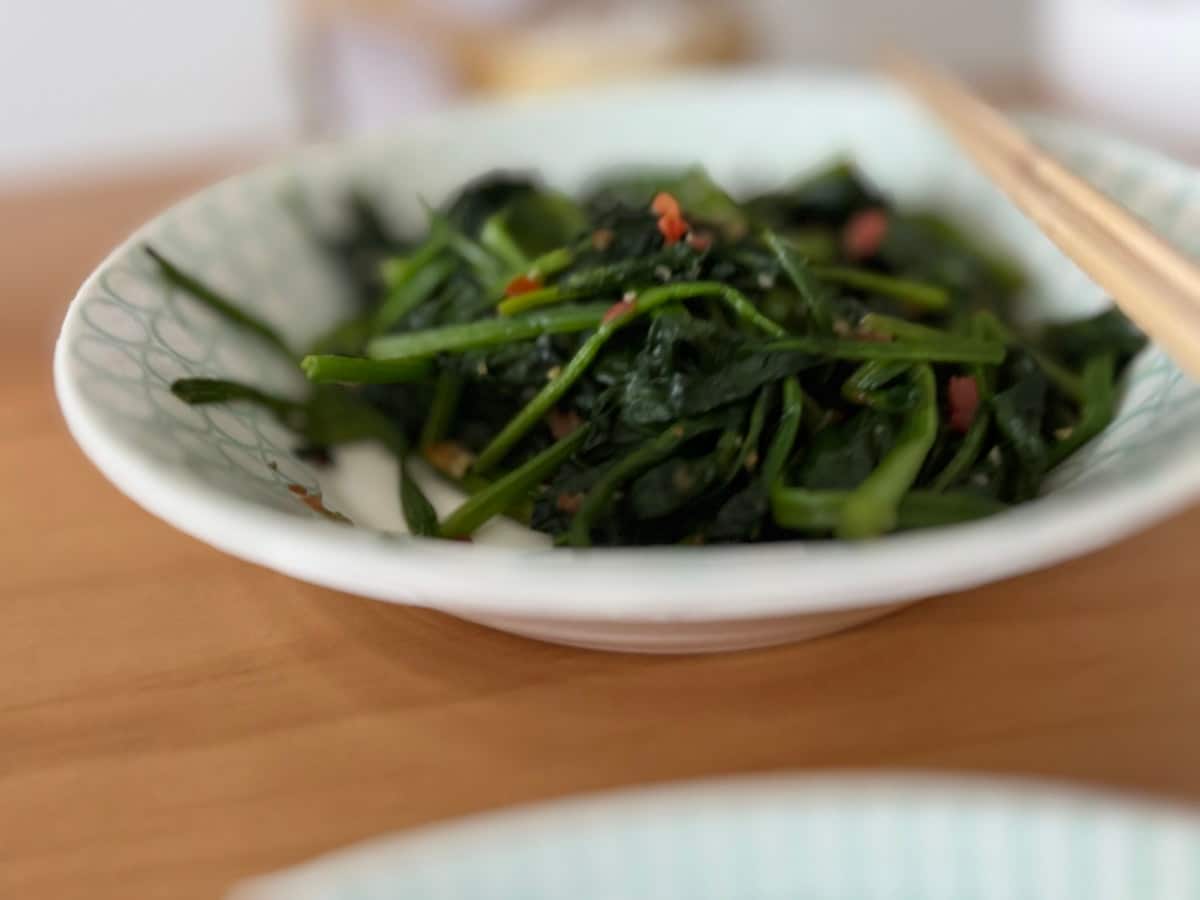
Steps
- 1
Bring a pot of salted water to a rolling boil.
- 2
Add the spinach and blanch for just 30-45 seconds, until it wilts and turns bright green.
- 3
Immediately drain and plunge into a bowl of ice water to stop the cooking.
- 4
Drain again and squeeze the spinach firmly by hand to remove as much water as possible.
- 5
Roughly chop the squeezed spinach into shorter pieces.
- 6
Toss with salt, sesame oil, garlic, soy sauce, green onion, and sesame seeds.
- 7
Taste and adjust seasoning before serving at room temperature.
Did you know — Korean culture
Sigeumchi namul is part of a set, not usually a standalone dish on formal occasions. It's one of the samsaek-namul, or "three-color vegetables," traditionally served together at Korean ancestral rites (jesa) and on holidays like Chuseok — spinach for green, doraji (bellflower root) for white, and gosari (fernbrake) for brown. The three are meant to represent a visually and symbolically complete offering, which is why they still tend to show up together rather than one at a time.
Thirty to forty-five seconds is genuinely all the time spinach needs in boiling water — it's a leaf, not a root vegetable, and it goes from raw to overcooked and mushy faster than people expect. The ice water shock right after is what locks in the bright green color and stops the cooking before it goes further.
Squeezing the spinach by hand after draining isn't optional. Spinach holds an enormous amount of water inside its structure, and skipping this step means a watery, diluted dish where the seasoning slides right off instead of clinging to the leaves.
Sigeumchi namul is usually part of a set rather than a standalone dish on formal occasions. It's one of the samsaek-namul, or "three-color vegetables," traditionally served together at Korean ancestral rites (jesa) and on holidays like Chuseok — spinach for green, doraji (bellflower root) for white, and gosari (fernbrake) for brown. The three together are meant to form a visually and symbolically complete offering, which is why they still tend to show up as a set rather than individually.
Troubleshooting
Spinach mushy instead of tender-crisp? It was blanched too long. Pull it at 30 seconds next time — spinach cooks almost instantly.
Dish watery on the plate? The squeezing step wasn't thorough enough. Really wring it out by hand; a light drain isn't enough.
Tastes bland? Spinach is mild on its own — don't be shy with the garlic and salt, and taste before serving rather than eyeballing it.
Recommended products
- Toasted sesame seeds
- Fine mesh strainer
More to cook
All Banchan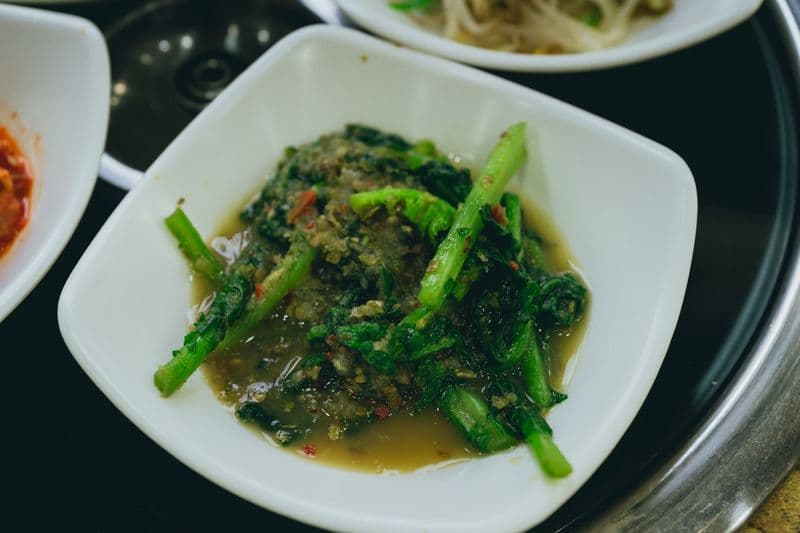
Ssukgat Namul (Seasoned Crown Daisy Greens)
Why crown daisy needs an even shorter blanch than most namul greens, and how its natural bitterness is meant to be balanced, not blanched away entirely.
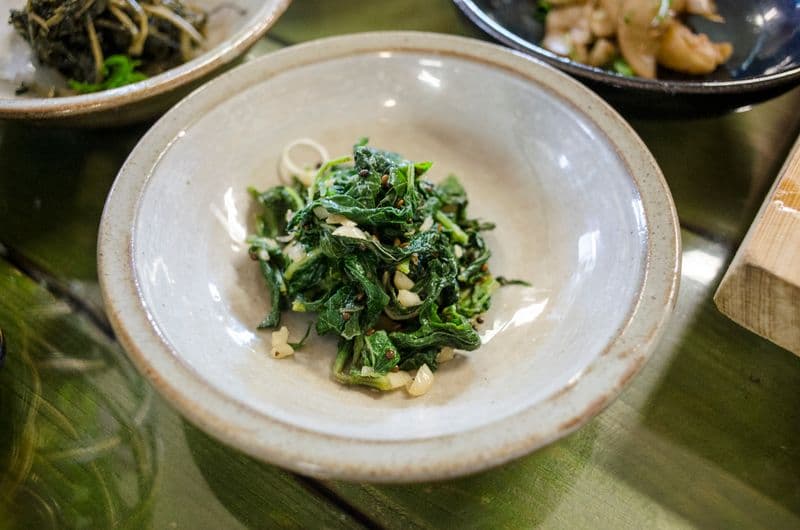
Chwinamul Muchim (Seasoned Aster Greens)
Why blanching briefly and shocking in cold water is what keeps this wild green tender and bright instead of mushy and dull.

Dubu Buchim (Plain Pan-Fried Tofu)
The pat-dry-and-sear technique behind dubu buchim, and why moisture is the one thing standing between soft tofu and a golden crust.