Did you know — Korean culture
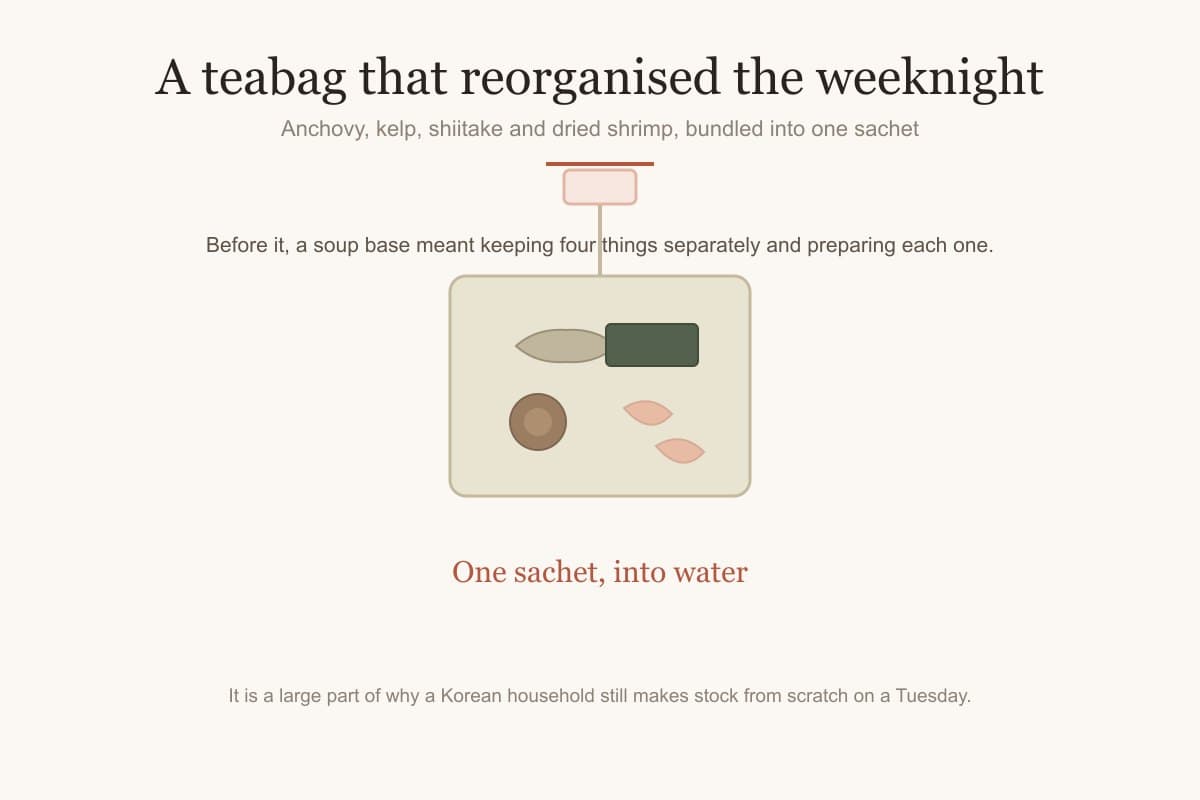
The Korean stock pack is a fairly recent invention that reorganised weeknight cooking. Before it, building a soup base meant keeping dried anchovies, kelp, shiitake and dried shrimp separately and preparing each; the sachet bundles all of it into something that goes into water and comes out again. It is now a supermarket staple with a whole aisle of variants — seafood, vegetable, beef-forward — and it is a large part of why a Korean household still makes stock from scratch on a Tuesday when very few other cuisines' households would.
Both are a fast fish-and-kelp stock, both are the base of most soups in their cuisine, and they are genuinely close. Close enough that one will stand in for the other, and far enough apart to notice.
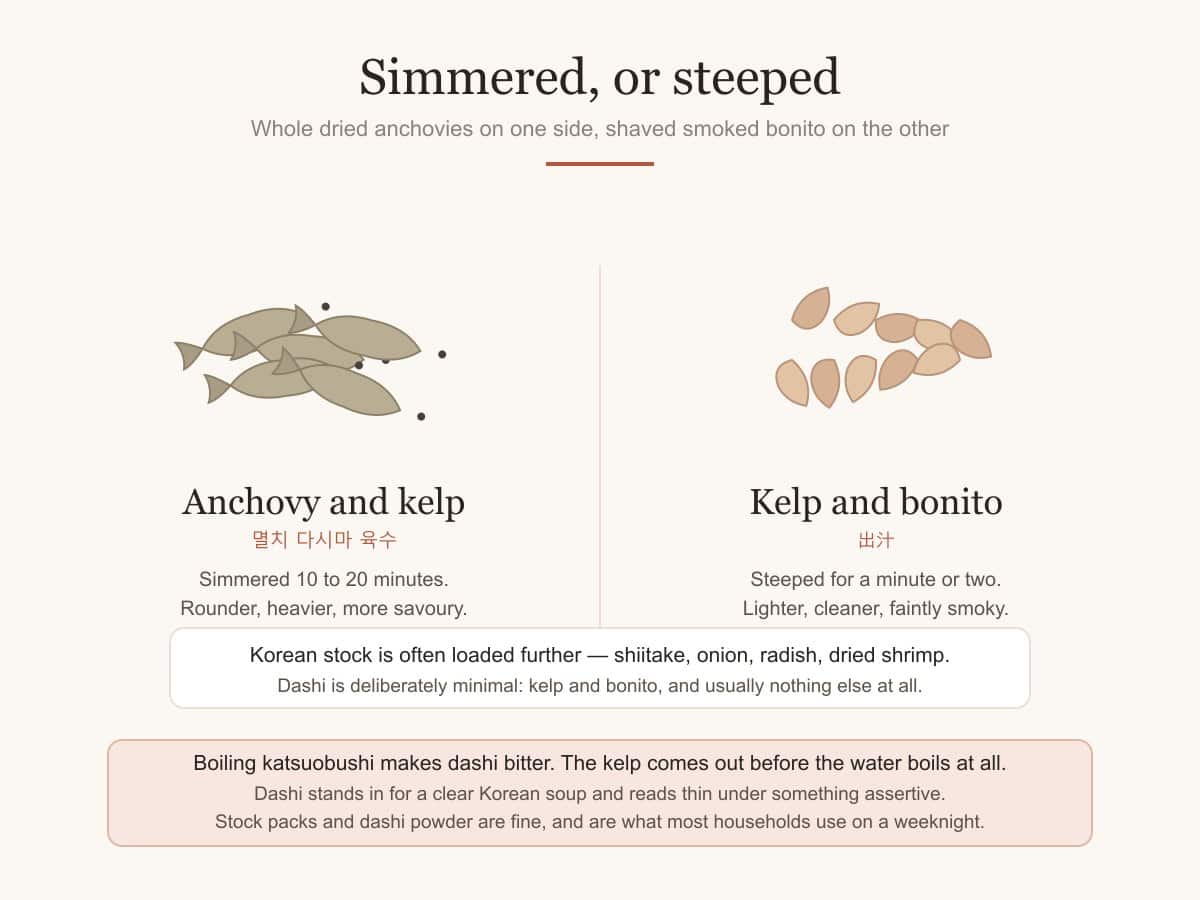
Korean stock uses whole dried anchovies. Dashi uses shaved bonito.
The fish
Korean stock uses myeolchi — whole dried anchovies, head and gut removed for anything larger than about 5 cm, simmered for ten to twenty minutes.
Dashi uses katsuobushi — dried, smoked, fermented skipjack shaved into paper-thin flakes, steeped for a minute or two and strained.
That is the clearest difference in taste: the Korean stock is rounder, slightly heavier and more savoury; dashi is lighter, cleaner and carries a distinct smokiness from the katsuobushi.
The method
Anchovy stock is simmered. Anchovies and dasima go into cold water, come up to heat, kelp out at ten minutes, anchovies carry on another ten.
Dashi is steeped. Kelp is warmed and removed before boiling, the bonito goes in off the heat, and the whole thing is strained within a couple of minutes. Boiling katsuobushi makes dashi bitter.
So one is a stock you can leave on the hob and the other is closer to making tea.
What else goes in
Korean anchovy stock is often loaded further: dried shiitake, onion, spring onion root, Korean radish, sometimes dried shrimp. Many households keep a bag of stock packs with all of it in.
Dashi is deliberately minimal — kelp and bonito, and that is usually all.
That difference in approach is most of why Korean soups taste more layered at the base and Japanese ones cleaner.
Substituting one for the other
Dashi in a Korean soup: works, and tastes lighter and faintly smoky. Fine in tteok guk or a clear soup; noticeably thin under something as assertive as sundubu jjigae.
Korean stock in a Japanese dish: heavier than intended, and the anchovy shows. Acceptable in a miso soup, wrong under something delicate.
Instant versions of both exist and are fine. A Korean stock pack is a teabag of anchovy, kelp and vegetables; dashi powder is the Japanese equivalent. Neither is cheating, and both are what most households actually use on a weeknight.
Common questions
Can I use dashi instead of Korean anchovy stock?
Yes, with a lighter and slightly smoky result. It is fine in a clear soup and noticeably thin under something assertive like sundubu jjigae.
What is the main difference between them?
The fish and the method. Korean stock simmers whole dried anchovies for ten to twenty minutes; dashi steeps shaved smoked bonito for a minute or two and strains.
Do I need to clean dried anchovies?
For anything larger than about 5 cm, yes. The head and the black innards are bitter and a long simmer pulls that straight into the broth.
Are stock packs and dashi powder acceptable?
Entirely. A Korean stock pack is a teabag of anchovy, kelp and vegetables, and both are what most households use on a weeknight.
More to cook
All Ingredient & Substitute Guides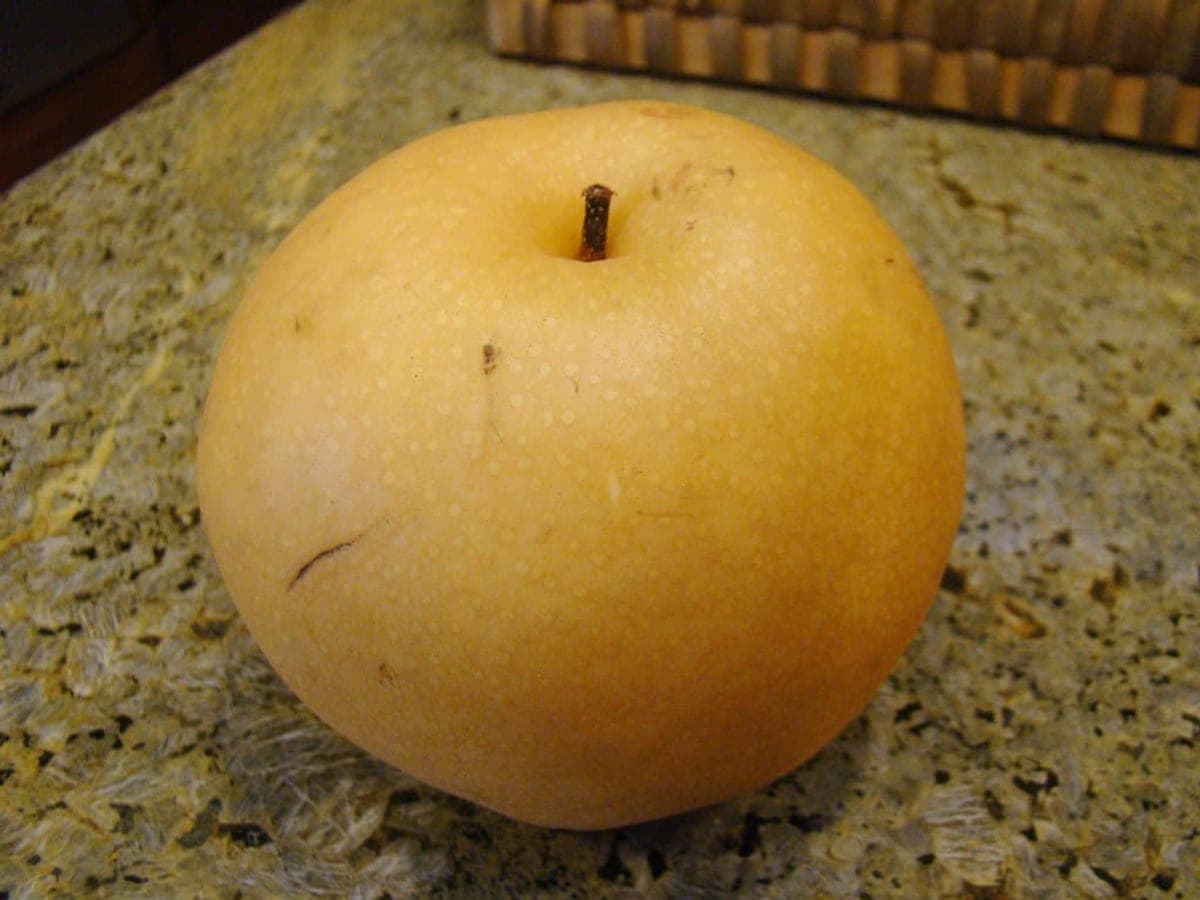
Asian Pear Substitute (For Korean Marinades)
Why Korean marinades use grated Asian pear rather than sugar, and which fruits actually reproduce the tenderising effect when you can't find one.
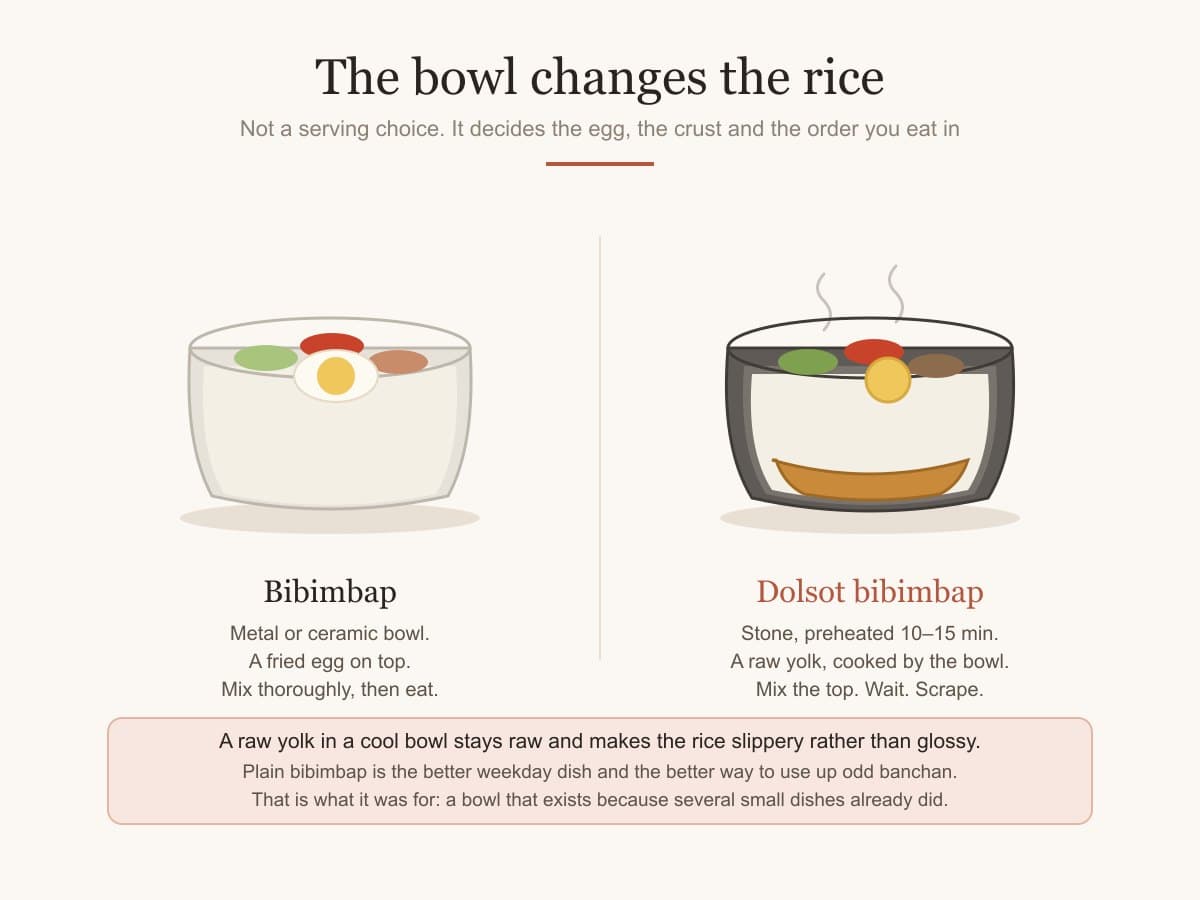
Bibimbap vs Dolsot Bibimbap
The stone bowl is not a serving choice. It changes the rice, the egg, the order you eat in and what the dish is for.
Bori (Barley) in Korean Cooking
Why barley is mixed into Korean rice rather than cooked alone, how much to use, and why it needs a longer soak than the rice it sits with.