Did you know — Korean culture
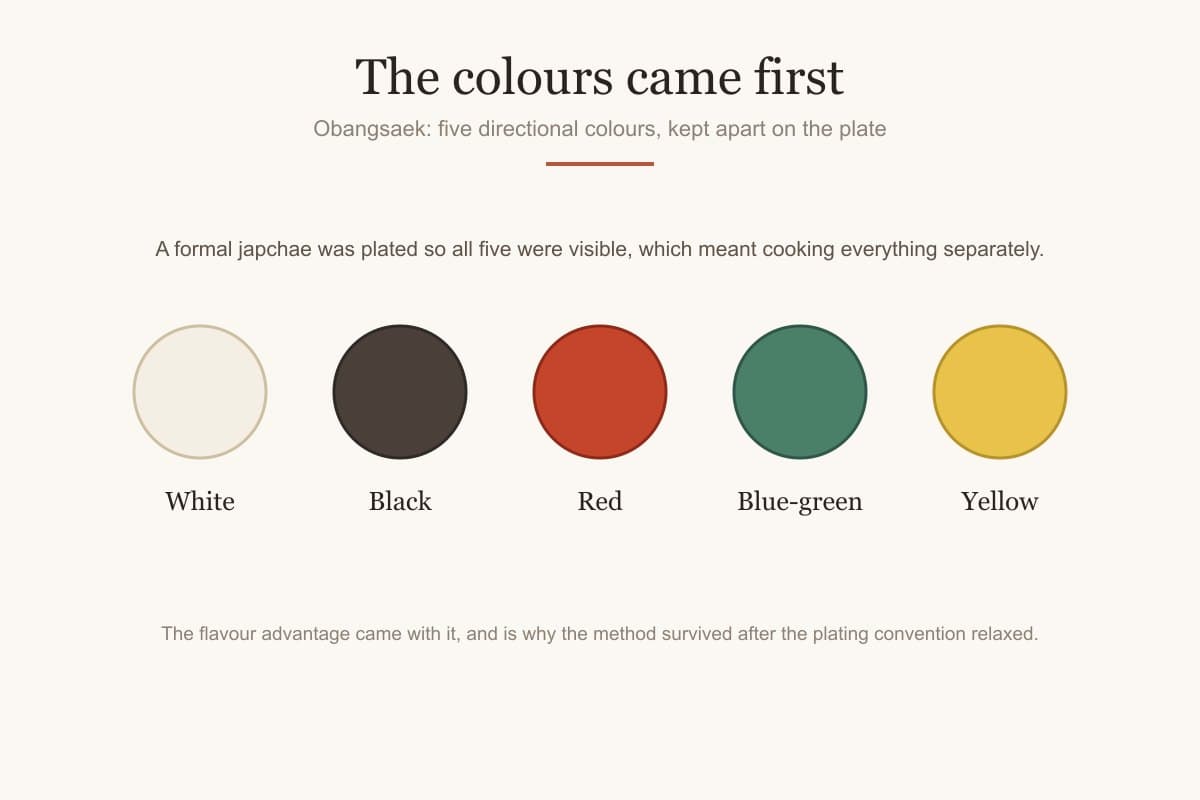
The separate-pan method is a survival from japchae's court origins, where it was a dish of shredded vegetables arranged by colour rather than mixed. Korean banquet cooking follows the principle of obangsaek, the five directional colours — white, black, red, blue-green and yellow — and a formal japchae was plated so each was visible. Cooking everything separately was not about flavour at first; it was about keeping the colours apart. The flavour advantage came with it and is why the method survived after the plating convention relaxed.
Japchae made as a stir-fry — everything into one pan, sauce over the top — comes out flat no matter how much soy goes in.
It is assembled, not stir-fried. Each component is cooked and seasoned separately, and that is why the traditional method takes longer and tastes better.
Season the parts, then combine
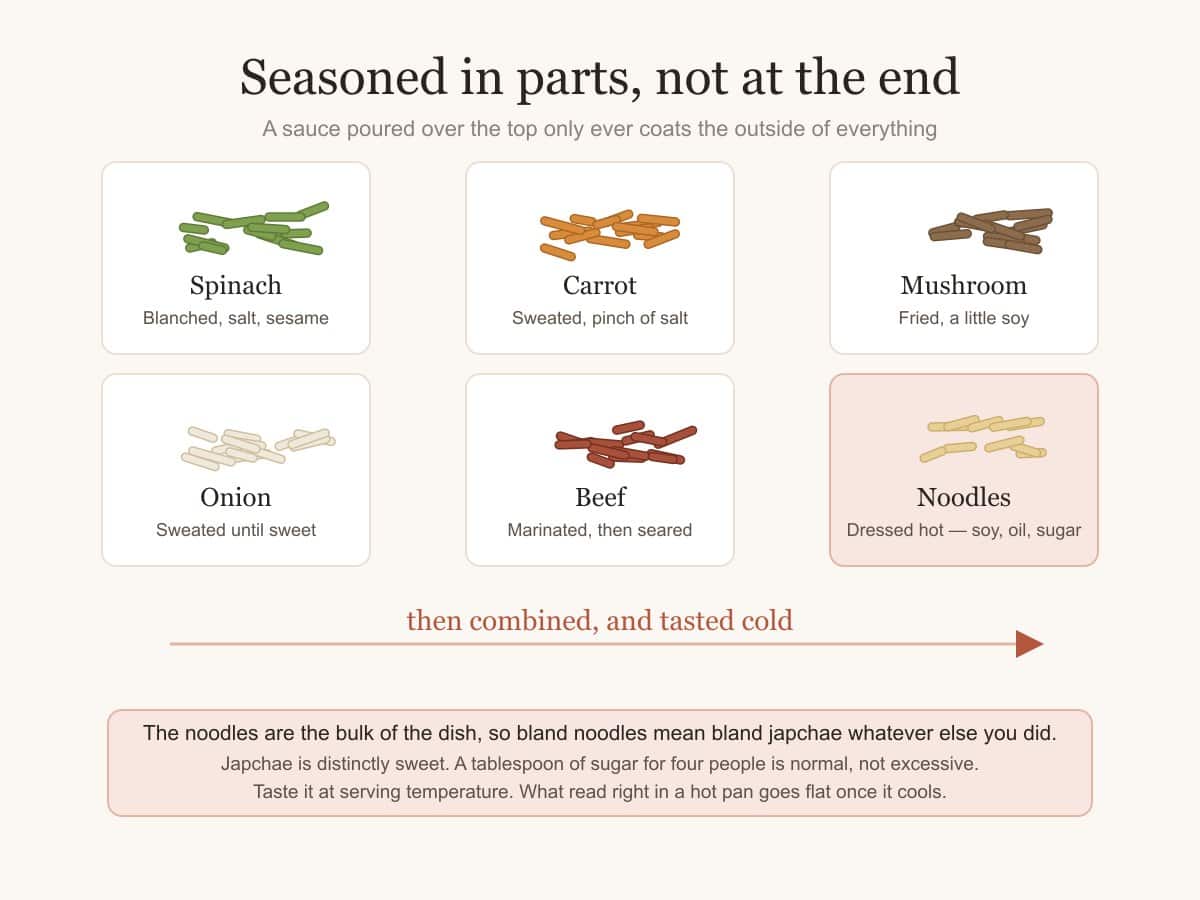
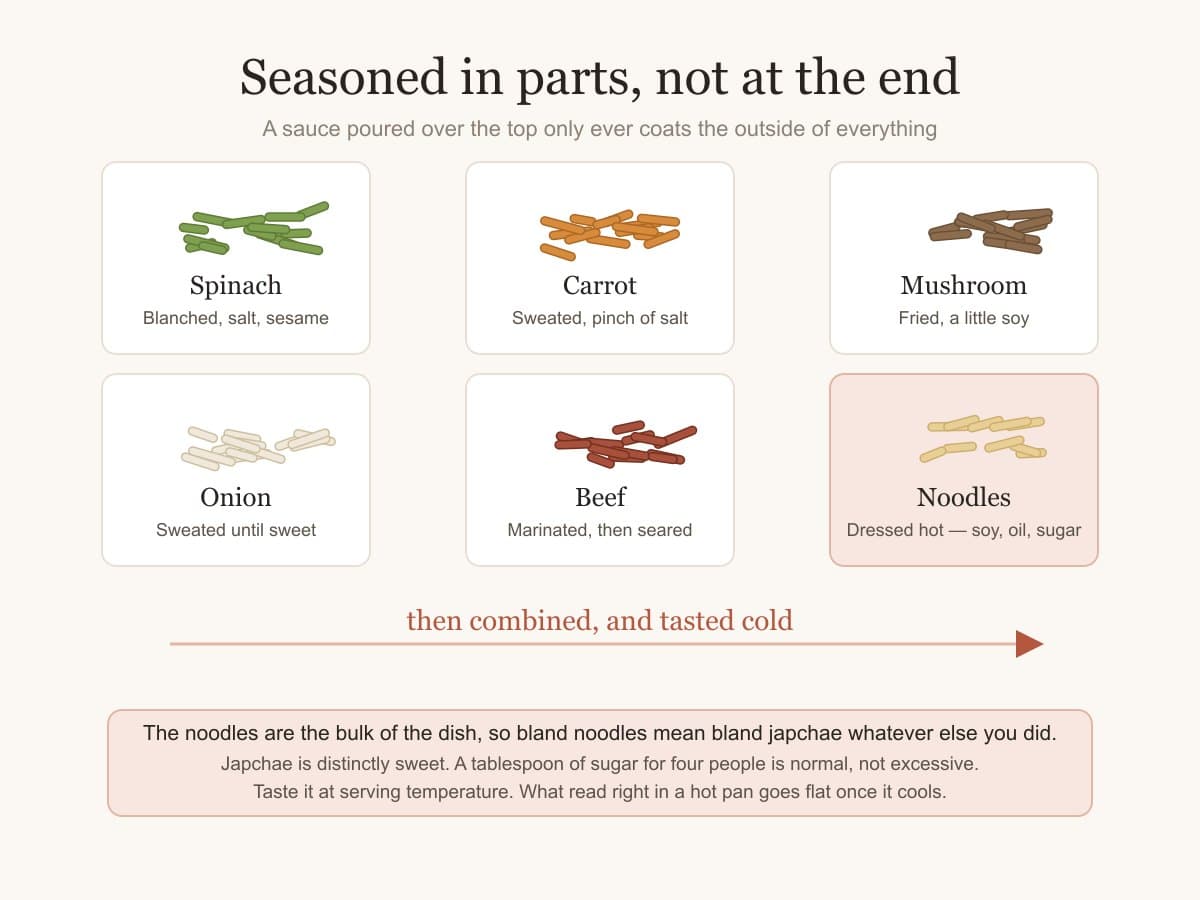
The proper method cooks each thing on its own: spinach blanched and dressed, carrot softened and salted, onion sweated, mushroom fried with a little soy, beef marinated.
Each gets its own pinch of salt and drop of sesame oil before it joins the bowl.
A single sauce at the end sits on the outside of everything. Seasoning in parts puts flavour through the dish, and that difference is the whole gap between dull japchae and good japchae.
The noodles need their own seasoning, hot
Dress the dangmyeon separately, while they are still hot, in soy, sesame oil and a little sugar. They absorb it then and will not later.
Undressed noodles tossed into a seasoned bowl taste of nothing in the middle. They are also the bulk of the dish, so bland noodles mean bland japchae whatever else you did.
This is the same step that keeps them from going sticky, so it is worth doing twice over.
Use enough sugar, and enough sesame
Japchae is noticeably sweet, and under-sugaring is a common Western adjustment that makes it taste thin rather than lighter.
A tablespoon of sugar for a four-person batch is normal, and some add a spoonful of jocheong for gloss as well.
Toasted sesame oil goes in generously at the end, plus a scatter of sesame seeds. It is not a background note here; it is one of the main flavours.
Taste it cold
Japchae is usually served at room temperature, and seasoning that tasted right in a hot pan reads flat once it cools.
So taste it at the temperature you will serve it, and adjust then — a splash more soy and sesame oil at that point is normal practice, not a correction.
If it is still flat, the likeliest missing thing is salt rather than soy. Soy brings colour with it, and past a certain point the dish goes dark before it goes savoury.
Common questions
Why does my japchae taste bland?
It was seasoned once, at the end. Japchae is assembled from separately cooked and separately seasoned parts, and a sauce poured over the top only coats the outside.
Should I season japchae noodles separately?
Yes, and while they are hot. Dangmyeon absorbs soy, sesame oil and sugar then and will not take it on later, and the noodles are the bulk of the dish.
How sweet should japchae be?
Noticeably sweet — about a tablespoon of sugar for four people. Cutting the sugar is a common adjustment that makes the dish taste thin rather than lighter.
Is japchae served hot or cold?
Usually at room temperature. Season it at the temperature you will serve it, because what tasted right in a hot pan reads flat once it has cooled.
More to cook
All Ingredient & Substitute Guides
Why Is My Japchae Sticky?
Clumped japchae comes from the rinse and the timing, not the sauce. How to keep dangmyeon separate and springy from pan to plate.
Why Is My Jjimdak Too Salty?
Braised soy chicken turns salty because the sauce reduces around a fixed amount of soy. How to build it so the reduction works for you.
Why Is My Kimbap Falling Apart?
Kimbap that unravels is nearly always wet rice, an overfilled roll or a blunt knife. What to change, in the order worth trying.