Did you know — Korean culture
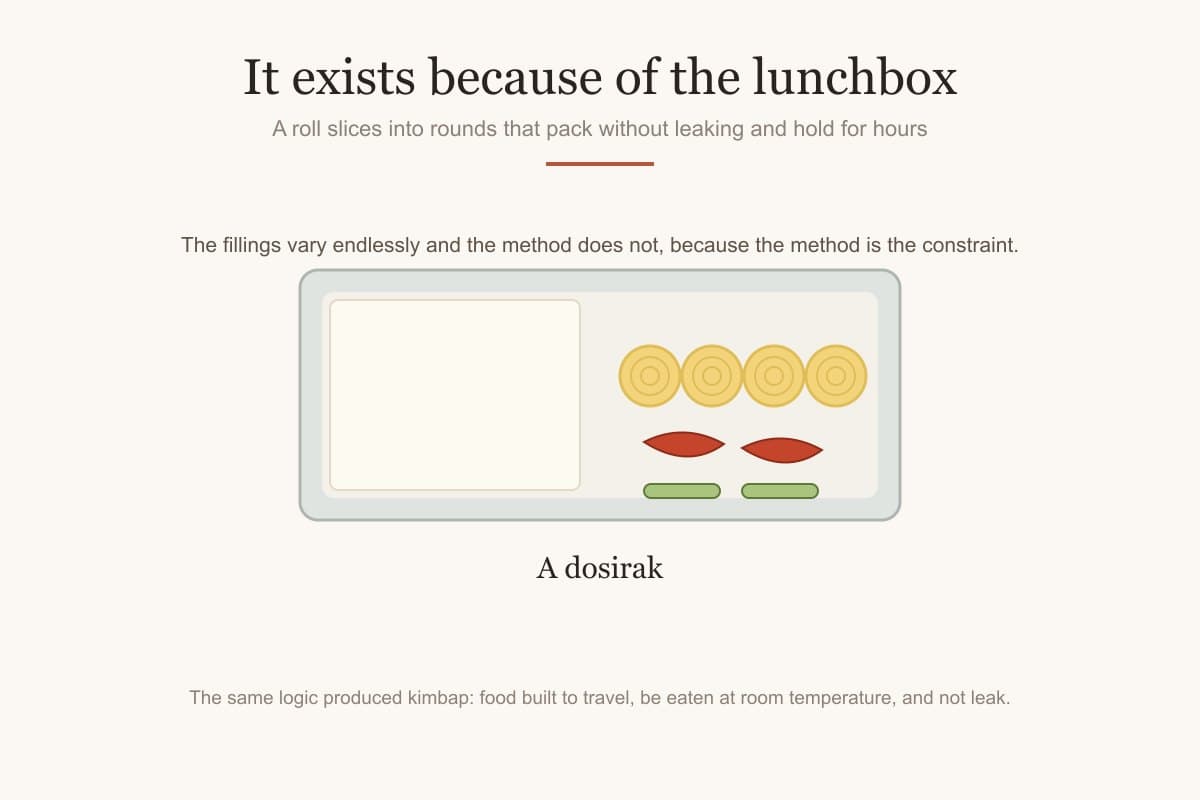
Gyeran mari is lunchbox food before it is anything else, and that shapes the recipe. A rolled omelette slices into neat rounds that pack without leaking, holds together at room temperature for hours, and absorbs whatever vegetables need using up — which is why the fillings vary endlessly and the method does not. The Korean school and work dosirak is the reason it exists in this form rather than as a flat omelette, and the same logic produced kimbap.
Gyeran mari is a rolled omelette, and a roll needs the egg to still be slightly wet where it meets the next layer.
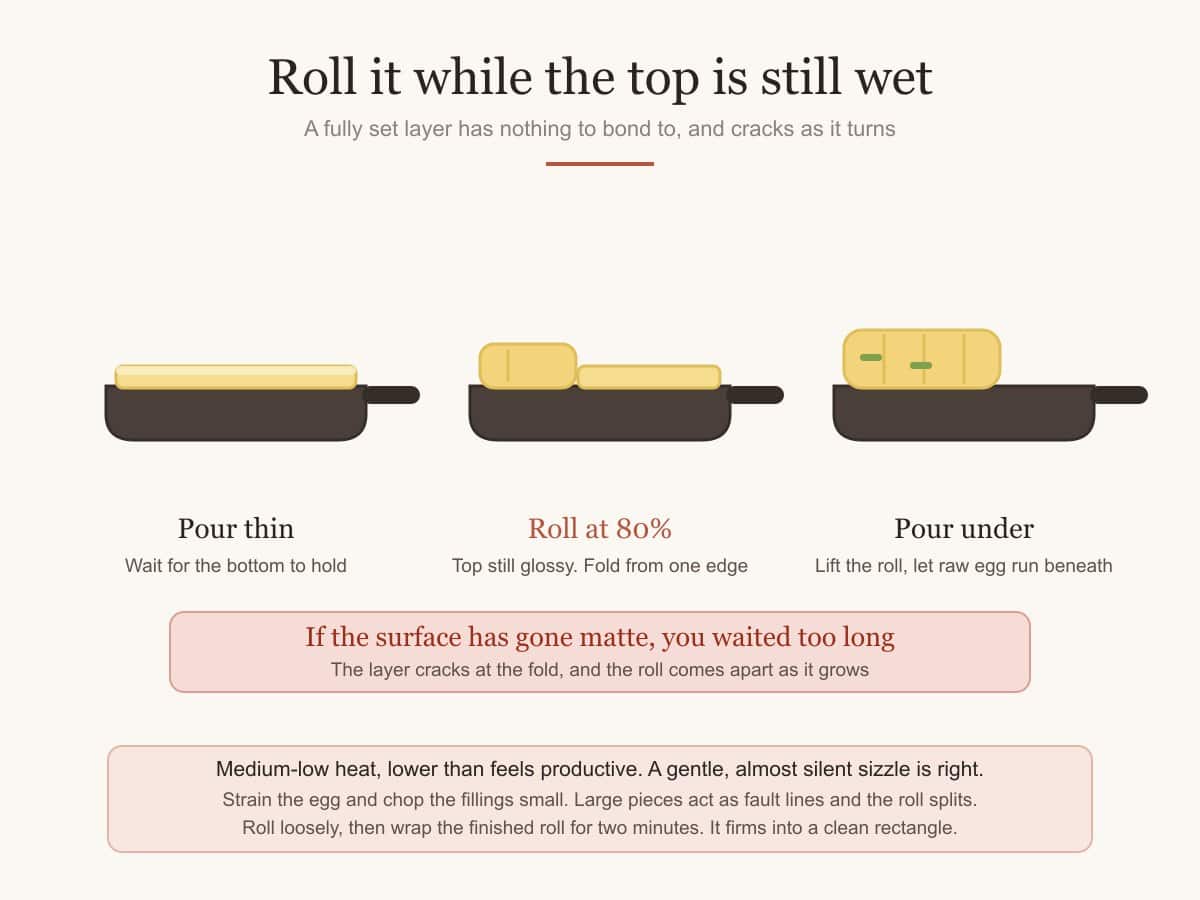
Start rolling while the surface is still glossy. A fully set layer has nothing to bond to and cracks as it turns.
Roll when it is 80 per cent set
Pour a thin layer, wait until the bottom holds and the top is still visibly wet, then start folding from one edge.
If the surface has gone matte all the way across, you have waited too long. The layer will crack along the fold and the roll will come apart as it grows.
Each new pour goes under the existing roll as well as around it — lift the roll slightly and let the raw egg run beneath, which is what welds the layers.
Low heat, the whole way
This is a low-heat dish. Medium-low at most, and lower than feels productive.
High heat sets the bottom before the top is anywhere near ready, which forces the exact problem above. It also browns the outside, and gyeran mari is supposed to be pale yellow.
If the pan is spitting, it is too hot. A gentle, almost silent sizzle is right.
Strain the egg, and skip the milk
Pass the beaten egg through a sieve. It removes the chalazae and any unbeaten white, and the layers come out even instead of patchy. Same principle as gyeranjjim.
Add a tablespoon of water per three eggs if you want it softer — not milk, which makes it more likely to tear.
And chop the fillings small. Large pieces of vegetable or gim act as fault lines, and the roll splits along them.
Shape it after, not during
Roll it loosely, then tighten it at the end. Fighting for a tight roll at every turn is what tears the layers.
Once it is done, turn it out onto a bamboo mat or a sheet of foil, wrap it, and let it sit for two or three minutes. It firms into a clean rectangle and slices without squashing.
Slice it warm with the sharpest knife you have, wiping the blade between cuts — the same discipline as kimbap.
Common questions
When should I start rolling gyeran mari?
When the bottom holds but the top is still visibly wet and glossy. A layer that has gone matte all over has nothing left to bond to and cracks at the fold.
What heat for a rolled omelette?
Medium-low, and lower than feels productive. High heat sets the bottom before the top is ready and browns the outside, which it should not be.
Should I add milk to gyeran mari?
No — a tablespoon of water per three eggs if you want it softer. Milk makes the layers more likely to tear.
How do I get a neat rectangle?
Roll loosely, then wrap the finished roll in a bamboo mat or foil for two or three minutes. It firms into shape and slices cleanly.
More to cook
All Ingredient & Substitute Guides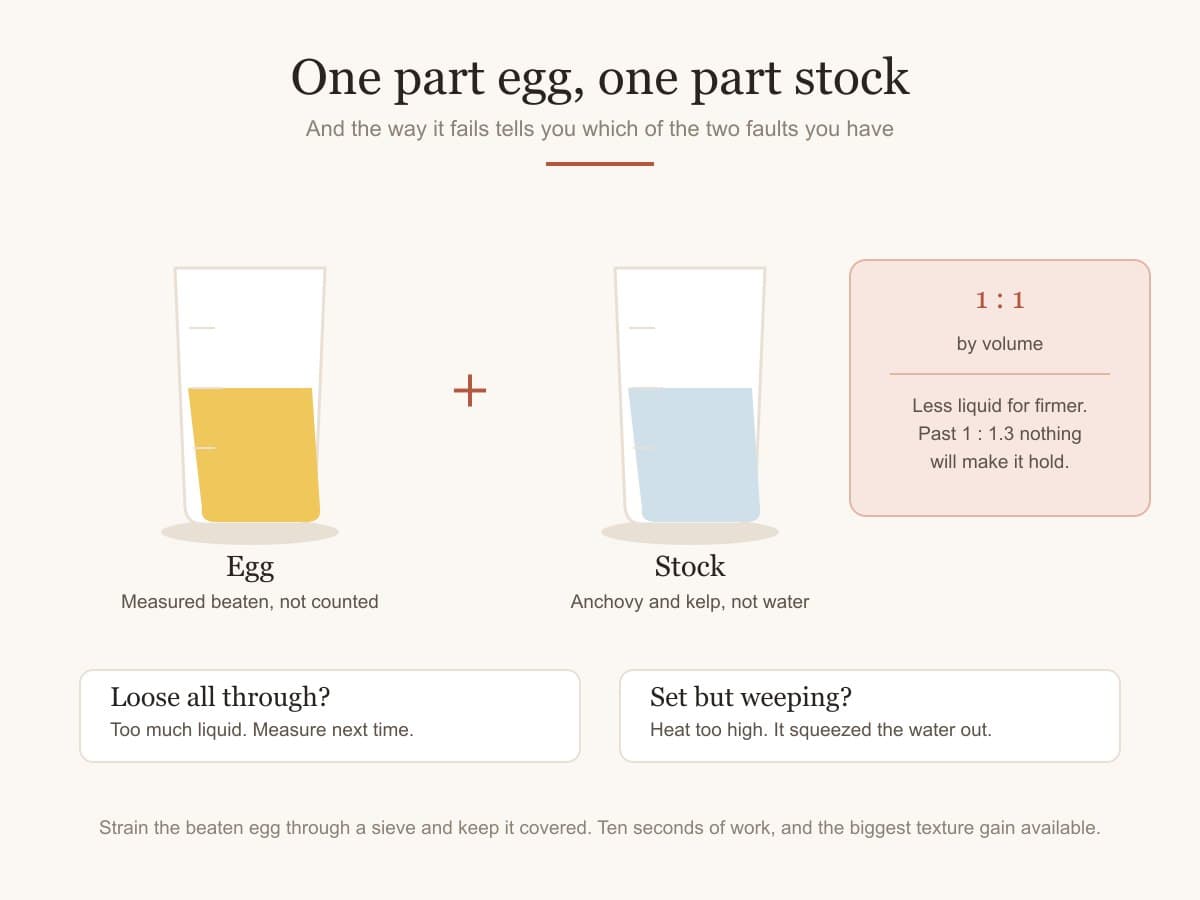
Why Is My Gyeranjjim Watery?
Watery or weeping steamed egg comes down to the liquid ratio and the heat. The numbers that work, and how to tell which one went wrong.
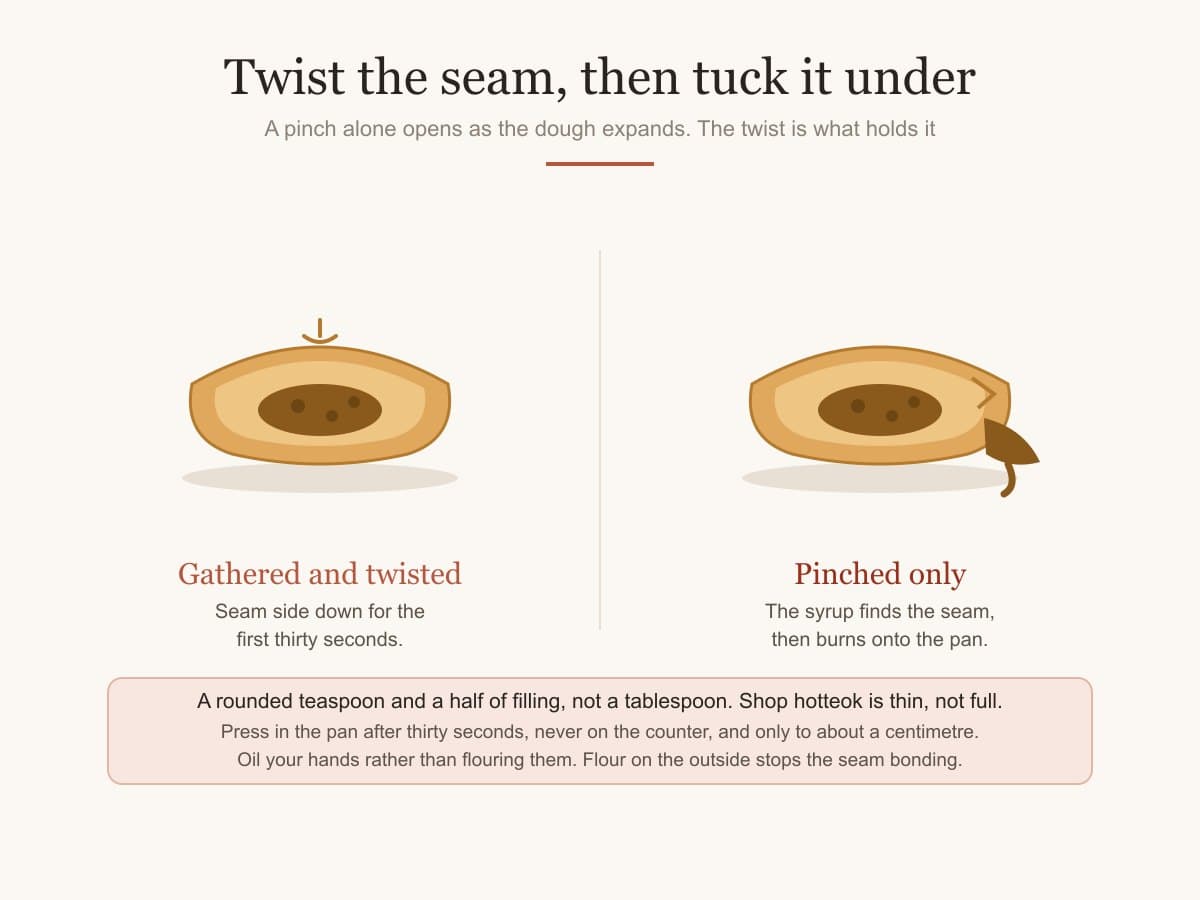
Why Is My Hotteok Leaking?
Molten sugar escaping from a Korean pancake is a sealing problem and a filling problem. How to close it, and what to put inside.
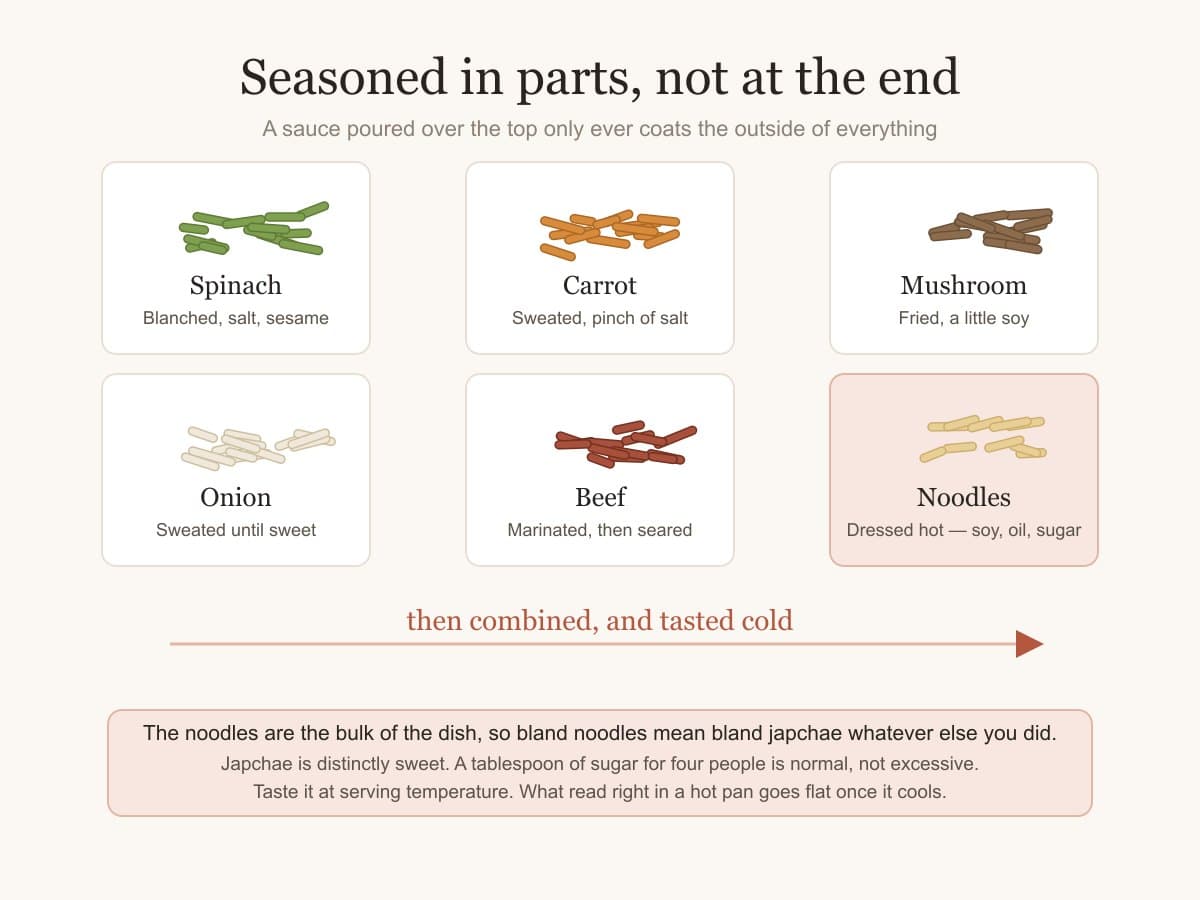
Why Is My Japchae Bland?
Japchae is seasoned in parts, not at the end. Why a single sauce poured over the top never reaches the noodles, and what to do instead.