Did you know — Korean culture
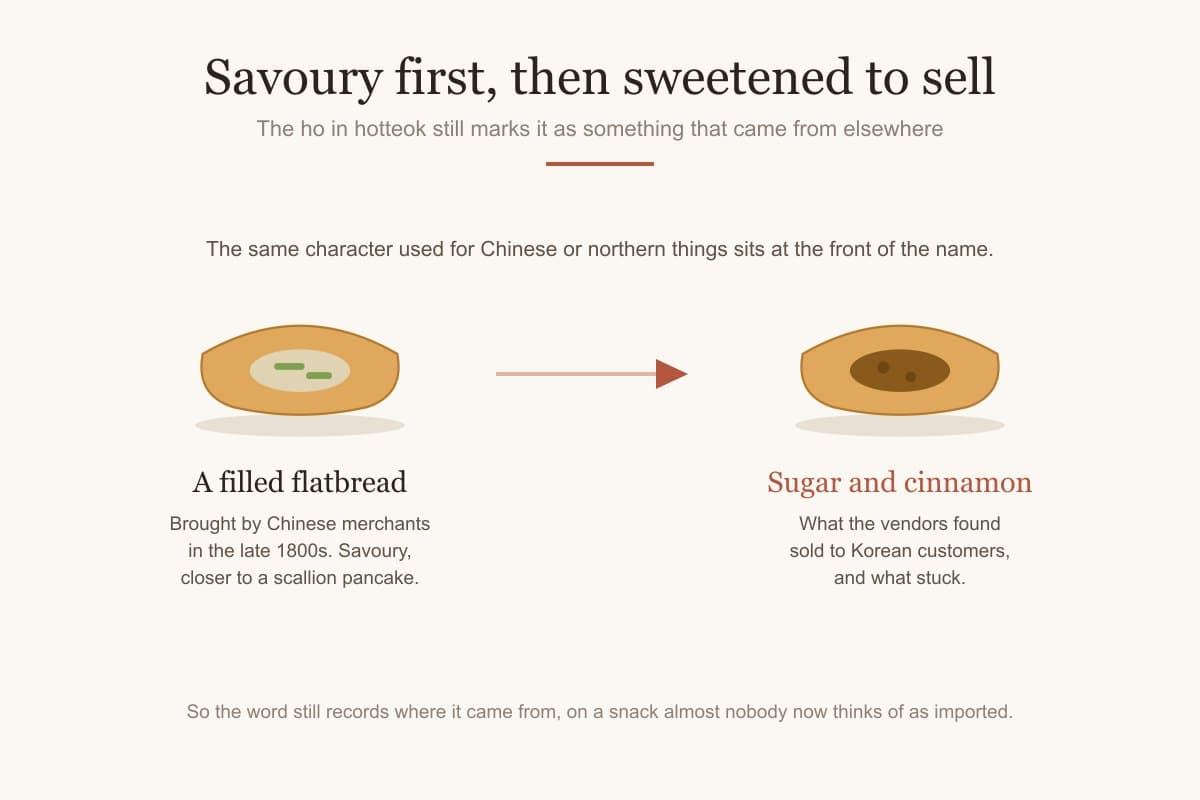
Hotteok arrived as a savoury pancake and was sweetened to sell. Chinese merchants settling in Korea in the late nineteenth century brought a filled flatbread closer to a scallion pancake, and the vendors who adapted it found that a sugar and cinnamon filling sold far better to Korean customers. The ho in hotteok marks it as foreign — the same character used for Chinese or northern things — so the name still records where it came from, on a snack almost nobody now thinks of as imported.
Hotteok filling turns to syrup at frying temperature and goes looking for a way out. A leak is a mechanical failure, not a recipe one.
Seal it properly, use less filling than you want to, and press it flat only once it is in the pan.
Seal it like a dumpling, not like a parcel
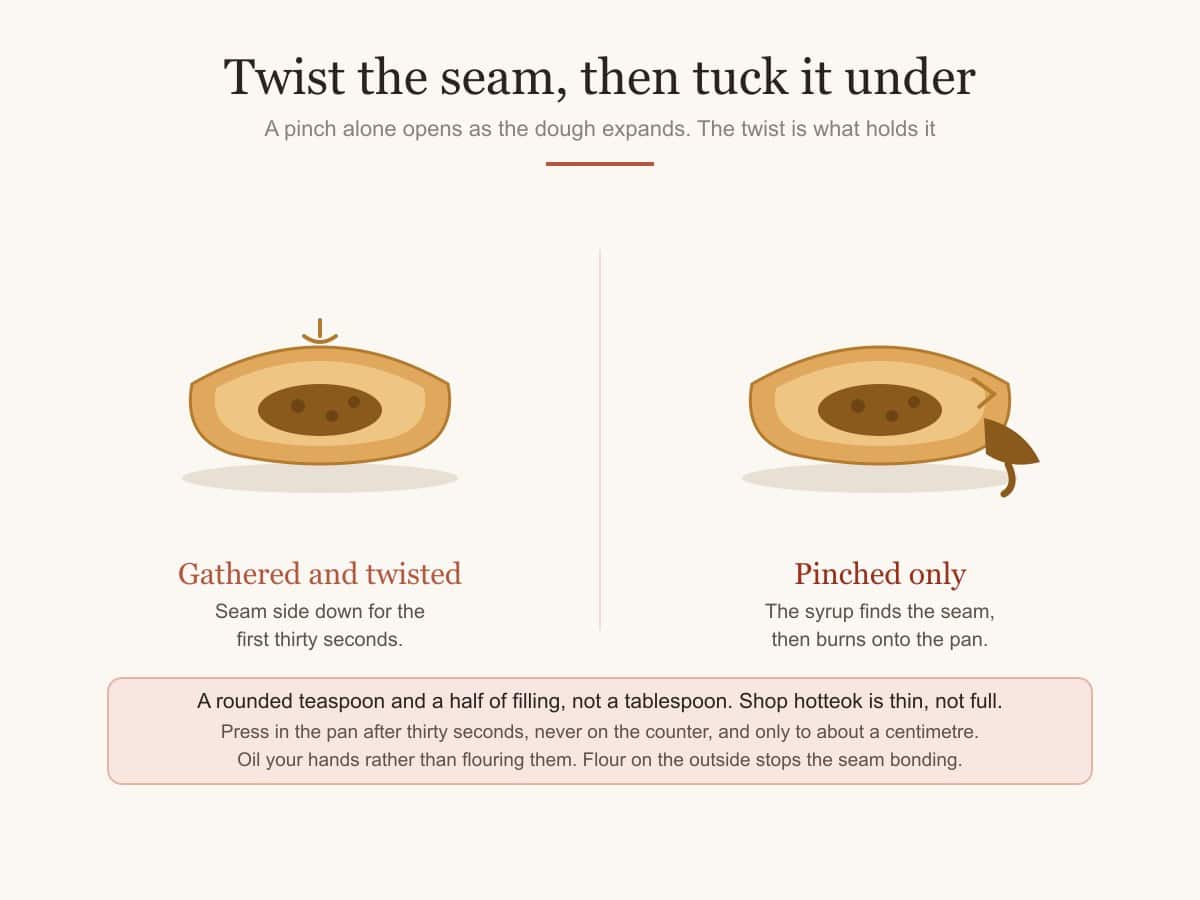
Cup the dough round the filling, gather the edges at the top, pinch them together hard, then twist and tuck the seam underneath.
A pinch alone opens as the dough expands. The twist is what holds it.
Put the sealed side down in the pan and leave it there for the first thirty seconds. That sets the seam before any pressure goes on it.
Less filling than feels right
A rounded teaspoon and a half, not a tablespoon. Shop hotteok looks generously filled because the dough is thin and flat, not because there is a lot in it.
Overfilled hotteok leaks every time, and the sugar that escapes burns on the pan and makes the next one stick.
Keep the dough even. A thin patch is where it will split, and the usual thin patch is directly opposite the seam, where the dough stretched most.
Press late and press gently
Put the ball in the pan, let it set for thirty seconds, then press. Pressing a cold ball on the counter forces the filling sideways into the seam.
Use an oiled press or the back of an oiled spatula, and flatten to about 1 cm — no thinner.
Medium heat. Too hot and the dough browns before the inside melts, so you press harder to compensate and that is what bursts it.
The dough itself
It wants to be soft and slightly sticky — tacky to the hand, not firm. A stiff dough will not stretch round the filling and splits.
It needs a proper rise: about an hour until doubled, then knock it back. Under-risen dough is dense and cracks.
Oil your hands rather than flouring them. Flour on the outside stops the seam bonding, which is the leak nobody can explain afterwards. And the filling — brown sugar, cinnamon, chopped walnuts or peanuts — works better with the nuts in, because they hold some of the syrup in place.
Common questions
Why does the sugar leak out of my hotteok?
The seam opened. Gather the dough at the top, pinch hard, then twist and tuck it underneath, and put that side down in the pan for the first thirty seconds.
How much filling goes in a hotteok?
About a rounded teaspoon and a half. Shop hotteok looks generous because the dough is thin and flat, not because there is a lot inside.
When should I press hotteok flat?
In the pan, after about thirty seconds, not on the counter. Pressing a cold ball forces the filling sideways into the seam before it has set.
Should I flour my hands when shaping hotteok?
No — oil them. Flour on the outside stops the seam bonding properly, and that is a leak with no obvious cause.
More to cook
All Ingredient & Substitute Guides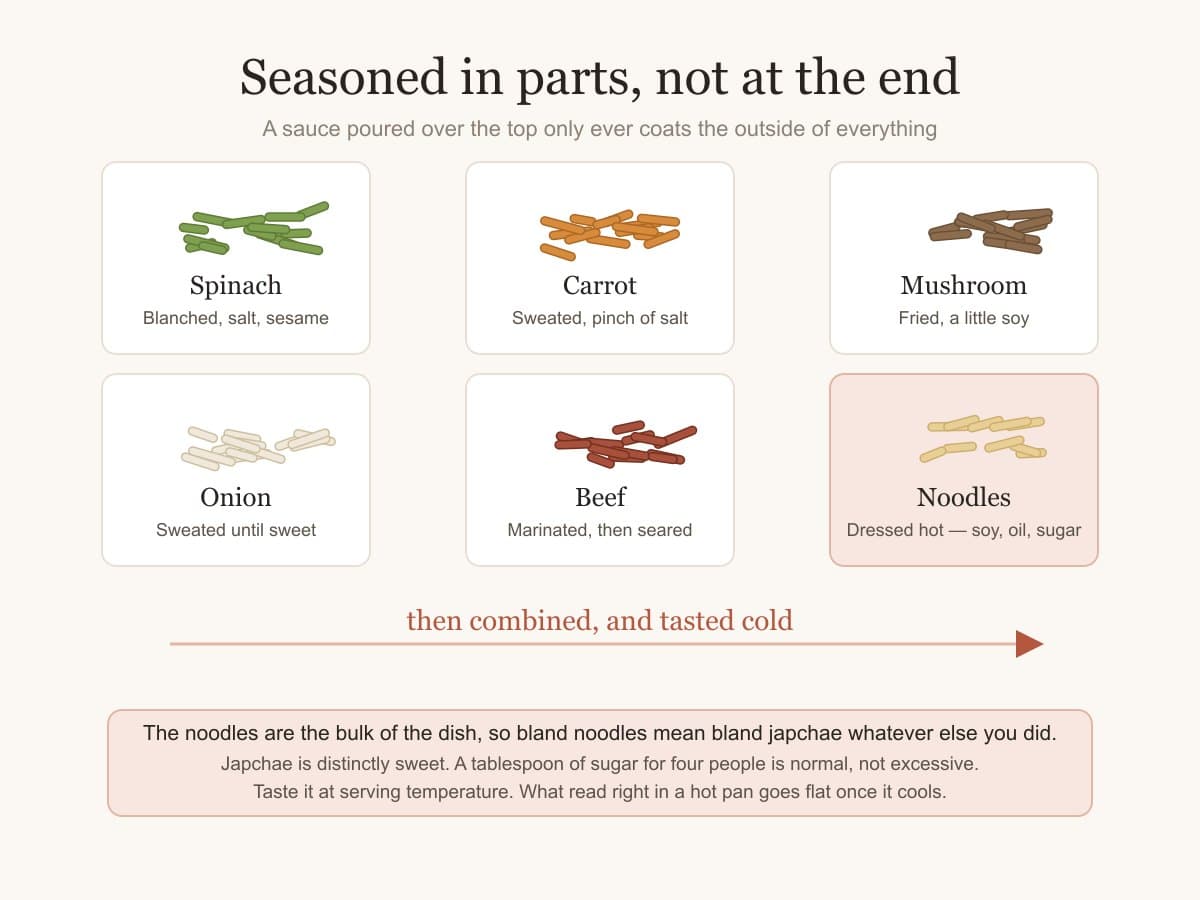
Why Is My Japchae Bland?
Japchae is seasoned in parts, not at the end. Why a single sauce poured over the top never reaches the noodles, and what to do instead.
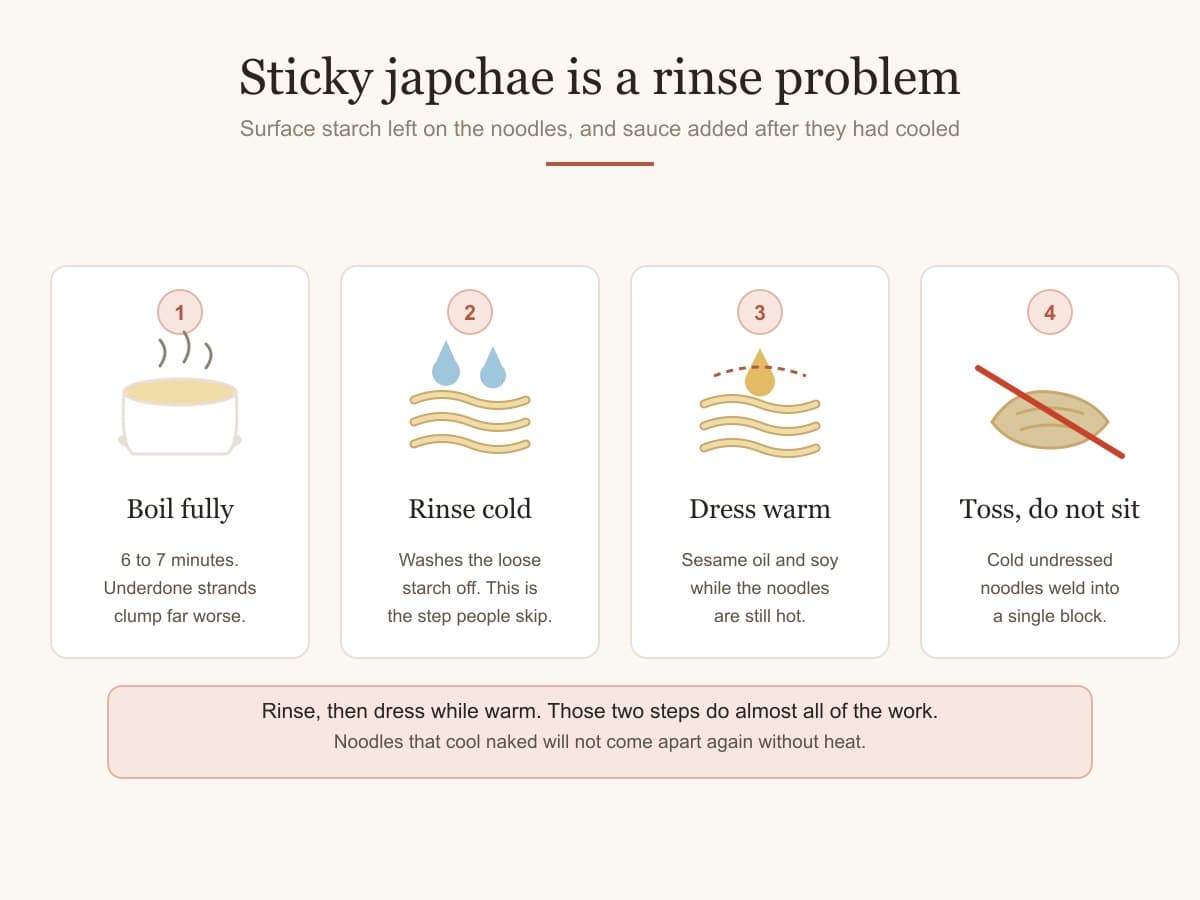
Why Is My Japchae Sticky?
Clumped japchae comes from the rinse and the timing, not the sauce. How to keep dangmyeon separate and springy from pan to plate.
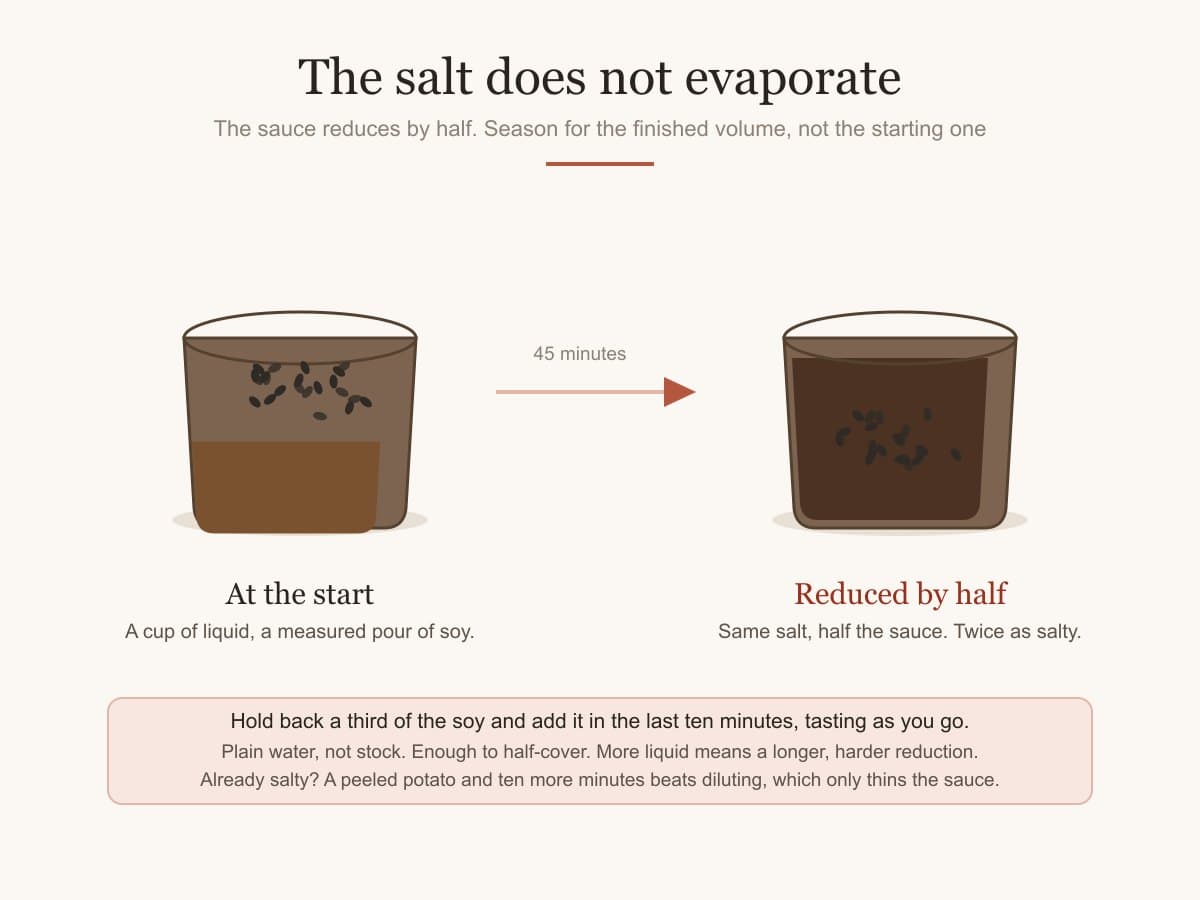
Why Is My Jjimdak Too Salty?
Braised soy chicken turns salty because the sauce reduces around a fixed amount of soy. How to build it so the reduction works for you.