Did you know — Korean culture
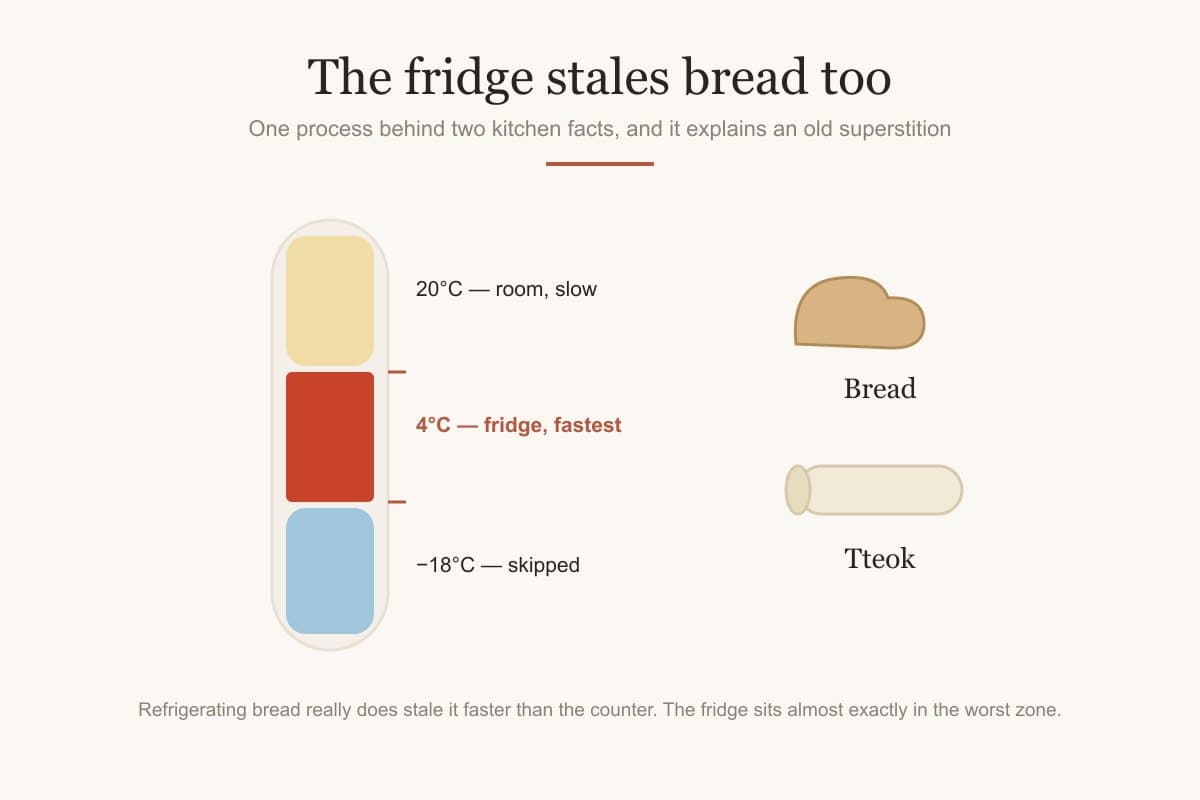
The same process that hardens rice cakes is what makes bread go stale, and it explains a kitchen superstition that turns out to be correct: refrigerating bread really does stale it faster than leaving it on the counter. Starch retrogradation peaks a little above freezing, so a fridge sits almost exactly in the worst zone. A freezer skips past it entirely, which is why frozen bread and frozen tteok both thaw far closer to fresh than refrigerated ones ever get.
Rice cakes that have turned to stone in the fridge have not dried out. They have done something more specific, and it is reversible.
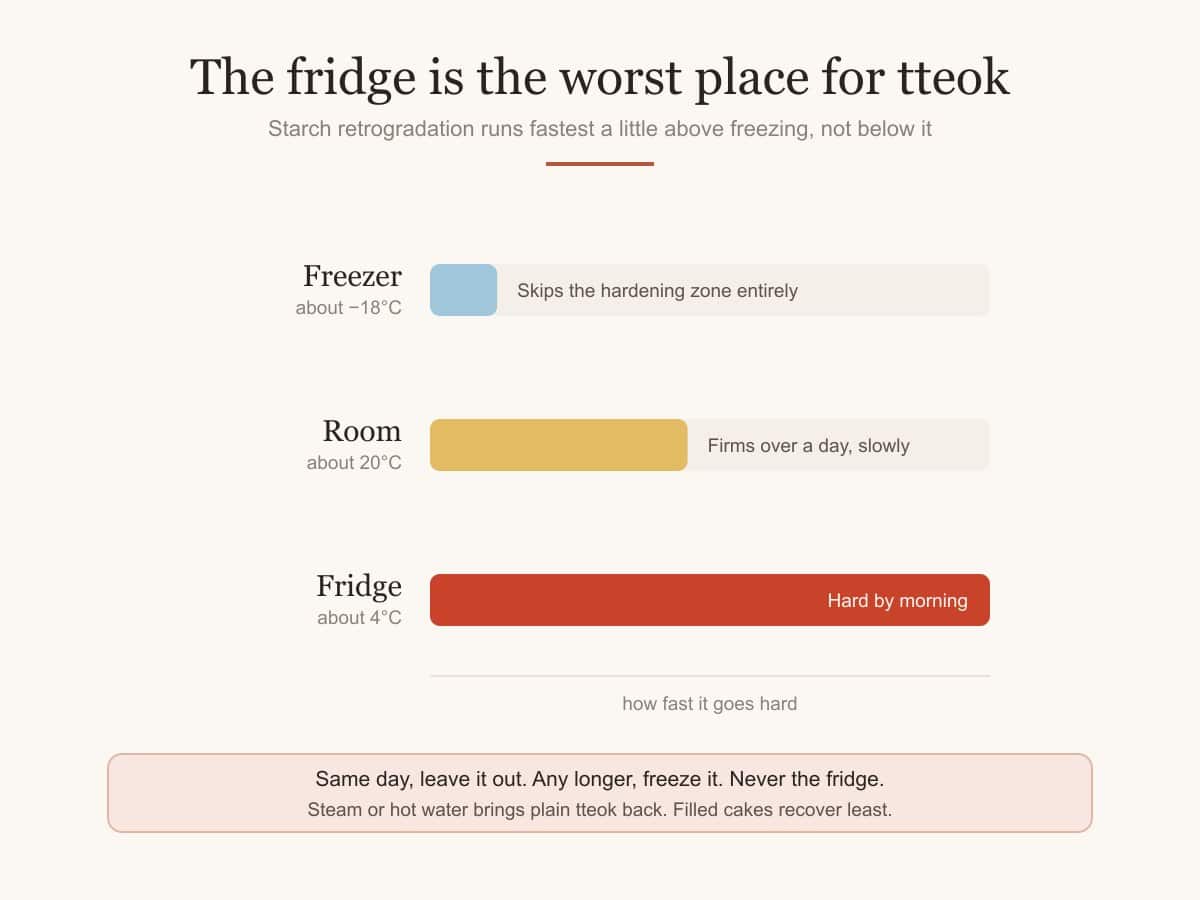
The process is called starch retrogradation: cooked starch molecules gradually re-align into a crystalline structure, squeezing water out as they go. It happens fastest at fridge temperature — faster than at room temperature, and far faster than in the freezer.
Why the fridge is the worst place
This is the part that surprises people. Chilling accelerates the hardening rather than slowing it.
Around 4°C is close to the optimum for starch re-crystallising. A tray of tteok left on the counter for a day will be softer than the same tray refrigerated for a day.
For anything beyond a day, the freezer is the right answer — below freezing the process effectively stops.
Bringing hard rice cakes back
Warm water, ten to twenty minutes. This is the standard fix for refrigerated garaetteok and it works well. The starch reabsorbs water and the structure relaxes.
Or steam them, five minutes, which is gentler and better for filled cakes like songpyeon.
Or simmer them straight into a sauce, which is what tteokbokki does anyway — just soak first or the centres stay firm.
Which cakes recover and which do not
Plain garaetteok and tteokguk slices recover almost completely. They are starch and water, and you are putting the water back.
Filled and sweetened cakes recover less well. Injeolmi, chapssaltteok and anything with a bean paste inside will soften but not fully return, because the filling behaves differently from the shell.
Fried rice cakes do not recover at all. Once the surface has crisped and then gone stale, warming only makes it leathery.
Storing them properly from the start
Same day: leave them at room temperature, wrapped. Do not refrigerate.
Beyond a day: freeze, in portions, wrapped tightly. They keep for months and thaw in warm water.
Vacuum-packed shop tteok is already stabilised and keeps unopened in the cupboard. Once opened, treat it like fresh.
Common questions
How do I soften hard rice cakes?
Soak them in warm water for ten to twenty minutes, or steam them for about five. Plain cylindrical garaetteok recovers almost completely; filled or sweetened cakes soften but do not fully return.
Why do rice cakes get hard in the fridge?
Starch retrogradation — the cooked starch re-crystallises and pushes water out. Fridge temperature is close to ideal for that process, which is why chilling hardens them faster than leaving them out.
Can you freeze tteok?
Yes, and it is the right way to keep them beyond a day. Freezing stops the hardening almost completely. Thaw in warm water and they come back close to fresh.
Why are my tteokbokki rice cakes still hard after cooking?
They went into the sauce without soaking. Refrigerated or frozen rice cakes need ten to twenty minutes in warm water first, or the centres stay firm no matter how long they simmer.
More to cook
All Ingredient & Substitute Guides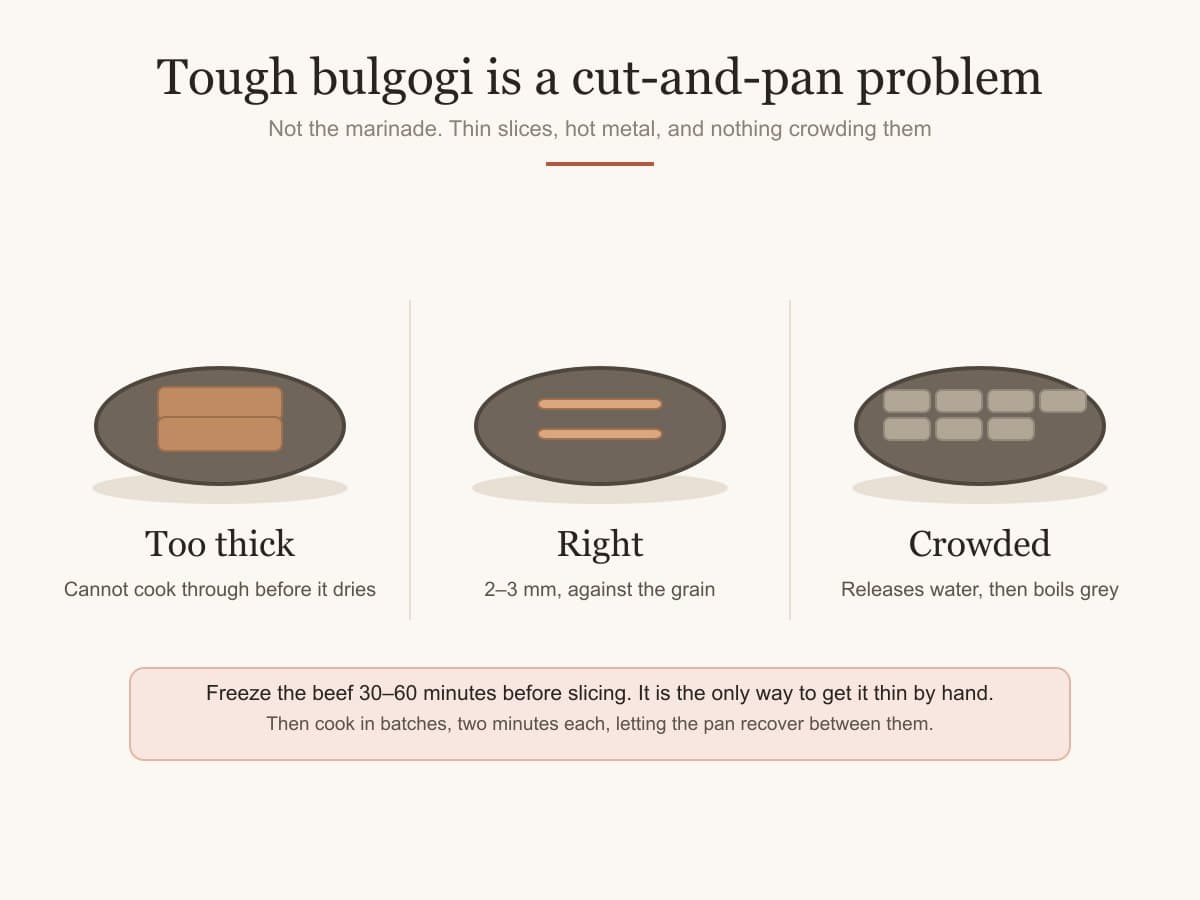
Why Is My Bulgogi Tough?
Tough bulgogi is almost never the marinade. The three real causes are the cut, the thickness and a crowded pan, and all three are easy to fix.
Why Is My Doenjang Jjigae Bitter?
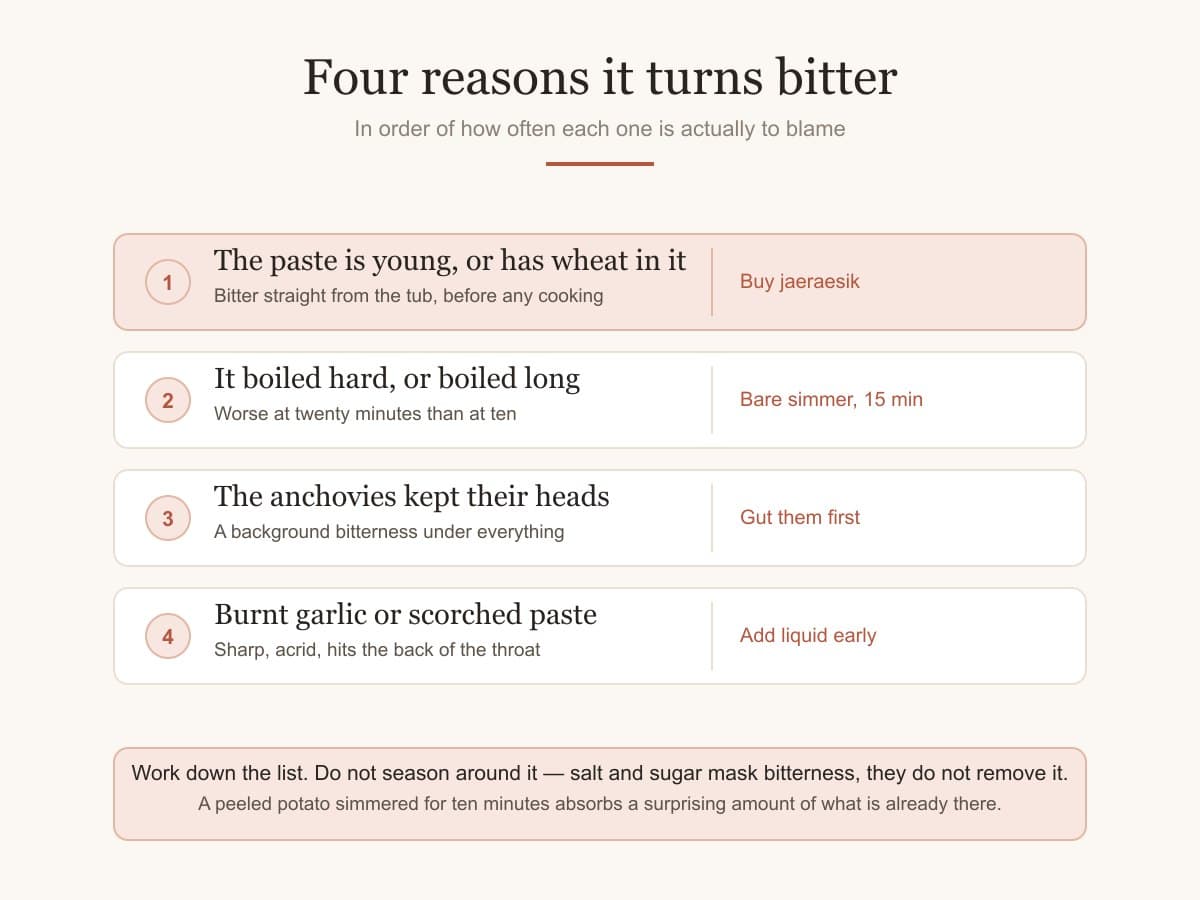
Bitterness in doenjang jjigae almost always comes from the paste or the boil, not the vegetables. How to find which, and how to fix it mid-pot.
Why Is My Galbijjim Tough?
Tough braised short rib is almost always undercooked, not overcooked. The collagen window, the parboil, and why the sugar goes in late.