Did you know — Korean culture
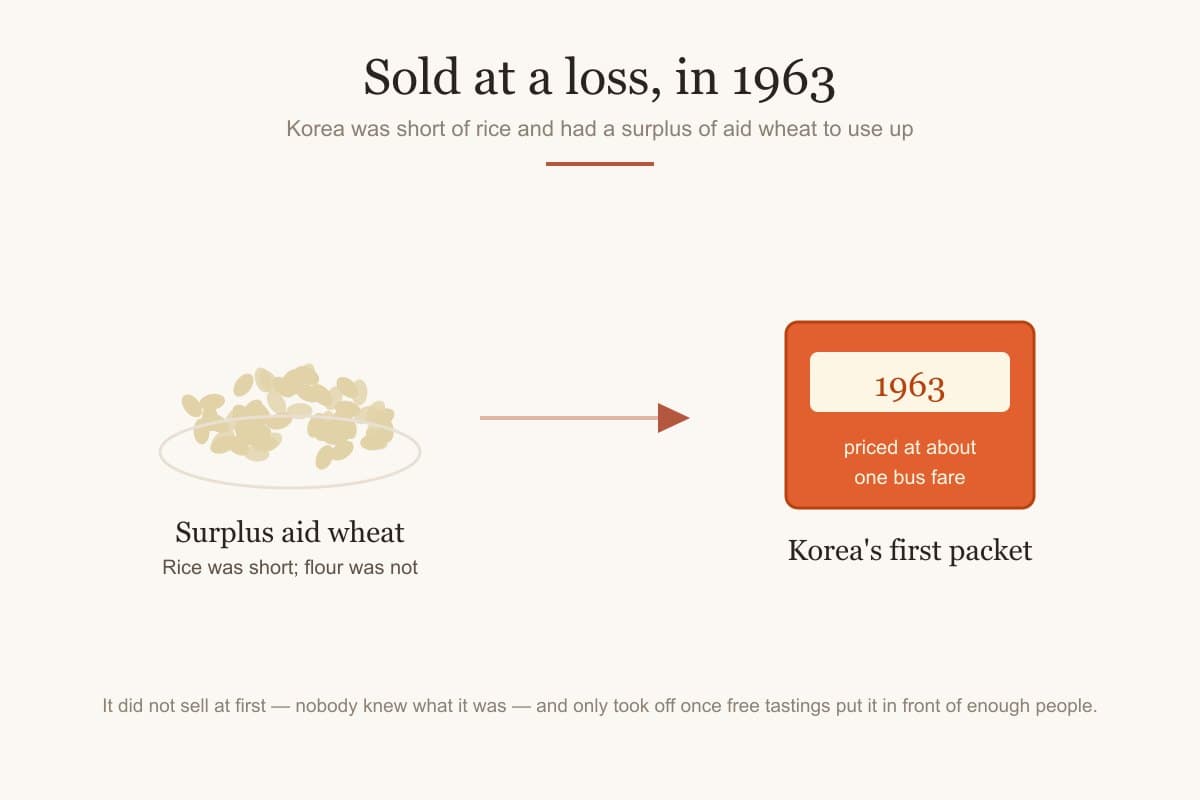
Korea's first instant noodle launched in 1963 and was sold at a deliberate loss. The country was short of rice and had a surplus of wheat flour from aid shipments, and the government was actively promoting flour-based food to close the gap. Samyang's founder licensed the technology from Japan and priced the packet at roughly the cost of a bus fare. It did not sell at first — people did not know what it was — and only took off once free tastings put it in front of enough of them.
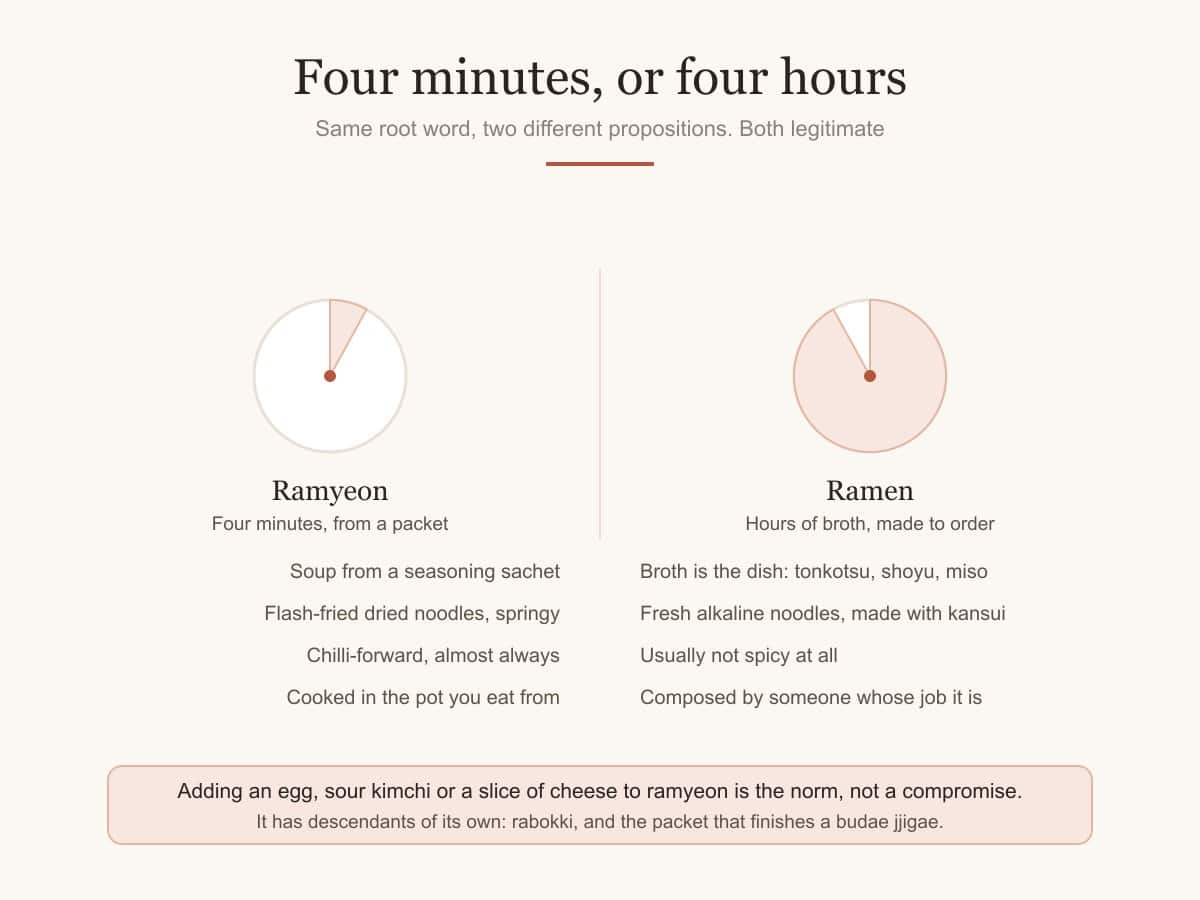
The names come from the same Chinese root, which is where the connection mostly ends. One is a five-minute packet food that Korea has made its own; the other is a restaurant dish built on hours of stock.
Both are legitimate. Expecting either to be the other is the mistake.
Instant against made-to-order
Ramyeon in Korea almost always means the instant kind, and that is not a lesser version of anything — it is the default, eaten by adults, cooked at home and served in restaurants and convenience stores.
Ramen in Japan almost always means a bowl made to order, with a broth simmered for hours and a shop built around one style of it.
There is instant ramen in Japan and there are hand-pulled noodle shops in Korea. But if someone says the word without qualification, those are the two things they mean.
The broth
Ramyeon's soup comes from a seasoning sachet, chilli-forward, salty and quick. The cooking is the whole preparation.
Ramen's broth is the dish: tonkotsu, shoyu, shio, miso — each a long simmer and a separate tradition.
Korean ramyeon is nearly always spicy, which Japanese ramen usually is not. That is the flavour difference people notice first, and it is a real one rather than a branding one.
The noodles
Ramyeon noodles are flash-fried and dried, which gives them their springy, slightly chewy bite and the ability to cook in four minutes. The frying is also why they hold up in a bubbling pot better than fresh noodles do.
Ramen noodles are fresh alkaline noodles, made with kansui, and differ by shop and by broth style — thin and straight for tonkotsu, thick and wavy for miso.
Korean noodles explained covers where ramyeon sits among the rest.
How each is actually eaten
Ramyeon is cooked in the pot it is eaten from, often shared, usually improved: an egg cracked in at the end, a handful of sour kimchi, a slice of processed cheese, spring onion. Adding things is the norm, not a compromise.
Ramen is composed. Broth, tare, noodles and toppings are assembled in a specific order by someone whose job that is.
And the Korean dish has its own descendants. Rabokki folds ramyeon noodles into tteokbokki, and budae jjigae usually ends with a packet dropped in.
Common questions
Is ramyeon just Korean instant ramen?
It is instant noodles, but calling it 'just' that misses how it is treated. Ramyeon is a staple eaten by adults at home and in restaurants, improved with egg, kimchi and cheese as a matter of course.
Is Korean ramyeon spicier than Japanese ramen?
Almost always. Korean ramyeon is chilli-forward by default; Japanese ramen is usually not spicy at all unless the shop specialises in it.
Why do ramyeon noodles taste different?
They are flash-fried and dried, which gives them a springy chew and lets them cook in four minutes without going soft in a bubbling pot. Ramen noodles are fresh alkaline noodles made with kansui.
Can I use ramen noodles for ramyeon?
You can, but the texture will not be the same. Fresh noodles soften faster and will not hold up to the way ramyeon is cooked — hard boil, lid off, straight from the pot.
More to cook
All Ingredient & Substitute Guides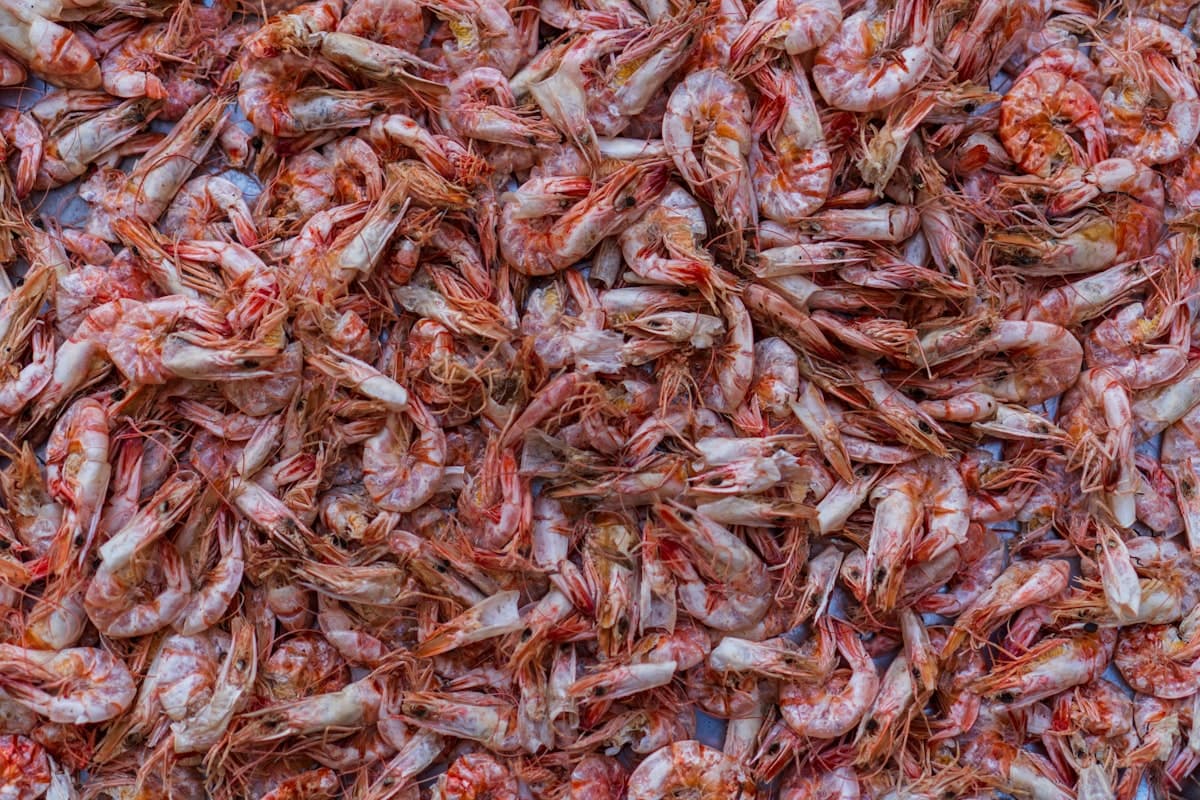
Saeujeot (Salted Fermented Shrimp)
What saeujeot is, why kimchi recipes call for it in such small amounts, and what to use if you can't find it.
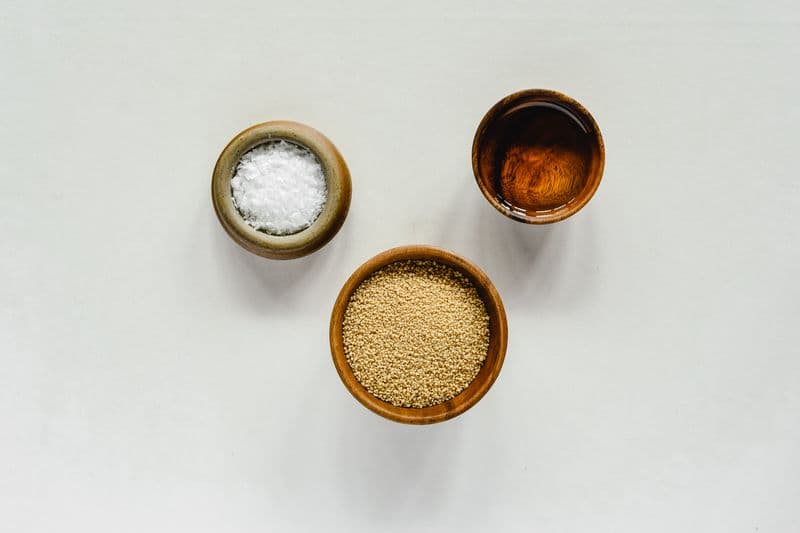
Sesame Oil vs. Perilla Oil
How toasted sesame oil and perilla oil actually differ in flavor, smoke point and shelf life — and which Korean dishes specifically want one over the other.
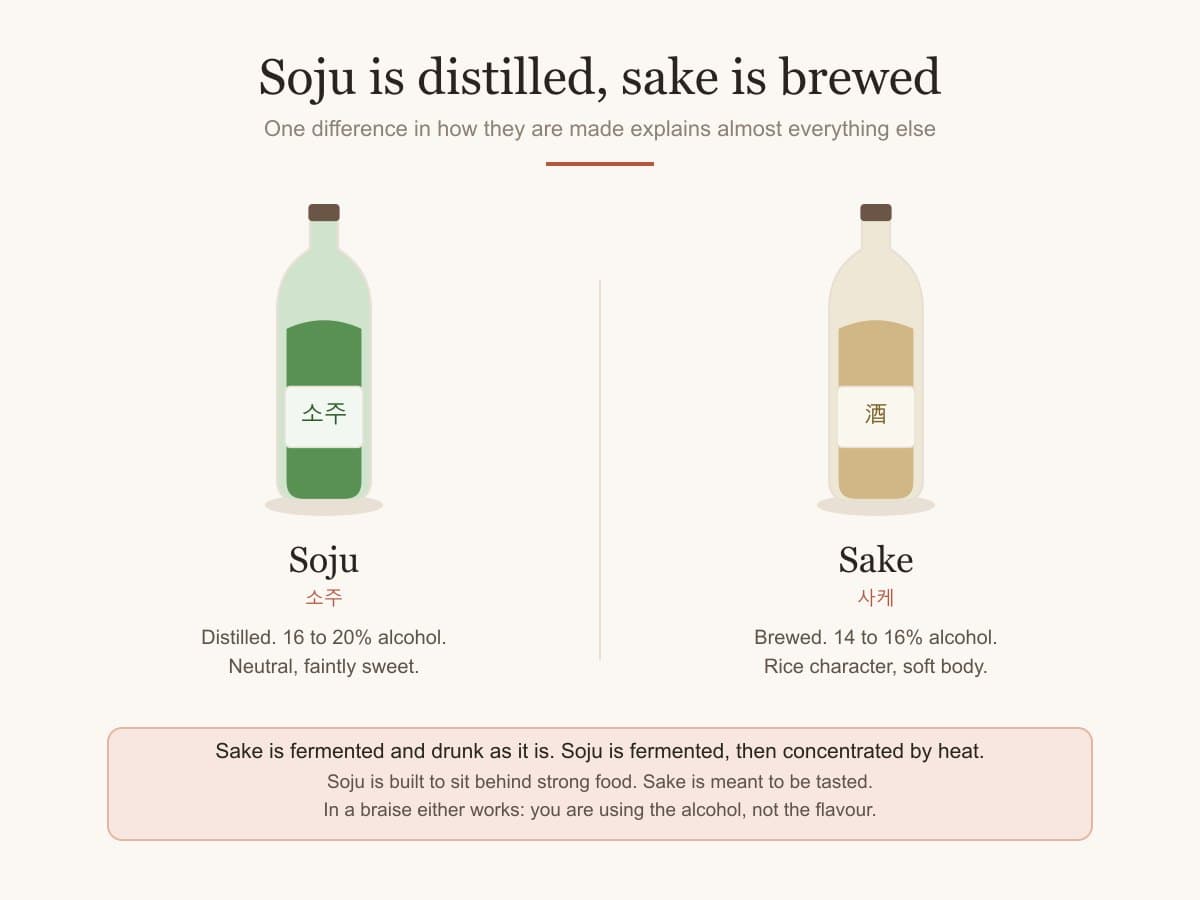
Soju vs Sake
One is distilled, the other brewed, and they are not substitutes at the table or in the pan. Strength, flavour and what each one is drunk with.