Did you know — Korean culture
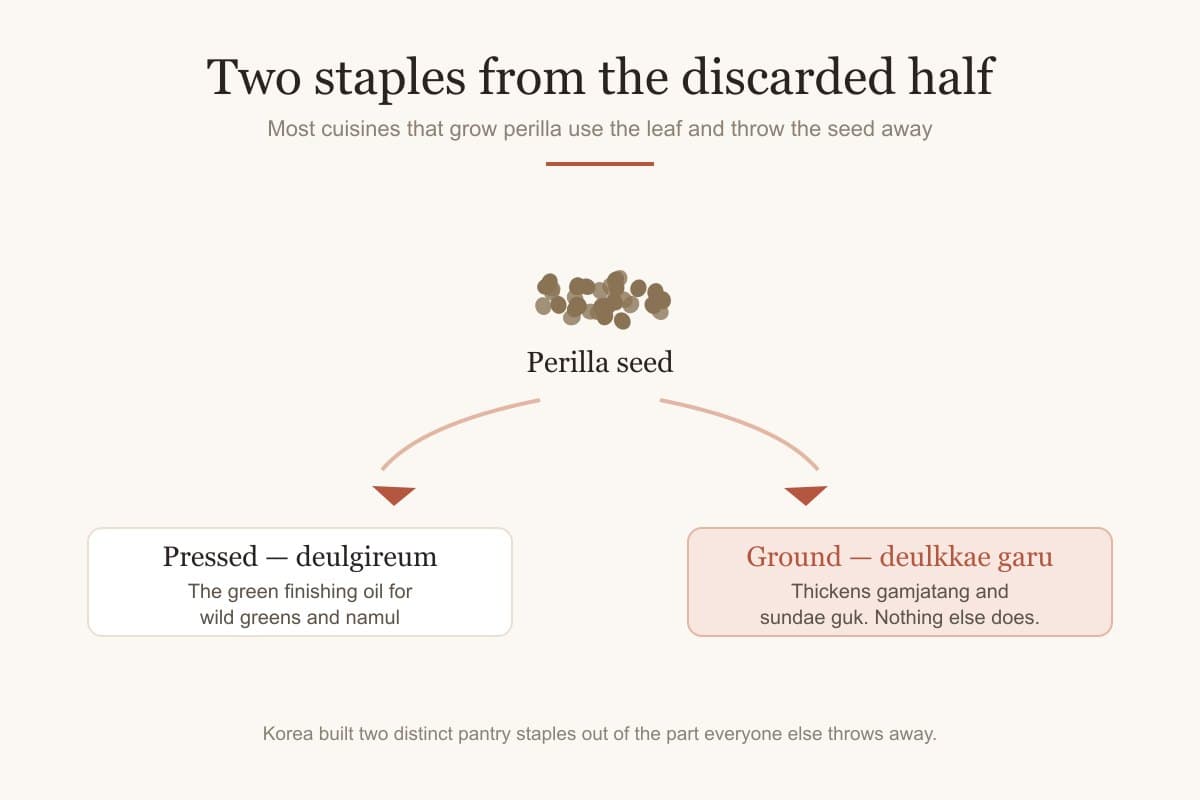
Perilla seed gives two separate ingredients and Korean cooking uses both heavily. Pressed, it becomes deulgireum, the green finishing oil for wild greens and namul. Ground whole, it becomes deulkkae garu, a pale nutty powder that thickens gamjatang, sundae guk and several namul dressings — a role nothing else in the pantry fills. Most cuisines that grow perilla use the leaf and discard the seed. Korea built two distinct pantry staples out of the part everyone else throws away.
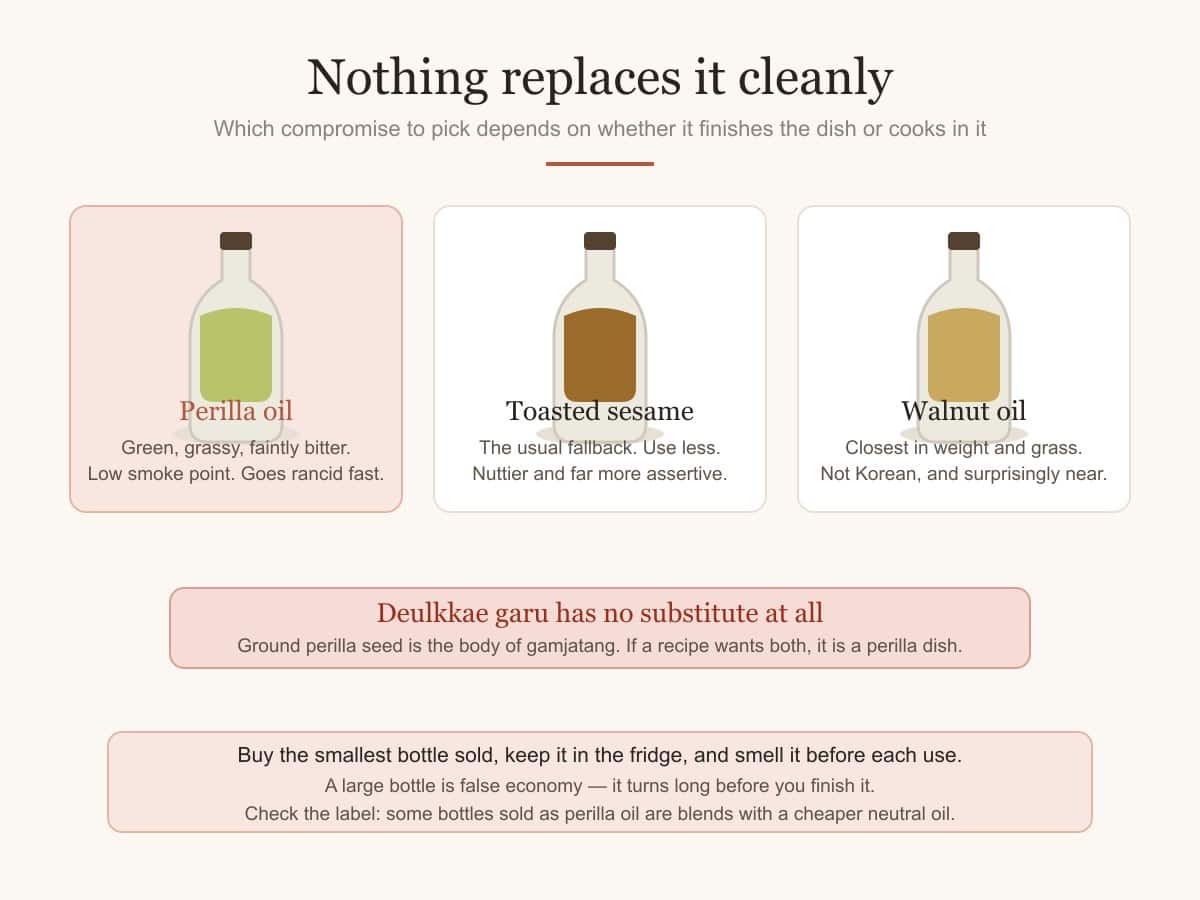
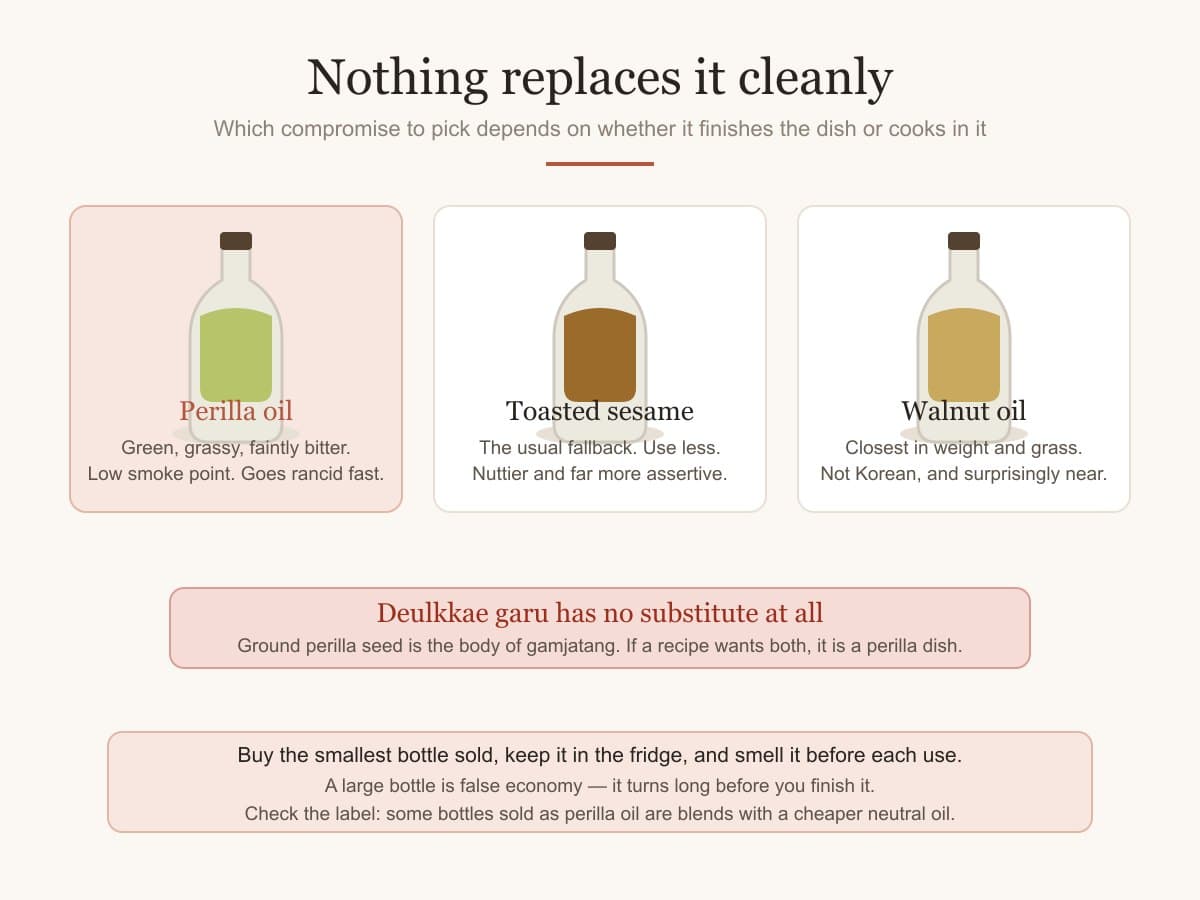
Perilla oil is green, grassy and faintly bitter, and there is no clean substitute — which is annoying, because it spoils fast and many people only discover they need it mid-recipe.
Which compromise works depends on whether it is a finishing oil, a cooking oil, or the body of a dish.
For dressing namul, the usual case
Toasted sesame oil is the standard fallback, and it is what most households use when the perilla has run out.
It is nuttier, darker and more assertive, so use slightly less. A spinach or gosari namul dressed with sesame oil is a good dish; it is just a different one.
For something closer: walnut oil, which has the right grassy-nutty weight and almost no bitterness. Hazelnut oil works too. Neither is Korean and both get surprisingly close.
For frying or wild greens
Perilla oil has a low smoke point and is not a frying oil — it is used over low heat or added at the end. So a substitute here only needs to be neutral.
For sautéing namul, any neutral oil plus a few drops of sesame oil at the end covers it.
Where perilla oil is poured over a finished dish, a neutral oil will not do. That is the case where it is worth buying a bottle.
Where it cannot be replaced
Gamjatang and other dishes thickened with deulkkae garu — ground perilla seed — are built on the flavour, not the oil, and ground perilla powder has no substitute at all.
If a recipe calls for both the oil and the powder, it is a perilla dish and a swap turns it into something else.
The powder is easier to find and keeps far better than the oil. If you are buying one, buy the powder.
Buying and keeping it
It goes rancid fast — far faster than sesame oil. Small bottle, in the fridge, and smell it before each use. Rancid perilla oil is unmistakable and ruins the dish.
Buy the smallest bottle sold, even if the price per unit looks poor. A large bottle is false economy.
And check the label: some bottles sold as perilla oil are blends with a cheaper neutral oil, which is why they vary so much in colour and strength.
Common questions
What can I use instead of perilla oil?
Toasted sesame oil is the standard fallback, used slightly more sparingly. Walnut oil is closer in weight and grassiness, with almost none of perilla's bitterness.
Is perilla oil the same as sesame oil?
No. Perilla oil is green, grassy and faintly bitter, pressed from perilla seed; sesame oil is darker, nuttier and more assertive. They are not interchangeable without a noticeable change.
Can I fry with perilla oil?
No, it has a low smoke point. It is used over low heat or added to a finished dish, which is why a neutral oil covers it for actual frying.
Why does my perilla oil taste bad?
It has probably gone rancid — it turns much faster than sesame oil. Buy the smallest bottle, keep it in the fridge, and smell it before each use.
More to cook
All Ingredient & Substitute Guides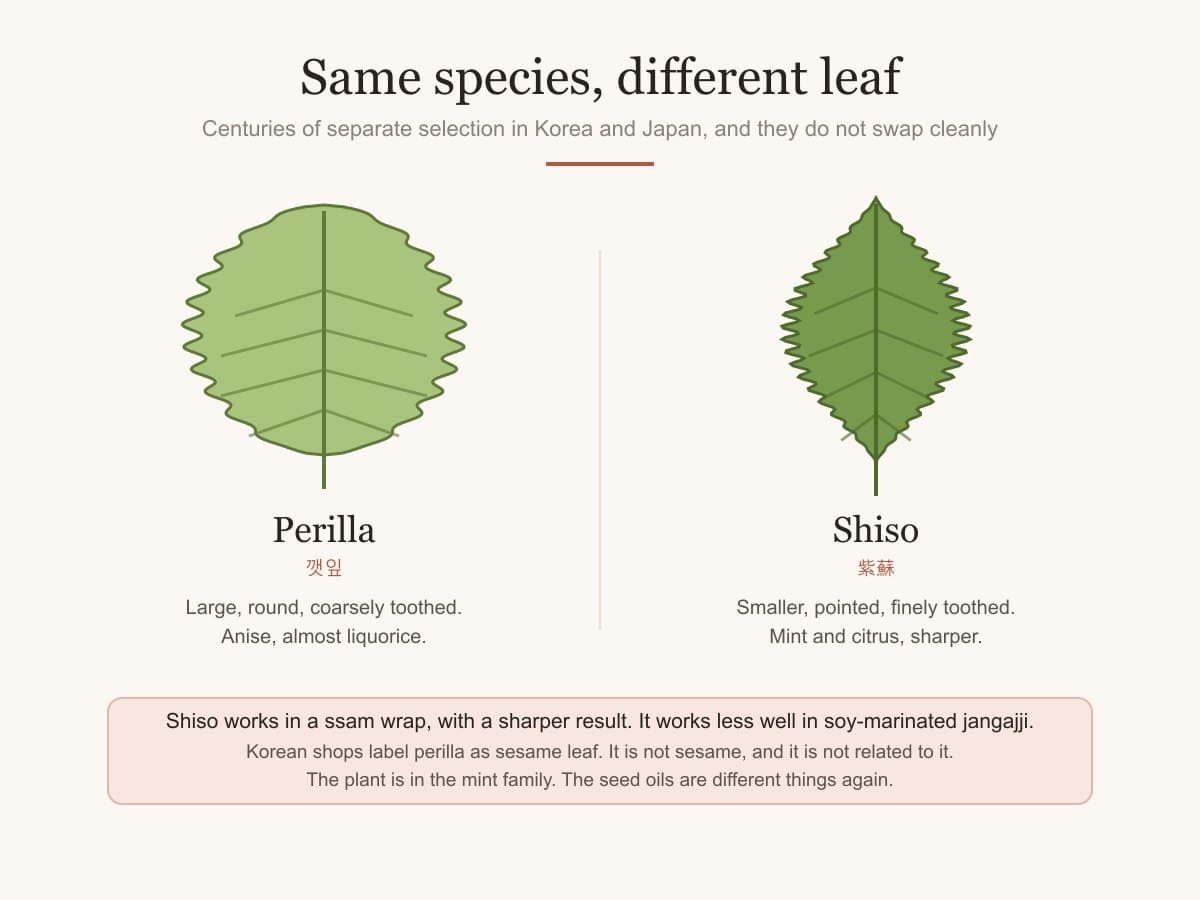
Perilla vs Shiso
Korean kkaennip and Japanese shiso are varieties of one species, and they are not interchangeable. How they differ and when a swap works.
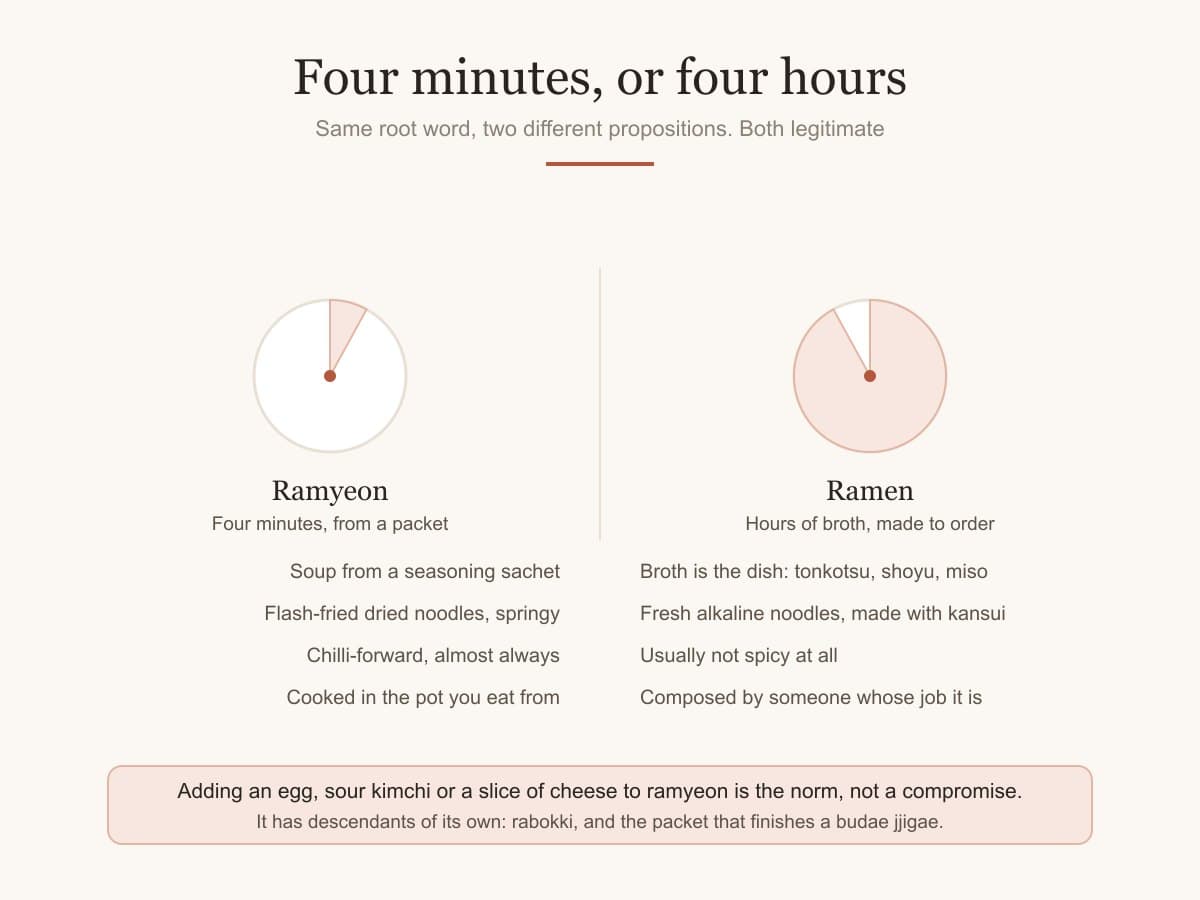
Ramyeon vs Ramen
Korean ramyeon and Japanese ramen share an ancestor and almost nothing else. Broth, noodles, time and what each one is for.
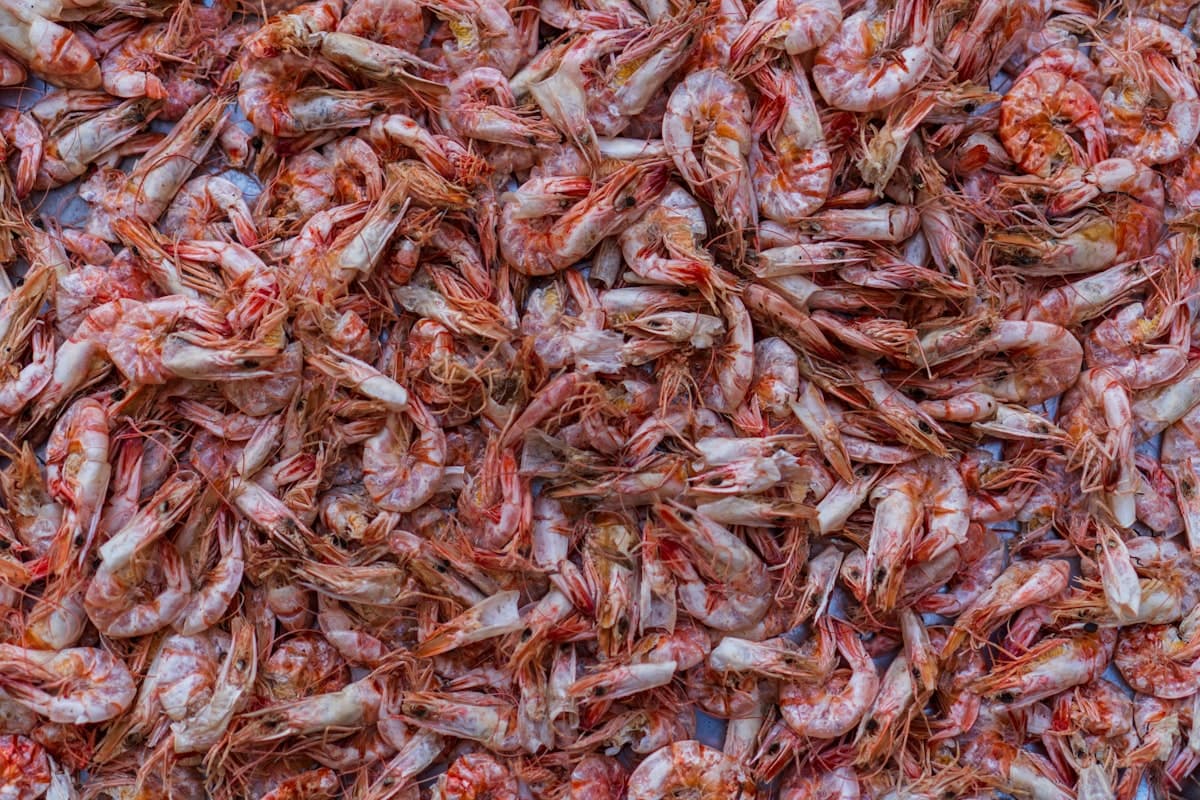
Saeujeot (Salted Fermented Shrimp)
What saeujeot is, why kimchi recipes call for it in such small amounts, and what to use if you can't find it.