Did you know — Korean culture
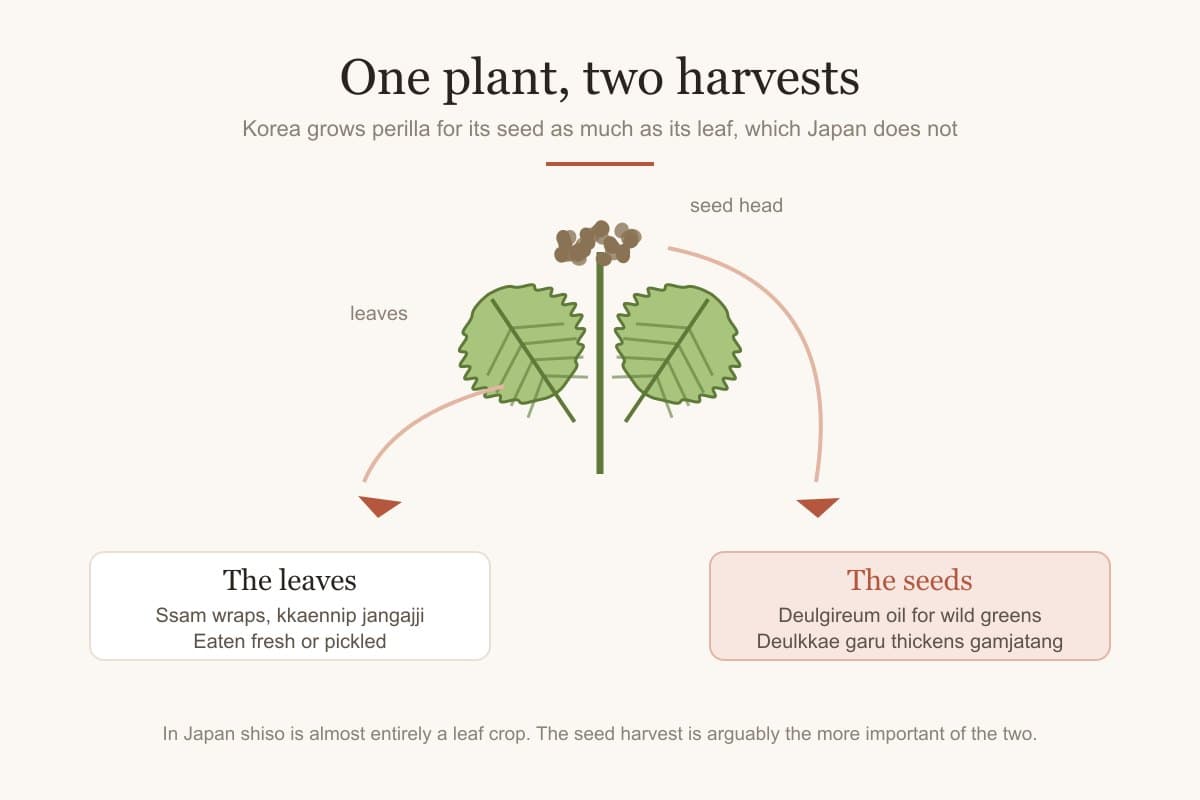
Korea grows perilla for its seeds as much as for its leaves, which is unusual — in Japan shiso is almost entirely a leaf crop. Pressed perilla seed gives deulgireum, a green, grassy oil used on wild-green namul, and the seeds are also ground into deulkkae garu, the powder that thickens gamjatang and gives it its nutty body. One plant, two harvests, and the seed harvest is arguably the more important of the two.
These are varieties of the same species, which is why they get treated as the same ingredient and why that keeps disappointing people.
Korean kkaennip and Japanese shiso come from Perilla frutescens, but centuries of separate selection have pulled them in different directions — in shape, in aroma and in what they are used for.
Telling them apart
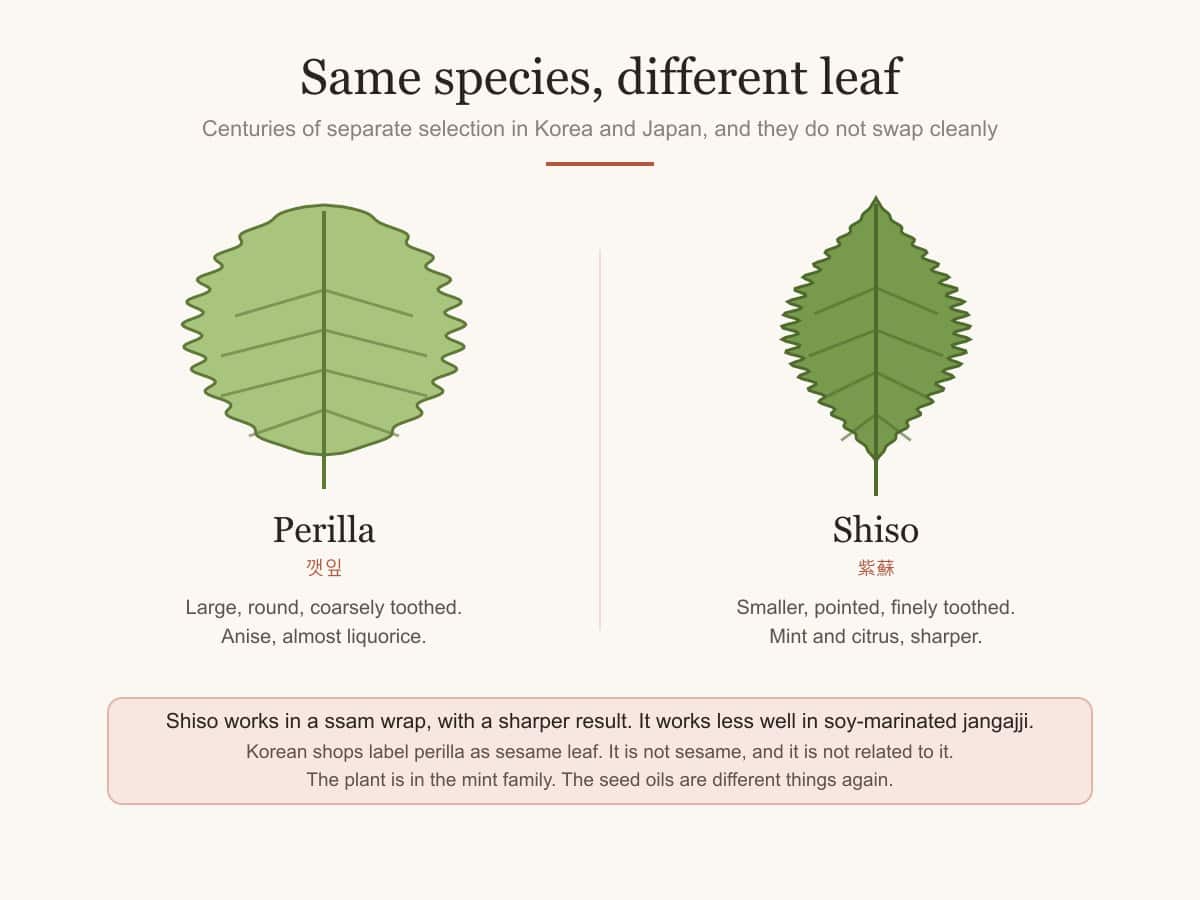
Korean perilla is larger, rounder and flatter, with a coarsely serrated edge and a matte green surface. The aroma is anise-like, slightly medicinal, closer to liquorice than to mint.
Shiso is smaller, pointier, more deeply toothed, and comes in green and red-purple forms. The aroma is sharper — minty and citrus, with a cumin edge.
Side by side the difference is obvious. In a photograph, less so, which is how shops end up labelling one as the other.
Why the English names confuse everyone
Korean shops often sell kkaennip as "sesame leaf". It is not sesame and is not related to it — the name is a loose translation of the Korean, where kkae covers both sesame and perilla seed.
The plant is in the mint family. Its seeds are pressed into perilla oil, which is a different thing again from toasted sesame oil — see sesame oil vs perilla oil.
When a swap works
Shiso for perilla in a ssam wrap: works, but noticeably sharper. The wrap is still good; it tastes Japanese rather than Korean.
Shiso for perilla in kkaennip jangajji: less successful. The soy marinade is built around perilla's heavier, rounder aroma, and shiso's citrus edge sits oddly against it.
Perilla for shiso with sashimi: too assertive. Shiso is there as a clean note; perilla takes over.
Neither substitutes for the other in oil form. They are pressed from different seeds for different purposes.
Buying and keeping them
Both bruise easily and wilt fast. Wrap in slightly damp kitchen paper, bag, refrigerate — five to seven days at best, and do not wash until you use them.
Look for firm, unblemished leaves with no yellowing. Perilla is usually sold in tied bundles of twenty or so; shiso in smaller packs.
If a bundle of perilla is about to turn, make jangajji. Slightly tired leaves are fine marinated, and that is largely what the pickle is for.
Common questions
Are perilla and shiso the same plant?
Same species, different varieties. Centuries of separate cultivation in Korea and Japan have produced noticeably different leaves — perilla rounder, flatter and anise-like, shiso pointier and sharper.
Can I use shiso instead of perilla leaves?
In a ssam wrap, yes, with a sharper result. In soy-marinated kkaennip jangajji it works less well, because the marinade is built around perilla's heavier aroma.
Is perilla leaf the same as sesame leaf?
No, despite the label. Korean shops often sell it as sesame leaf because the Korean word covers both sesame and perilla seed, but the plant is in the mint family and unrelated to sesame.
How do you store perilla leaves?
Unwashed, wrapped in slightly damp kitchen paper inside a bag, in the fridge — five to seven days. Standing them stem-down in a little water buys a few more.
More to cook
All Ingredient & Substitute Guides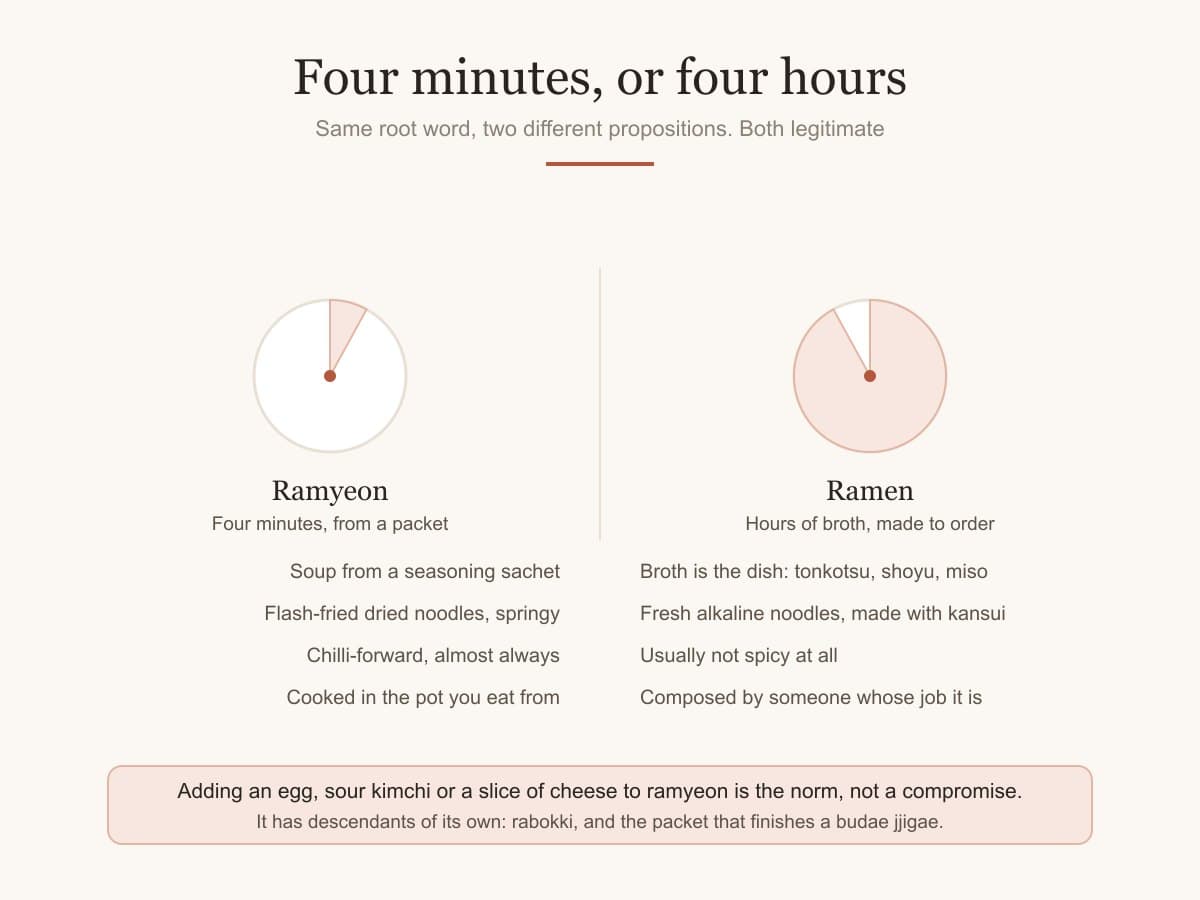
Ramyeon vs Ramen
Korean ramyeon and Japanese ramen share an ancestor and almost nothing else. Broth, noodles, time and what each one is for.
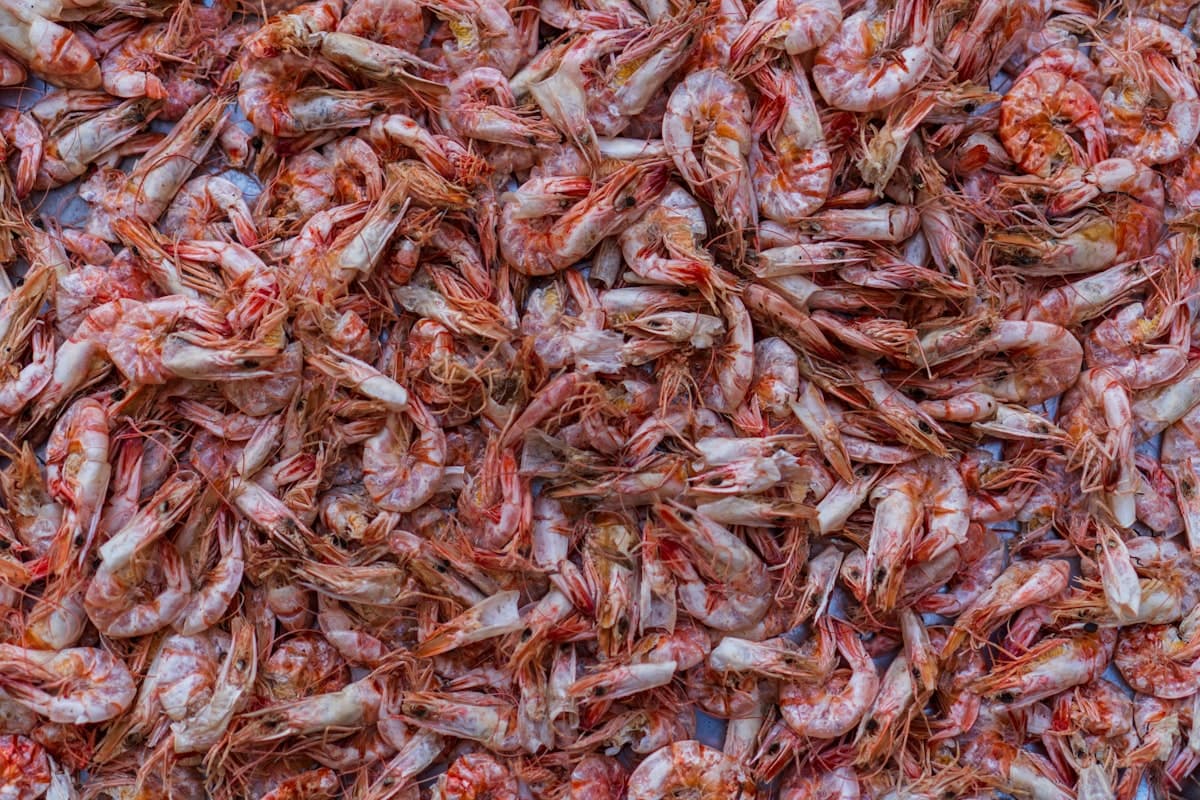
Saeujeot (Salted Fermented Shrimp)
What saeujeot is, why kimchi recipes call for it in such small amounts, and what to use if you can't find it.
Sesame Oil vs. Perilla Oil
How toasted sesame oil and perilla oil actually differ in flavor, smoke point and shelf life — and which Korean dishes specifically want one over the other.