Did you know — Korean culture
In 2010, napa cabbage got expensive enough to become a national news story. A record-wet summer and Typhoon Kompasu wrecked the harvest, cabbage prices roughly quadrupled to over $10 a head, and the government suspended its 30% import tariff while Seoul subsidised cabbage for households. The papers called it the kimchi crisis.
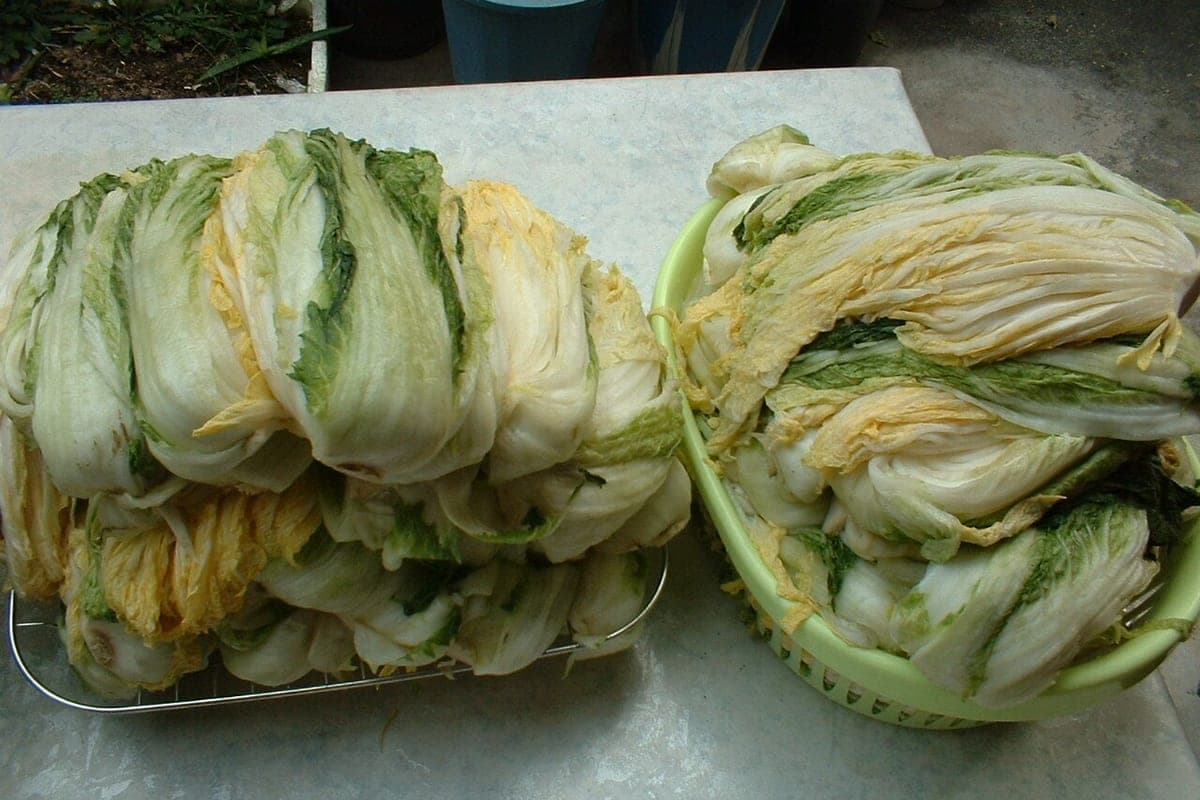
Photo: Joseph Steinberg · CC BY-SA 2.0
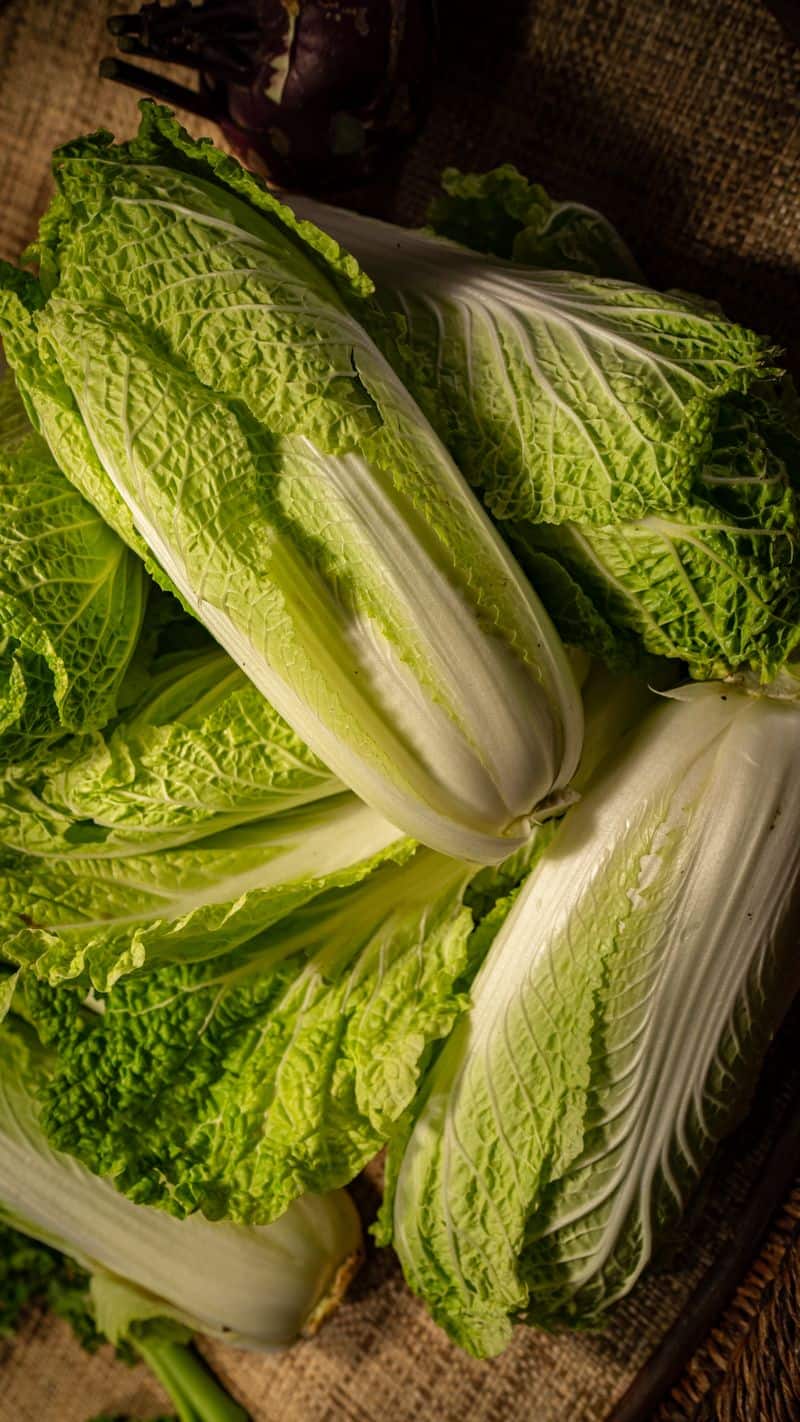
Napa cabbage (baechu) is the backbone of the kimchi most people picture, and it's the one ingredient that's genuinely worth hunting down rather than substituting. But substitutes do exist, and which one works depends heavily on whether you're fermenting it or just cooking with it.
Why napa is hard to replace in kimchi
Napa's structure is doing specific work. The thick white ribs hold their crunch through weeks of fermentation while the thin leafy tops go soft, which is what gives good kimchi its range of textures in a single bite. It also has a high water content that the salting step draws out, and that brine is part of how fermentation gets going.
A denser, drier cabbage doesn't release water the same way during salting, so the seasoning paste sits on the surface rather than working into the leaves.
What actually works
For kimchi:
- Bok choy / pak choi — the closest structural match, with a similar rib-to-leaf contrast. Ferments well. The most reliable substitute.
- Savoy cabbage — ruffled leaves and reasonably thin ribs. Works, though it ferments a little faster and stays firmer.
- Green cabbage — usable but the weakest option here. It's much denser and drier, so salt it longer and expect a crunchier, less layered result.
Outside kimchi (soups, stir-fries, wraps), the constraint mostly disappears — bok choy, savoy, green cabbage and even romaine all stand in fine, since you're not relying on fermentation behavior.
What doesn't work
Red cabbage ferments acceptably but bleeds purple through everything, so the finished kimchi looks wrong. Brussels sprouts and kale are far too dense and bitter. Iceberg lettuce collapses entirely — it has no structural ribs and turns to mush within days.
If you're substituting, adjust the salting
Denser cabbages need longer in the salt than napa's usual couple of hours, because there's less free water to draw out and the leaves are stiffer. Check by bending a rib: it should flex without snapping. Under-salted substitute cabbage is the most common reason a batch turns out watery and bland rather than properly seasoned.
For kimchi specifically
This is the hardest case, because kimchi is not cooked and the cabbage sits in brine for months. Texture is the whole thing.
Best option: don't substitute the cabbage — change the kimchi. Kkakdugi (radish), chonggak kimchi (ponytail radish), oi sobagi (cucumber) and pa kimchi (scallion) are all traditional and all designed around their own vegetable.
If you must: savoy cabbage is the closest — crinkled leaves that hold paste, reasonable water content. Salt it a little less, since it is denser than napa. Bok choy works for a small, quick-eating batch but goes soft within a couple of weeks. Green cabbage is too dense and too tough; it never softens properly and the result is closer to a slaw.
For cooked dishes
Much more forgiving. In soups, stir-fries and hot pots almost any cabbage will do.
Savoy — closest in texture and behaviour.
Bok choy or pak choi — good, cooks faster, add it later.
Green cabbage — fine, but denser; cut it thinner and give it longer.
Chard or spinach — for the leafy element only, and they collapse in seconds rather than minutes.
The main adjustment in every case is timing, not quantity. Napa is unusually quick to soften, so anything you substitute probably needs longer — except the leafy greens, which need less.
Buying and storing napa cabbage
Heavy for its size, tightly packed, pale. A light head is mostly air and gives limp results.
Avoid brown edges on the outer leaves and any sliminess at the base.
For kimchi, size matters: a medium head is easier to salt evenly than a very large one, and quartering it lengthways through the core keeps the leaves attached.
Storage: whole, unwashed, wrapped, in the fridge for 2–3 weeks. Cut napa keeps about 5 days and the cut edges will brown — trim them rather than discarding the head.
Do not freeze it raw. The cell walls rupture and it thaws to mush.
Common questions
What can I use instead of napa cabbage for kimchi?
Savoy cabbage is the closest substitute — crinkled leaves that hold paste well. But the better answer is usually to make a different kimchi entirely: kkakdugi with radish or oi sobagi with cucumber are traditional and built around their own vegetable rather than working around a missing one.
Is bok choy a good substitute for napa cabbage?
In cooked dishes, yes — just add it later, since it softens faster. For kimchi it works for a small batch eaten within a couple of weeks, but it goes soft over a longer ferment.
Can I use regular green cabbage instead of napa?
In cooked dishes, yes, cut thinner and cooked longer. For kimchi it's poor — too dense and tough to soften properly, giving something closer to a spicy slaw than kimchi.
How do you store napa cabbage?
Whole, unwashed and wrapped in the fridge for two to three weeks. Once cut it keeps about five days, and the cut edges brown — trim them rather than throwing the head away. Don't freeze it raw.
More to cook
All Ingredient & Substitute Guides
Saeujeot (Salted Fermented Shrimp)
What saeujeot is, why kimchi recipes call for it in such small amounts, and what to use if you can't find it.
Sesame Oil vs. Perilla Oil
How toasted sesame oil and perilla oil actually differ in flavor, smoke point and shelf life — and which Korean dishes specifically want one over the other.
Ssamjang (Korean Wrap Sauce)
What ssamjang is made from, why it's a blend rather than a single paste, and how to use it in lettuce wraps without drowning out the meat it's meant to balance.