Did you know — Korean culture
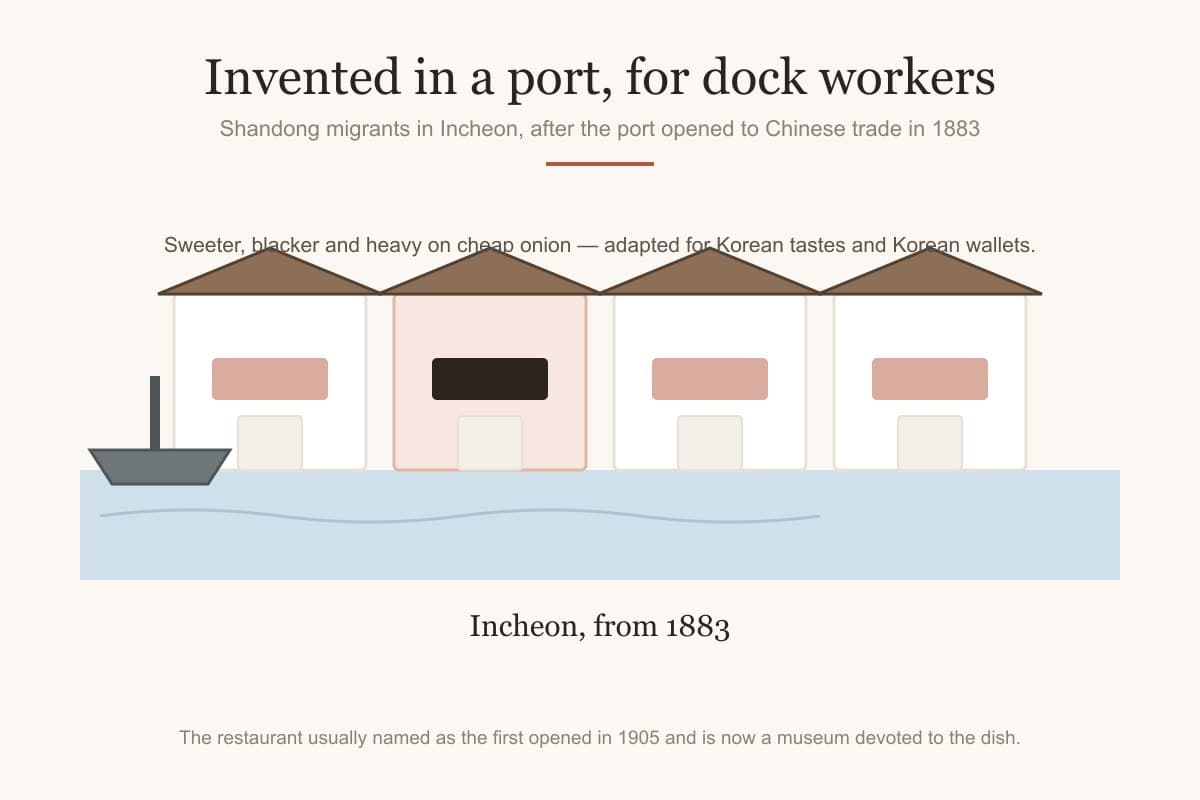
Jjajangmyeon was invented in a port, for dock workers. Shandong migrants settled around Incheon after the port opened to Chinese trade in 1883, and the version of zhajiangmian they sold was adapted for Korean tastes and Korean wallets — sweeter, blacker, and heavy on cheap onion. The restaurant usually named as the first, Gonghwachun, opened in 1905 and the building is now a museum devoted to the dish. Korea eats something in the order of six million servings of it a day.
Korean jjajangmyeon descends from Chinese zhajiangmian, by way of Shandong migrants in the port of Incheon. The two dishes are now barely related in flavour.
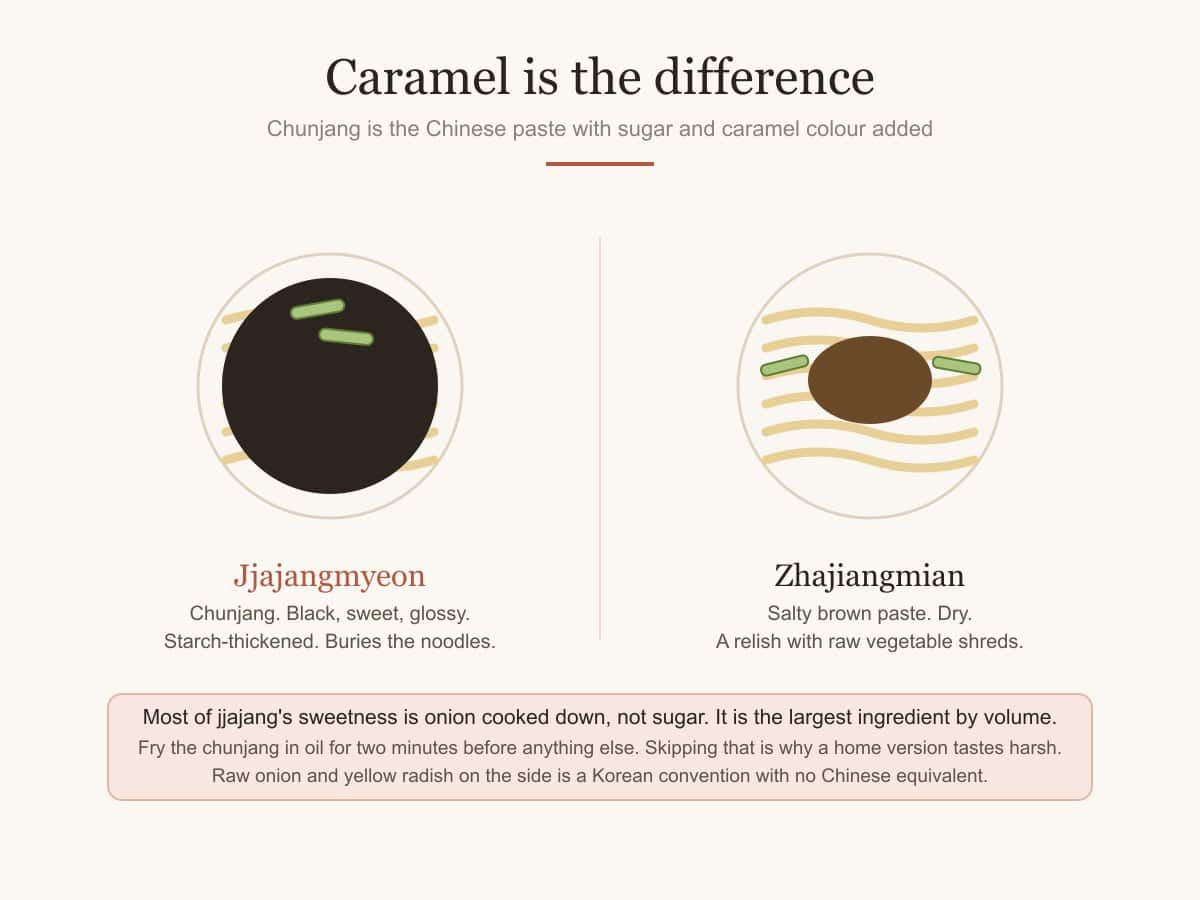
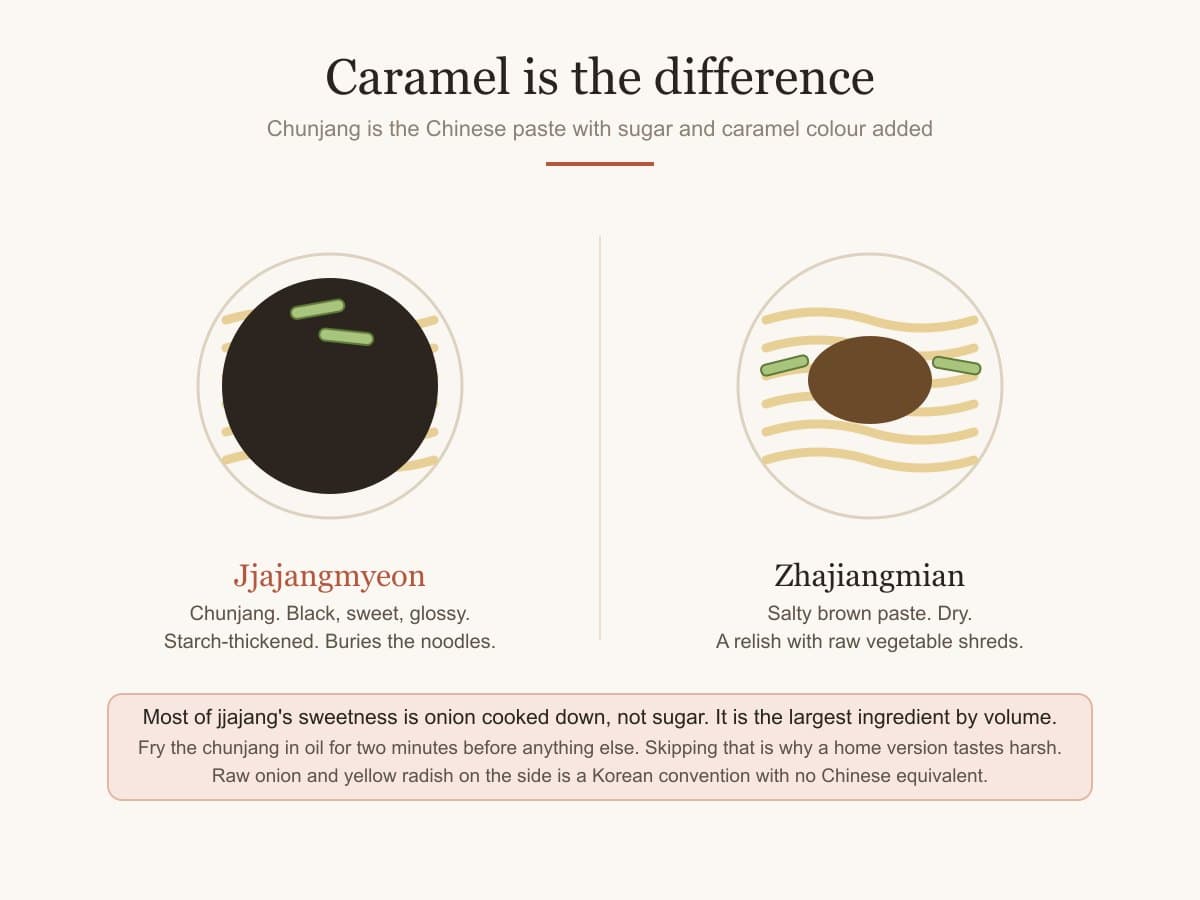
Zhajiang is salty, dry and brown. Jjajang is sweet, glossy and almost black. One ingredient explains most of it.
The paste is a different product
Zhajiangmian uses tianmianjiang or a salty fermented yellow soybean paste — brown, intensely salty, not sweet.
Jjajangmyeon uses chunjang, which is the Korean adaptation: the same soybean base with caramel colour and sugar added. That is what makes the sauce black and sweet.
Chunjang is also fried in oil before use, which mellows its raw bitterness. Skipping that step is the usual reason a home jjajang tastes harsh.
Wet against dry
Jjajang sauce is thickened with starch into something glossy that coats every noodle and pools on the plate.
Zhajiang is much drier, closer to a thick meat relish spooned over noodles, with raw vegetable shreds alongside — cucumber, radish, sometimes bean sprouts.
The Korean version buries the noodles. The Chinese one dresses them.
What is in it
Jjajangmyeon is heavy on onion, and sweet onion specifically — it is the largest ingredient by volume after the noodles, and most of the sweetness comes from cooking it down rather than from sugar. Plus courgette, potato and diced pork.
Zhajiangmian is mostly pork, often belly, with the paste, and little else in the sauce itself.
The garnish differs too: jjajangmyeon gets a few strips of cucumber and is served with raw onion and danmuji-style yellow radish on the side, which is a Korean convention with no Chinese equivalent.
Where each sits
Jjajangmyeon is Korea's delivery food, and has been for decades. It has its own unofficial holiday on 14 April, and it is what people order when nobody wants to cook.
Zhajiangmian is a Beijing home dish, not a takeaway staple.
And jjajangmyeon has descendants: jjamppong sits beside it on every menu, tangsuyuk is the standard thing to order with it, and jjajangbap is the same sauce over rice.
Common questions
Is jjajangmyeon Chinese or Korean?
Korean, with Chinese ancestry. It was developed by Shandong migrants in Incheon and then adapted — the black, sweet chunjang paste it depends on is a Korean product with no Chinese equivalent.
Why is jjajangmyeon black and Chinese zhajiangmian brown?
Chunjang has caramel colour and sugar added to the fermented soybean base. The Chinese pastes used for zhajiangmian are salty and brown with neither.
Is zhajiangmian sweet?
No. It is salty and much drier, closer to a thick meat relish over noodles with raw vegetable shreds alongside, rather than a glossy starch-thickened sauce.
Why does my homemade jjajang taste bitter?
The chunjang was not fried in oil first. A couple of minutes in hot oil before anything else goes in mellows the raw paste, and skipping it is the usual cause.
More to cook
All Ingredient & Substitute Guides
Jocheong (Korean Rice Syrup)
What jocheong does that sugar cannot, how it differs from clear corn syrup (mullyeot), and why it goes into a glaze at the end rather than the start.
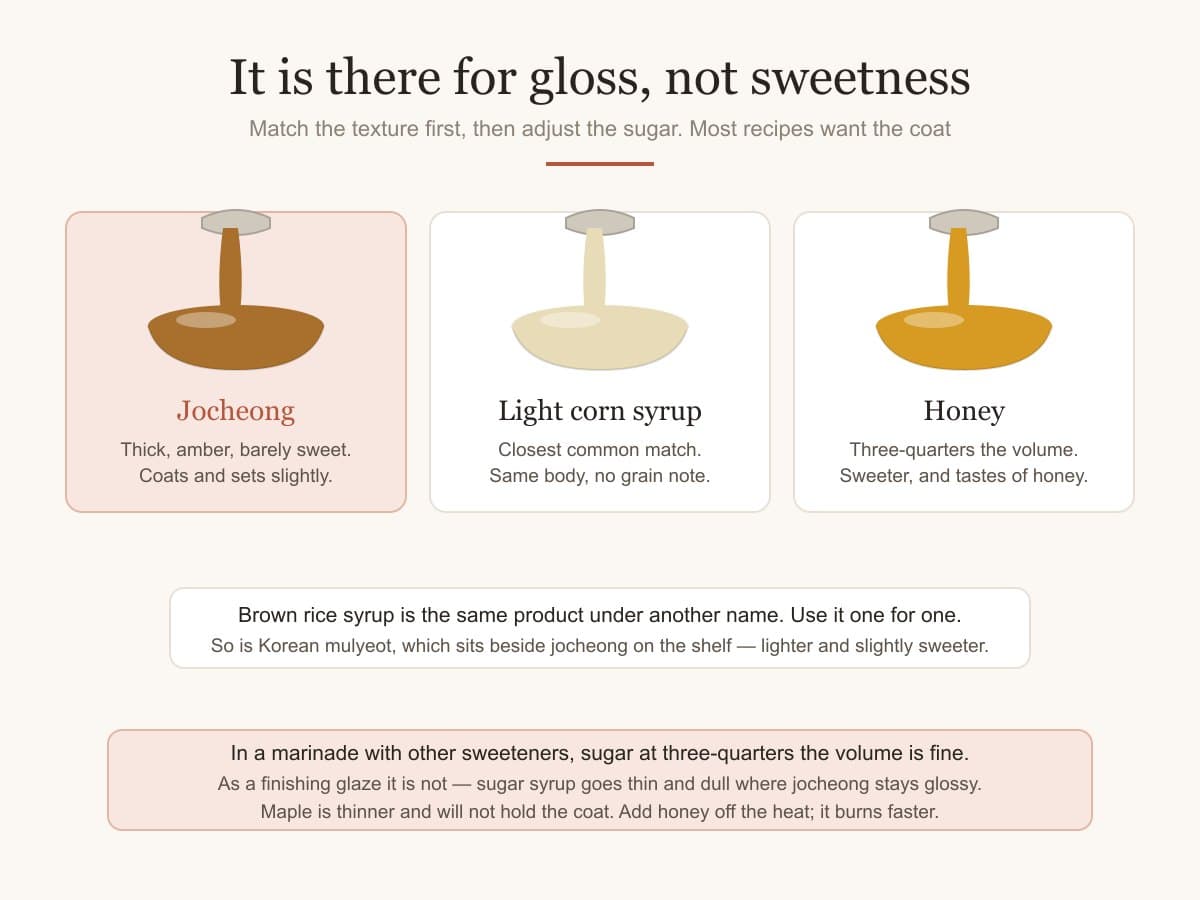
Jocheong Substitute
Korean rice syrup does a specific job — gloss and body without much sweetness. What replaces it, and what each swap changes.

Kimchi 101: A Complete Guide
What kimchi actually is, the main types beyond the red cabbage one, how fermentation works, and what to do when a batch goes wrong.