Did you know — Korean culture
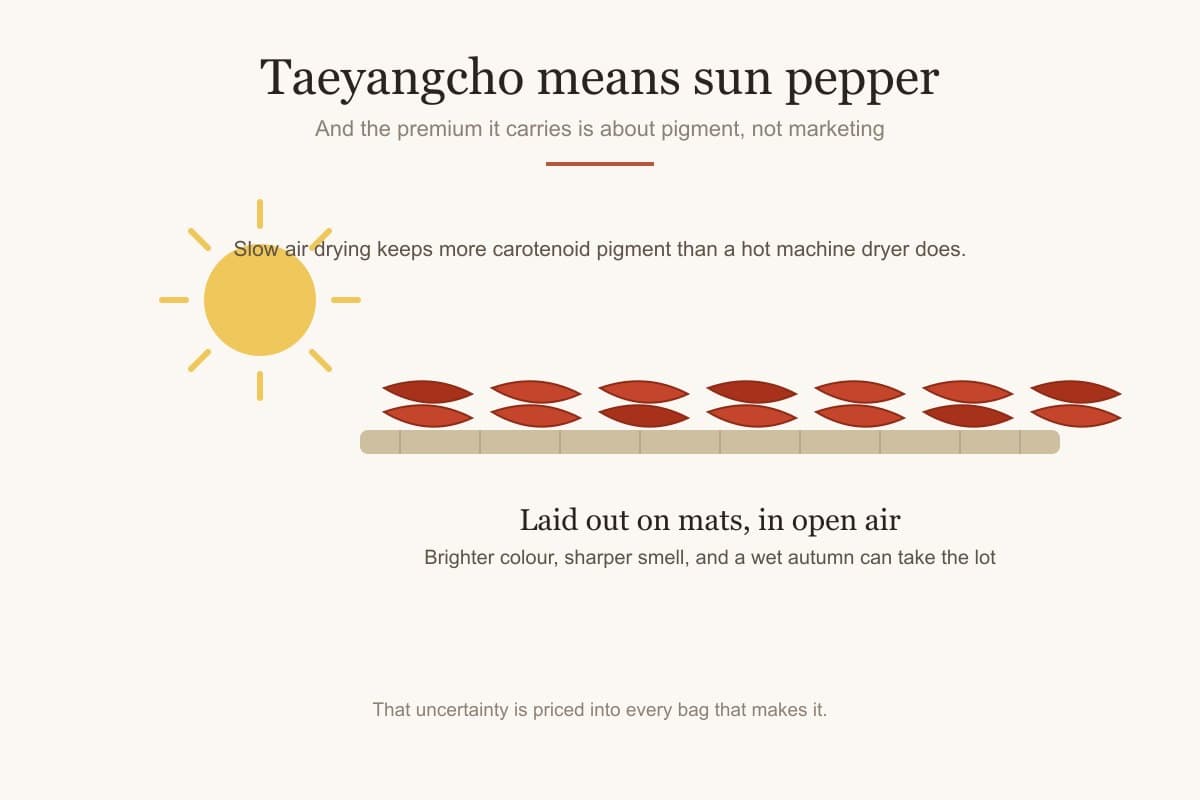
The word taeyangcho means sun pepper, and the premium it carries is about more than marketing. Chillies dried slowly in open air keep more of their carotenoid pigment and aromatic compounds than ones pushed through a hot machine dryer, which is why sun-dried gochugaru is visibly brighter and smells sharper straight from the bag. The trade-off is risk: a wet autumn can spoil a whole crop laid out on mats, and that uncertainty is priced into every bag that makes it.
They look similar in a jar, which is exactly the problem. Paprika is the substitution people reach for first and it is one of the worst available.
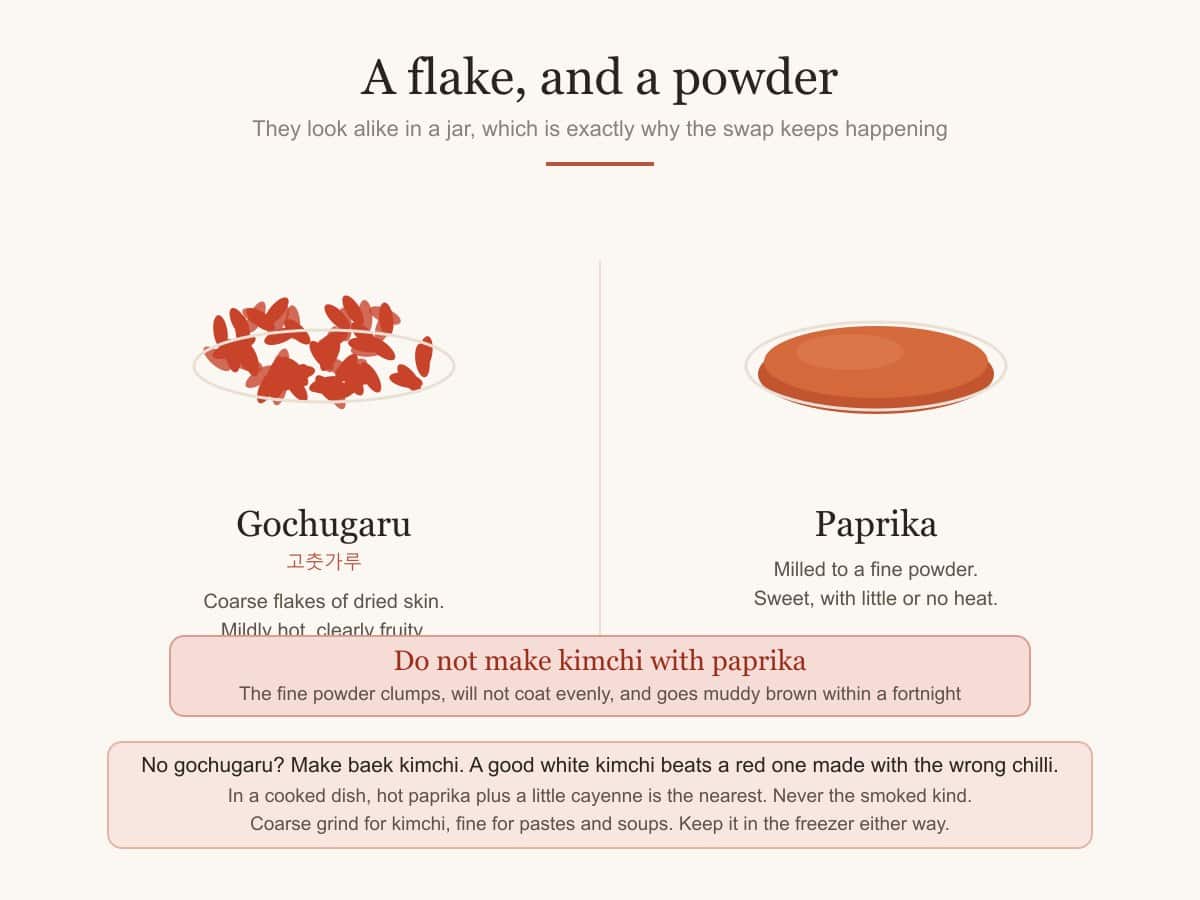
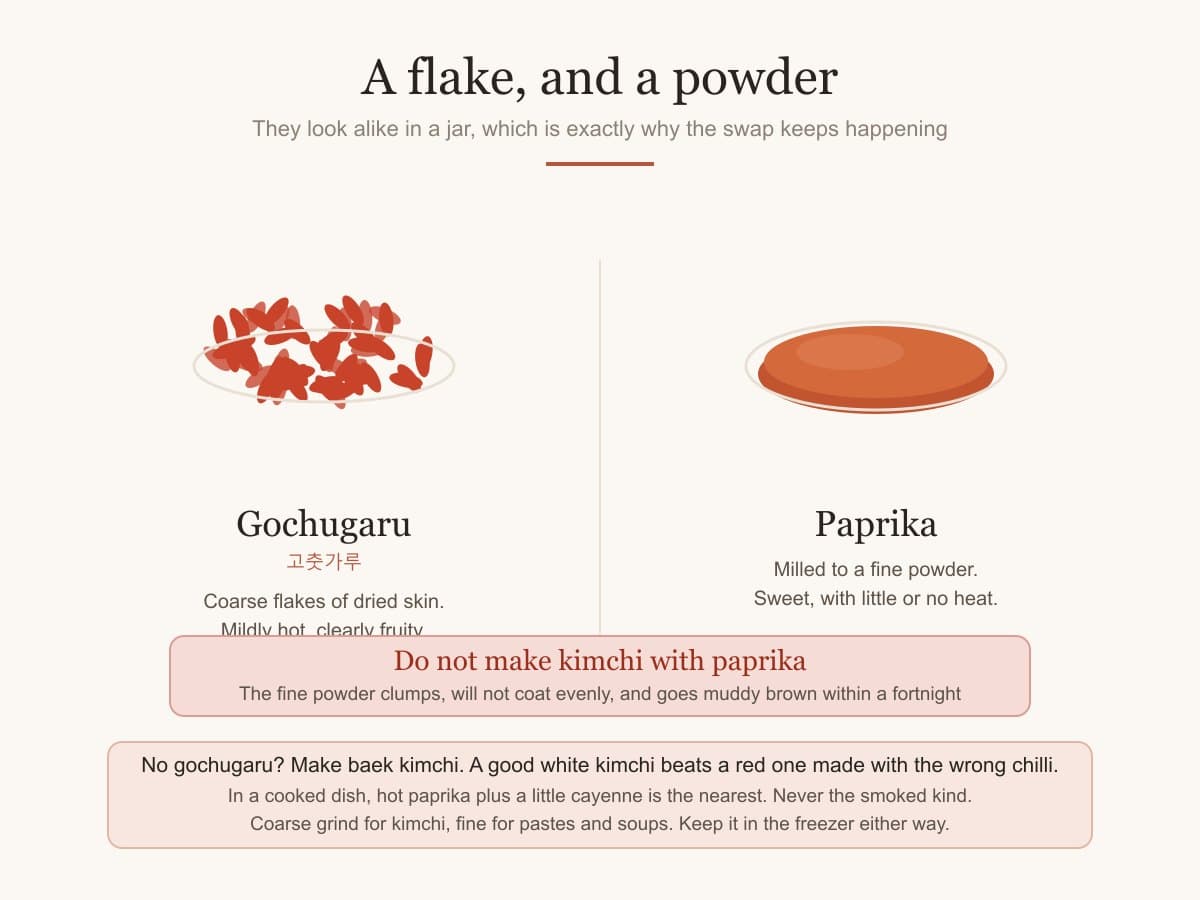
Gochugaru is a coarse flake with seeds and skin. Paprika is a fine powder. The texture difference matters as much as the heat.
Flake against powder
Gochugaru is coarsely ground — visible flakes of dried chilli skin, sometimes with seed. In a kimchi paste those flakes stay distinct and cling to the cabbage.
Paprika is milled to a fine powder. Stirred into a paste it dissolves, and the result is a smooth orange slurry rather than a flecked red one.
This is visible in the finished jar and it is the first thing a Korean cook would notice.
Heat and sweetness
Gochugaru is mildly hot — roughly 1,500 to 10,000 Scoville depending on the grade — with a clear fruity sweetness behind it.
Sweet paprika has essentially no heat. Hot paprika has some. Smoked paprika has a pronounced smokiness that belongs to a completely different cuisine and is unmistakable in a Korean dish.
If you must substitute, hot paprika plus a little cayenne is the nearest, and it will still be smoother and less sweet.
What it does to kimchi
Do not make kimchi with paprika. Beyond the colour and texture, the fine powder behaves differently in a ferment: it clumps, it does not coat evenly, and the result goes muddy brown within a couple of weeks rather than staying red.
Gochugaru also carries its own small contribution to the ferment through the skins.
If you cannot get gochugaru, make baek kimchi instead. A white kimchi made properly is far better than a red one made with the wrong chilli — and it is what Korea made for most of its history.
Buying gochugaru
Two grades matter: coarse (gulgeun) for kimchi, fine (goun) for pastes, sauces and soups.
Sun-dried (taeyangcho) costs more and is brighter in both colour and flavour. Machine-dried is perfectly usable.
It loses colour and aroma fast at room temperature. Keep it in the freezer, which is where most Korean households keep theirs, and it stays good for a year or more. See gochugaru substitutes for the options when you are out.
Common questions
Can I use paprika instead of gochugaru?
In a cooked dish at a push, using hot paprika with a little cayenne. Not in kimchi — the fine powder clumps, does not coat evenly, and turns muddy brown within weeks.
Is gochugaru spicier than paprika?
Than sweet paprika, considerably. Gochugaru runs roughly 1,500 to 10,000 Scoville with a fruity sweetness behind it; sweet paprika has essentially no heat at all.
What is the difference in texture?
Gochugaru is a coarse flake of dried chilli skin, sometimes with seed, and stays visible in a paste. Paprika is a fine powder that dissolves into a smooth slurry.
How should I store gochugaru?
In the freezer. It loses colour and aroma quickly at room temperature, and frozen it keeps well for a year or more. That is where most Korean households keep theirs.
More to cook
All Ingredient & Substitute Guides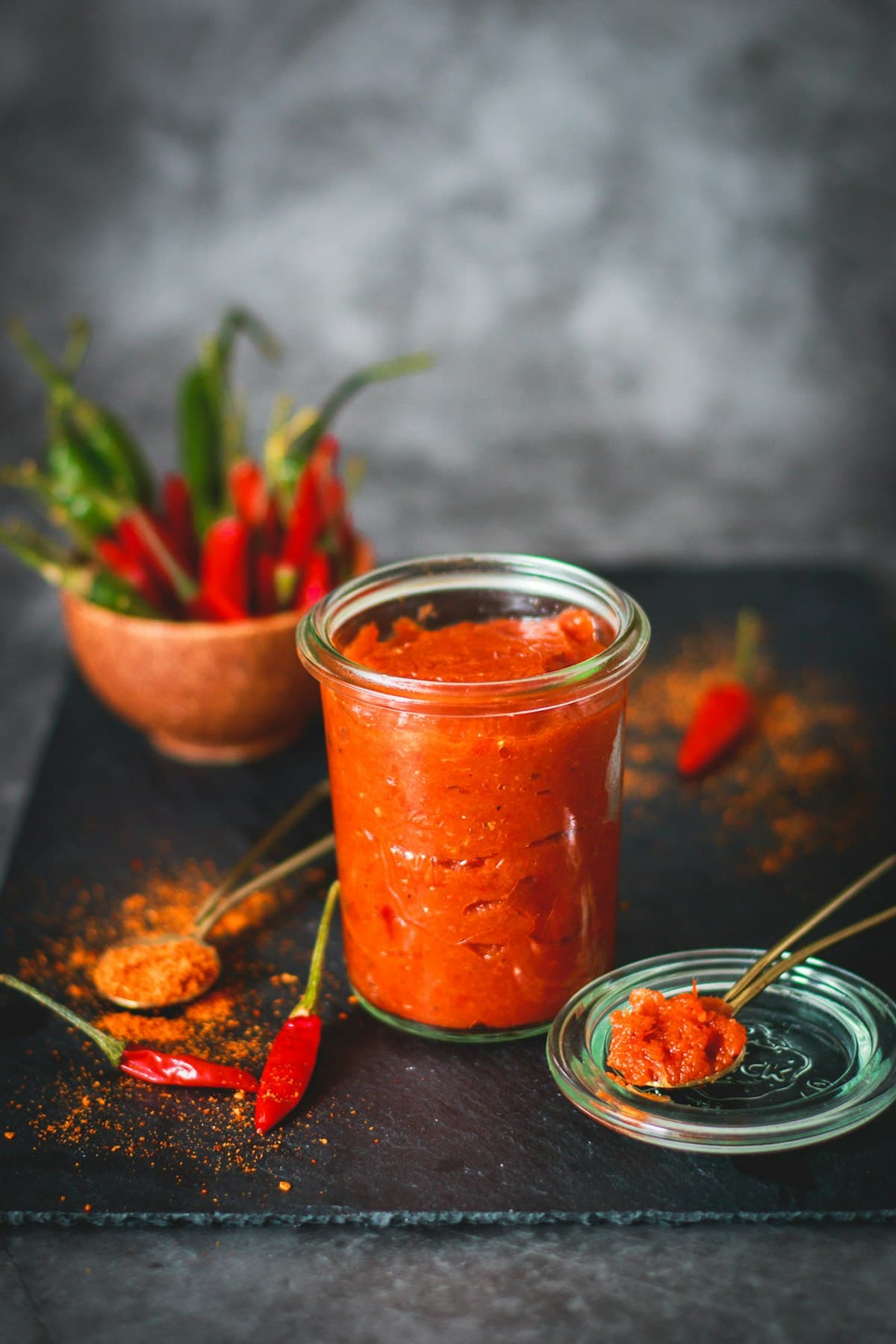
Gochujang (Fermented Chili Paste)
What gochujang is made from, why it's fermented rather than just mixed, and how to use it without overpowering a dish.
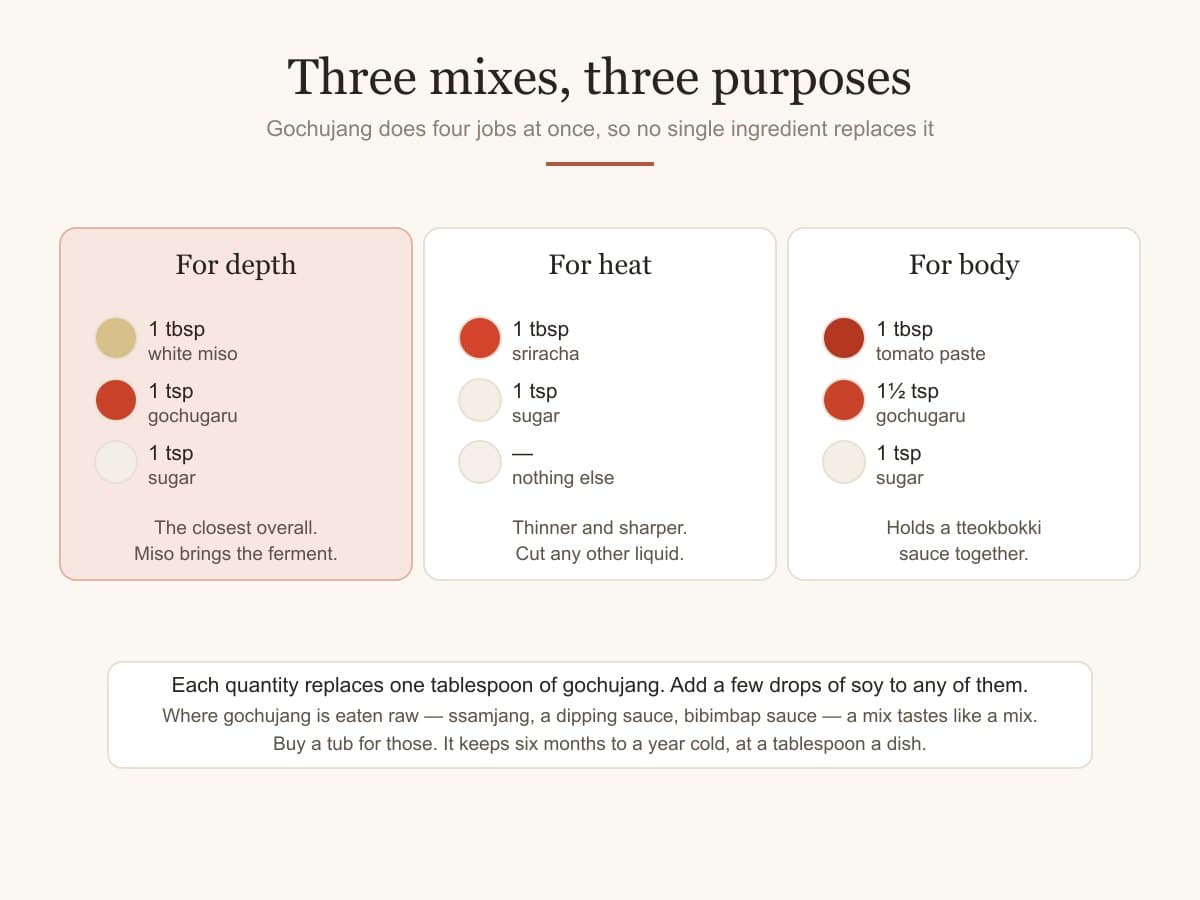
Gochujang Substitute
Nothing replaces gochujang exactly, but three mixes get close depending on the dish. What each one misses, and the ratios to use.
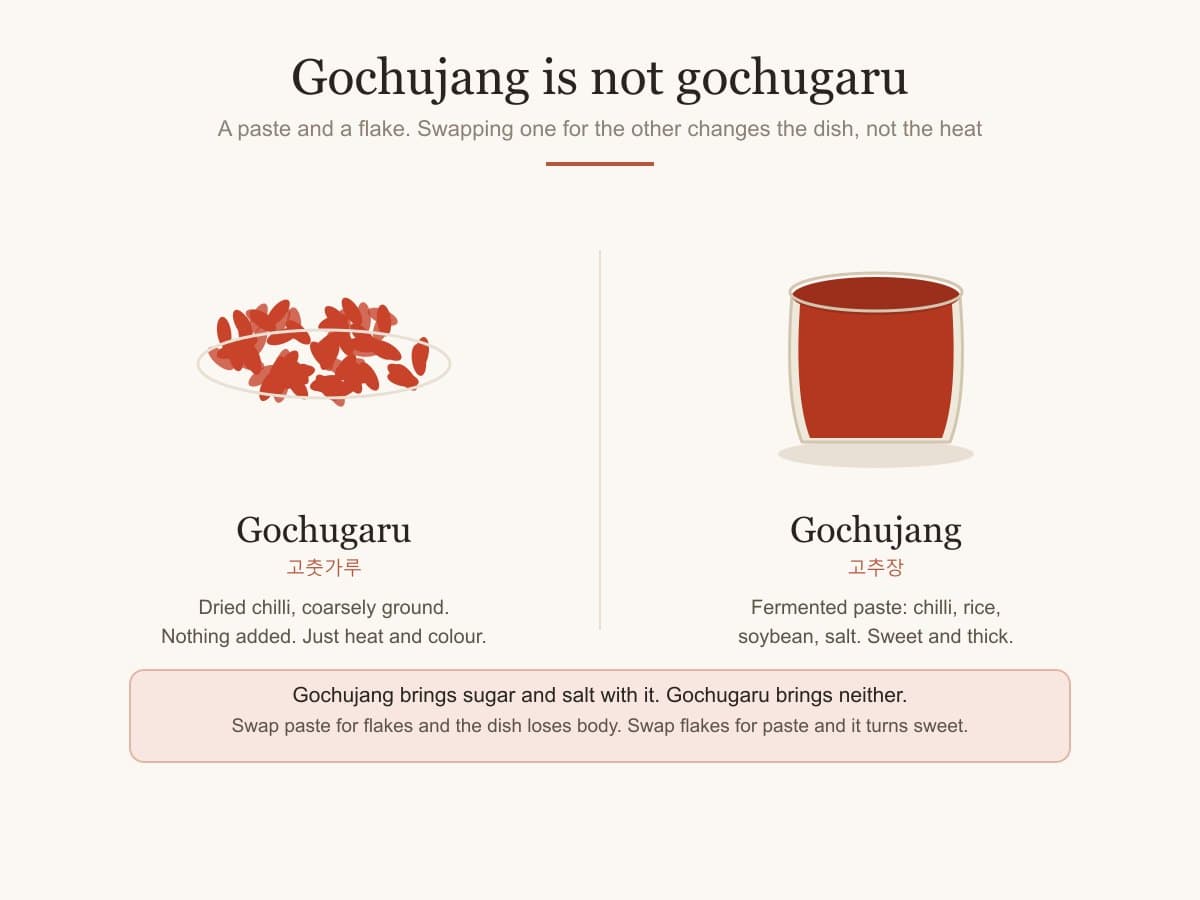
Gochujang vs Gochugaru
One is a fermented paste, the other is dried chilli flakes. Why swapping them changes the dish, and what to do when you only have one.