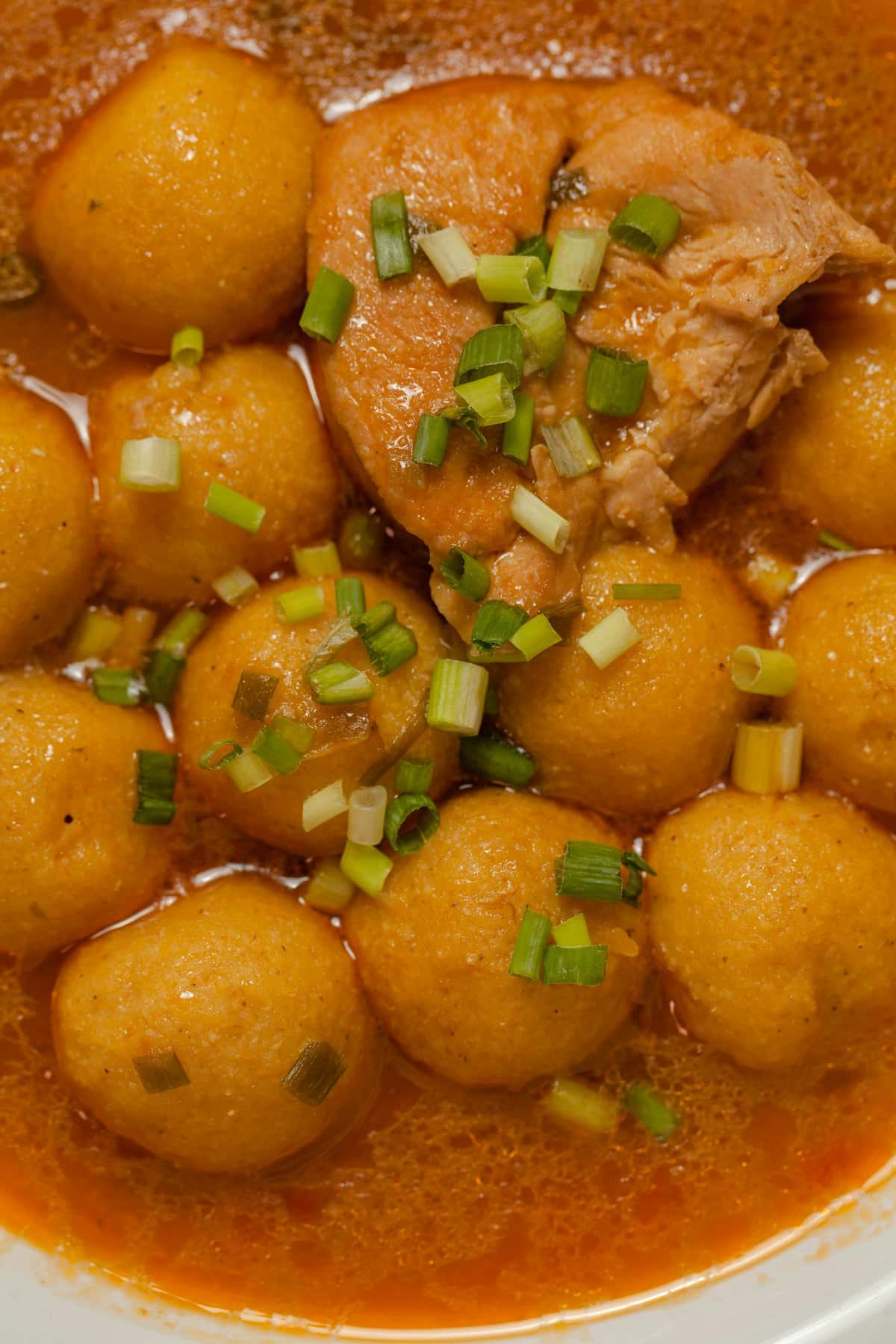
Steps
- 1
Parboil the chicken pieces briefly in boiling water, then drain and rinse to remove surface fat and impurities.
- 2
Whisk together gochujang, gochugaru, soy sauce, sugar, garlic, and ginger into a sauce.
- 3
Combine the chicken, sauce, and water or stock in a pot and bring to a boil.
- 4
Reduce to a simmer and cook 15 minutes.
- 5
Add the potato and carrot, and simmer another 20 minutes.
- 6
Add the onion in the last 5-10 minutes, so it stays slightly firm rather than dissolving.
- 7
Simmer until the sauce has reduced and thickened around the chicken and vegetables.
- 8
Finish with green onion and a drizzle of sesame oil.
Did you know — Korean culture
Dakbokkeumtang's own name contains a small contradiction that Koreans argue about. "Bokkeum" usually means stir-fried, while "tang" means soup or stew — but this dish is neither exactly stir-fried nor a soup, it's a braise somewhere in between. The dish is also commonly called dak-dori-tang, though that name has fallen out of official favor since "dori" is believed to come from a Japanese word for chicken, making dakbokkeumtang the preferred, fully-Korean name in modern usage.
Parboiling the chicken before the real braise starts is the same logic as with beef bones or pork spine — it clears out surface impurities that would otherwise cloud the sauce and leave a slightly off flavor underneath all that gochujang.
Potato timing is the detail most home cooks get backwards. Add it too early and it disintegrates into the sauce by the time the chicken is done; add it with the chicken from the start and it turns to mush. Giving it roughly 20 minutes on its own, once the chicken has a head start, is what keeps the chunks intact but fully tender.
Dakbokkeumtang's own name contains a small contradiction Koreans still argue about. "Bokkeum" usually means stir-fried, while "tang" means soup or stew — but this dish is neither exactly stir-fried nor a soup, more a braise in between the two. It's also commonly called dak-dori-tang, though that name has fallen out of official favor since "dori" is believed to come from a Japanese word for chicken, making dakbokkeumtang the preferred name in modern Korean usage.
This is the braised, soupy member of the spicy chicken family. Dak galbi is its stir-fried cousin, cooked hard in a shallow pan until the sauce caramelises rather than simmered, and jjimdak is the soy-braised one with no chili heat at all.
Troubleshooting
Potato falling apart before the chicken's done? It went in too early. Give the chicken a 15-minute head start before adding the potato.
Sauce thin instead of clinging? Let it simmer uncovered a bit longer toward the end — the reduction is what thickens it, not additional gochujang.
Chicken tough despite a long simmer? Bone-in pieces need real time to relax — check for tenderness at the joint rather than going by the clock alone.
Recommended products
- Bone-in chicken thighs and drumsticks
- Wide braising pot
More to cook
All Meat & BBQ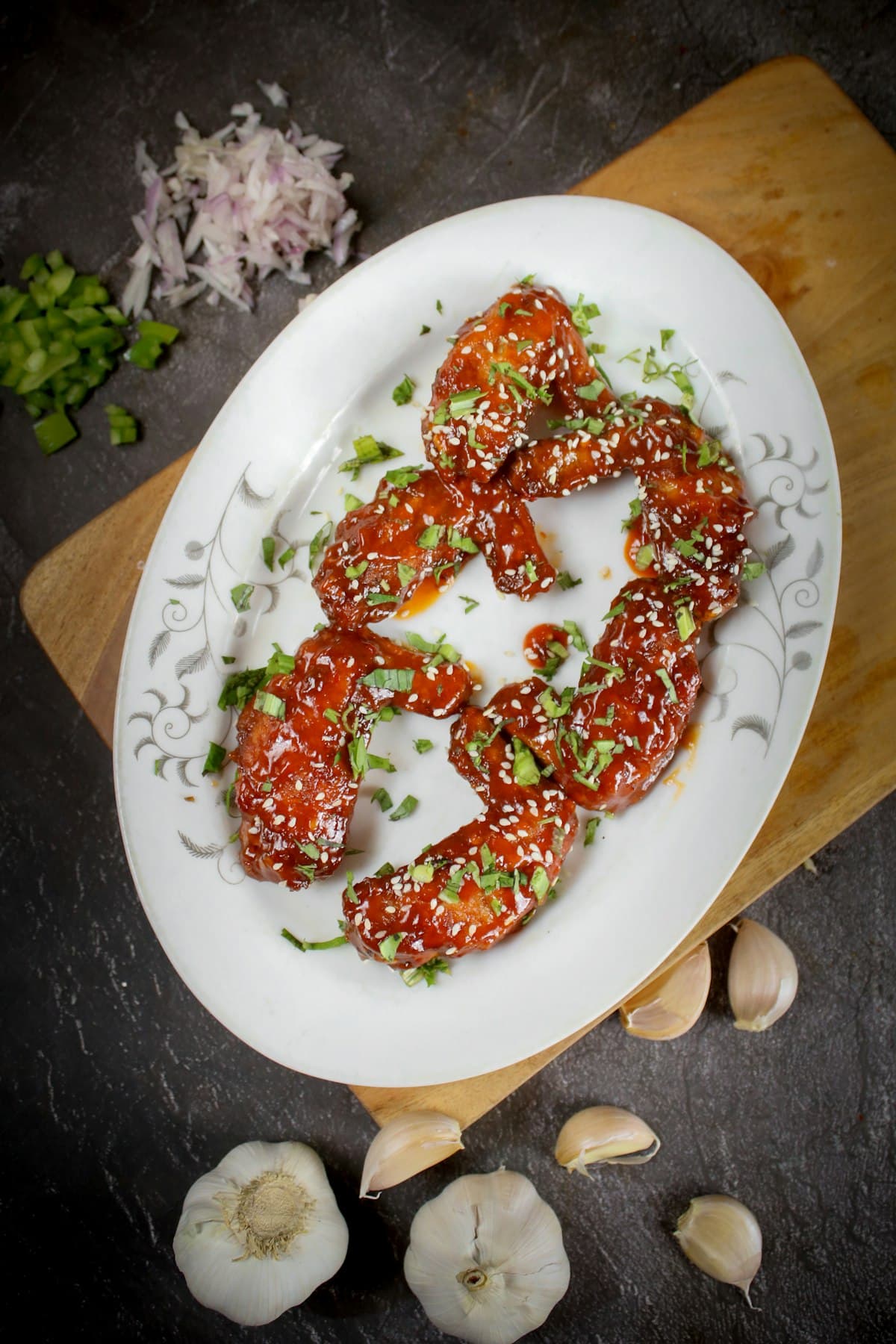
Dakgangjeong (Sweet & Spicy Glazed Fried Chicken Bites)
The double-fry and honey-glaze technique behind dakgangjeong, and why the glaze needs real reduction time to actually cling.
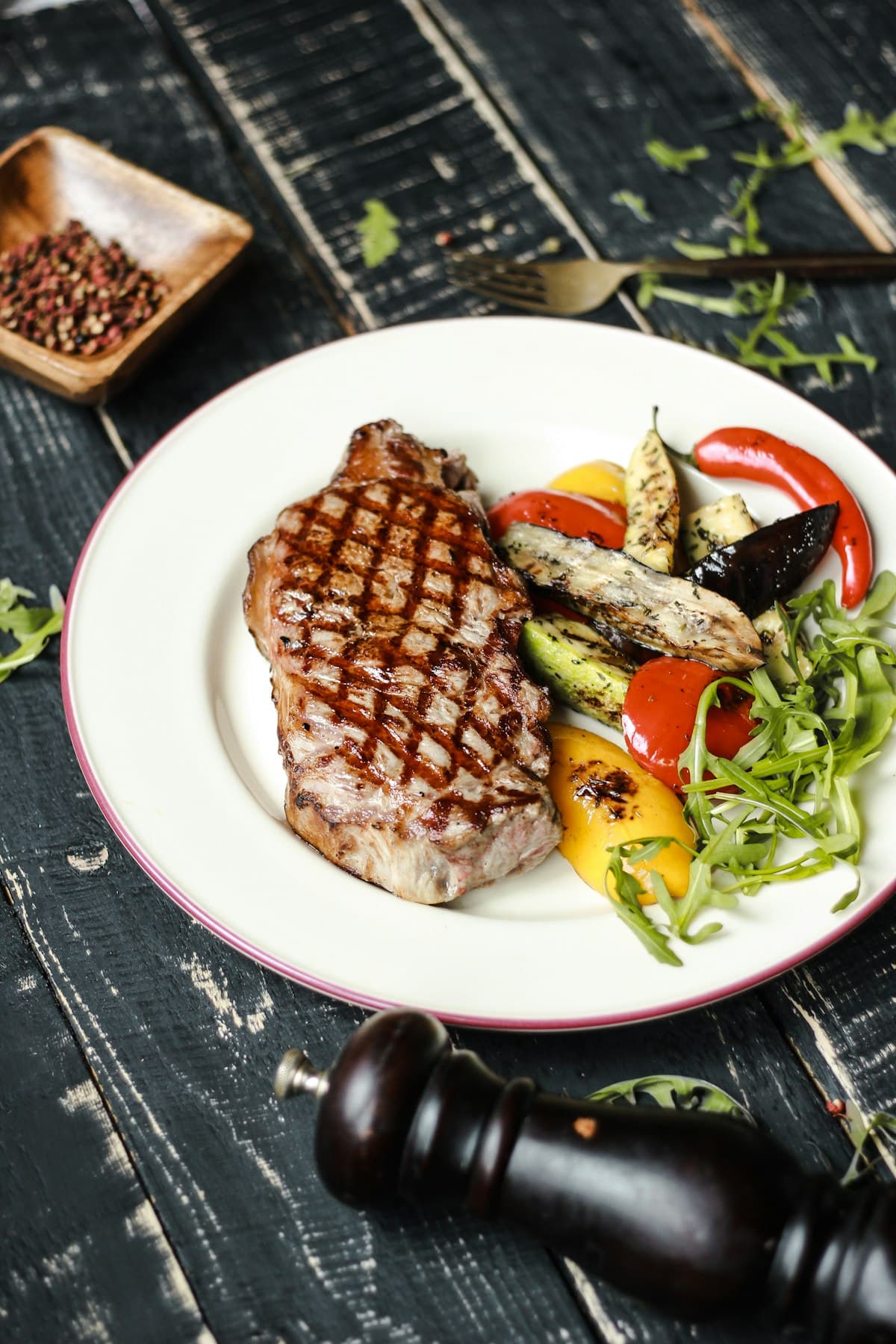
Deungshim Gui (Grilled Beef Sirloin)
The salt-and-rest technique behind deungshim gui, and why this cut is deliberately left almost unseasoned rather than marinated.
Donkatsu (Korean Pork Cutlet)
The pound-and-rest technique behind a tender donkatsu cutlet, and why frying temperature matters more than breading thickness.