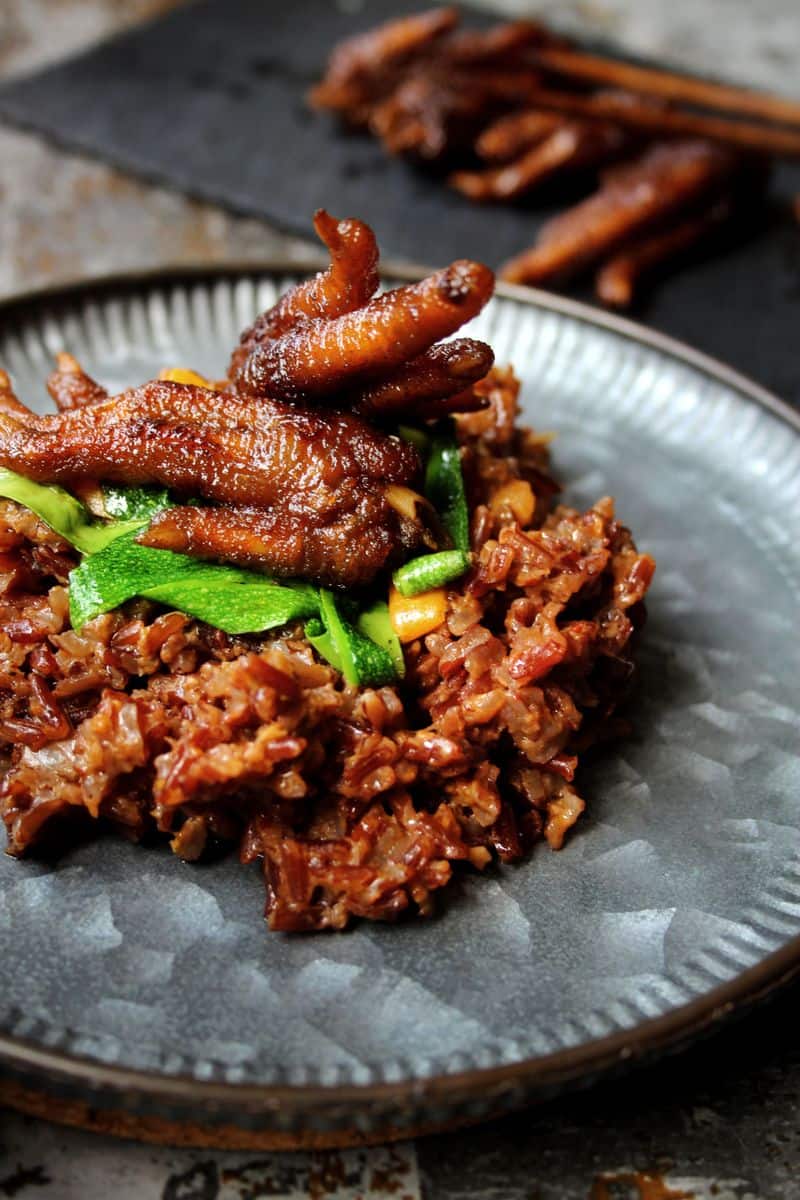
Steps
- 1
Blanch the chicken feet in boiling water with ginger and green onion for 5 minutes, then drain and rinse — this removes surface impurities and any strong smell.
- 2
Simmer the blanched feet in fresh water for 20-25 minutes, until tender.
- 3
Meanwhile, whisk together gochujang, gochugaru, soy sauce, brown sugar, rice syrup, and garlic for the sauce.
- 4
Drain the cooked feet well and toss with the sauce.
- 5
Heat a pan over medium-high heat and cook the sauced feet, stirring frequently, until the sauce thickens and clings, 8-10 minutes.
- 6
Finish with sesame oil and sesame seeds.
Did you know — Korean culture
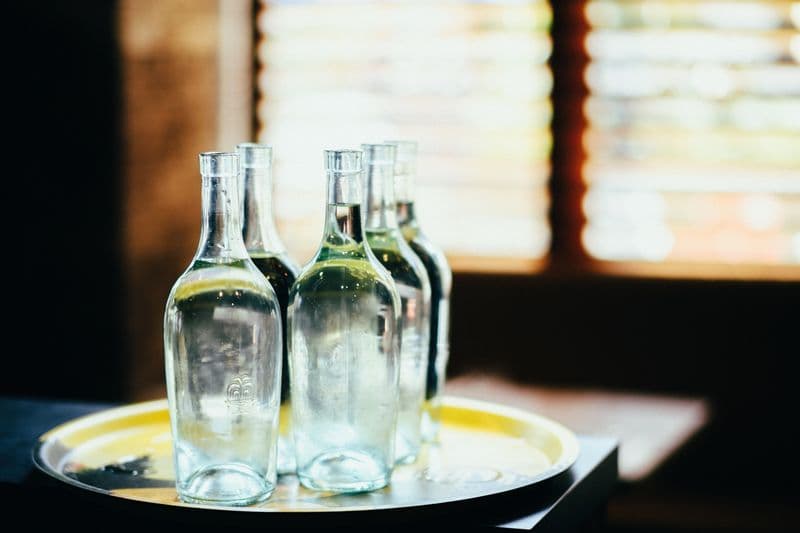
Dakbal is a defining anju (drinking food) in Korea, commonly ordered alongside soju specifically because its intense heat and sticky texture are built for slow sharing over drinks — deboned versions have also become popular for people who want the flavor without the bones.
The two-stage cook — a blanch, then a full simmer, before the spicy sauce ever gets involved — isn't optional for chicken feet the way it might be for other cuts. Feet are mostly skin, tendon, and cartilage, which need real time in water to soften into something pleasant to eat; going straight to a quick pan-fry with sauce would leave them tough no matter how good the glaze tastes.
Simmering until genuinely tender before saucing also means the final pan step is short — just long enough to build a glossy, clinging coating rather than cooking the meat itself, since by that point the meat is already done.
Dakbal is a defining anju (drinking food) in Korea, commonly ordered at bars alongside soju specifically because the intense heat and sticky texture are built for sharing over drinks rather than as a standalone meal — deboned versions have also become popular for people who want the flavor without navigating bones.
If this is too much heat, jjimdak is the other side of Korean braised chicken entirely — soy and sugar, barely any chili, and glass noodles soaking up the sauce.
Troubleshooting
Feet still tough after saucing? They likely weren't simmered long enough before the sauce stage — tenderness has to be built in the plain simmer, not the glaze.
Sauce burning before it thickens? Lower the heat — sugar-heavy sauces scorch fast, and chicken feet don't need high heat since they're already cooked through by the saucing stage.
Strong or gamey smell? The initial blanch was probably skipped or too brief — that first boil-and-discard step is what clears out most of the smell.
Recommended products
- Wide skillet
- Gochujang paste
More to cook
All Meat & BBQ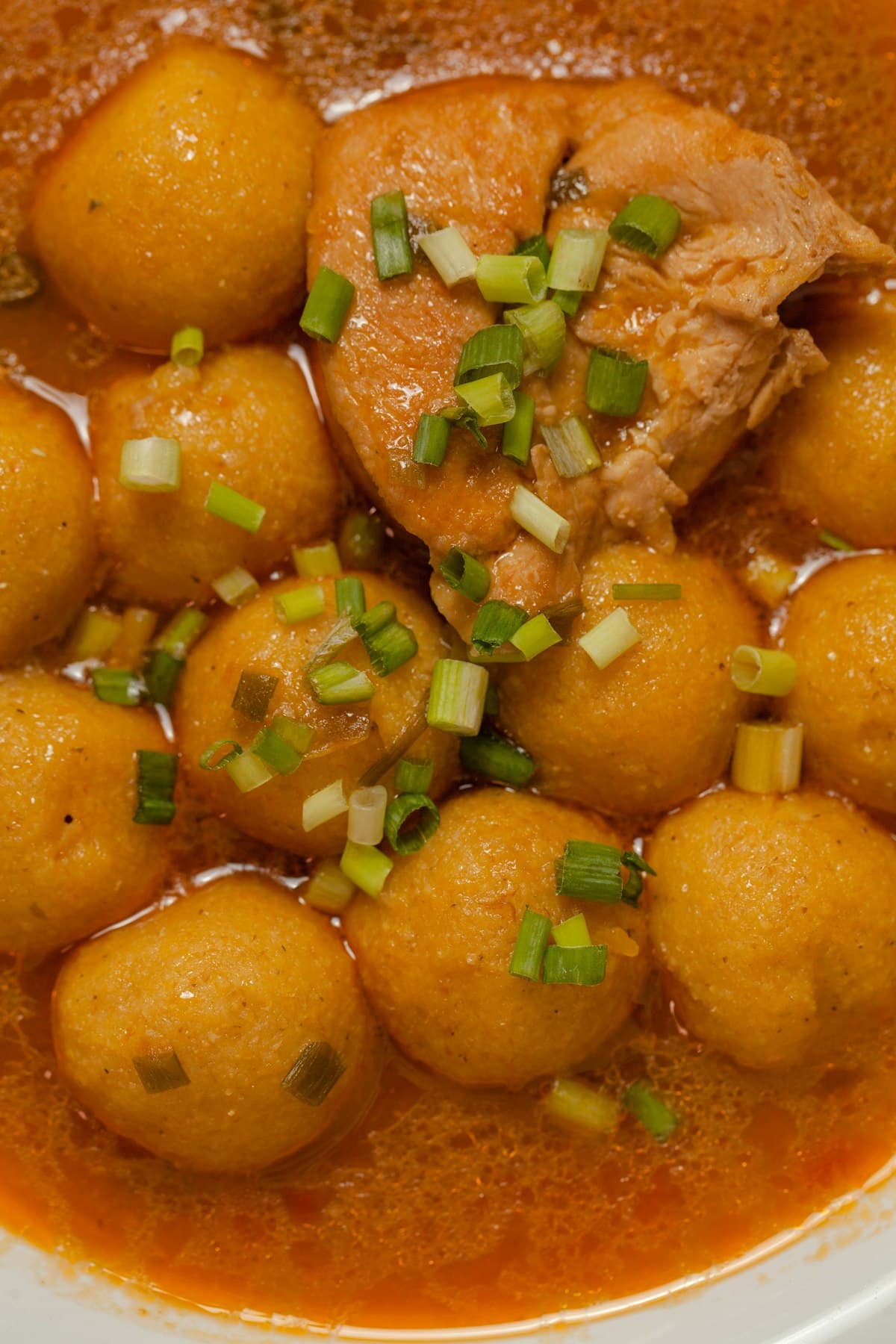
Dakbokkeumtang (Spicy Braised Chicken)
The bone-in braise technique behind dakbokkeumtang, and why potato timing matters more than the sauce itself.
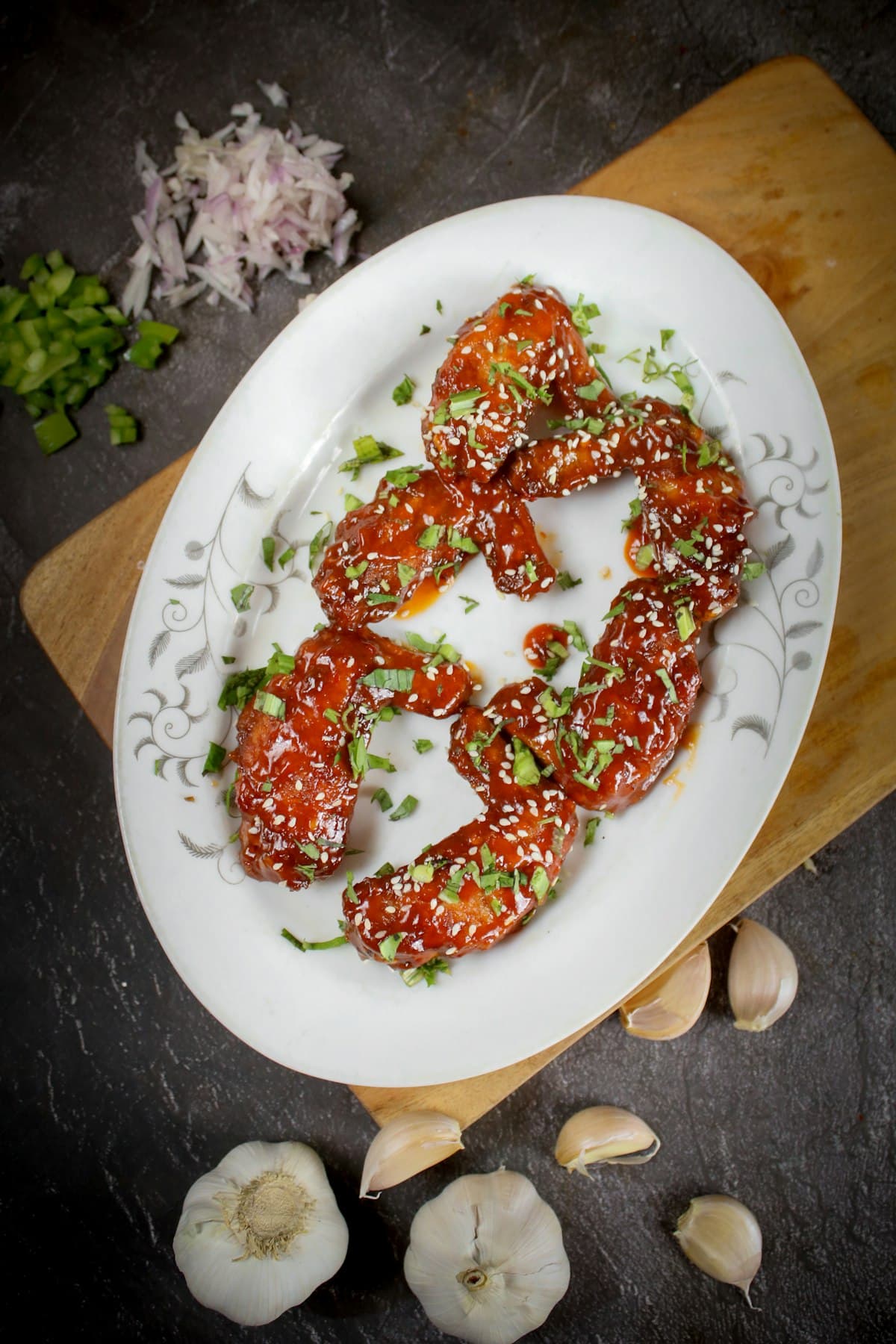
Dakgangjeong (Sweet & Spicy Glazed Fried Chicken Bites)
The double-fry and honey-glaze technique behind dakgangjeong, and why the glaze needs real reduction time to actually cling.
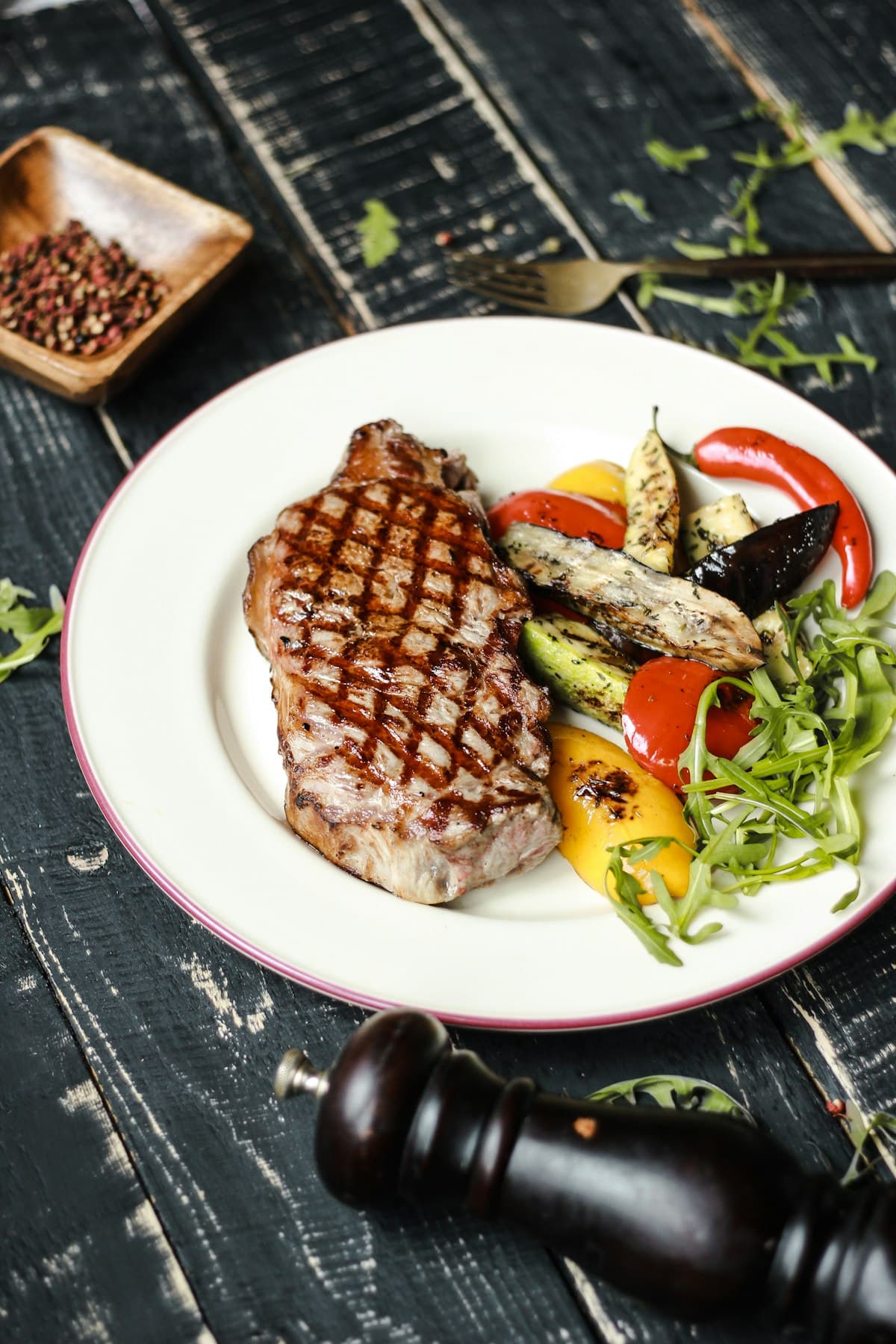
Deungshim Gui (Grilled Beef Sirloin)
The salt-and-rest technique behind deungshim gui, and why this cut is deliberately left almost unseasoned rather than marinated.