Steps
- 1
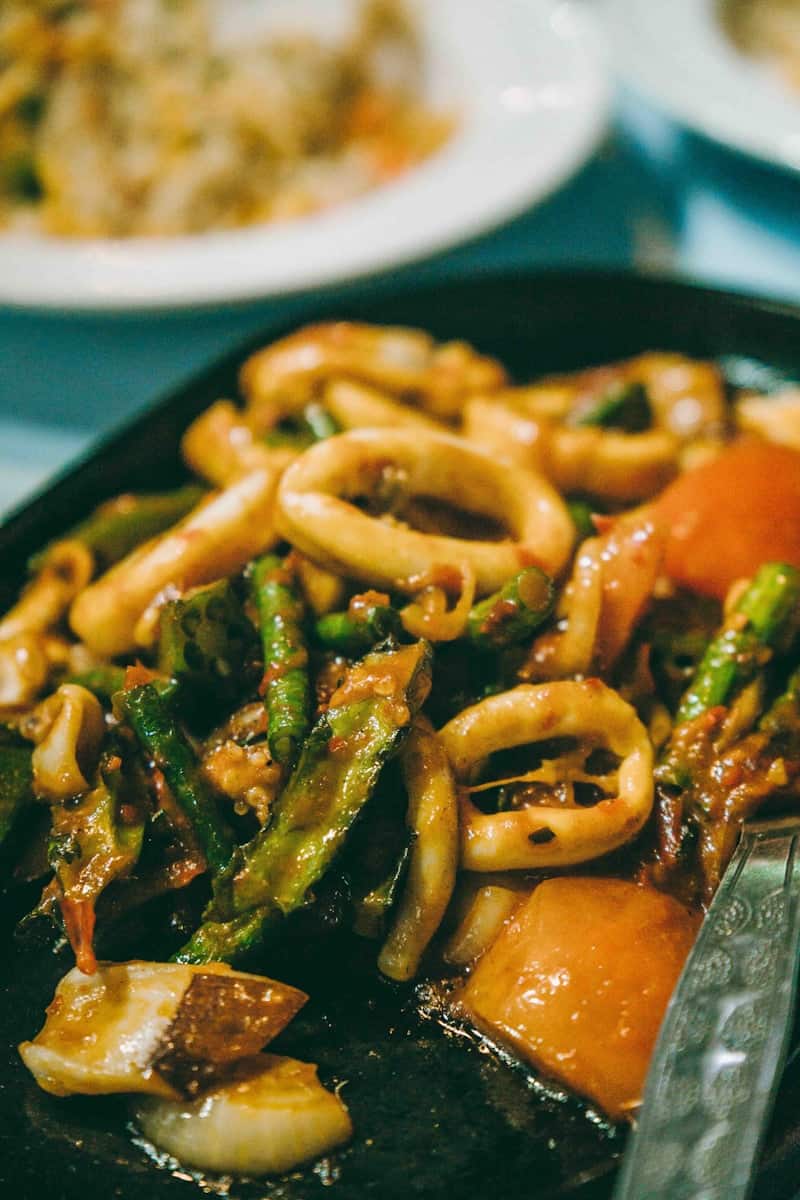
Score the inside of the squid bodies in a shallow crosshatch pattern before cutting into rings — this helps it curl evenly and cook fast.
- 2
Whisk together gochujang, gochugaru, soy sauce, sugar, rice wine, and garlic for the sauce.
- 3
Heat sesame oil in a wok or wide pan over high heat until just smoking.
- 4
Add the onion and green beans and stir-fry 2 minutes.
- 5
Add the squid and sauce and stir-fry hard and fast, 2-3 minutes only, until the squid just turns opaque and curls.
- 6
Remove from heat immediately — squid keeps cooking from residual heat even off the burner.
- 7
Toss with green onions and sesame seeds before serving.
Did you know — Korean culture
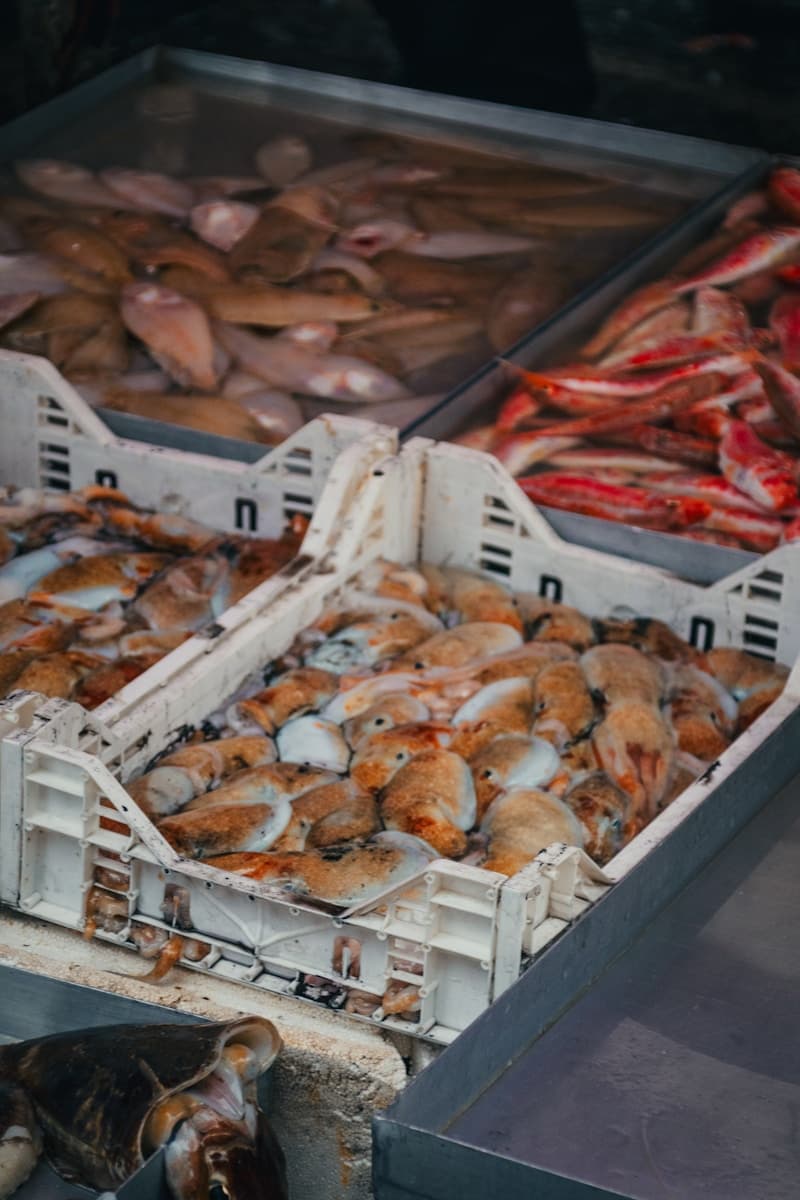
Squid cooks faster than almost any other protein used in Korean stir-fries — often under three minutes — which is part of why ojingeo bokkeum became such a common late-night bar-food order: it can go from raw ingredients to the table before a round of drinks is finished.
Squid has almost no margin for error on heat and time. Its muscle fibers tighten and turn rubbery the moment it's overcooked, and unlike most proteins, more time in the pan doesn't fix undercooked squid — it just makes already-cooked squid tougher. Two to three minutes over genuinely high heat is the real window, not a rough guideline.
Scoring the inside of the body before cooking does two things at once: it helps the squid curl into an even shape as it cooks (rather than seizing flat), and it lets the sauce cling to more surface area instead of sliding off a smooth piece.
Ojingeo bokkeum is a common Korean bar-food and home-cooking staple specifically because squid cooks faster than almost any other protein used in Korean stir-fries — a dish that can go from raw ingredients to the table in well under fifteen minutes once the sauce is mixed.
Troubleshooting
Squid turned out rubbery? It was almost certainly overcooked — pull it off the heat the moment it turns opaque and curls, even if that feels too soon.
Sauce not clinging to the squid? Make sure the pan is genuinely hot before the squid goes in; a lukewarm pan releases water and thins the sauce instead of reducing it.
Vegetables soggy instead of crisp? Give them a head start in the hot pan alone before the squid goes in, since squid releases liquid fast once it's added.
Recommended products
- Carbon steel wok
- Gochujang paste
More to cook
All Meat & BBQ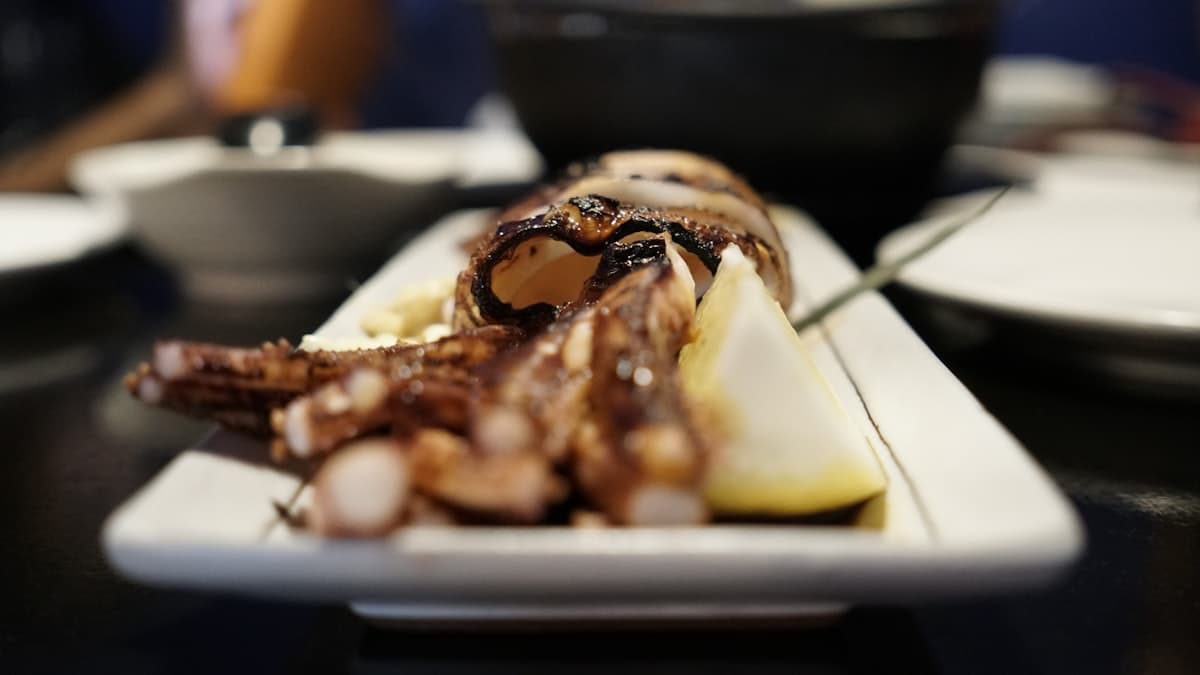
Ojingeo Gui (Grilled Squid)
The scoring technique and short grill time behind ojingeo gui, and why overcooking squid by even a minute ruins it here just like anywhere else.
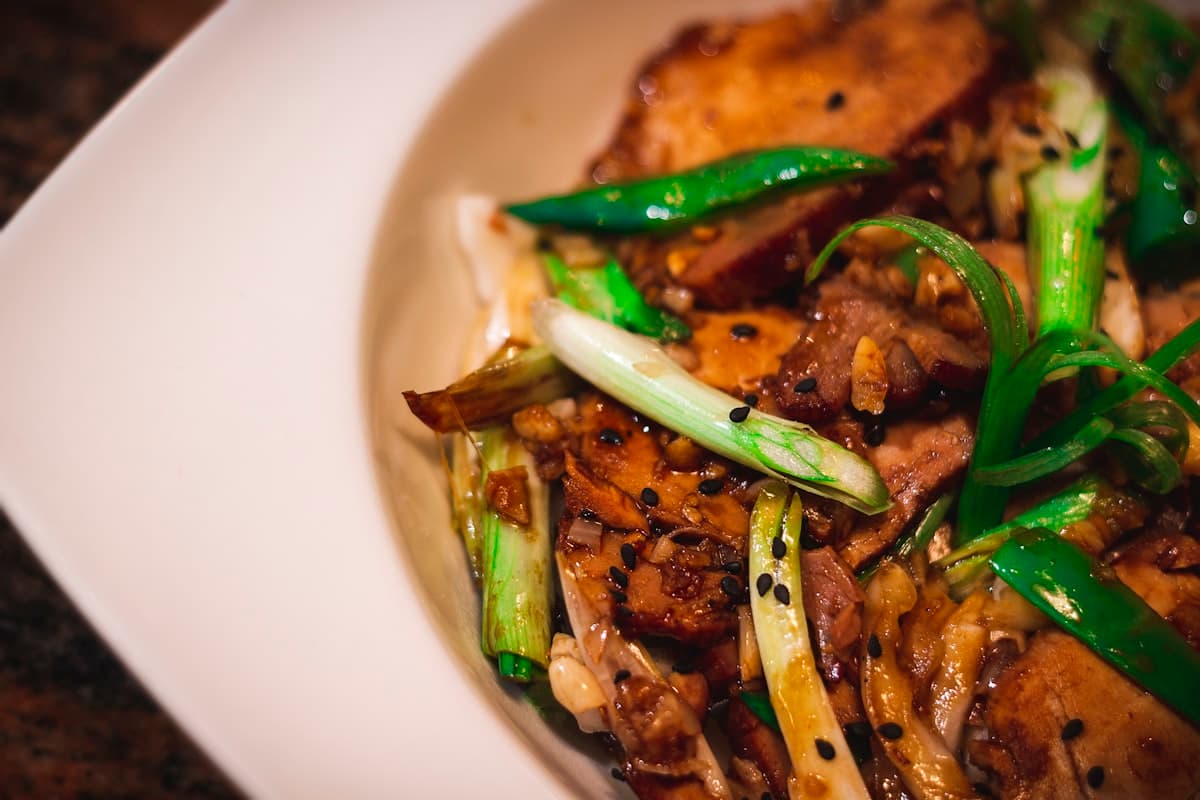
Padak (Green Onion Fried Chicken)
The julienne-and-soak technique behind padak's sharp green onion topping, and why it goes on right before serving, not during frying.
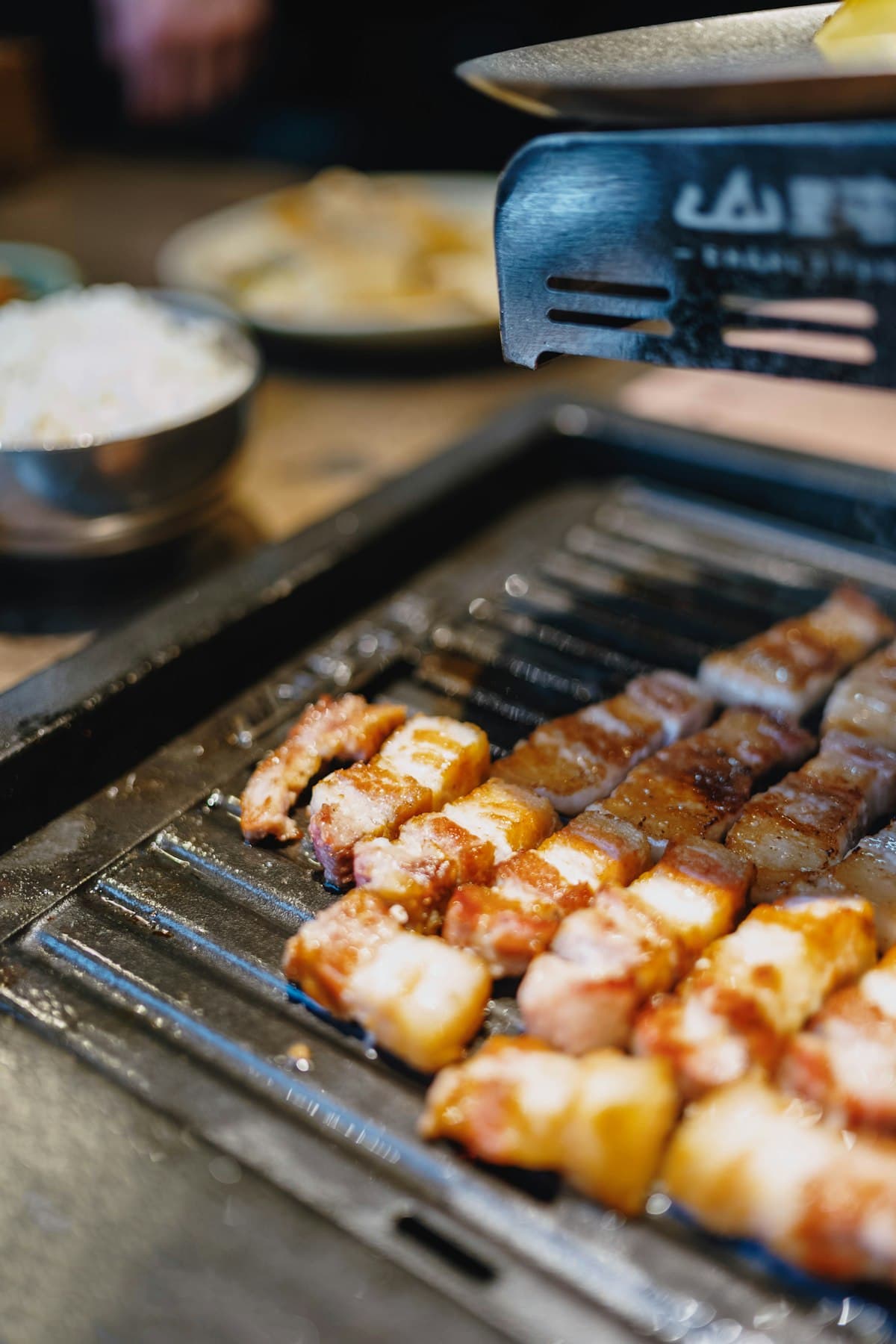
Samgyeopsal (Korean Grilled Pork Belly)
How to grill pork belly the way Korean BBQ restaurants actually do it — the ssamjang ratio, the lettuce wrap, and why you barely need a marinade.