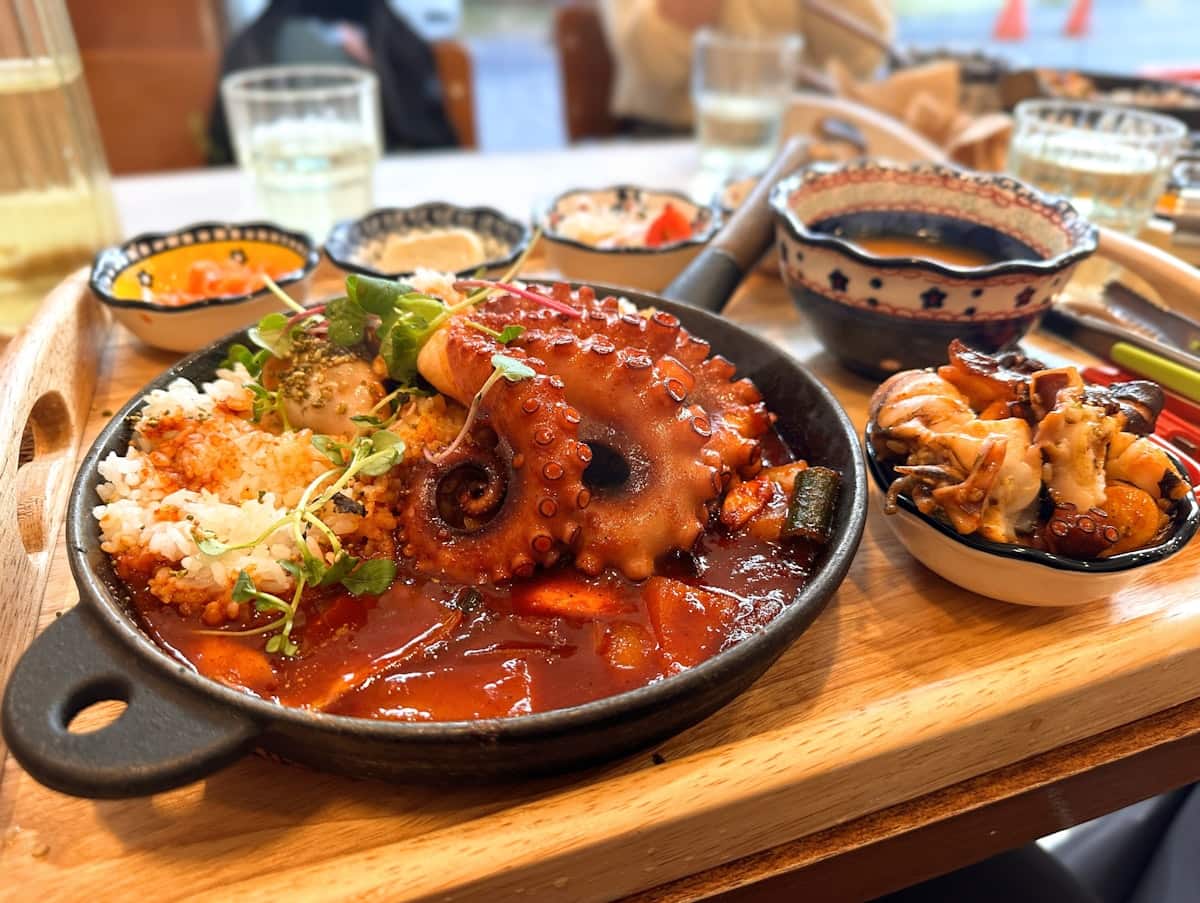
Steps
- 1
Rinse the octopus pieces thoroughly, massaging briefly with a little flour or salt to remove excess sliminess, then rinse clean.
- 2
Whisk together gochujang, gochugaru, soy sauce, sugar, garlic, and ginger into a sauce.
- 3
Heat oil in a wok or wide pan until genuinely hot.
- 4
Stir-fry the onion and carrot for 1-2 minutes.
- 5
Add the octopus and sauce, and stir-fry on high heat for 3-4 minutes, no longer — octopus turns rubbery fast past this point.
- 6
Add the green onion in the last minute.
- 7
Finish with a drizzle of sesame oil and serve immediately.

Did you know — Korean culture
Octopus is unusually high in taurine, an amino acid linked to reduced fatigue, which is part of why nakji bokkeum (and raw octopus dishes) carry a long-standing reputation in Korea as an energy-restoring food for exhausted farm workers historically, and for anyone feeling run down today. The coastal city of Mokpo is especially associated with the dish, thanks to its easy access to fresh octopus and a local tradition of cooking it fiery-hot.
The entire technique here is about not overcooking the octopus, and the window is genuinely narrow. Three to four minutes over real heat is enough to cook it through while keeping it tender; leave it another couple of minutes past that and it seizes up into something noticeably chewier and less pleasant, the same way overcooked squid does.
Massaging the raw octopus with a little flour or salt before rinsing isn't just about cleanliness — it helps break down some of the natural sliminess on the surface, which otherwise keeps the sauce from clinging evenly once it hits the hot pan.
Octopus is unusually high in taurine, an amino acid linked to reduced fatigue, which is part of why nakji bokkeum (and raw octopus dishes) carry a long-standing reputation in Korea as an energy-restoring food, historically for exhausted farm workers and today for anyone feeling run down. The coastal city of Mokpo is especially associated with the dish, thanks to its easy access to fresh octopus and a local tradition of cooking it fiery-hot.
Troubleshooting
Octopus turned rubbery instead of tender? It was almost certainly overcooked — stick to 3-4 minutes of high-heat stir-frying and pull it the moment it's opaque and cooked through.
Sauce not clinging evenly to the octopus? The pre-rinse massage step matters here — surface sliminess left on the octopus keeps the sauce from making full contact.
Dish tasting watery instead of concentrated? Make sure the pan and oil are properly hot before the octopus goes in — a lukewarm pan makes the octopus release liquid instead of searing against the sauce.
Recommended products
- Wide wok or stir-fry pan
- Gochujang
More to cook
All Meat & BBQ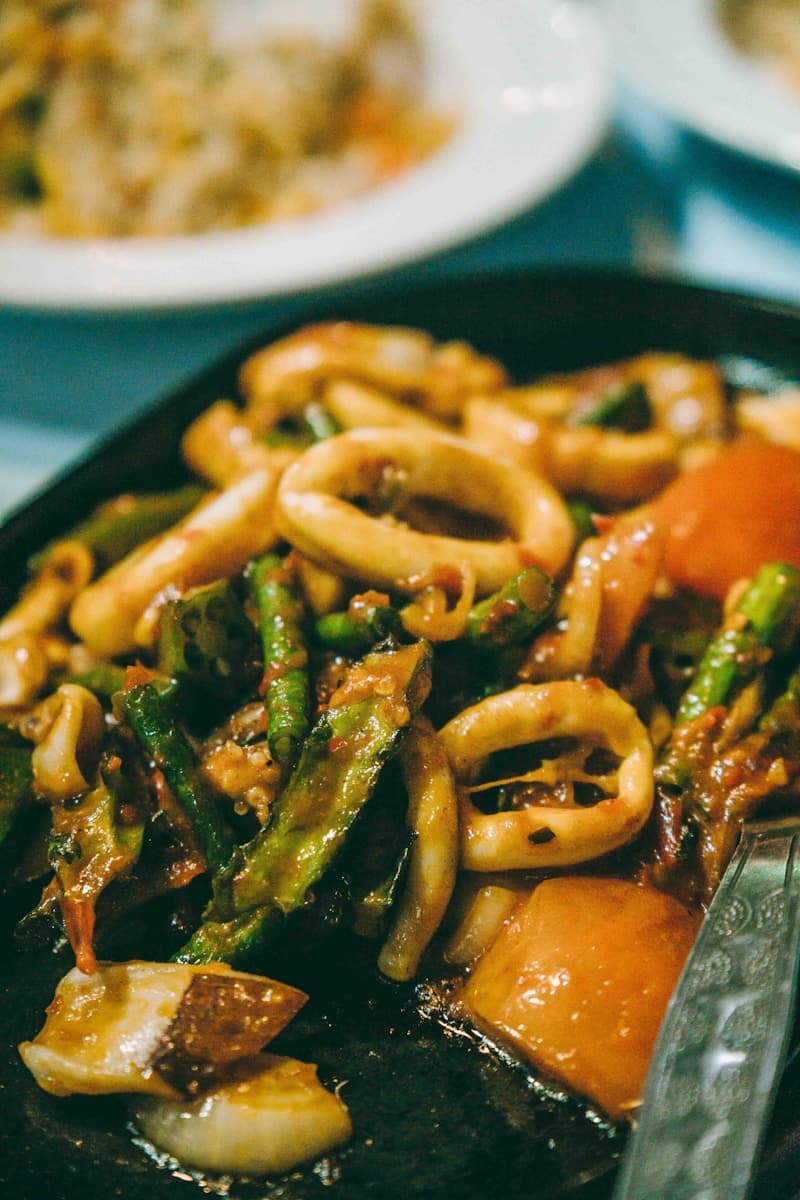
Ojingeo Bokkeum (Spicy Stir-Fried Squid)
Why squid needs the shortest possible time in a screaming-hot pan, and how scoring it before cooking keeps it from turning rubbery.
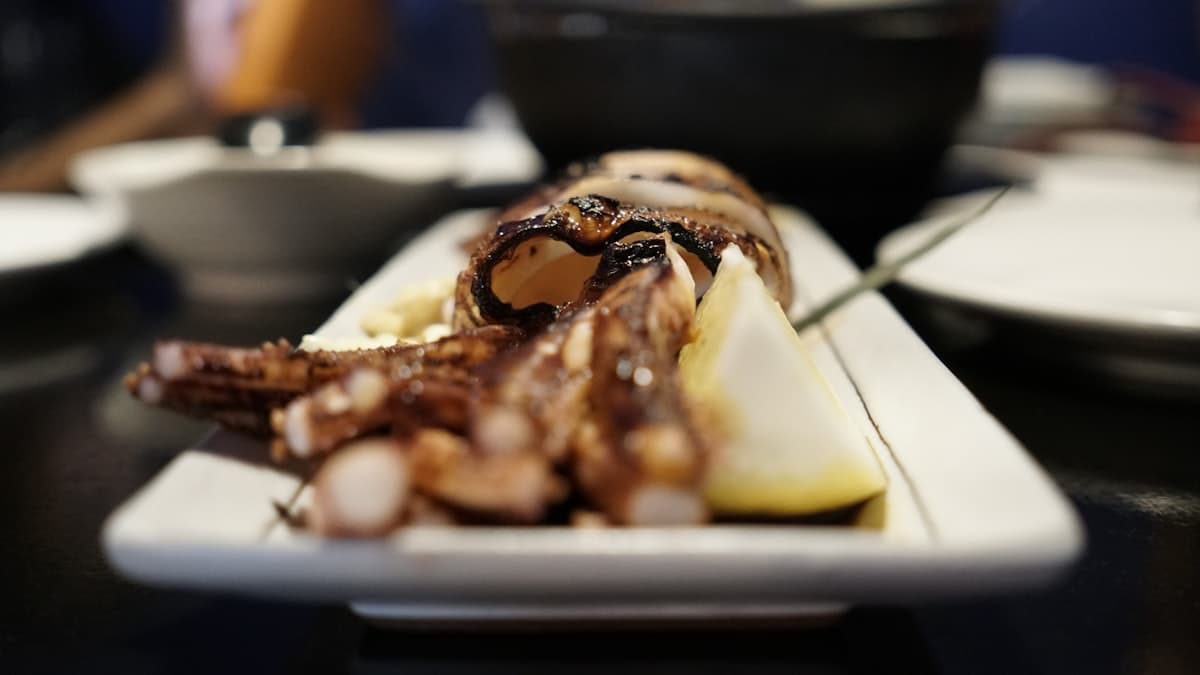
Ojingeo Gui (Grilled Squid)
The scoring technique and short grill time behind ojingeo gui, and why overcooking squid by even a minute ruins it here just like anywhere else.
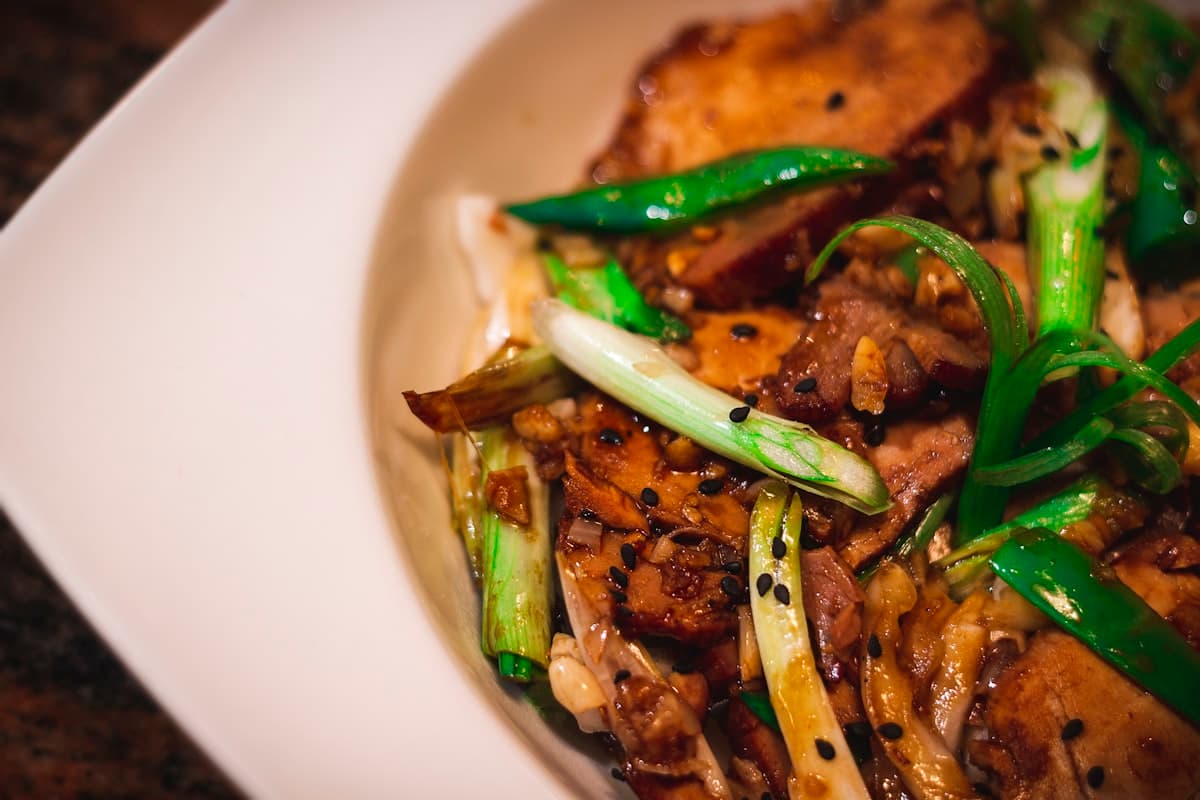
Padak (Green Onion Fried Chicken)
The julienne-and-soak technique behind padak's sharp green onion topping, and why it goes on right before serving, not during frying.