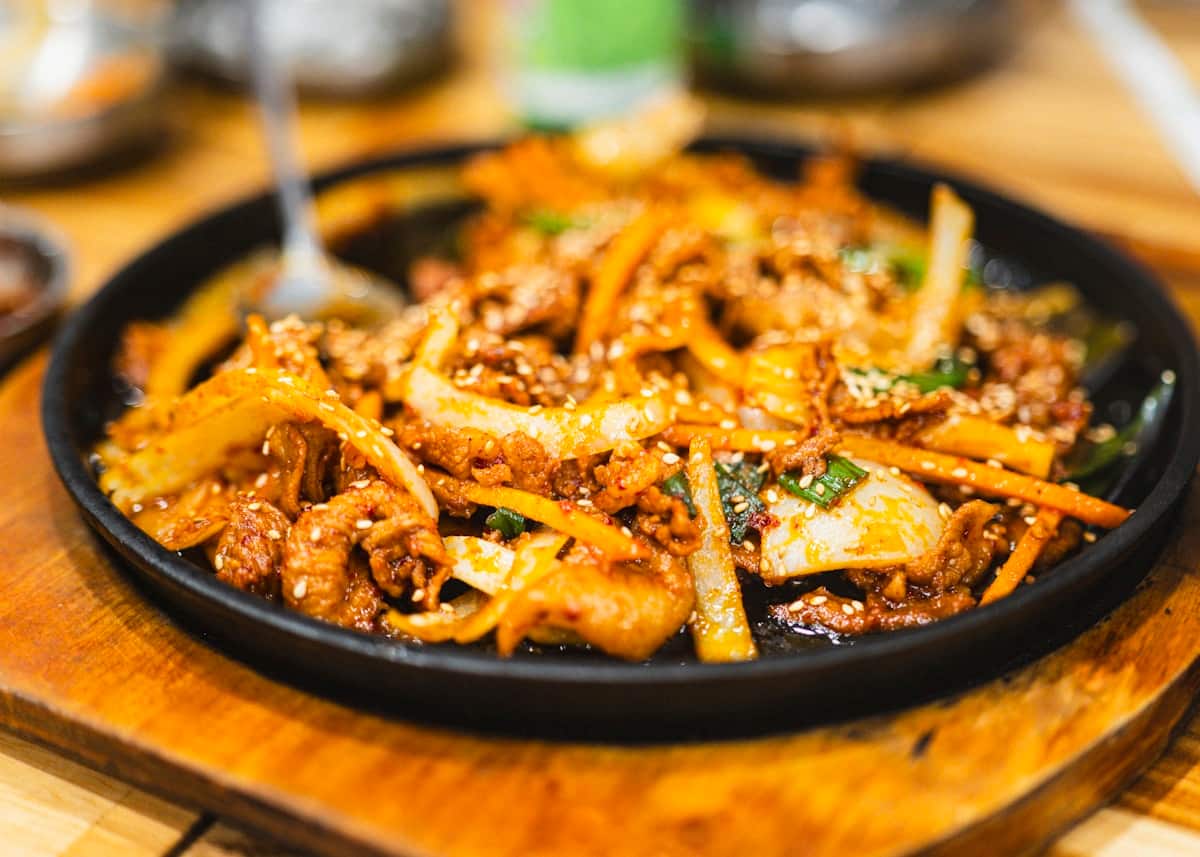
Steps
- 1
Whisk together gochujang, gochugaru, soy sauce, sugar, rice wine, garlic, and ginger into a marinade.
- 2
Toss the sliced pork in the marinade, coating evenly.
- 3
Marinate at least 30 minutes, ideally a few hours in the fridge.
- 4
Heat oil in a wide pan or skillet until genuinely hot.
- 5
Add the pork and stir-fry over high heat for 3-4 minutes, until mostly cooked through.
- 6
Add the onion and carrot, and continue stir-frying 3-4 minutes until the vegetables soften and the pork is fully cooked.
- 7
Add the green onion in the last minute.
- 8
Finish with a drizzle of sesame oil.
Did you know — Korean culture
Jeyuk bokkeum is one of the most common "baekban" (set-meal) lunch specials in Korea, the kind of dish small restaurants near office districts build an entire daily rotation around, since it's fast to cook to order, cheap relative to beef, and reheats well for a following-day lunch box. Its ubiquity in that specific context is part of why it reads as an everyday, unpretentious dish rather than a special-occasion one, unlike some of its beef counterparts.
Pork shoulder, thinly sliced, is the right cut here rather than pork belly, even though belly gets more attention in other Korean pork dishes. Shoulder has enough fat to stay juicy through a fast, high-heat stir-fry without turning greasy, while belly's higher fat content can make the finished dish feel heavy under an already-rich gochujang marinade.
Marinating for at least 30 minutes isn't just about flavor — it gives the gochujang time to actually penetrate the meat rather than sitting on the surface, which is the difference between pork that tastes seasoned throughout and pork that tastes like it was tossed in sauce right before cooking.
Jeyuk bokkeum is one of the most common "baekban" (set-meal) lunch specials in Korea, the kind of dish small restaurants near office districts build an entire daily rotation around, since it's fast to cook to order, cheap relative to beef, and reheats well for a following-day lunch box. Its ubiquity in that specific context is part of why it reads as an everyday, unpretentious dish rather than a special-occasion one.
Troubleshooting
Pork tasting bland despite the marinade? It needs more time — 30 minutes is a minimum, and a few hours in the fridge makes a real difference.
Dish turning watery instead of glossy? The pan probably wasn't hot enough, or was overcrowded. Stir-fry over genuinely high heat, in batches if needed, rather than letting everything steam in its own liquid.
Vegetables mushy instead of tender-crisp? They go in after the pork has a head start cooking — adding them too early means they overcook by the time the pork is done.
Recommended products
- Cast iron sizzle plate
- Gochujang and gochugaru
More to cook
All Meat & BBQ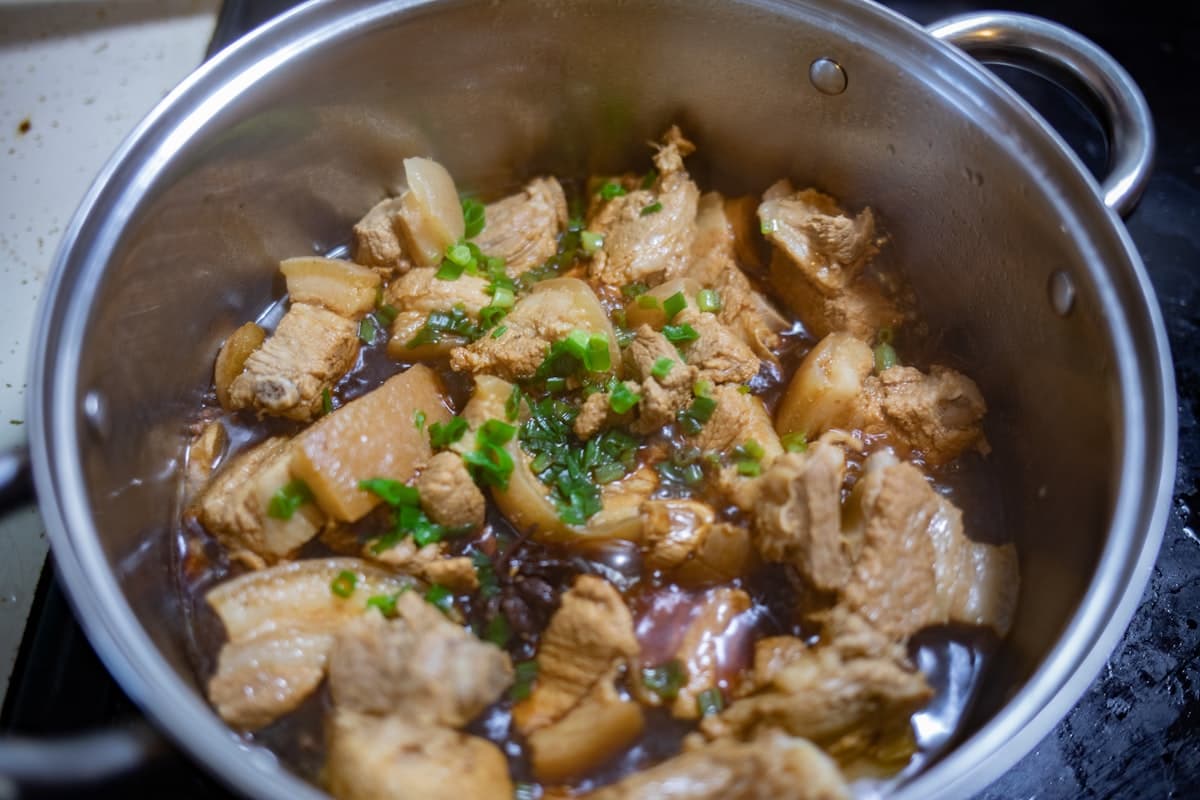
Jjimdak (Andong Braised Chicken with Glass Noodles)
The soy-braise technique behind jjimdak, and why the glass noodles go in last, not first.
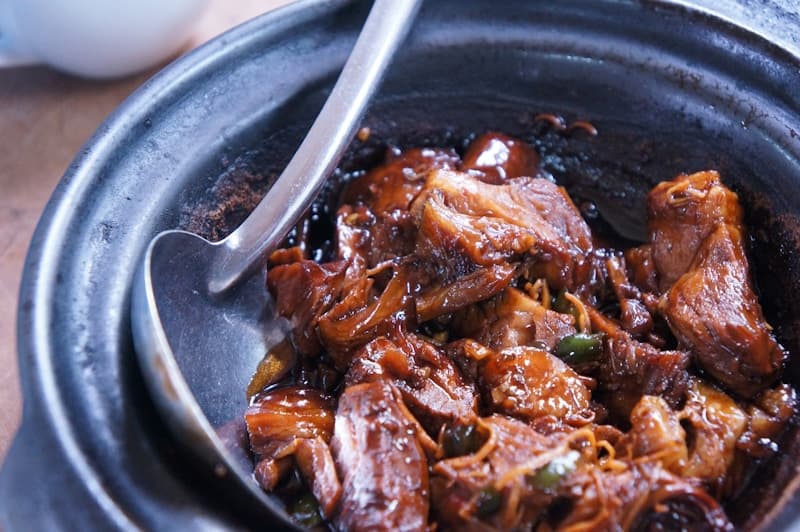
Kalbi Jjim (Braised Short Ribs)
The soaking and simmering technique that turns tough short ribs tender and glossy, plus why the braising liquid needs a second reduction.
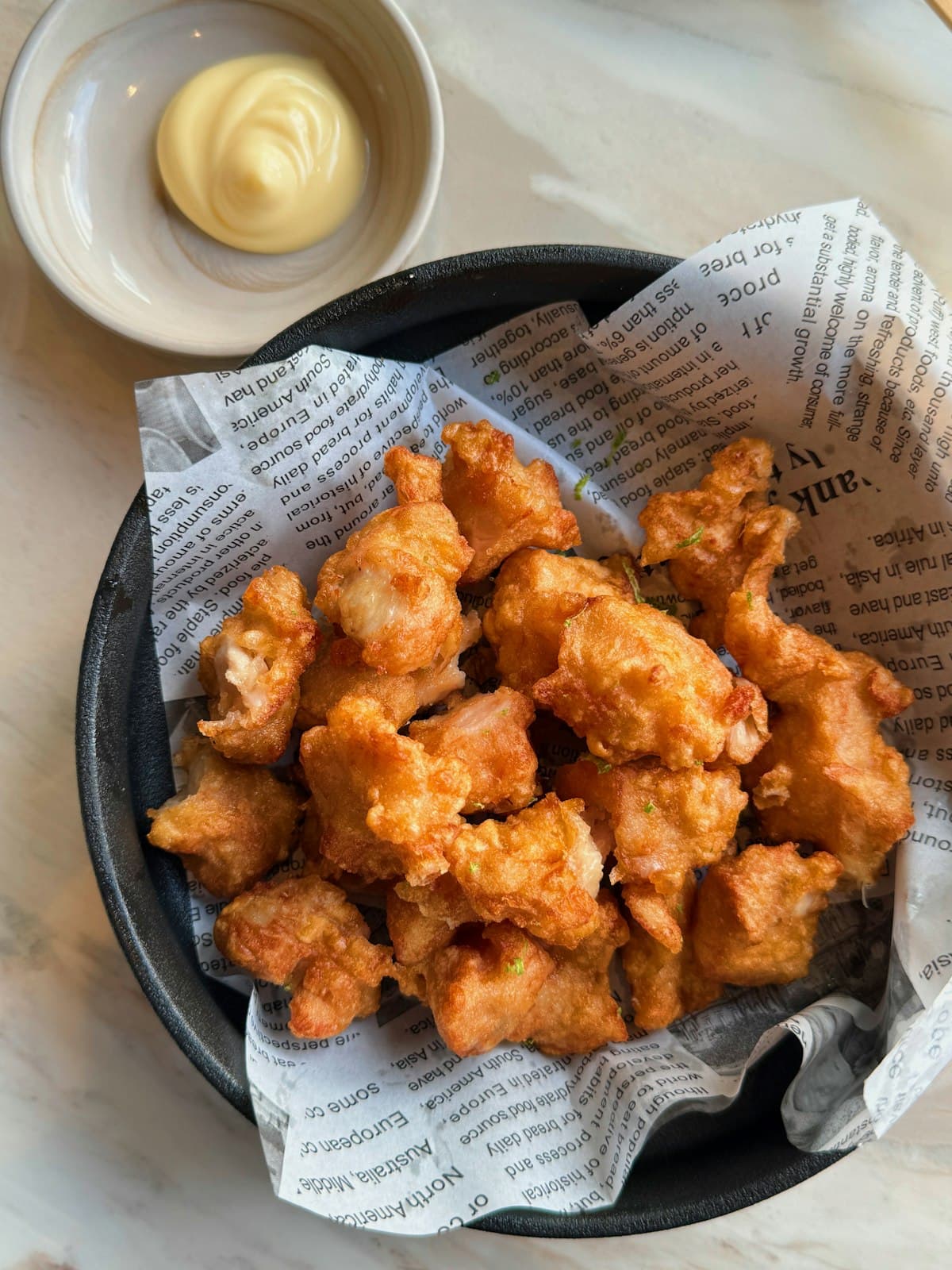
Korean Fried Chicken (Yangnyeom Chicken)
The double-fry technique that makes Korean fried chicken stay crispy under sauce, plus the sweet-spicy yangnyeom glaze most home versions get wrong.