Steps
- 1
Halve the kabocha, scrape out the seeds, and cut into wedges. Peel the wedges — a vegetable peeler works once the skin is cut into manageable pieces.
- 2
Cut into rough chunks, put in a pot with the 5 cups of water, and simmer covered 20 to 25 minutes, until a chunk collapses under a spoon.
- 3
Blend until completely smooth, then return to the pot. An immersion blender in the pot is easiest.
- 4
Whisk the glutinous rice flour into the 1/2 cup of COLD water until there are no lumps at all.
- 5
Bring the pumpkin back to a gentle simmer and pour the slurry in slowly, in a thin stream, stirring constantly.
- 6
Simmer 5 to 8 minutes more, stirring, until the porridge thickens and loses its raw-flour taste.
- 7
Season with the sugar and salt. Add the salt even if you want it sweet — it is what makes the pumpkin taste of pumpkin.
- 8
Serve hot, topped with red beans, rice balls and pine nuts if using.
Did you know — Korean culture
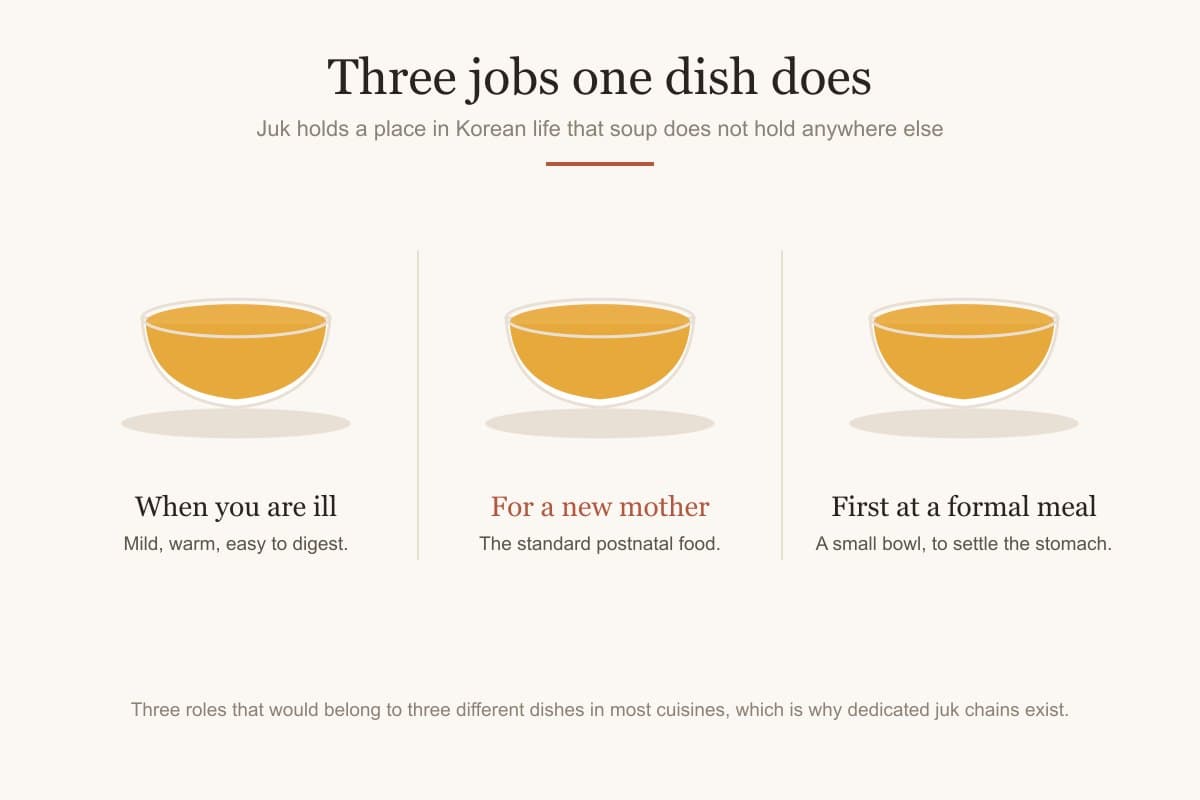
Juk occupies a specific place in Korean life that soup does not. It is what you eat when you are ill, what a new mother is given, and what is served first at a formal meal to settle the stomach before anything heavier — three roles that would belong to three different dishes in most cuisines. Dedicated juk restaurant chains exist across Korea for exactly this reason, open early, and do a large part of their business in deliveries to hospitals.
Hobakjuk is kabocha simmered soft, blended, and thickened with glutinous rice flour into a smooth, mildly sweet porridge. It is served hot, often as a first course or to someone who is unwell.
Two things decide whether it works: the slurry goes into cold water, and the salt goes in even though the dish is sweet.
Kabocha, not pumpkin
The squash is danhobak — kabocha. Dense, dry-fleshed and sweet.
A carving pumpkin will not work. It is watery and bland, and the porridge comes out thin and tasteless no matter how long you reduce it. Butternut is an acceptable substitute; it is sweeter and slightly stringier.
Peeling raw kabocha is hard. Cut it into wedges first and peel the wedges, or microwave the whole squash for two minutes to soften the skin.
The slurry has to start cold
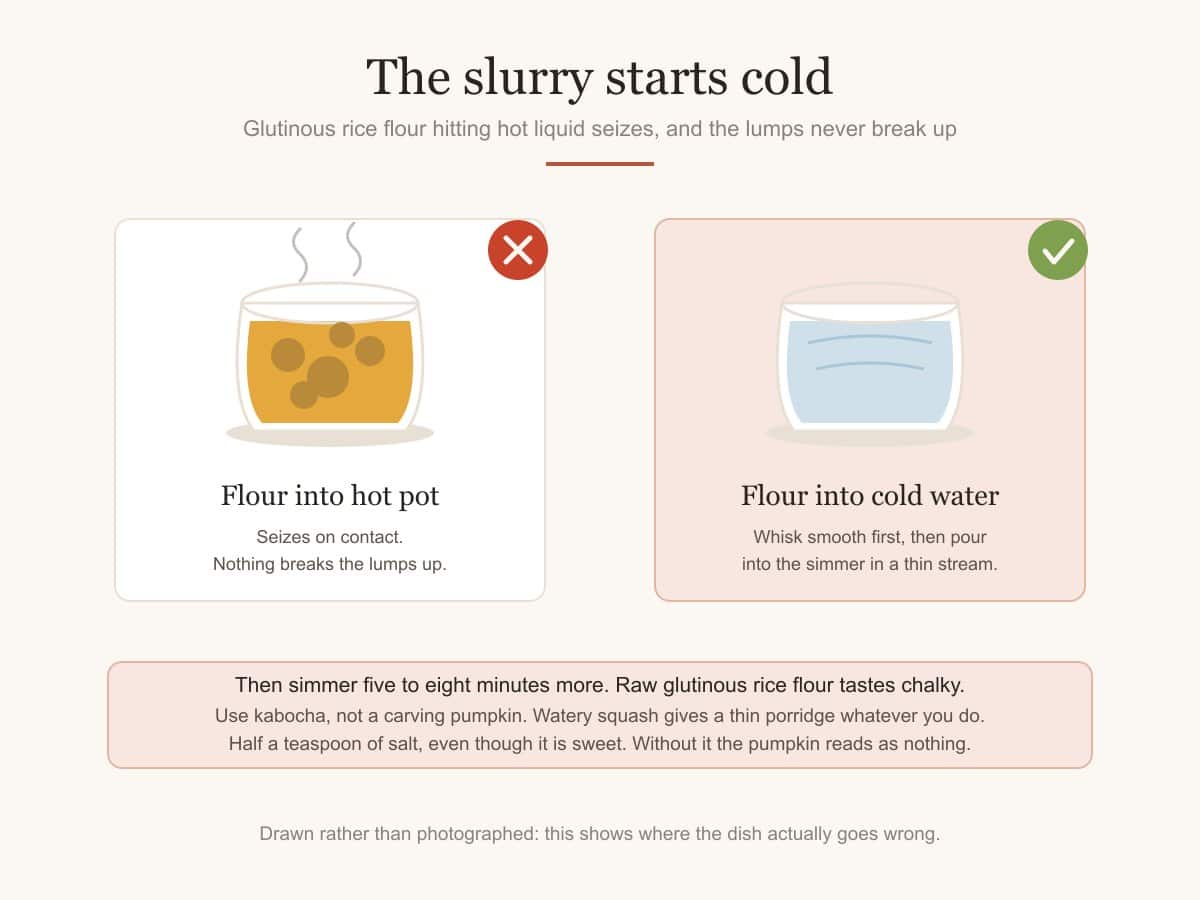
This is the one step that reliably goes wrong. Glutinous rice flour whisked into hot liquid seizes instantly into lumps that will not break up, however long you stir.
Whisk it into cold water first, until the mixture is completely smooth, then pour that into the simmering pot in a thin stream while stirring.
And keep simmering for five to eight minutes afterwards. Raw glutinous rice flour has a chalky, pasty taste that only cooking removes — the same principle as the rest after thickening in dotorimuk.
Salt, in a sweet dish
The half-teaspoon of salt is not optional and it is not there to make it savoury. Without it the porridge tastes flat and vaguely of nothing; with it the pumpkin comes forward and the sweetness reads as pumpkin sweetness rather than sugar.
Add the sugar last and to taste. A good kabocha needs far less than a poor one, and the squash varies enormously.
If it is too thick, thin with hot water rather than cold — cold water shocks the starch and the texture goes grainy.
When it is eaten
Hobakjuk is convalescent food and postnatal food before it is anything else. It is easy to digest, warm, and mild, and it is what a Korean household makes for someone recovering.
It also appears as the opening course of a formal meal, in a small bowl, the same role jatjuk plays.
The optional toppings are traditional rather than decorative: sweet red beans for contrast, small chewy rice balls for texture, pine nuts for richness. None is required and the plain version is the common one.
Common questions
What squash is used for hobakjuk?
Kabocha, called danhobak in Korean. It is dense and sweet; a carving pumpkin is too watery and gives a thin, bland porridge. Butternut is an acceptable substitute.
Why is my hobakjuk lumpy?
The glutinous rice flour went into hot liquid. It seizes on contact and the lumps will not break up. Whisk it into cold water first, then pour that slurry into the simmering pot in a thin stream.
Does hobakjuk need salt if it is sweet?
Yes. Without the half teaspoon the porridge tastes flat; with it the pumpkin reads as pumpkin rather than as sugar. Add the sugar afterwards and to taste.
Can I freeze pumpkin porridge?
It freezes acceptably for about a month, though the texture loosens. Reheat gently and stir hard; thin with hot water rather than cold, which makes the starch grainy.
More to cook
All Rice & Noodles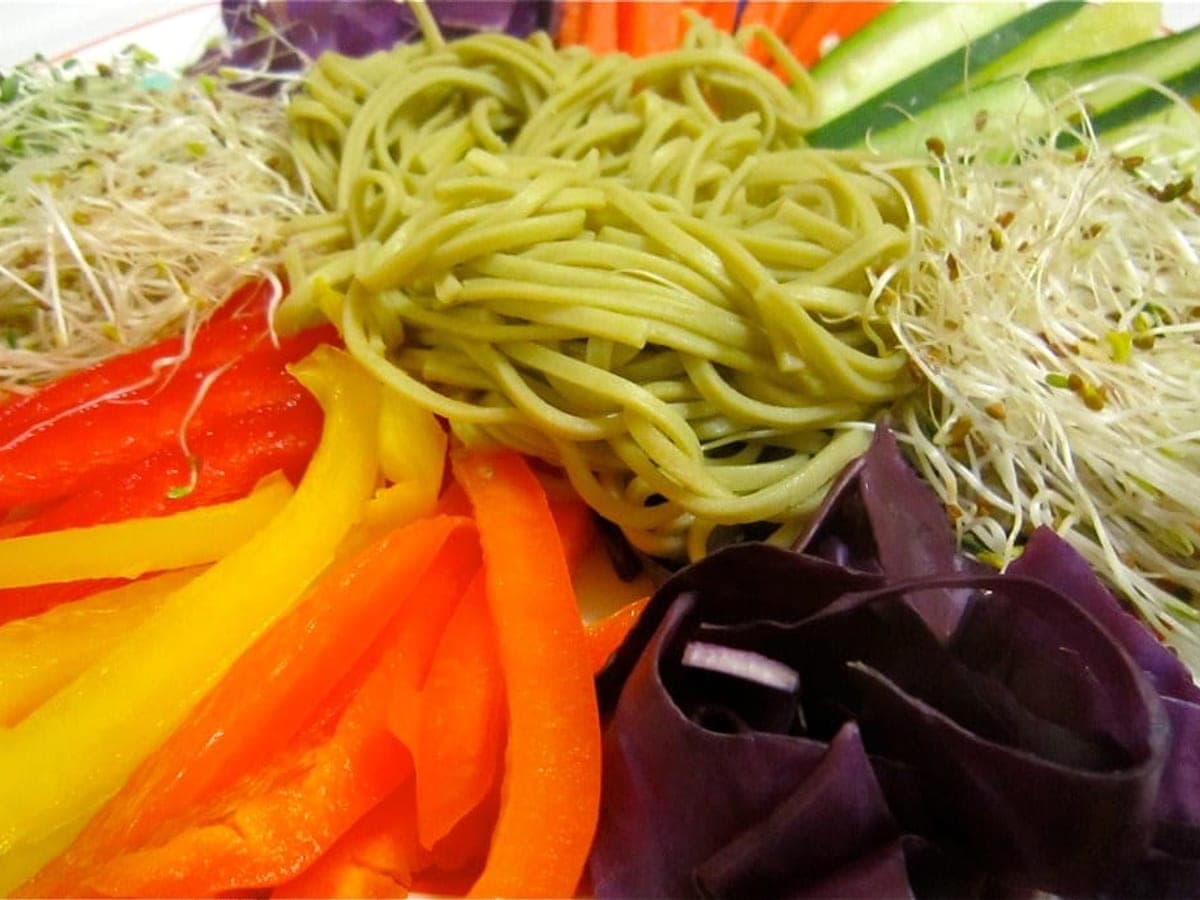
Jaengban Guksu (Platter Noodles)
Why jaengban guksu is served on a wide platter rather than in bowls, and how the sauce goes on at the table so the vegetables stay crisp until the last second.
Janchi Guksu (Banquet Noodles)
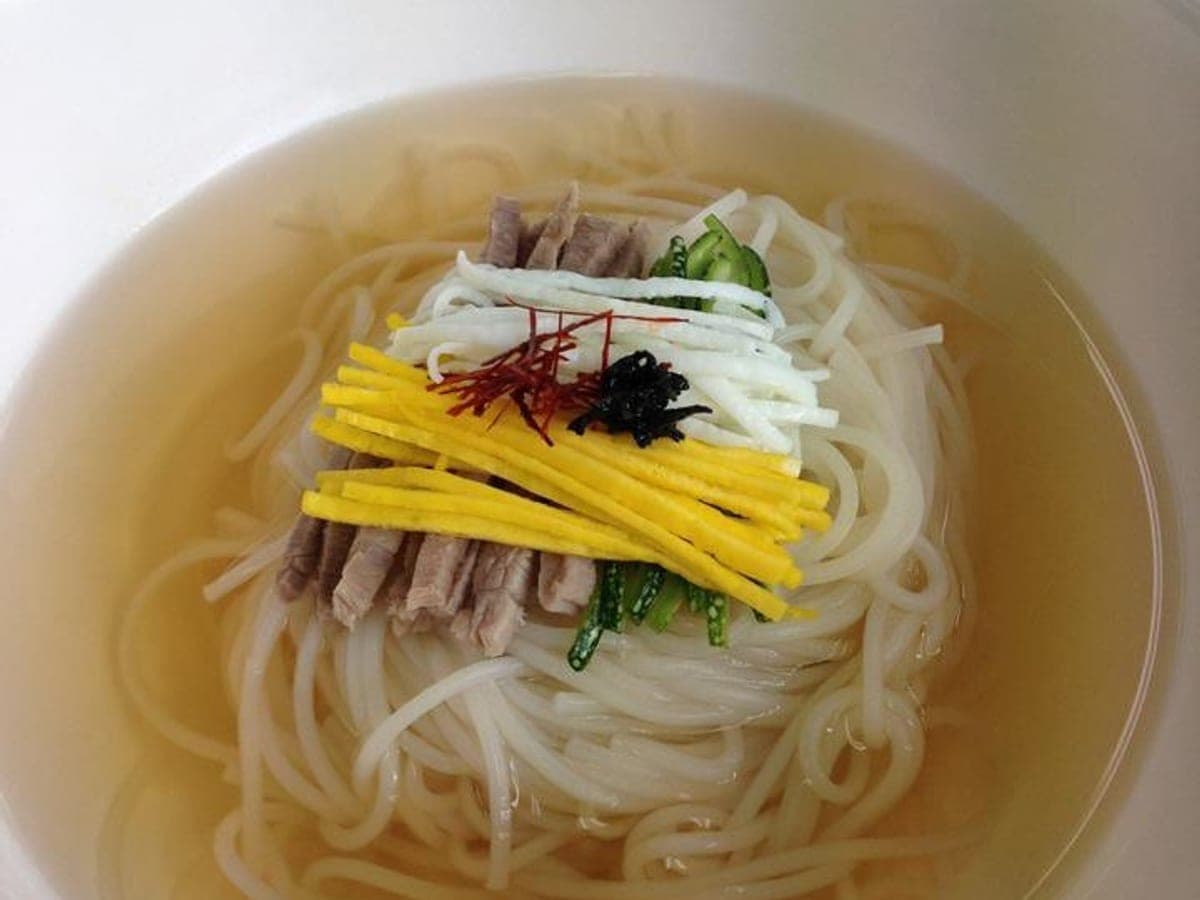
Why janchi guksu noodles are cooked and rinsed separately from the broth, and how a clear anchovy stock keeps this celebration dish light rather than heavy.
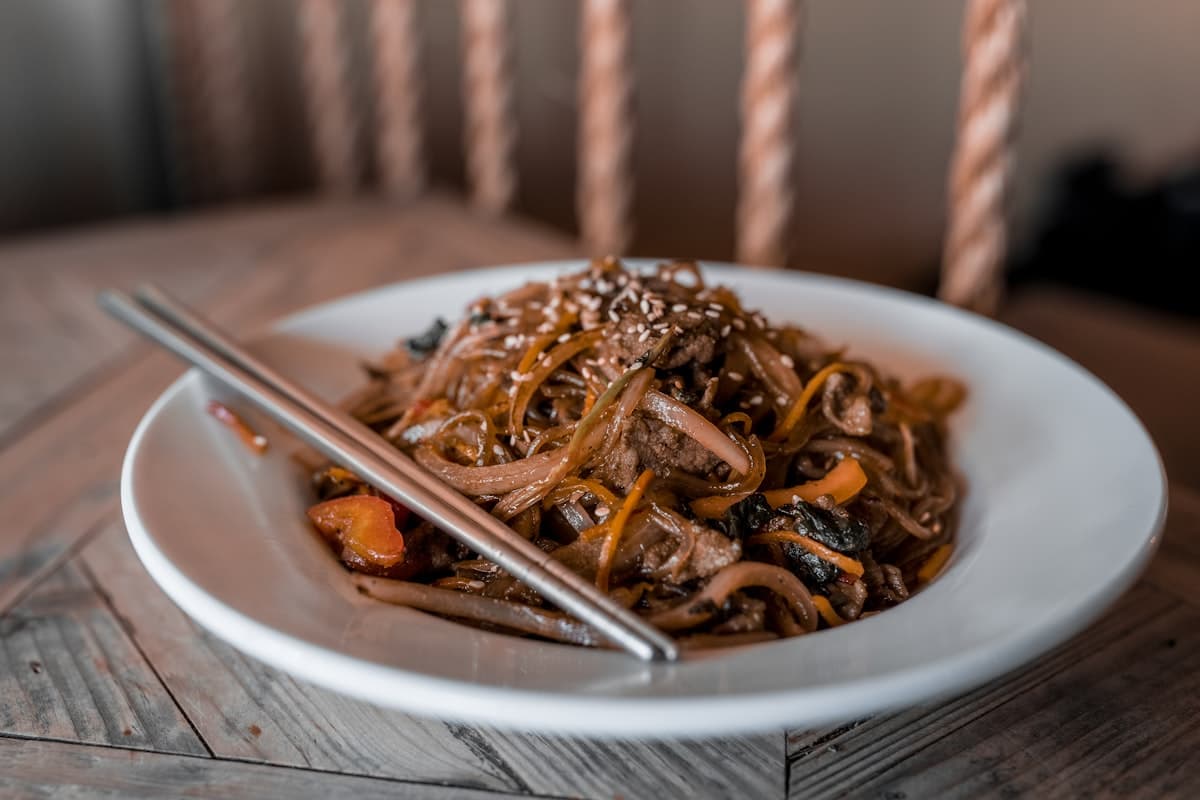
Japchae (Korean Glass Noodle Stir-Fry)
The separate-pan technique behind restaurant-quality japchae, and the one noodle mistake — overcooking dangmyeon — that ruins the texture every time.