Photo: Анатолий Стафичук · CC0
Steps
- 1
Simmer beef brisket for about an hour to build a clear broth, skimming foam as it rises, then strain and season lightly with soy sauce and salt.
- 2
Fry thin sheets of egg yolk and egg white separately, then slice into neat strips (jidan).
- 3
Lightly cook the beef, fish and prawns separately so each keeps its own color and texture.
- 4
Blanch or briefly saute the carrot, zucchini and mushrooms, keeping each distinct.
- 5
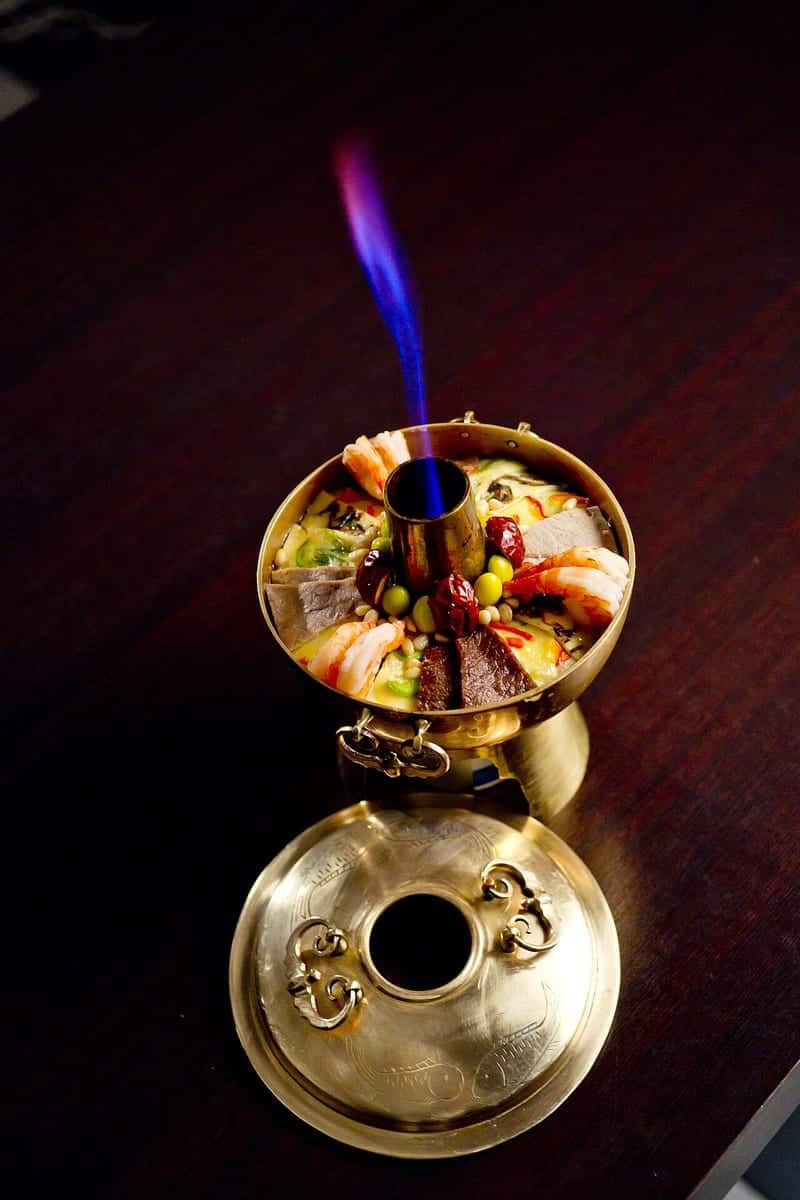
Arrange the cooked components in the sinseollo vessel in radiating wedges around the central chimney, alternating colors.
- 6
Scatter ginkgo nuts, pine nuts and sliced jujube over the top.
- 7
Pour the hot broth in gently down the side so the arrangement isn't disturbed.
- 8
Light the chimney and bring to a gentle simmer at the table, serving as it bubbles.
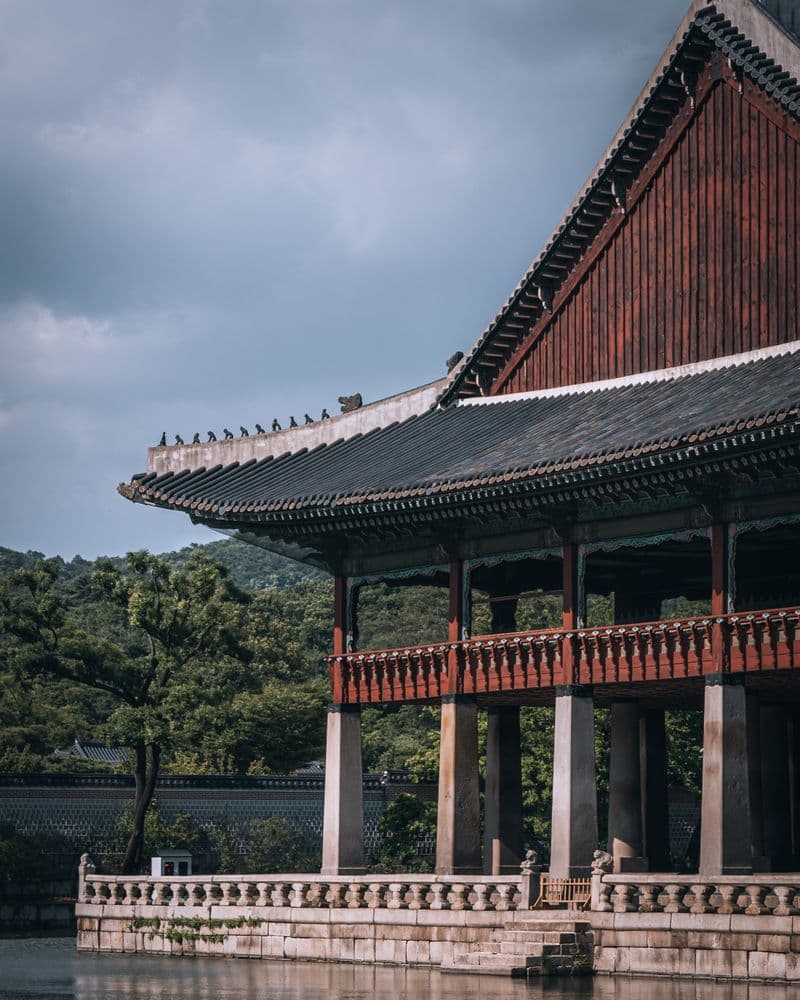
Did you know — Korean culture
Sinseollo's name translates roughly as "immortal's brazier," after the purpose-built brass vessel with a charcoal chimney running up its middle. It's royal court cuisine, which is exactly why it's built around many expensive ingredients arranged for show rather than one main one.
The arrangement is the dish. Sinseollo is Korean royal court cuisine, and the components are cooked separately and laid out in distinct radiating wedges specifically so each keeps its own color — the yellow and white of the egg jidan, the orange carrot, the green zucchini, the dark beef. Stirring everything together produces a perfectly good hot pot, but it stops being sinseollo, which is as much about the presentation as the flavor.
The broth has to be genuinely clear, which means skimming diligently during the beef simmer and never letting it reach a hard rolling boil. A cloudy broth muddies the look of the carefully arranged sections underneath it, which defeats the point of arranging them.
The vessel itself is purpose-built: a brass pot with a central chimney holding hot charcoal (or, more commonly now, a small burner), so the broth simmers gently at the table throughout the meal. The name translates roughly as "immortal's brazier," and the dish's association with the royal court is the reason it's built around expensive, varied ingredients rather than a single main one.
Troubleshooting
Broth cloudy? It was boiled too hard or not skimmed enough — a clear broth needs a patient, barely-trembling simmer and steady skimming.
Sections blurring into each other? Pour the broth gently down the inside edge of the vessel rather than directly over the top of the arrangement.
Components overcooked by the time it's served? Everything is pre-cooked before it goes in, so the tabletop simmer is only meant to keep it hot — cook each element to just-done, not fully done, before arranging.
Recommended products
- Sinseollo vessel
- Pine nuts
More to cook
All Stews & Soups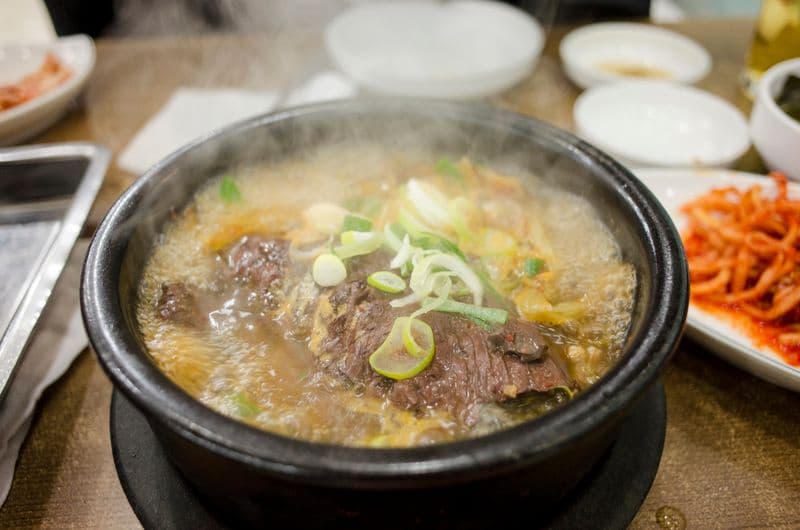
Sogogi Muguk (Beef Radish Soup)
Why the beef and radish get sauteed in sesame oil before any water goes in, and how that one step separates a rich broth from a watery one.
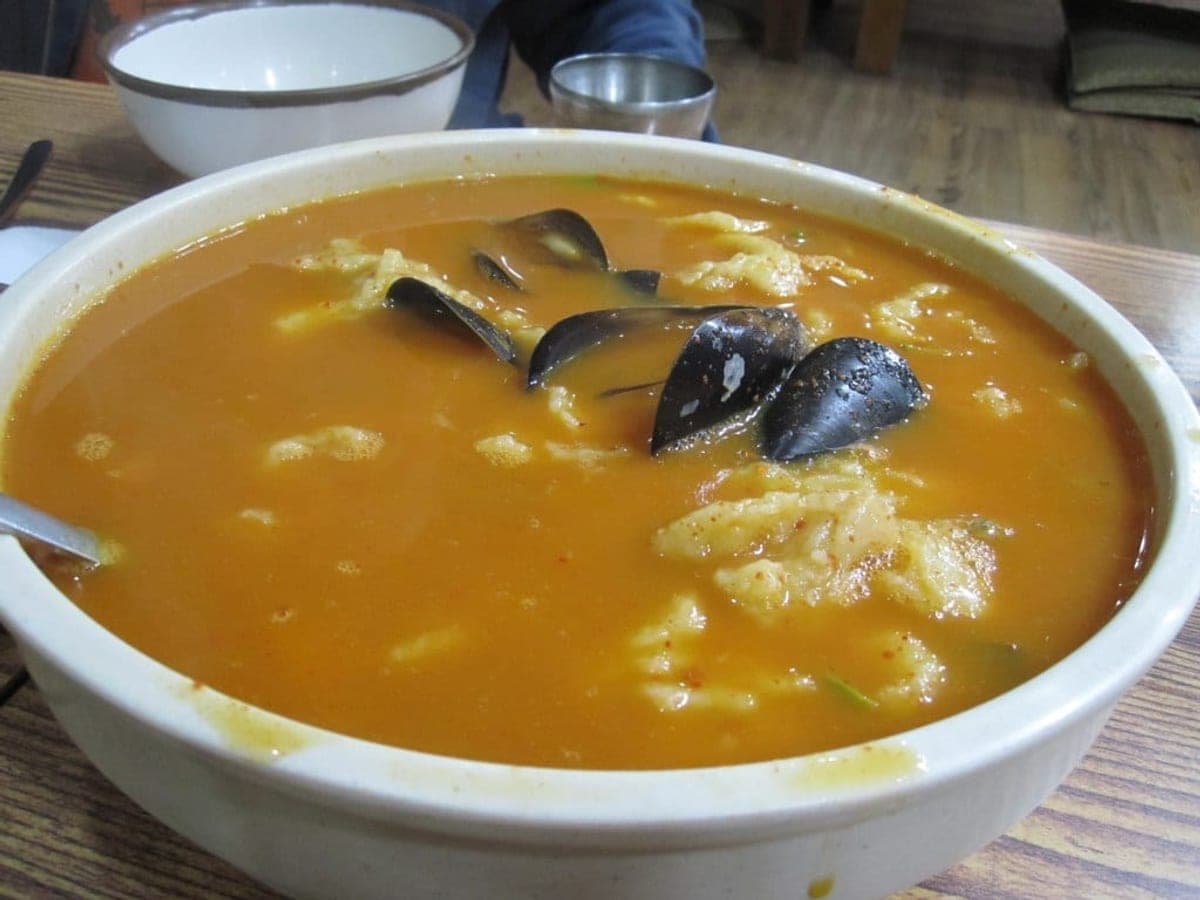
Sujebi (Hand-Torn Noodle Soup)
Why sujebi dough has to rest before it will tear thin, and why the pieces go into fully boiling broth one at a time instead of all at once.
Sundubu Jjigae (Soft Tofu Stew)
Why this stew needs uncurdled silken tofu, not the firm kind, and the tableside egg trick that finishes it right at the table, not in the kitchen.