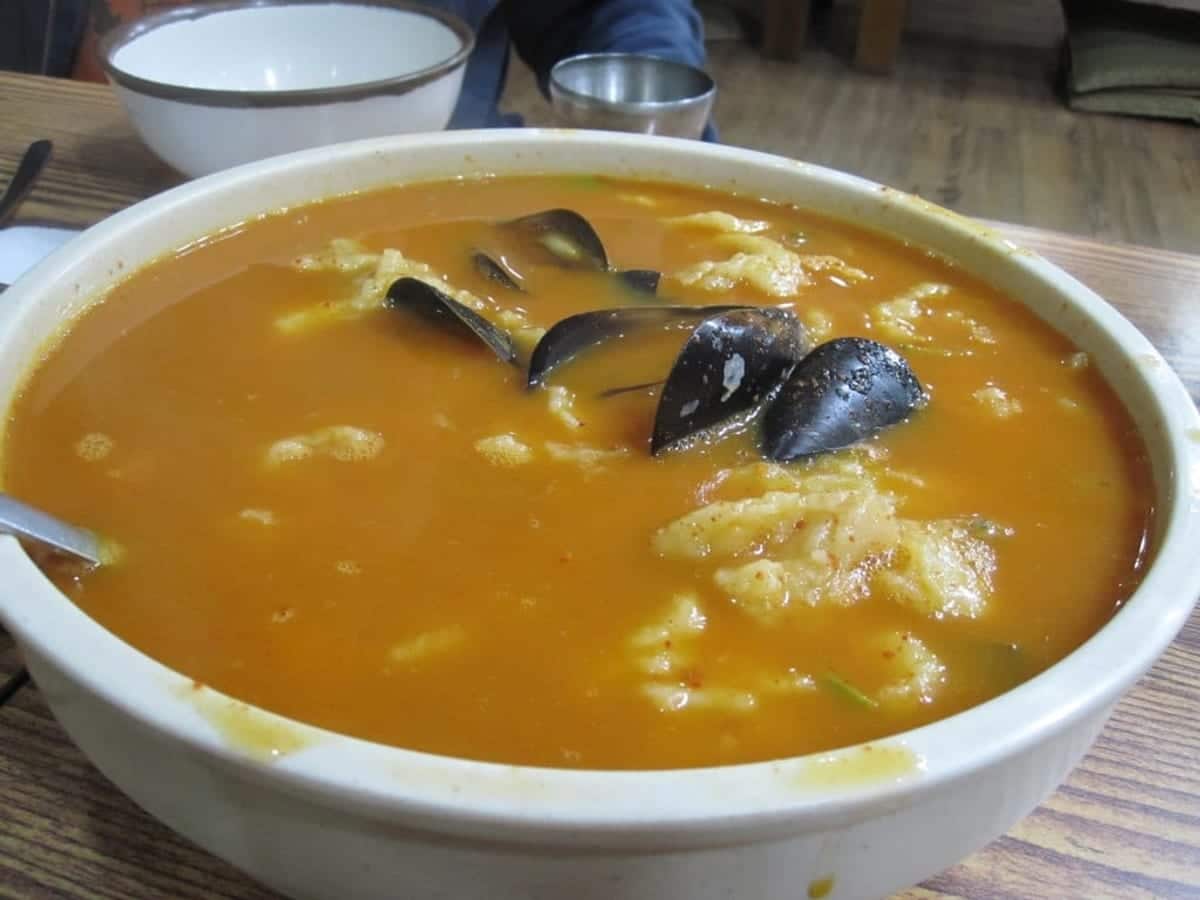
Photo: vlauria · CC BY-SA 2.0
Steps
- 1
Mix flour, water, salt and oil into a soft dough and knead until smooth.
- 2
Wrap and rest the dough at least 30 minutes - an hour is better.
- 3
Bring the anchovy-kelp stock to a full rolling boil and add potato and onion.
- 4
Stretch the rested dough thin between your fingers and tear off bite-sized pieces straight into the boiling broth.
- 5
Keep the broth at a boil as you work so the pieces set on contact rather than sinking.
- 6
Once all the dough is in, add zucchini and cook 5 minutes until the pieces float and turn glossy.
- 7
Season with garlic and soy sauce.
- 8
Finish with green onion.
Did you know — Korean culture
Sujebi is a nostalgia dish now, but it became common for a bleak reason. Wheat flour was historically scarce in Korea, where rice was the staple, until large quantities arrived as aid during and after the Korean War. Cheap flour and not much else is exactly what sujebi is made of, and for a generation it was the taste of getting by. It stayed on menus long after it stopped being necessary.
Sujebi dough is softer and wetter than kalguksu dough, and the rest matters even more because you are stretching it by hand rather than rolling it. Straight after mixing, the gluten is tight and the dough snaps back into thick lumps the moment you pull. After thirty minutes to an hour it relaxes enough to stretch translucent-thin, which is what gives sujebi its uneven, silky pieces.
The broth has to be at a genuine rolling boil before the first piece goes in, and it needs to stay there while you tear. Dough dropped into merely simmering liquid sinks and glues itself to whatever it lands on; dough that hits properly boiling stock sets on the outside immediately and floats free. Tearing directly over the pot, one piece at a time, is the whole technique.
Thickness is a matter of preference rather than correctness - some cooks pull them almost transparent, others leave them chewy and substantial - but consistency within a batch matters. Wildly uneven pieces cook at different rates, so the thin ones go mushy while the thick ones are still raw in the middle.
Troubleshooting
Dough springing back and tearing thick? It has not rested long enough. Give it another 30 minutes covered and it will stretch far more willingly.
Pieces sticking together in the pot? The broth was not boiling hard enough. Keep it at a full boil the entire time you are tearing.
Broth gone thick and gluey? Some starch release is normal and wanted, but excess flour makes it worse - do not flour your hands, oil them lightly instead.
Recommended products
- Korean pantry staples
More to cook
All Stews & Soups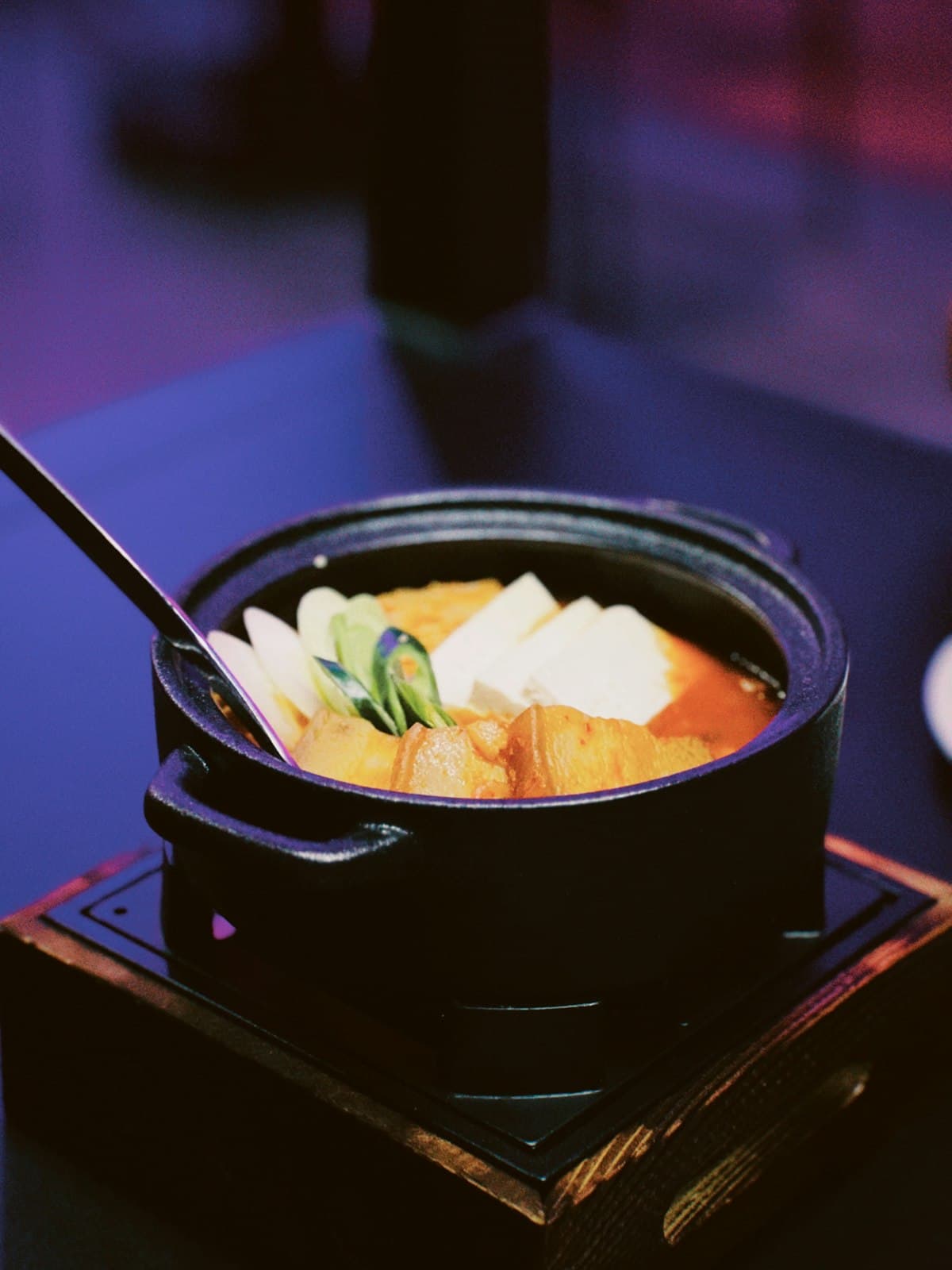
Sundubu Jjigae (Soft Tofu Stew)
Why this stew needs uncurdled silken tofu, not the firm kind, and the tableside egg trick that finishes it right at the table, not in the kitchen.
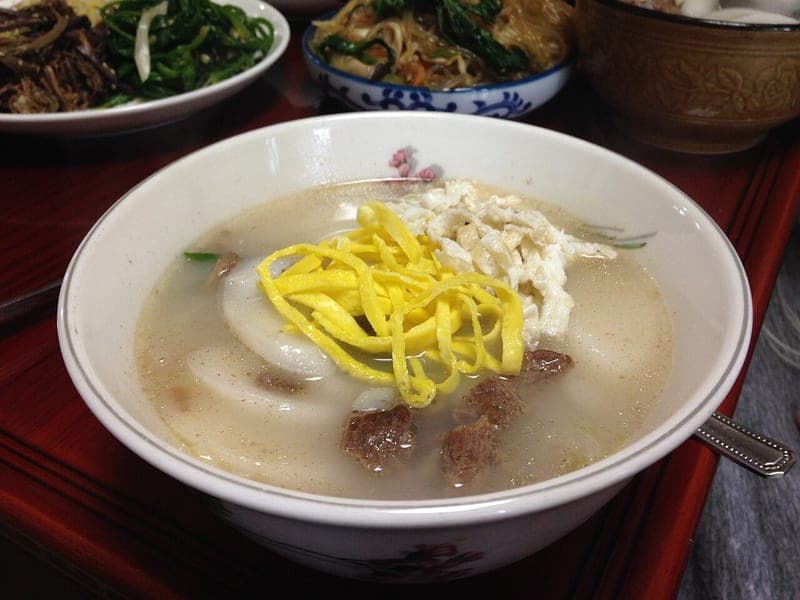
Tteok Guk (New Year's Rice Cake Soup)
Why the rice cakes need soaking before they hit the broth, and how a clear beef stock keeps this New Year's soup from turning cloudy and starchy.
Yukgaejang (Spicy Beef Soup)
The shredded-brisket technique and gochugaru-oil base that gives yukgaejang its deep red color without relying on heat alone.