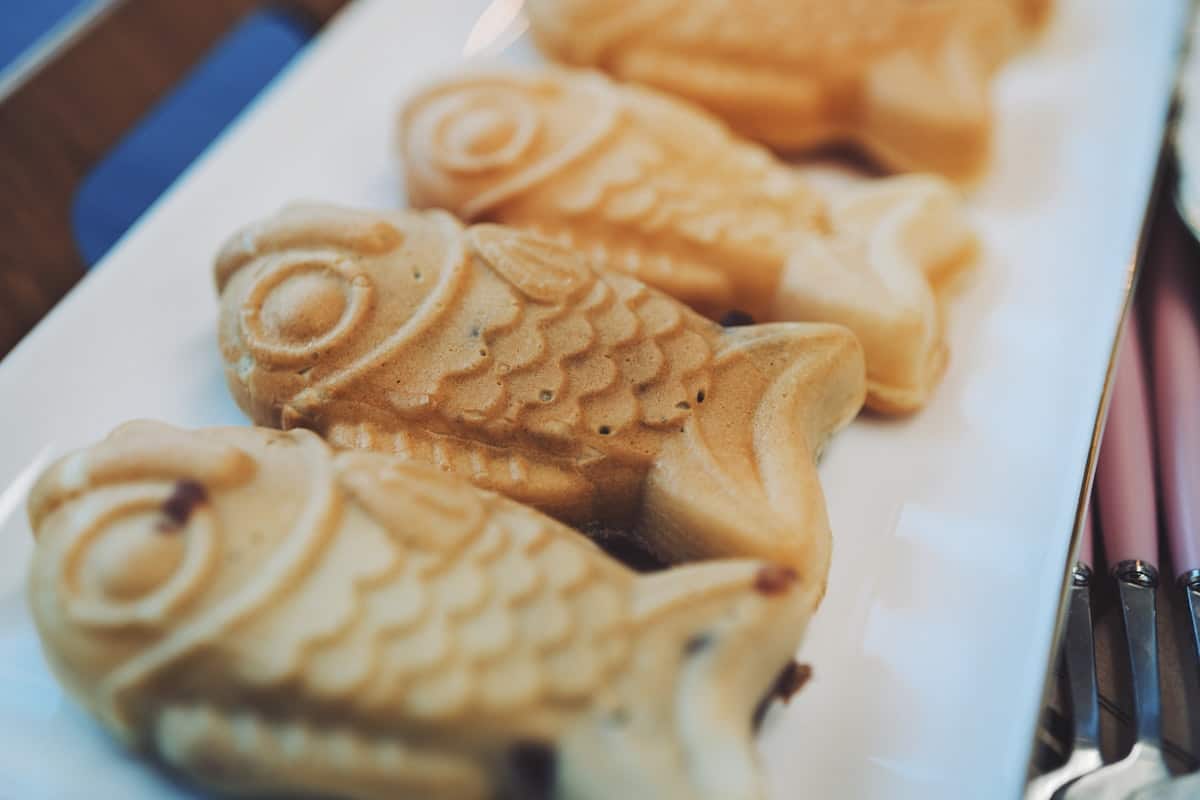
Steps
- 1
Whisk together flour, sugar, baking powder, baking soda, and salt.
- 2
In a separate bowl, whisk the egg, milk, and melted butter.
- 3
Combine the wet and dry ingredients into a smooth, pourable batter.
- 4
Heat a fish-shaped waffle mold over medium heat and grease both sides lightly.
- 5
Pour a thin layer of batter into the bottom half of the mold.
- 6
Add a spoonful of red bean paste down the center, leaving room around the edges.
- 7
Pour a bit more batter over the filling, then close the mold.
- 8
Cook 2-3 minutes per side, until golden and crisp on the outside.
- 9
Serve warm, straight from the mold.
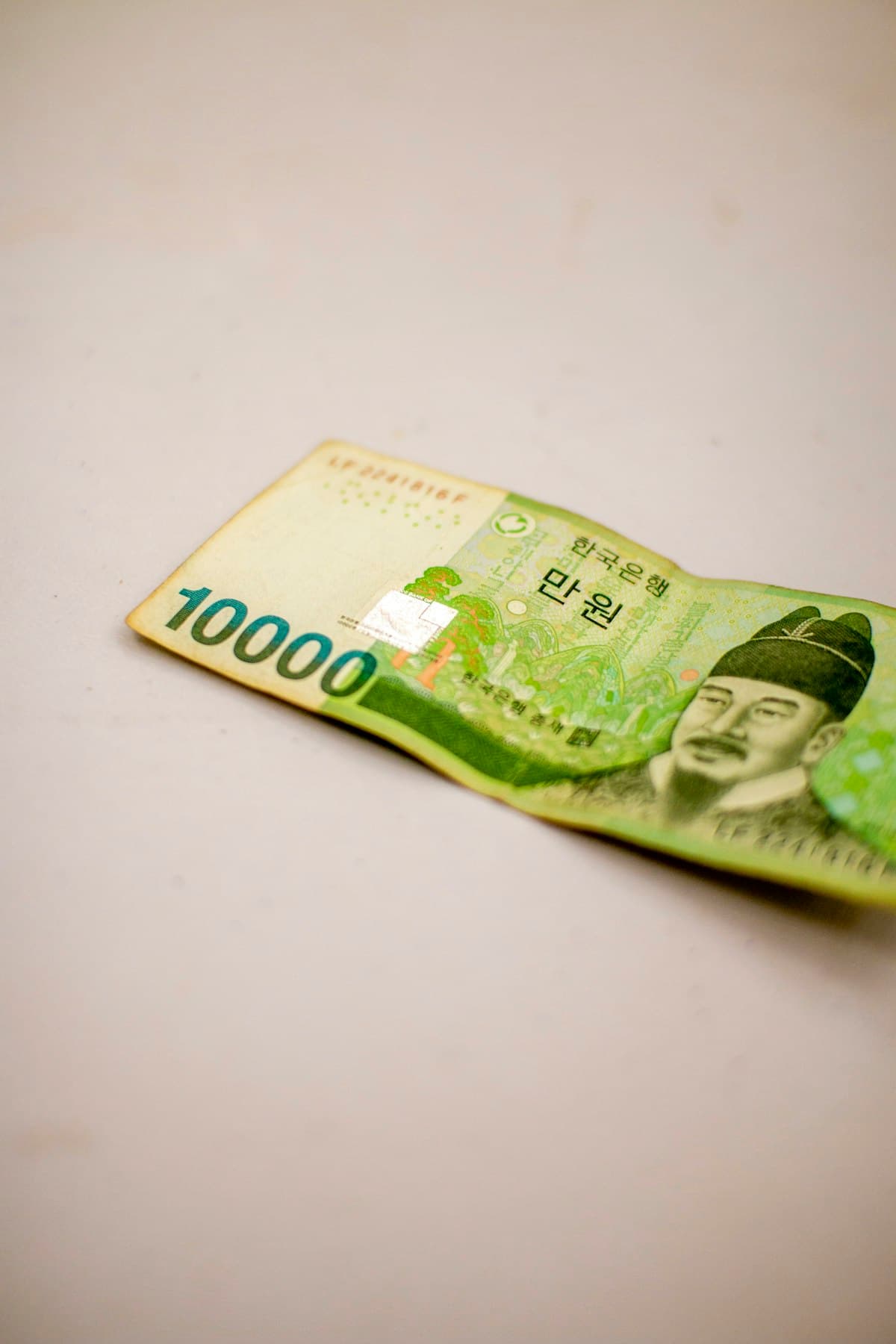
Did you know — Korean culture
Bungeoppang is cheap and standardized enough nationwide that Korean media has informally tracked its street price for years as a kind of everyday inflation gauge, the same way some countries track a basic loaf of bread or a cup of coffee. When bungeoppang prices tick up during winter, it tends to show up in casual news coverage as a relatable sign that costs are rising, long before anyone looks at official government inflation figures.
The filling amount is the detail that separates a good bungeoppang from a disappointing one. Too little and every bite is mostly plain batter; too much and the filling leaks out the seams before the mold ever closes. Leaving a visible border of bare batter around the bean paste is what keeps the seal intact.
Getting the batter thin enough for the first pour matters just as much as the filling. A batter that's too thick doesn't spread evenly across the fish-shaped cavity, leaving thick, doughy pockets at the head and tail while the body cooks through fine.
Bungeoppang is cheap and standardized enough nationwide that Korean media has informally tracked its street price for years as a kind of everyday inflation gauge, the same way some countries track a basic loaf of bread or a cup of coffee. When bungeoppang prices tick up during winter, it tends to show up in casual news coverage as a relatable sign that costs are rising, long before anyone looks at official government figures.
Bungeoppang and hotteok are the two winter street snacks sold from the same carts, usually within a few metres of each other. One is a filled fish-shaped cake, the other a fried sugar-filled pancake, and both are eaten standing up in the cold.
Troubleshooting
Filling leaking out during cooking? Too much bean paste, or it wasn't kept clear of the edges. Leave a visible batter border all the way around before closing the mold.
Ends of the fish shape doughy and undercooked? The batter was probably too thick to reach every corner of the mold. Thin it slightly with a splash more milk next time.
Pastries sticking to the mold? Re-grease between batches — even a well-seasoned mold needs a fresh coat of oil every couple of rounds.
Recommended products
- Fish-shaped waffle mold (bungeoppang iron)
- Sweetened red bean paste
More to cook
All Desserts & Drinks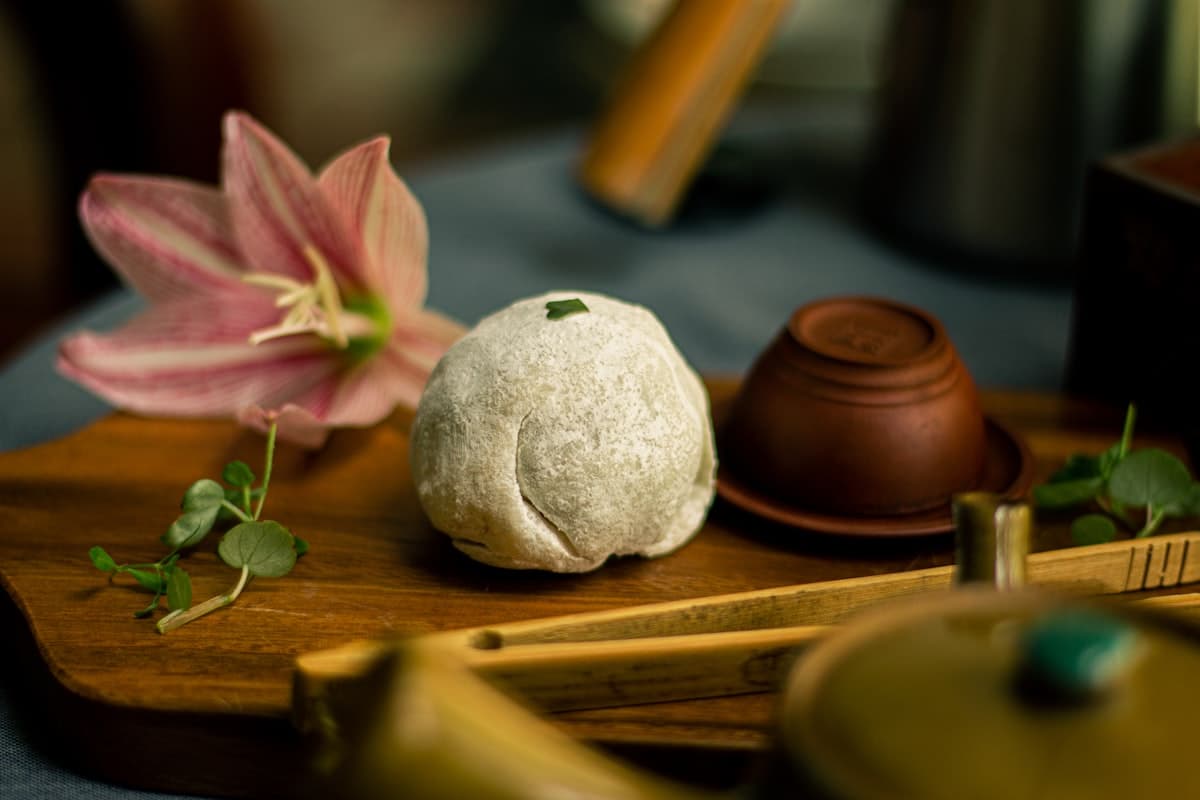
Chapssaltteok (Sweet Rice Cake with Filling)
The steam-then-pound technique behind chewy chapssaltteok, and why the filling needs to be fully cooled before wrapping.
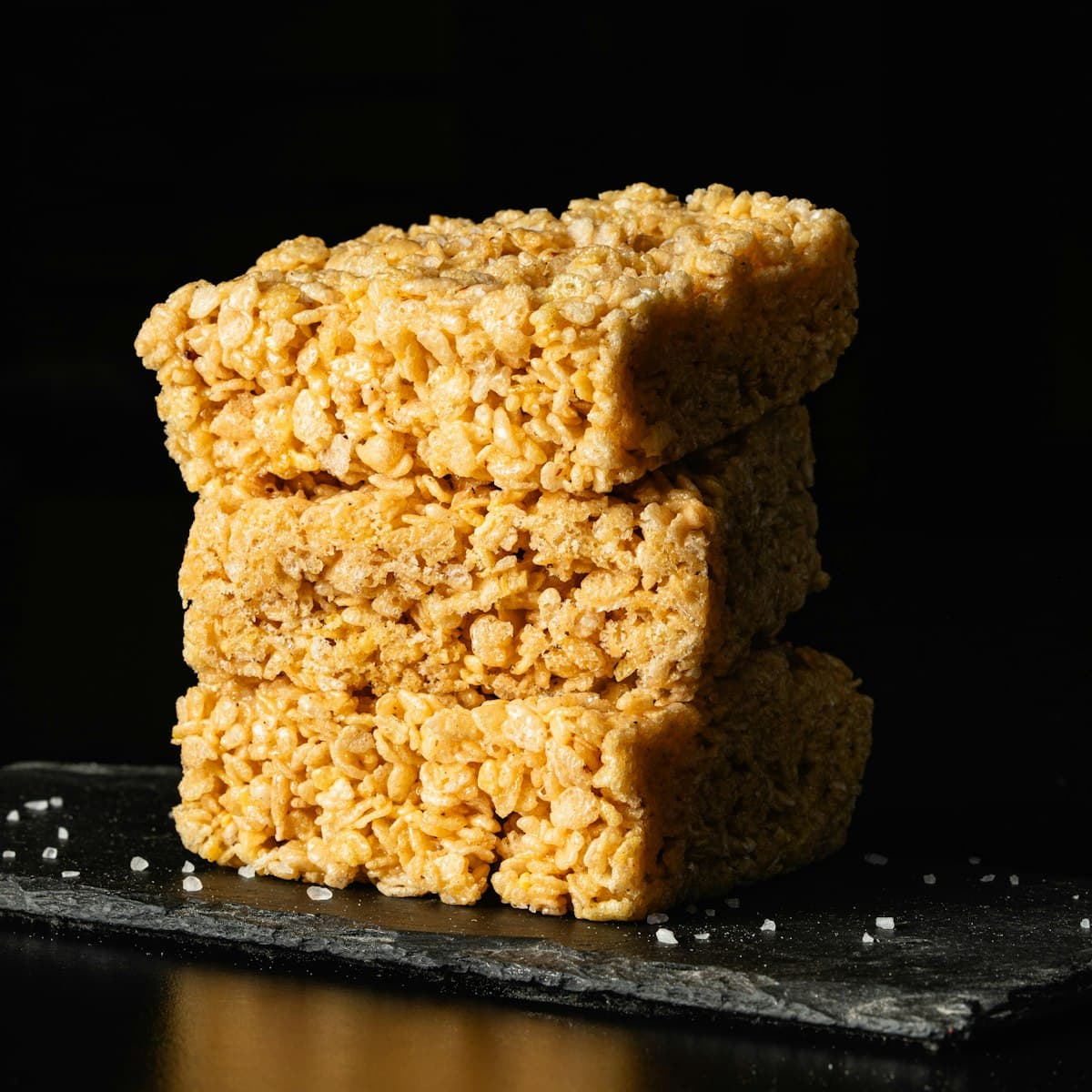
Gangjeong (Puffed Rice Candy)
The syrup temperature behind gangjeong's clean set, and why working fast once the syrup is ready matters more than any other step.
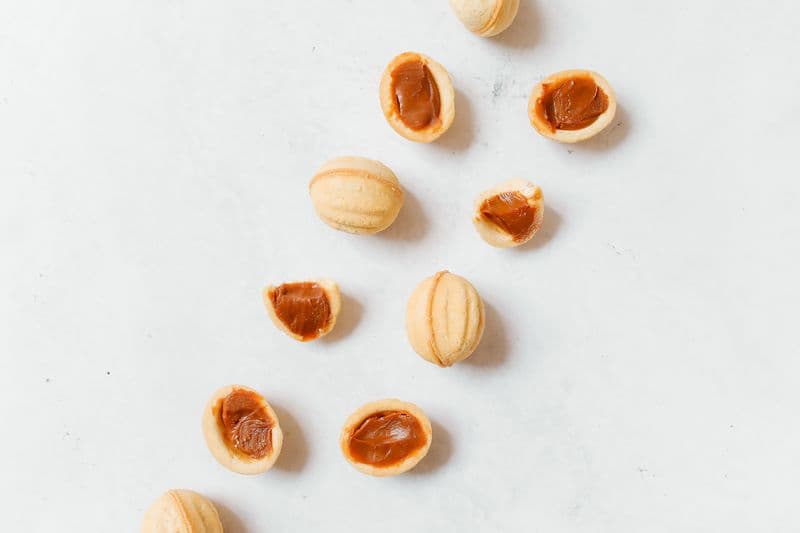
Hodu-gwaja (Walnut-Shaped Cakes)
Why the batter needs to be thin and the mold genuinely hot before filling, and how overfilling is what causes leaks and uneven shells.