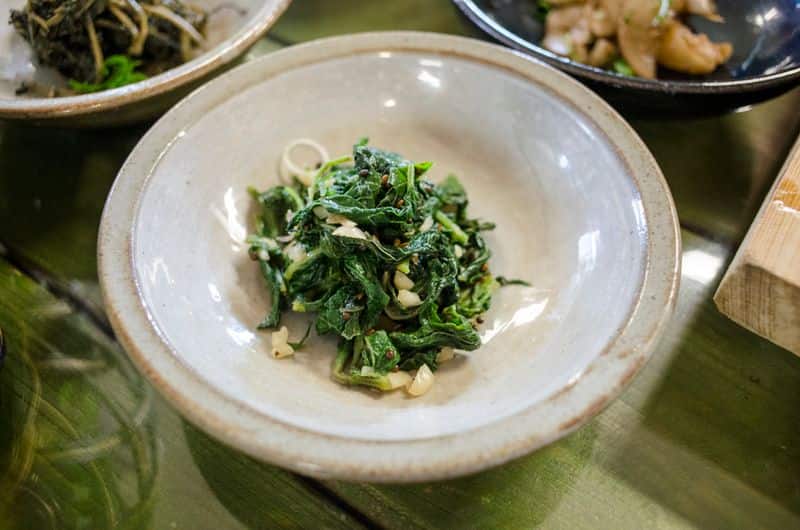
Steps
- 1
Bring a pot of water to a boil and blanch the greens for 30-60 seconds, just until wilted.
- 2
Immediately transfer to a bowl of ice water to stop the cooking and preserve the color.
- 3
Drain thoroughly and squeeze out excess water gently.
- 4
Roughly chop the greens if the leaves are large.
- 5
Toss with soy sauce, sesame oil, garlic, and doenjang if using.
- 6
Top with sesame seeds before serving.

Did you know — Korean culture
Chwinamul is a foraged wild green historically gathered in early spring in Korea's mountain regions — namul dishes built around foraged greens like this one are less about a fixed recipe and more about whatever wild greens are actually in season.
The blanch time here is short for a reason. Wild greens like chwinamul are more delicate than sturdier vegetables, and even an extra minute in boiling water pushes them from tender to mushy fast. Thirty to sixty seconds is usually enough — just until the leaves wilt and turn a deeper green.
Shocking the greens in ice water immediately afterward does two things: it stops the cooking instantly, so residual heat doesn't keep softening them past the blanch, and it locks in the bright green color that a slow cool-down on the counter would let fade toward a duller olive tone.
Chwinamul is a foraged wild green historically gathered in early spring in Korea's mountain regions, and namul dishes built around foraged greens like this one are a defining feature of the seasonal banchan spread — dishes tied less to a fixed recipe and more to whatever wild greens are actually in season.
Troubleshooting
Greens mushy instead of tender? The blanch ran too long — thirty seconds is often enough for delicate wild greens; check early rather than late.
Color dull rather than bright green? The ice-water shock step was likely skipped or too brief — that's what locks in the color right after blanching.
Flavor flat? Add the doenjang for extra depth, and make sure the greens are well-drained before seasoning — excess water dilutes the sauce.
Recommended products
- Fine mesh strainer
More to cook
All Banchan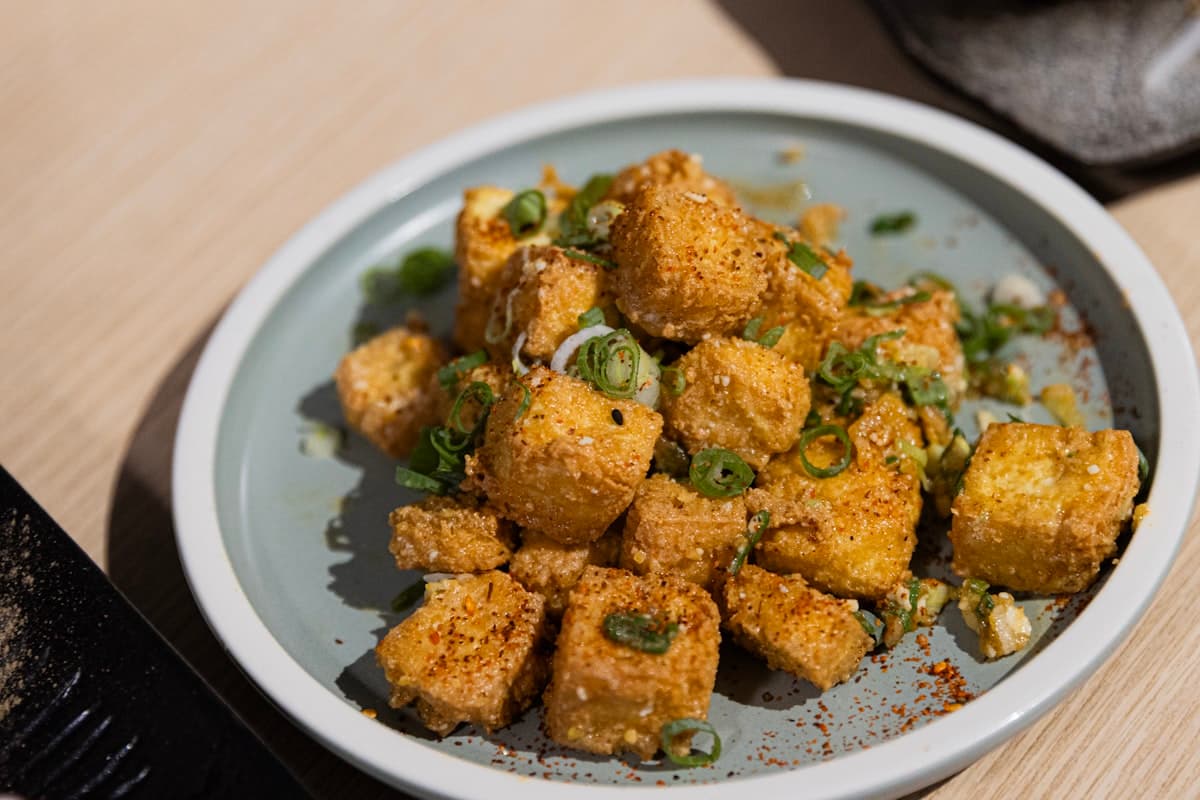
Dubu Buchim (Plain Pan-Fried Tofu)
The pat-dry-and-sear technique behind dubu buchim, and why moisture is the one thing standing between soft tofu and a golden crust.
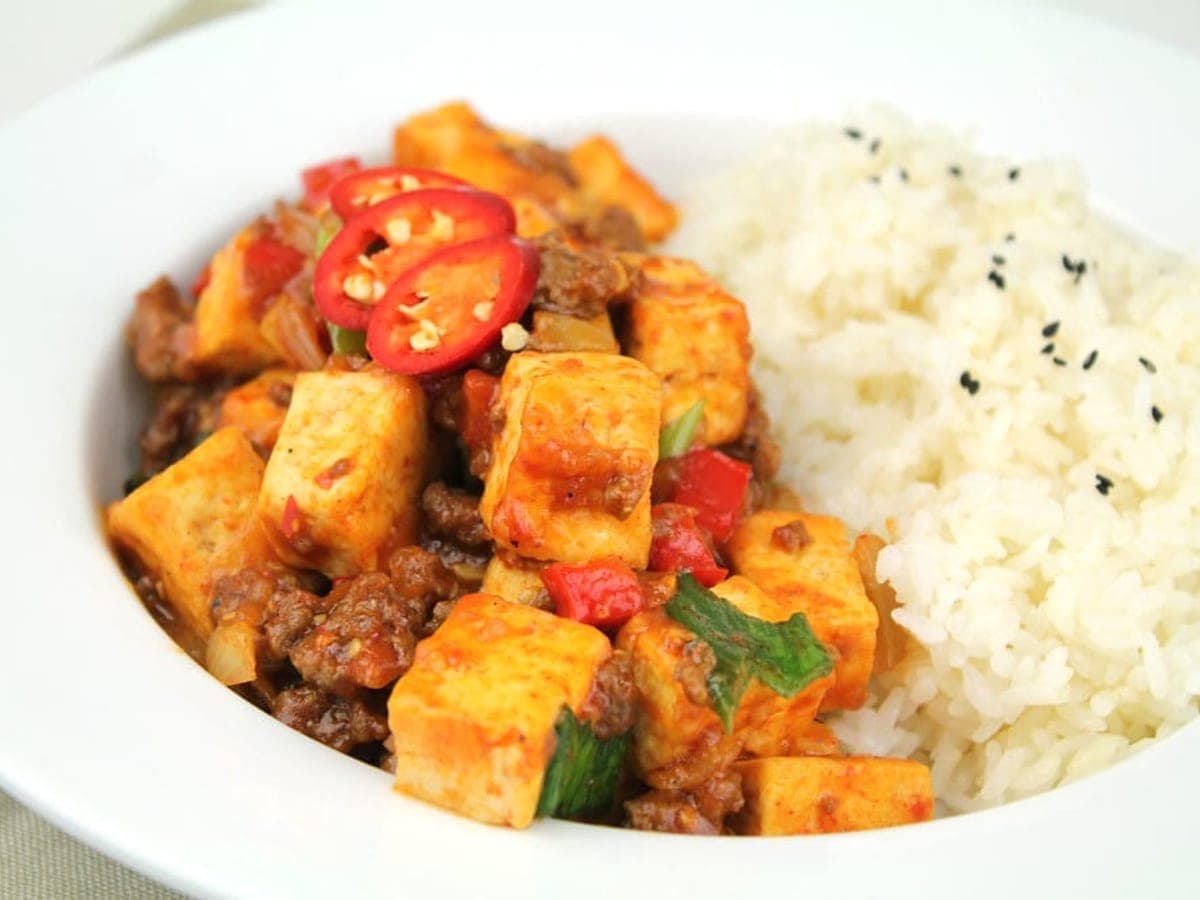
Dubu Jorim (Braised Tofu)
Why the tofu is pan-fried before it is braised, and how the sauce is reduced around it rather than the tofu being simmered in a full pot of liquid.
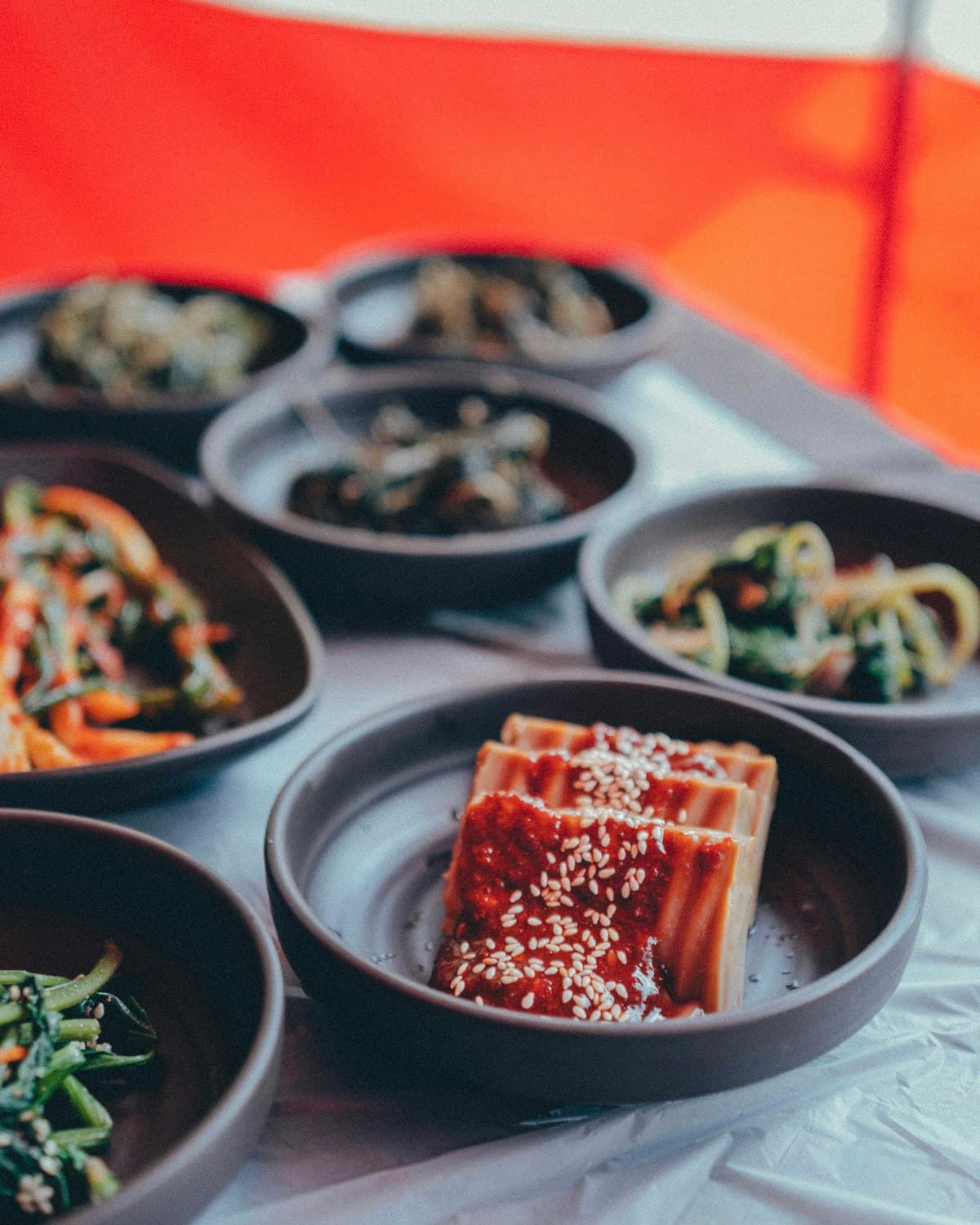
Dubu Kimchi (Tofu with Stir-Fried Kimchi)
The steamed-tofu, stir-fried-kimchi pairing behind dubu kimchi, and why the two halves are meant to stay separate on the plate.